Introduction
Shipyard in Indonesia, the world’s largest archipelagic nation, is home to over 17,000 islands and relies heavily on its maritime sector for trade, transportation, and economic growth. With its strategic geographical location along key international shipping lanes, Indonesia has a strong potential to become a major hub for shipbuilding and ship repair services. The shipyard industry in Indonesia plays a critical role in supporting the nation’s maritime economy, catering to both domestic and international markets.
In this article, we will explore the current state of Indonesian shipyards, their economic impact, key challenges, and future opportunities for growth in the global shipbuilding industry.
The Importance of Shipyard in Indonesia
Shipyards serve as vital facilities for constructing, repairing, and maintaining ships of various types, from fishing boats and passenger ferries to oil tankers and naval vessels. In Indonesia, the shipyard industry is essential because:
- Support for Domestic Transportation:
With thousands of islands, Indonesia’s economy relies on shipping for the movement of goods and people. Domestic shipyards provide the vessels needed for inter-island connectivity. - Boosting the Maritime Economy:
The shipyard industry contributes significantly to employment, local business development, and industrial growth. - Strategic Security:
As a maritime nation, Indonesia requires a strong naval fleet to protect its waters. Local shipyards build and maintain navy ships to strengthen defense capabilities. - Global Market Potential:
Due to its location along key maritime routes, Indonesia can position itself as a competitive player in the global shipbuilding and ship repair sector.
Major Shipyard in Indonesia
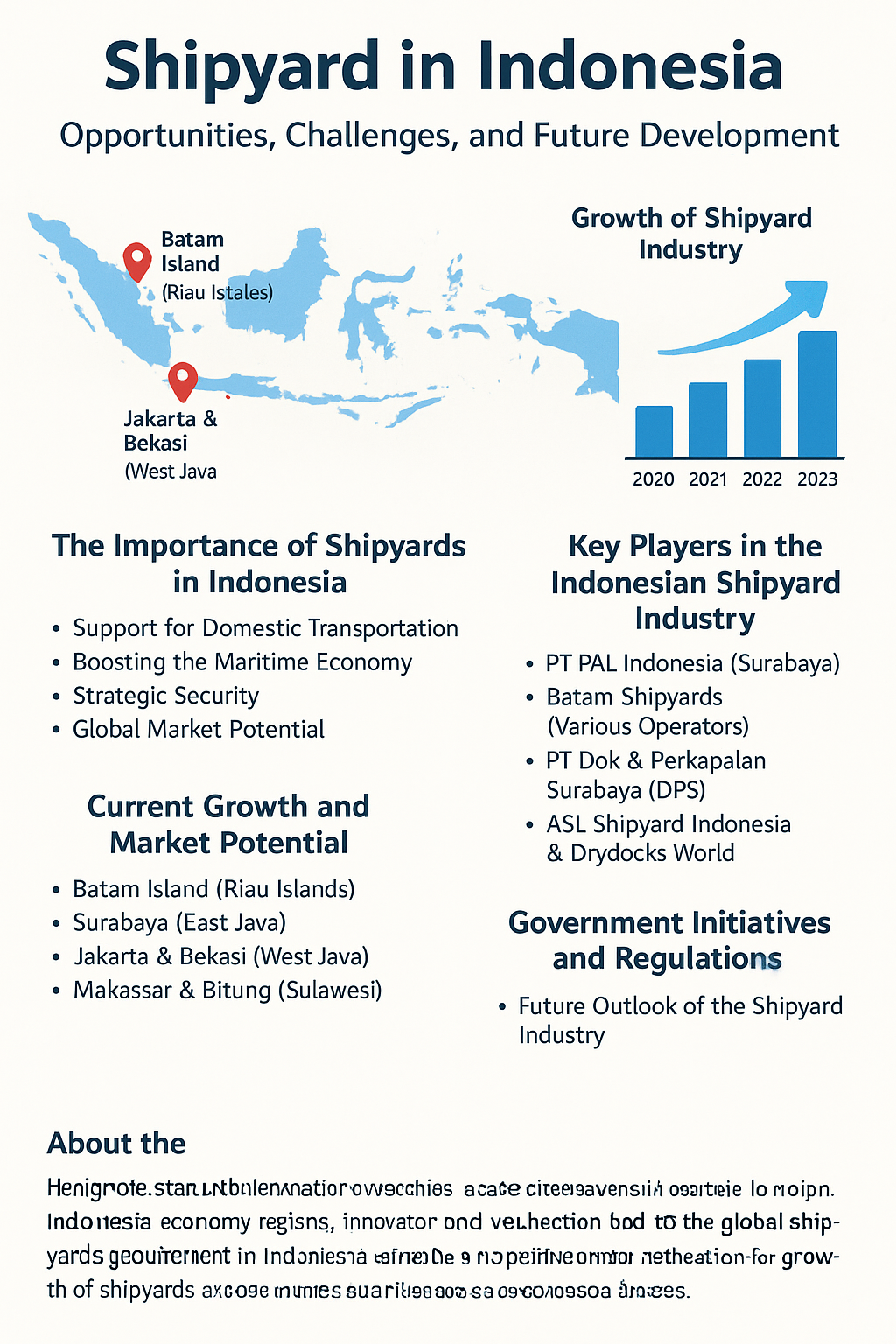
Several regions in Indonesia have developed into key shipyard hubs, including:
- Batam Island (Riau Islands):
One of the largest shipyard hubs in Indonesia, Batam is strategically located near Singapore and Malaysia. It hosts both domestic and foreign shipbuilding companies, offering ship repair, conversion, and new construction services. - Surabaya (East Java):
Known for PT PAL Indonesia, the state-owned shipyard specializing in military vessels, submarines, and large commercial ships. - Jakarta & Bekasi (West Java):
Several shipyards focus on smaller vessels, tugboats, and cargo ships for domestic operations. - Makassar & Bitung (Sulawesi):
Growing centers for shipbuilding, mainly serving the eastern part of Indonesia.
Key Players in the Shipyard in Indonesia Industry
Some of the notable companies in Indonesia’s shipyard sector include:
- PT PAL Indonesia (Surabaya):
The largest state-owned shipyard, producing naval vessels, submarines, and commercial ships. - Batam Shipyards (Various Operators):
Many private companies operate in Batam, serving international clients for ship repair and offshore engineering. - PT Dok & Perkapalan Surabaya (DPS):
Focused on ship repair and shipbuilding services for commercial and government clients. - ASL Shipyard Indonesia & Drydocks World:
Foreign-invested companies with strong presence in Batam.
Current Growth and Market Potential
The Indonesian government has identified shipbuilding as a strategic industry under its maritime vision, known as the “Global Maritime Fulcrum.” This initiative aims to strengthen Indonesia’s position as a maritime powerhouse.
- Rising Domestic Demand:
The expansion of inter-island trade, fishing industry, and passenger ferries drives strong domestic demand for new vessels. - Naval Modernization:
Indonesia continues to upgrade its naval defense systems, creating opportunities for shipyard growth. - Global Competitiveness:
With competitive labor costs and proximity to international shipping routes, Indonesia is attracting more global shipowners to use its shipyards for repair and maintenance.
Challenges Facing Shipyard in Indonesia
Despite the potential, the industry faces several challenges that need to be addressed:
- Technology Gap:
Many Indonesian shipyards still rely on outdated technology compared to global leaders like South Korea and Japan. - Skilled Workforce Shortage:
While labor is abundant, there is a lack of highly skilled engineers and technicians specialized in advanced shipbuilding. - Financing Difficulties:
Shipbuilding is capital-intensive, and many local companies face difficulties securing financing for expansion and modernization. - Global Competition:
Indonesia must compete with established shipbuilding nations such as China, South Korea, and Singapore.

Government Initiatives and Regulations
To boost the shipyard industry, the Indonesian government has implemented several policies:
- Tax Incentives and Subsidies for domestic shipbuilders.
- Local Content Requirements (TKDN) to encourage the use of Indonesian-made components.
- Infrastructure Development, such as expanding shipyard zones in Batam and East Java.
- Naval Contracts awarded to local shipyards to strengthen military capacity.
Future Outlook of the Shipyard in Indonesia Industry
The future of shipyards in Indonesia looks promising with continued government support and private sector investment. Key opportunities include:
- Green Shipbuilding:
With global demand for eco-friendly vessels rising, Indonesian shipyards can focus on LNG-fueled ships and hybrid-electric ferries. - Offshore Energy Support:
Shipyards in Batam and East Java can expand services for offshore oil and gas platforms, as well as renewable energy projects. - Regional Hub Development:
Batam and Surabaya have the potential to become regional centers for ship repair and conversion, attracting international clients. - Skilled Workforce Development:
Investment in training and education will help Indonesia build a competitive workforce to match global standards.
Conclusion
The shipyard industry in Indonesia is an essential part of the country’s maritime economy. With its strategic location, large domestic market, and supportive government policies, Indonesia has significant potential to become a regional and even global shipbuilding hub. However, addressing challenges such as technological gaps, financing, and workforce skills will be critical for long-term growth.
As Indonesia strengthens its maritime industry through the Global Maritime Fulcrum vision, shipyards across the nation are poised to play a pivotal role in shaping the future of shipping and naval development in Southeast Asia.