

Introduction of Modern Trends in Plumbing
Plumbing is one of the oldest and most essential systems in human civilization, dating back thousands of years. From ancient aqueducts to modern pipelines, plumbing has continuously evolved to meet the needs of societies. Today, as technology advances and sustainability becomes a global priority, the plumbing industry is undergoing significant transformations. Modern trends in plumbing focus on efficiency, sustainability, digital integration, and improved user experiences.
This article explores the latest plumbing innovations, including smart technologies, eco-friendly practices, and material advancements that are shaping the future of water systems.
1. Modern Trends in Plumbing: Smart Plumbing Systems
One of the biggest modern plumbing trends is the rise of smart technology. Just as smart homes have revolutionized energy and security, plumbing systems are also benefiting from digital innovation.
Key Features of Smart Plumbing Systems:
- Smart Leak Detectors: Sensors installed in plumbing systems can instantly detect leaks and notify homeowners via smartphone apps. This prevents costly water damage.
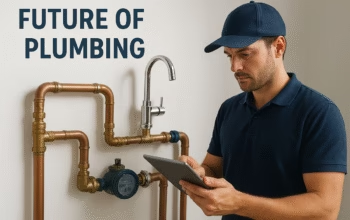
- Digital Water Meters: Advanced meters track water consumption in real-time, helping users manage water usage more efficiently.
- Voice-Activated Fixtures: Faucets and showers can now be controlled by voice commands or mobile apps, offering convenience and water-saving options.
Smart plumbing not only provides comfort but also reduces water waste, making it a key trend for the future.
2. Modern Trends in Plumbing: Eco-Friendly and Sustainable Plumbing
Sustainability has become a top priority across all industries, and plumbing is no exception. With water scarcity and environmental concerns growing, eco-friendly solutions are being integrated into plumbing systems worldwide.
Eco-Friendly Plumbing Trends:
- Low-Flow Fixtures: Modern toilets, faucets, and showerheads are designed to use less water without compromising performance.
- Greywater Recycling: Systems that recycle wastewater from sinks and showers for irrigation or toilet flushing are becoming increasingly popular.
- Rainwater Harvesting: Collecting and storing rainwater for household use is gaining traction as a sustainable practice.
- Tankless Water Heaters: These energy-efficient units heat water on demand, reducing energy consumption and costs.
Eco-friendly plumbing not only saves resources but also helps reduce utility bills, making it a win-win for both the environment and homeowners.
3. Advanced Plumbing Materials
The materials used in plumbing systems have evolved significantly over the years. Traditional metal pipes are being replaced by advanced alternatives that offer better durability, flexibility, and safety.
Popular Modern Plumbing Materials:
- PEX (Cross-Linked Polyethylene): Flexible, easy to install, and resistant to corrosion.
- CPVC (Chlorinated Polyvinyl Chloride): Durable and suitable for both hot and cold water applications.
- Stainless Steel: Long-lasting and resistant to rust, though more expensive.
- Composite Pipes: Combining different materials for strength, efficiency, and longevity.
These materials not only extend the life of plumbing systems but also reduce maintenance and installation costs.
4. Modern Trends in Plumbing: Water Conservation Technologies
Water conservation is one of the most critical aspects of modern plumbing trends. With global water shortages becoming a pressing issue, new technologies are helping reduce waste and improve water efficiency.
Water-Saving Innovations:
- Dual-Flush Toilets: Allow users to choose between a low-volume or full flush depending on needs.
- Sensor-Activated Faucets: Prevent unnecessary water flow by activating only when hands are detected.
- Drip Irrigation Systems: Designed for landscaping and agriculture, these systems reduce water loss significantly.
- Smart Irrigation Controllers: Adjust water usage based on weather and soil conditions.
Such innovations are vital in promoting responsible water usage in both residential and commercial spaces.

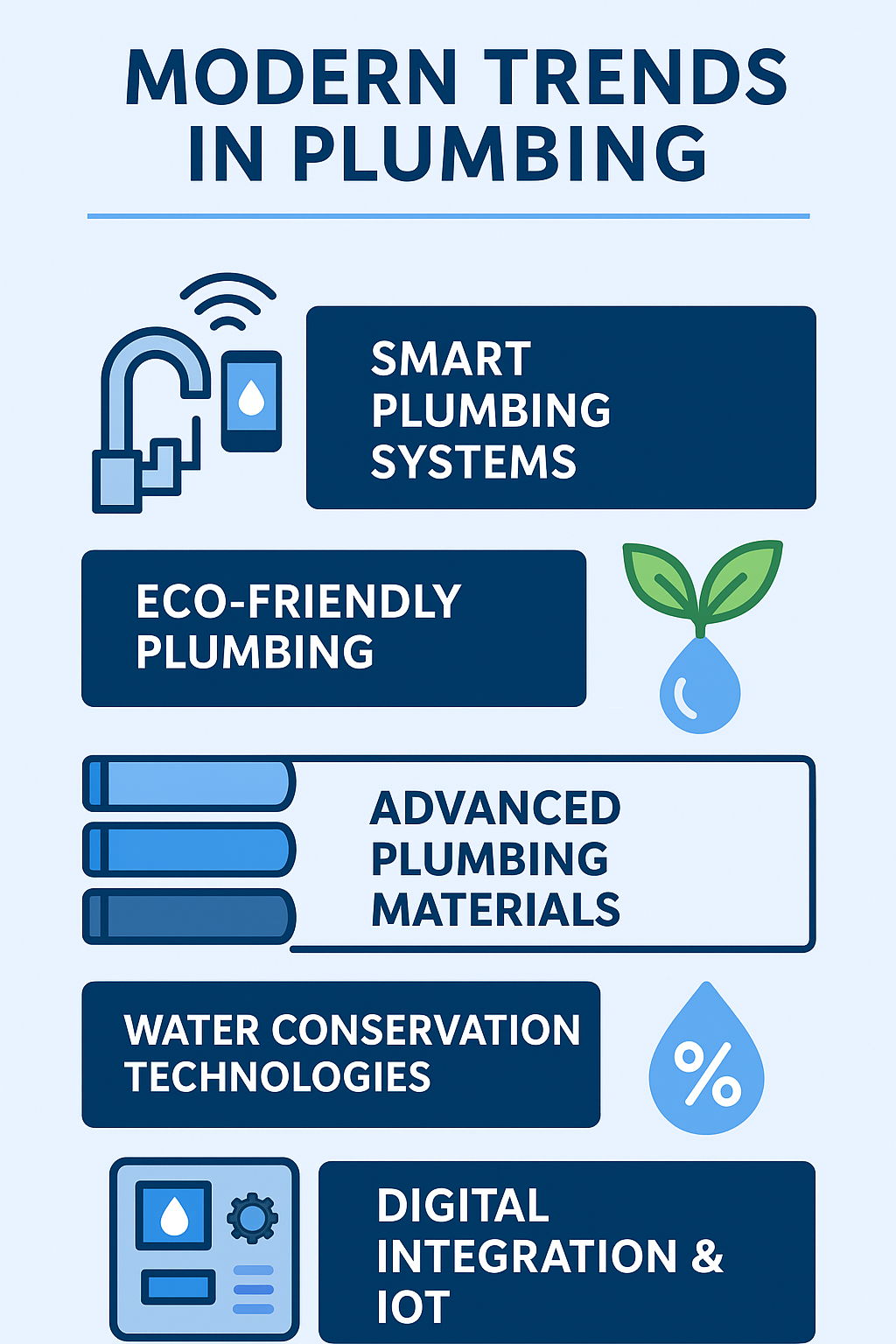
5. Digital Integration and IoT in Plumbing
The Internet of Things (IoT) is transforming plumbing into a connected system that integrates seamlessly with smart homes and businesses.
Examples of IoT in Plumbing:
- Remote Monitoring: Homeowners can monitor water usage and detect leaks from anywhere in the world.
- Predictive Maintenance: AI-driven tools analyze water system performance and predict failures before they occur.
- Smart Valves: Automatically shut off water supply when leaks are detected, preventing damage.
- Cloud-Based Data Analysis: Plumbing systems connected to cloud platforms provide valuable data for optimizing usage.
This digital integration ensures better efficiency, safety, and long-term system reliability.
6. Modern Trends in Plumbing: Touchless and Hygienic Plumbing Fixtures
Hygiene has become a major focus, especially after global health concerns in recent years. Plumbing innovations now prioritize touchless and hygienic fixtures.
Trending Hygienic Fixtures:
- Touchless Faucets: Reduce the spread of germs by eliminating the need for manual operation.
- Self-Cleaning Toilets: Advanced designs use UV light or electrolyzed water to sanitize automatically.
- Antimicrobial Surfaces: Materials treated to resist bacteria growth on plumbing fixtures.
These innovations are especially important in commercial spaces, hospitals, and public restrooms.
7. Green Building and Plumbing Integration
As the demand for green buildings grows, plumbing systems are becoming an integral part of sustainable architecture. Many new constructions are incorporating eco-friendly plumbing designs that align with green building certifications such as LEED (Leadership in Energy and Environmental Design).
Examples of Green Plumbing Practices:
- Designing buildings with low-impact water systems.
- Using recycled materials for pipes and fixtures.
- Implementing on-site water treatment systems for reusing wastewater.
- Integrating plumbing into solar water heating systems.
Green plumbing is not just a trend—it is becoming a requirement in modern construction projects.
8. Modern Trends in Plumbing: Plumbing for Smart Cities
With the development of smart cities, plumbing systems are also advancing to meet the needs of urbanization.
Urban Plumbing Trends:
- Centralized Smart Water Networks: Managing water supply and distribution through real-time monitoring.
- Wastewater Recycling Plants: Large-scale systems that recycle water for non-drinking purposes.
- Flood Management Systems: Smart drainage networks that prevent urban flooding.
- Integration with Renewable Energy: Using solar or geothermal energy for water heating.
These large-scale innovations ensure cities can meet the growing demand for water sustainably.
Conclusion of Modern Trends in Plumbing
The plumbing industry is undergoing a remarkable transformation, driven by technological innovation, sustainability goals, and modern lifestyle demands. From smart leak detectors and eco-friendly fixtures to advanced materials and IoT integration, modern plumbing trends are shaping a future where water systems are efficient, sustainable, and highly connected.
For homeowners, businesses, and urban planners alike, staying updated with these innovations is essential. Embracing modern plumbing trends not only enhances convenience and hygiene but also plays a crucial role in conserving one of the world’s most valuable resources—water.