Introduction
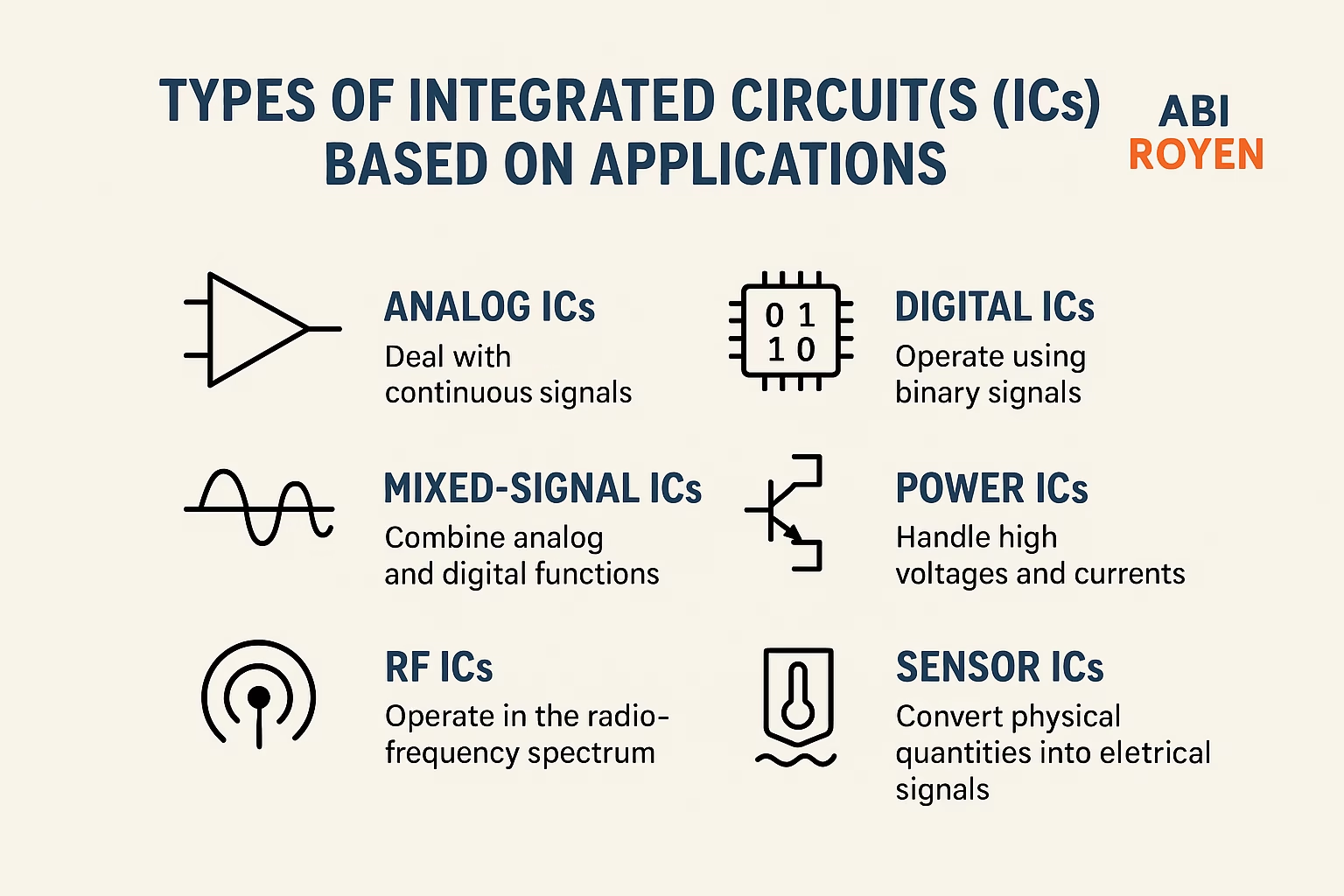
In modern electronics, devices often need to process both continuous analog signals and discrete digital signals. Mixed-Signal Integrated Circuits (ICs) have emerged as a vital solution, combining analog and digital circuitry into a single chip. These ICs enable seamless interaction between the physical world, which is inherently analog, and the digital systems that process and store data. From smartphones to medical devices, Mixed-Signal ICs power countless applications.
This article explores what Mixed-Signal ICs are, how they work, their types, applications, and the benefits they bring to the electronics industry.
1. What Are Mixed-Signal ICs?
A Mixed-Signal IC is an integrated circuit that contains both analog and digital components on the same chip. While analog circuits handle continuous signals (such as voltage variations from sensors), digital circuits deal with binary data (0s and 1s).
By combining these functionalities, Mixed-Signal ICs reduce the need for multiple chips, minimize power consumption, and increase system efficiency.
Key examples of Mixed-Signal ICs include:
- Analog-to-Digital Converters (ADC)
- Digital-to-Analog Converters (DAC)
- Phase-Locked Loops (PLL)
- Mixed-Signal Microcontrollers
2. How Mixed-Signal ICs Work
Mixed-Signal ICs are designed to interface analog signals with digital processing units. The core idea is to convert signals from one domain to another:
- Analog-to-Digital Conversion (ADC):
Converts analog inputs (such as temperature or sound) into digital data for processing. - Digital Processing:
The digital section performs computations, filtering, or decision-making using microcontrollers or DSPs (Digital Signal Processors). - Digital-to-Analog Conversion (DAC):
Converts processed digital data back into analog form for output (e.g., audio signals).
These processes happen at extremely high speeds, enabling real-time performance in communication systems, consumer electronics, and industrial applications.
3. Types of Mixed-Signal ICs
Mixed-Signal ICs come in various forms depending on their intended application:
a. Data Converters
- ADC (Analog-to-Digital Converters)
Essential for capturing analog signals and feeding them into digital processors. - DAC (Digital-to-Analog Converters)
Convert processed digital information back into analog outputs.
b. Timing Circuits
- Phase-Locked Loops (PLL)
Synchronize signal frequencies in communication and clock generation applications.
c. Mixed-Signal Microcontrollers
- Embedded microcontrollers that integrate both analog peripherals and digital processing units.
d. RF Mixed-Signal ICs
- Handle radio-frequency communication, combining analog signal processing with digital modulation techniques.
4. Applications of Mixed-Signal ICs
Mixed-Signal ICs are used in almost every sector of electronics:
a. Consumer Electronics
- Smartphones, tablets, and laptops rely on Mixed-Signal IC for audio processing, display control, and touch interfaces.
b. Automotive Industry
- Used in sensor integration, infotainment systems, and advanced driver-assistance systems (ADAS).
c. Industrial Automation
- Process control, robotics, and monitoring systems require precise analog-digital interaction.
d. Medical Devices
- Vital for patient monitoring systems, diagnostic equipment, and imaging technologies.
e. Communication Systems
- Enable high-speed data transmission in networking and wireless communication devices.


5. Advantages of Mixed-Signal ICs
Mixed-Signal IC technology offers multiple benefits:
- Integration and Miniaturization – Combines multiple functions on a single chip, reducing size and weight.
- Lower Power Consumption – Optimized design leads to reduced energy usage.
- Cost Efficiency – Reduces the number of components, lowering manufacturing costs.
- Improved Reliability – Fewer external connections mean less chance of failure.
- Faster Processing – Reduced latency between analog and digital domains.
6. Challenges in Mixed-Signal IC Design
Despite their advantages, designing Mixed-Signal IC is complex:
- Noise Interference – Analog and digital circuits can interfere with each other.
- Design Complexity – Requires expertise in both analog and digital circuit design.
- Thermal Management – Heat generated by high-speed operations must be managed.
- Testing Difficulties – Verifying performance across analog and digital domains is challenging.
7. Future Trends in Mixed-Signal ICs
As technology evolves, Mixed-Signal IC will continue to improve:
- Increased Integration – More functions will be combined into single chips for compact devices.
- Higher Speeds – Advanced semiconductor processes will allow faster analog-digital conversions.
- AI and IoT Integration – Mixed-Signal ICs will power intelligent IoT devices with real-time signal processing.
- Low-Power Designs – Essential for wearable devices and battery-powered applications.
Conclusion
Mixed-Signal ICs have revolutionized modern electronics by combining the strengths of analog and digital circuitry. They allow seamless data conversion, efficient processing, and reliable communication between different types of signals. From smartphones to medical imaging, they form the backbone of countless innovations.
As industries demand smarter, faster, and more energy-efficient systems, the role of Mixed-Signal IC will only grow, making them an essential technology for the future of electronics.