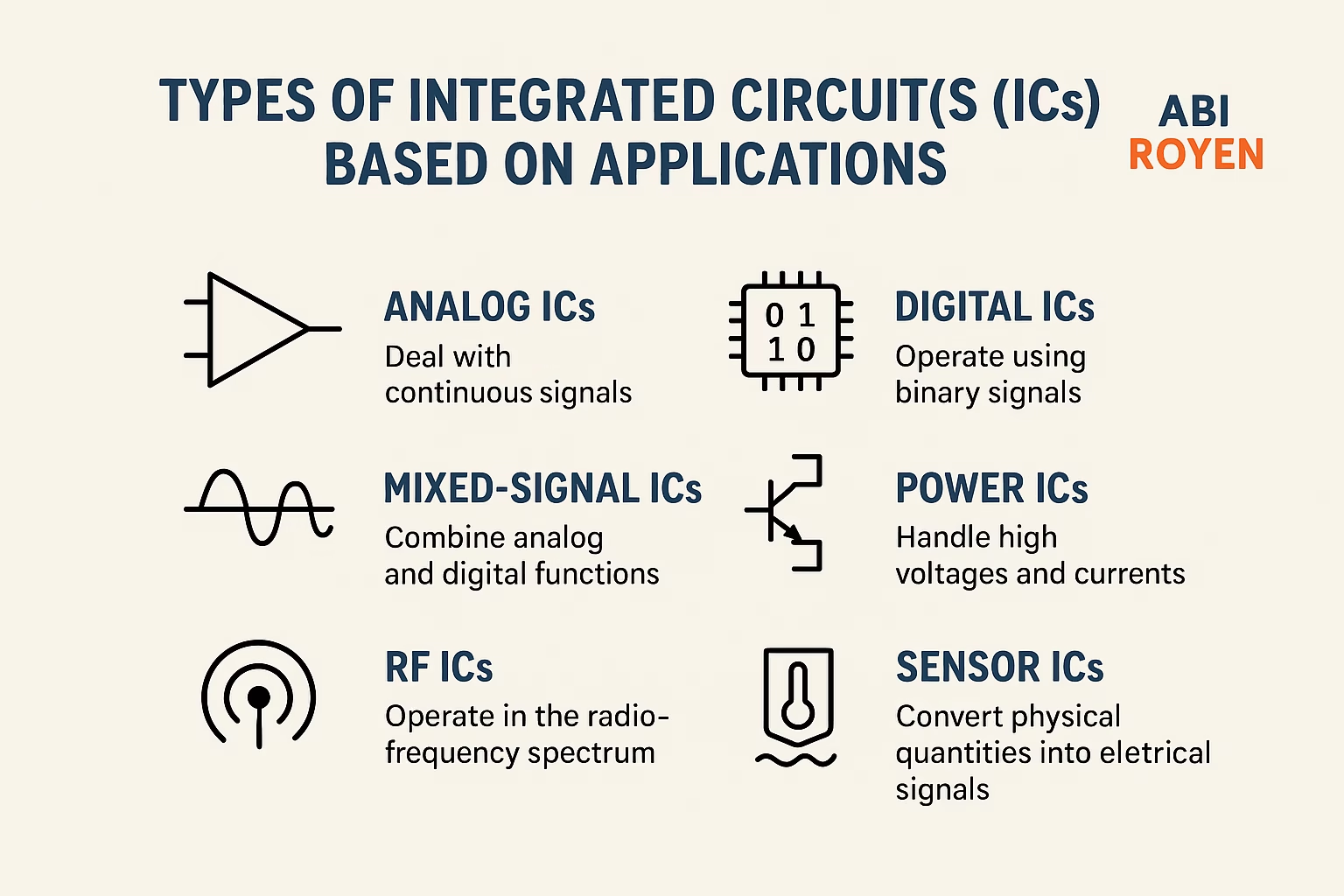


In the fast-paced world of electronics, innovation is constant. As consumer demands for smarter, faster, more energy-efficient, and adaptable devices continue to rise, the development of future electronic components is rapidly evolving to keep pace. From AI-integrated processors to bio-compatible sensors, the next generation of electronic components is not only smaller and more powerful—but also more intelligent and versatile than ever before.
In this article, we explore the key innovations, technologies, and trends shaping the future of electronic components and how they are set to revolutionize industries from healthcare and automotive to consumer electronics and space technology.
1. Future Electronic Components Miniaturization and Nanoelectronics
One of the most prominent trends in the evolution of electronic components is miniaturization. As transistors approach atomic scales, researchers are exploring nanoelectronics, a field that manipulates matter on the nanometer scale to create components with unprecedented performance.
Key developments:
- 7nm and 3nm chip technology from leading semiconductor companies.
- Use of carbon nanotubes and graphene as potential replacements for silicon.
- Molecular electronics, where individual molecules act as functional devices.
This trend allows manufacturers to pack more power into smaller devices, opening the door to ultra-compact wearables, medical implants, and even embedded systems in textiles and biological tissues.
2. Artificial Intelligence (AI)-Enabled Chips
The rise of AI and machine learning has led to the development of new chips designed specifically to process complex AI workloads.
AI-powered electronic components are now being used in:
- Smartphones with on-device AI features (image recognition, voice assistants).
- Autonomous vehicles for real-time decision-making.
- Robotics and IoT edge devices requiring local computation with minimal latency.
Neuromorphic chips, inspired by the human brain, represent the future of AI hardware. These chips can process information faster and more efficiently, mimicking neural networks to reduce power consumption while increasing performance.
3. Future Electronic Components Flexible and Wearable Electronics
The demand for wearable and portable technology is driving the growth of flexible electronic components, which can bend, stretch, and conform to different surfaces without compromising functionality.
Applications include:
- Smart clothing and fitness trackers.
- Flexible displays for foldable smartphones and tablets.
- Skin-mounted sensors for health monitoring.
These components use materials like organic semiconductors, silver nanowires, and conductive polymers that maintain conductivity even when deformed. The future points toward electronics that become part of the human body or everyday apparel.
4. Quantum and Photonic Components
Quantum computing and photonics are poised to redefine the boundaries of speed, security, and power in electronic systems.
Quantum Electronics:
- Use qubits for parallel processing, exponentially increasing computational power.
- Require cryogenic electronic components and special control chips.
Photonic Components:
- Replace traditional copper interconnects with light-based data transfer.
- Enable faster and more efficient data centers, telecommunication, and sensing systems.
Though still in the experimental or early commercial phases, these technologies offer significant breakthroughs in performance and speed.
5. Energy Harvesting and Power-Efficient Components
Energy efficiency is crucial for mobile and remote systems, especially in IoT networks, environmental sensors, and medical devices.
Innovations in this area include:
- Energy harvesting chips that convert heat, light, vibration, or RF signals into power.
- Low-power microcontrollers (MCUs) for long-life battery operation.
- Gallium Nitride (GaN) and Silicon Carbide (SiC) transistors for higher efficiency in power conversion.
These components help devices operate autonomously for years without needing battery replacement.
6. Advanced Printed Circuit Boards (PCBs) and Substrates
Future electronic components will also depend on next-generation PCB technology, which includes:
- High-frequency and high-speed PCBs for 5G and radar applications.
- Embedded passive and active components for reduced footprint.
- Thermal management materials for better heat dissipation.
Advanced substrates such as liquid crystal polymer (LCP) and flex-rigid boards will support smaller, more reliable designs.
7. Future Electronic Components Bioelectronics and Implantable Devices
Medical technology is rapidly adopting bioelectronic components that can interact directly with biological systems.
Examples include:
- Neural implants to restore lost functions.
- Electronic pills for diagnostics and drug delivery.
- Bio-sensors that monitor glucose, pH, or other parameters in real time.
These devices must be ultra-miniaturized, safe, and biocompatible—pushing the boundaries of what’s possible in electronic materials and packaging.
8. Smart Sensors and Edge Intelligence
Sensors are no longer passive. Modern smart sensors come with built-in intelligence and connectivity, enabling them to process and react to data locally.
Trending features:
- Multi-modal sensing (e.g., motion, temperature, and light in a single package).
- AI integration for anomaly detection and pattern recognition.
- Secure edge processing for critical systems like industrial control or healthcare monitoring.
Such components support the growing edge computing architecture, where decisions are made closer to the source of data.
9. Environmentally Friendly and Sustainable Components
As the world shifts toward green electronics, future components must be:
- Lead-free and RoHS-compliant.
- Recyclable or biodegradable, such as paper-based electronics.
- Designed for low environmental impact during manufacturing and disposal.
This push is not just for regulation compliance but to meet consumer demand for sustainable products.
🌐 Conclusion of Future Electronic Components
The future of electronic components is shaping a world where devices are smarter, smaller, faster, and more environmentally conscious. As we move toward a hyper-connected era—powered by AI, IoT, and quantum breakthroughs—electronic components will become the invisible foundation of virtually every industry.
For engineers, innovators, and tech enthusiasts, staying informed about these trends is essential. Whether you’re designing embedded systems or exploring wearable tech, understanding the direction of component innovation is key to staying ahead in the digital age.