

Introduction of Enduring Legacy of Radio
In a world dominated by smartphones, streaming platforms, and artificial intelligence, one might assume that radio has become obsolete. Yet, radio continues to stand as one of the most resilient and influential mediums of communication. From its invention in the late 19th century to its current digital transformation, radio has played a vital role in shaping societies, cultures, and industries worldwide. The enduring legacy of radio is not just about nostalgia—it is about adaptability, accessibility, and its timeless ability to connect people.
This article explores the history, significance, and future of radio, illustrating why its influence continues to thrive in the 21st century.
The Birth of Radio: A Revolution in Communication
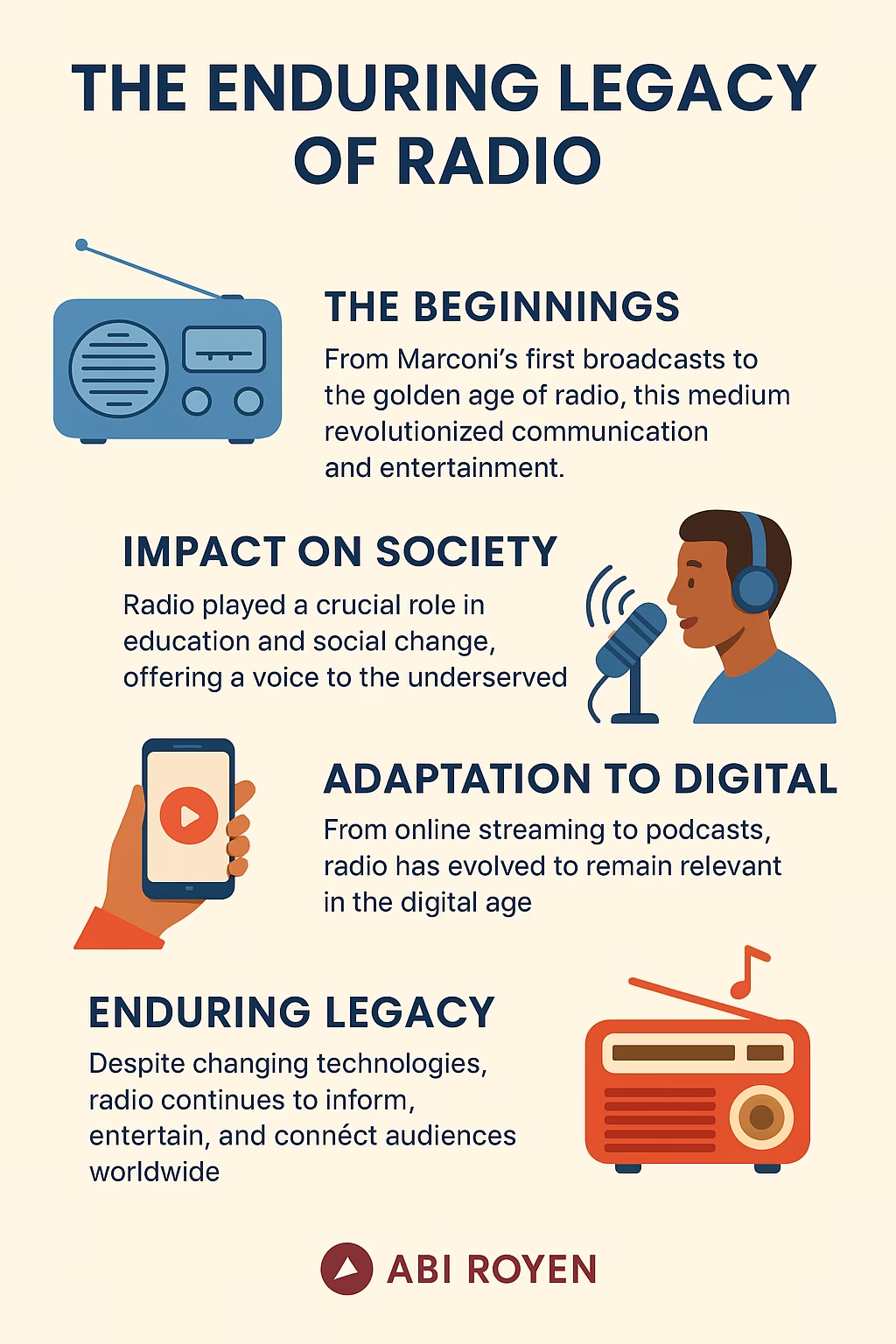
The origins of radio can be traced back to the experiments of Guglielmo Marconi in the 1890s. His pioneering work in wireless telegraphy laid the foundation for voice transmission across vast distances. By the early 20th century, radio broadcasting had become a groundbreaking innovation, revolutionizing communication and entertainment.
The first commercial radio broadcast in 1920 by KDKA in Pittsburgh marked the beginning of a new era. Suddenly, information could be disseminated instantly to millions of people, breaking geographical barriers. Radio became the world’s first true mass communication medium.
Enduring Legacy of Radio: Radio’s Golden Age
From the 1920s to the 1950s, radio experienced its “golden age.” Families gathered around their radio sets in the evenings to listen to dramas, music, news, and sports. It was during this period that radio became a cultural icon, shaping public opinion and providing a shared experience for entire communities.
Radio’s role during World War II further cemented its importance. Leaders like Winston Churchill and Franklin D. Roosevelt used radio broadcasts to inspire and rally their nations. News bulletins delivered via radio became lifelines for people seeking updates in uncertain times.
The Transition to Music and Entertainment
By the 1950s, television emerged as a powerful competitor, drawing audiences away from radio dramas and variety shows. However, instead of fading into obscurity, radio reinvented itself. It shifted focus toward music programming, becoming the dominant platform for discovering new songs and artists.
The rise of rock ‘n’ roll in the 1950s and 1960s owes much to radio DJs, who introduced groundbreaking music to eager listeners. Radio stations became cultural trendsetters, shaping youth identity and influencing fashion, politics, and social movements.
Radio as a Tool for Education and Social Change
Beyond entertainment, radio has played a crucial role in education and social development. In many rural and developing regions, radio remains the most accessible medium, requiring no internet, television, or electricity beyond a simple battery.
Educational programs, public health campaigns, and government announcements often reach millions through radio, making it an indispensable tool for community development. From literacy initiatives in Africa to agricultural advice in Asia, radio empowers people with knowledge and information.
The Digital Transformation of Radio
The 21st century has brought immense challenges and opportunities for traditional media. With the rise of the internet, streaming services, and podcasts, radio once again faced the risk of being overshadowed. But just as it did in the past, radio adapted.
Digital radio, online streaming, and satellite broadcasting have expanded radio’s reach beyond geographical boundaries. Listeners can now tune into stations from around the world with a click. Meanwhile, podcasts—essentially radio’s modern offspring—have exploded in popularity, attracting millions of listeners daily.
Rather than being replaced, radio has evolved into a hybrid medium, blending traditional broadcasting with modern digital platforms.

Why Radio Endures in the Modern Age
Despite being over a century old, radio continues to thrive because of several key factors:
- Accessibility – Radio requires minimal technology and is inexpensive compared to other media.
- Immediacy – It delivers live updates, making it vital during emergencies or breaking news events.
- Local Connection – Local radio stations foster community identity, offering content tailored to regional needs.
- Adaptability – From analog to digital, AM to FM, and now to online platforms, radio adapts to new technologies.
- Human Connection – The voice of a radio presenter provides a personal, intimate touch that algorithms and AI struggle to replicate.
The Cultural Impact of Radio
Radio is not merely a communication tool; it is a cultural force. It has shaped music trends, political movements, and even revolutions. For example:
- The Civil Rights Movement in the United States relied heavily on radio to spread its message.
- Radio has been instrumental in spreading local languages and preserving cultural traditions.
- Popular shows and personalities have created strong listener loyalty, influencing generations.
The Future of Radio
As technology continues to evolve, radio’s future is not about survival but transformation. We are already witnessing:
- Smart integration – Radio accessible through smartphones, smart speakers, and connected cars.
- Podcast boom – Radio-inspired content is flourishing as on-demand audio.
- AI-powered personalization – Radio platforms using AI to recommend content and enhance the listener experience.
- Cross-platform presence – Stations expanding beyond FM/AM to mobile apps, websites, and social media.
The next generation of radio will likely be a fusion of traditional broadcasting and interactive, digital-first experiences.
Conclusion of Enduring Legacy of Radio
The enduring legacy of radio lies in its remarkable ability to adapt to technological, cultural, and societal changes. From Marconi’s first transmissions to today’s global digital platforms, radio has never ceased to be relevant. It continues to inform, entertain, educate, and inspire millions of people around the world.
Far from being outdated, radio is a living testament to the resilience of human communication. Its story reminds us that while technology changes, the need for connection and shared experiences remains constant.