

Choose Ferrite Bead ~ In today’s world of advanced electronics, managing electromagnetic interference (EMI) is critical. Unwanted noise can affect the performance of circuits, degrade signal quality, and even cause complete system failure. One of the most effective yet simple solutions is the use of ferrite beads. These small but powerful components are widely used for noise suppression, improving signal integrity, and protecting sensitive devices.
If you’re designing or troubleshooting an electronic system, learning how to choose the right ferrite bead is essential. This article will guide you through the fundamentals of ferrite beads, their applications, and the step-by-step process for selecting the ideal one for your needs.
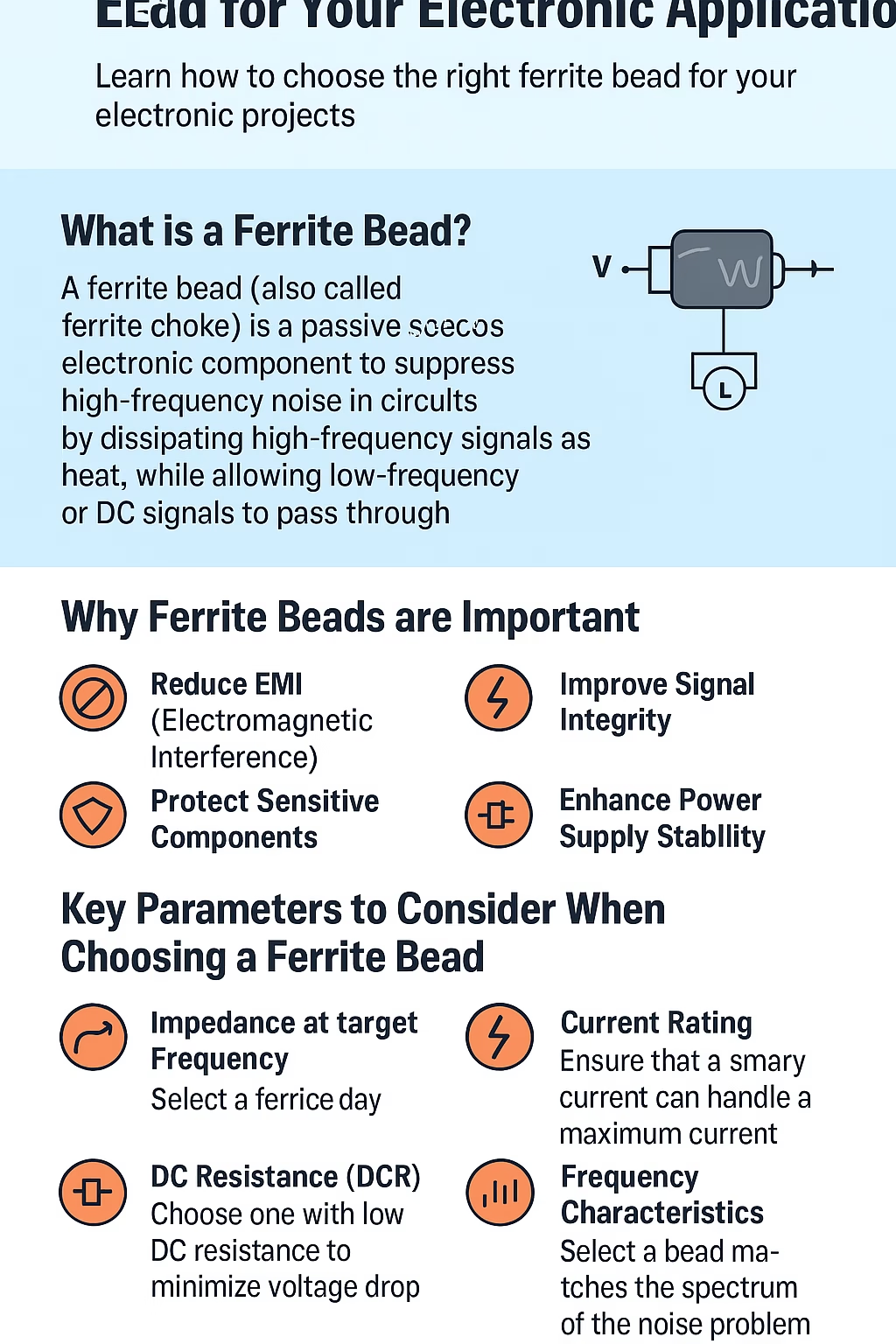
What is a Ferrite Bead?
A ferrite bead (also called a ferrite choke) is a passive electronic component designed to suppress high-frequency noise in electronic circuits. It works by dissipating high-frequency signals as heat, while allowing low-frequency or DC signals to pass through unaffected.
Ferrite beads are typically made of a ceramic-like material called ferrite, which has both magnetic and resistive properties. When placed in series with a signal or power line, the bead acts as a frequency-dependent resistor, providing higher impedance at higher frequencies.
Why Ferrite Beads are Important
Electronics today operate at very high speeds, often switching in the megahertz (MHz) or gigahertz (GHz) range. These rapid transitions can generate EMI that radiates from cables, circuit boards, or components, potentially interfering with other devices.
Ferrite beads are widely used because they:
- Reduce EMI (Electromagnetic Interference) – Essential for regulatory compliance and stable operation.
- Improve Signal Integrity – Suppress noise without distorting the desired signal.
- Protect Sensitive Components – Prevent high-frequency noise from reaching delicate circuits.
- Enhance Power Supply Stability – Minimize noise in power lines for microcontrollers, sensors, and ICs.

Types of Ferrite Beads
Before choosing a ferrite bead, it’s important to understand the main types available:
- Surface-Mount Ferrite Beads (SMD Ferrite Beads)
- Compact and widely used in modern PCBs.
- Ideal for high-density circuit boards.
- Through-Hole Ferrite Beads
- Larger and more robust.
- Commonly used in power circuits or applications requiring higher current handling.
- Ferrite Bead Arrays
- Multiple beads in a single package.
- Useful for filtering multiple lines simultaneously, such as data buses.
- Clip-On Ferrite Beads
- Designed to be attached to cables or wires.
- Commonly used for external EMI suppression in consumer electronics.
Key Parameters to Consider When Choose Ferrite Bead
Selecting the right ferrite bead requires analyzing several factors. Here are the most important considerations:
1. Impedance at Target Frequency
The primary function of a ferrite bead is to provide high impedance at the frequency of unwanted noise.
- Example: If your noise is around 100 MHz, choose a ferrite bead with a significant impedance at that frequency.
2. Current Rating
Ensure the bead can handle the maximum current of your circuit without overheating or saturating.
3. DC Resistance (DCR)
Ferrite beads introduce a small resistance in the circuit. Choose one with low DCR to minimize voltage drop in power applications.
4. Frequency Characteristics
Different ferrite materials are optimized for different frequency ranges. Select a bead that matches the spectrum of your noise problem.
5. Package Type
- Use SMD ferrite beads for compact PCBs.
- Choose clip-on ferrite beads for cables.
6. Application-Specific Needs
- For power supply filtering, prioritize high current rating and low DCR.
- For signal lines, prioritize impedance at the operating frequency.
Applications of Ferrite Beads
Ferrite beads are used across a wide range of applications:
- Power Supplies – To suppress switching noise from DC-DC converters.
- Microcontrollers & ICs – To protect digital circuits from high-frequency interference.
- Communication Devices – To improve RF performance in smartphones, radios, and IoT devices.
- Audio Equipment – To eliminate high-frequency hum or interference.
- Cables & Wires – To reduce radiated EMI in USB, HDMI, or Ethernet cables.
Step-by-Step Guide: How to Choose Ferrite Bead
- Identify the Noise Frequency
- Use an oscilloscope or spectrum analyzer to detect EMI.
- Determine the Current Requirement
- Measure the current passing through the line where the bead will be placed.
- Select the Target Impedance
- Choose a ferrite bead with high impedance at your noise frequency.
- Check DC Resistance
- Ensure minimal voltage drop in power circuits.
- Match the Package to Your Design
- Pick SMD, through-hole, or clip-on based on your PCB or cable design.
- Test and Validate
- Always test the ferrite bead in the real circuit environment to confirm performance.
Common Mistakes When Choose Ferrite Bead
- Overlooking Current Rating – Can lead to overheating and failure.
- Choosing the Wrong Frequency Range – Ineffective noise suppression.
- Ignoring DC Resistance – May cause unwanted voltage drops.
- Assuming One Size Fits All – Each circuit has unique noise characteristics.
Future of Ferrite Beads in Electronics
As devices become faster and more compact, EMI control will remain critical. Ferrite bead technology continues to evolve with improved materials and higher performance designs. Engineers can expect more efficient beads tailored for high-speed digital applications, 5G communications, and advanced automotive systems.
Conclusion of Choose Ferrite Bead
Choosing the right ferrite bead is crucial for maintaining the performance and reliability of electronic circuits. By considering impedance, current rating, DC resistance, and frequency characteristics, you can effectively suppress EMI and improve signal integrity.
Whether you are designing a compact PCB, troubleshooting noise in audio equipment, or reducing interference in power supplies, ferrite beads offer a simple yet powerful solution.
When in doubt, test different beads and consult manufacturer datasheets to ensure the best fit for your application.