

Introduction of Advantages of Using Thyristors
Advantages of Using Thyristors ~ In the fast-evolving world of power electronics, semiconductor devices play a critical role in ensuring efficiency, reliability, and performance across countless applications. Among these devices, the thyristor stands out as one of the most widely used components for controlling high voltages and currents. Also known as a Silicon Controlled Rectifier (SCR), the thyristor has been an essential building block in industrial automation, energy management, consumer electronics, and renewable energy systems.
This article explores the main advantages of using thyristors, highlighting why they remain a popular choice in various modern electronic systems.
What is a Thyristor?
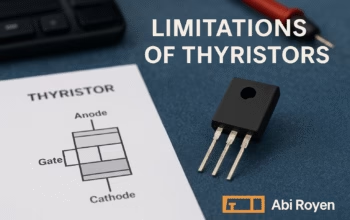
A thyristor is a solid-state semiconductor device with four layers of alternating P- and N-type materials (PNPN structure). It acts as a switch that can conduct when a small triggering signal is applied to its gate terminal. Once triggered, the device continues to conduct until the current falls below a certain threshold.
Because of this behavior, thyristors are ideal for controlling large amounts of power with a relatively small input signal. They are commonly used in power regulation, rectification, and motor control applications.
Key Advantages of Using Thyristors
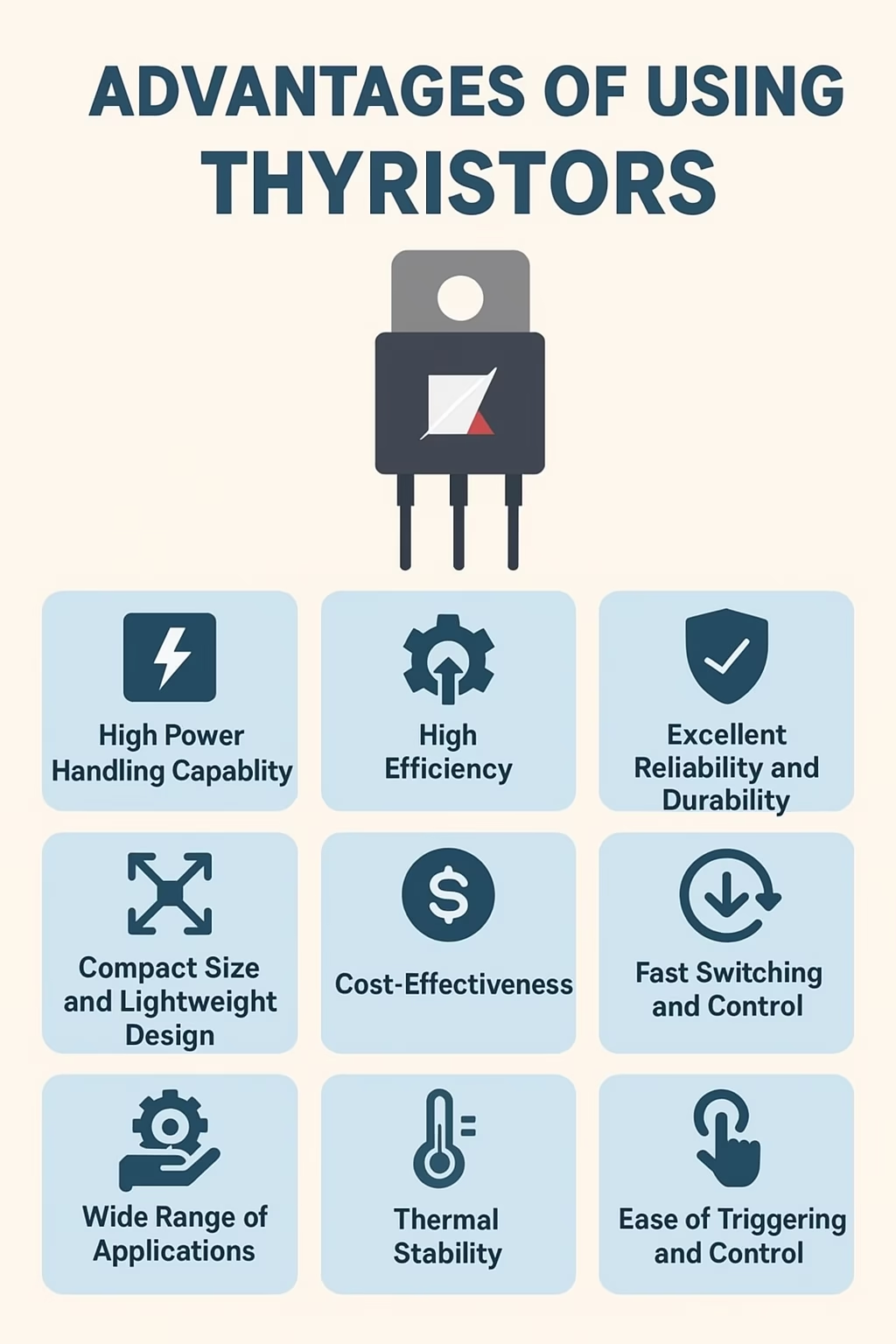
1. High Power Handling Capability
One of the most important advantages of thyristors is their ability to handle extremely high voltages and currents. Unlike transistors, which are typically limited to lower power ranges, thyristors are designed to operate in high-power circuits. This makes them particularly useful in applications such as:
- Industrial motor drives
- High-voltage direct current (HVDC) power transmission
- Welding equipment
- Power conversion systems
Their robustness allows them to be used in demanding environments where reliability is crucial.
2. Advantages of Using Thyristors: High Efficiency
Thyristors are known for their low conduction losses once turned on. When in the conducting state, they exhibit very low resistance, minimizing energy losses and improving system efficiency.
This efficiency is especially valuable in applications like renewable energy systems (solar and wind power) and electric vehicles, where minimizing energy waste is critical.
3. Advantages of Using Thyristors: Excellent Reliability and Durability
Due to their solid-state construction, thyristors have no moving parts, which makes them highly reliable and durable over long operating lifetimes. They are capable of functioning in harsh conditions, including high temperatures and high voltages.
This reliability is why thyristors are often chosen in critical systems, such as power grids and industrial machinery, where equipment failure could result in significant downtime and financial loss.
4. Compact Size and Lightweight Design
Compared to traditional electromechanical switches and relays, thyristors are much more compact and lightweight. This enables designers to build smaller and more efficient power control systems without compromising performance.
Compact size is especially beneficial in consumer electronics, where space-saving components allow for slimmer and lighter devices.
5. Advantages of Using Thyristors: Cost-Effectiveness
Thyristors are relatively inexpensive to manufacture compared to other power electronic devices. Their cost-effectiveness makes them a popular choice for mass production and widespread use in different industries.
For instance, applications such as light dimmers, power regulators, and controlled rectifiers can be produced economically thanks to the affordability of thyristors.
6. Fast Switching and Control
While not as fast as modern transistors like IGBTs or MOSFETs, thyristors still offer sufficiently fast switching speeds for many high-power applications. Their ability to rapidly switch large amounts of current on and off makes them suitable for:
- AC voltage regulation
- Motor speed control
- Induction heating systems
This capability ensures accurate power delivery and smooth performance in dynamic systems.
7. Advantages of Using Thyristors: Wide Range of Applications
The versatility of thyristors is another major advantage. They can be used in:
- Power Control Systems: Light dimmers, heater controls, and fan speed regulators
- Motor Drives: Industrial motors, elevators, and electric trains
- Power Transmission: HVDC and flexible AC transmission systems (FACTS)
- Renewable Energy: Solar inverters and wind turbine controllers
- Consumer Electronics: Household appliances requiring controlled power
This broad range of applications ensures that thyristors remain highly relevant despite advancements in alternative semiconductor technologies.

8. Ability to Handle Surge Currents
Thyristors are capable of withstanding high surge currents, which is particularly important in applications like rectifiers and uninterruptible power supplies (UPS). This makes them robust in scenarios where power spikes and fluctuations are common.
9. Advantages of Using Thyristors: Thermal Stability
Many thyristors are designed to maintain stability under high operating temperatures. This thermal robustness makes them reliable in heavy-duty industrial environments where overheating could be a concern.
10. Ease of Triggering and Control
Thyristors require only a small gate current to trigger conduction. This makes them easy to control, especially when integrated with microcontrollers or other digital control systems.
This advantage simplifies system design, allowing engineers to use thyristors in automated and programmable power systems.
Comparison with Other Power Devices
While modern devices like MOSFETs and IGBTs are often favored in high-frequency applications, thyristors continue to dominate in high-power, low-frequency systems due to their superior power handling, cost-effectiveness, and ruggedness.
- MOSFETs → Better for high-frequency switching but limited in power handling.
- IGBTs → Suitable for medium- to high-power applications but more expensive.
- Thyristors → Best for cost-effective, high-power, and reliable control.
This comparison highlights why thyristors remain indispensable in certain industries.
Future of Thyristors
Despite competition from advanced semiconductor technologies, thyristors will continue to play a vital role in power transmission, industrial control, and renewable energy. Their combination of simplicity, reliability, and cost-effectiveness ensures they remain relevant for decades to come.
As the demand for sustainable energy grows, thyristors will likely see expanded use in smart grids, electric vehicles, and energy-efficient systems.
Conclusion of Advantages of Using Thyristors
The advantages of using thyristors—including their high power handling capability, efficiency, durability, cost-effectiveness, and wide application range—make them one of the most reliable semiconductor devices in the field of power electronics.
From industrial automation to renewable energy, thyristors continue to support innovation and efficiency across multiple industries. Their proven reliability and performance ensure that, even as technology evolves, thyristors remain a cornerstone of modern electronics.