Ship’s equipment ~ Maritime transportation plays a vital role in global trade, logistics, and exploration. At the core of every sea voyage is the vessel and its intricate systems of tools and machinery—commonly referred to as ship’s equipment. These components are essential for navigation, safety, cargo handling, communication, propulsion, and various operations at sea.
This article offers an in-depth exploration of ship’s equipment, covering their types, functions, and why they are indispensable in marine engineering and maritime safety.
1. What is Ship’s Equipment?
Ship’s equipment encompasses all the tools, devices, machines, and systems installed or carried onboard a vessel to facilitate its safe and efficient operation. It includes everything from navigational aids to firefighting systems and deck machinery.
Generally, ship’s equipment is categorized into:
- Navigational Equipment
- Deck Equipment
- Engine Room Equipment
- Safety and Life-Saving Equipment
- Communication Systems
- Cargo Handling Equipment
Each category serves specific roles that collectively ensure seaworthiness, operational efficiency, and regulatory compliance.
Read More about
2. Ship’s Equipment: Navigational
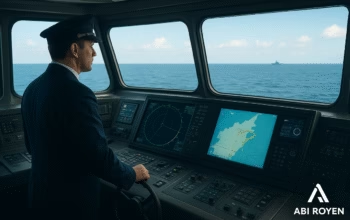
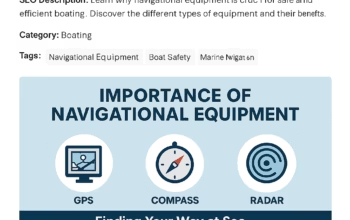
Navigational equipment helps seafarers determine the ship’s position, course, speed, and surrounding environmental conditions. These instruments are essential for ensuring safe passage across different waters.
Key Navigational Equipment Includes:
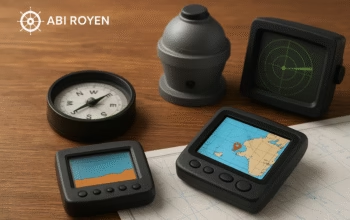
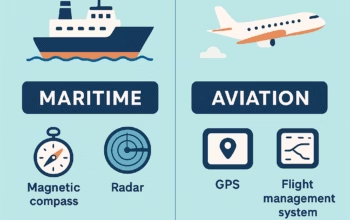
- Radar: Detects nearby objects and other vessels using radio waves.
- GPS (Global Positioning System): Offers accurate geographical positioning and route planning.
- Magnetic Compass and Gyrocompass: Used to determine direction.
- Echo Sounder: Measures depth below the keel to avoid grounding.
- Automatic Identification System (AIS): Shares vessel identity, position, and speed with nearby ships.
- Electronic Chart Display and Information System (ECDIS): Digital navigation chart display that replaces paper charts.
Read More about Navigational Equipment: Types, Functions, and Importance on Modern Ships
3. Ship’s Equipment: Deck Equipment
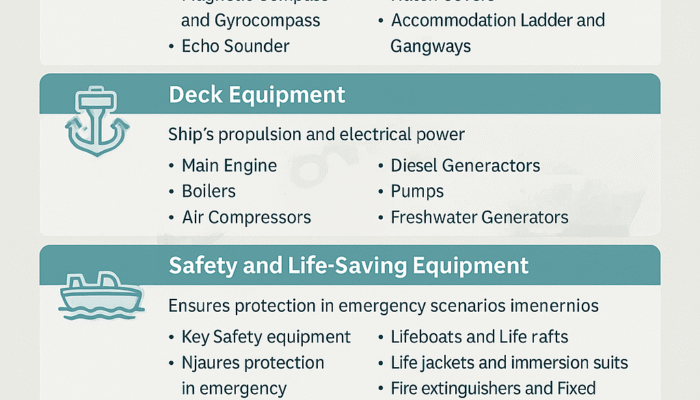
Deck equipment consists of all mechanical and support systems used on the deck for mooring, anchoring, and cargo handling.
Common Deck Equipment Includes:
- Windlass and Capstan: Used to lift and control the anchor and mooring lines.
- Cranes and Davits: Facilitate cargo loading and lifeboat deployment.
- Winches: Assist with pulling or lifting heavy loads.
- Hatch Covers: Provide weather-tight sealing for cargo holds.
- Accommodation Ladder and Gangways: Allow crew to board or disembark safely.
These tools enhance a vessel’s ability to perform port operations and secure the ship at sea or dock.
Read More about Ship’s Deck Equipment: Types, Functions, and Importance in Maritime Operations
4. Ship’s Equipment: Engine Room
The engine room houses the machinery responsible for the ship’s propulsion and electrical power.
Major Engine Room Equipment Includes:
- Main Engine: The primary power source for ship movement.
- Diesel Generators: Produce electricity to power all onboard systems.
- Boilers: Generate steam for heating and auxiliary systems.
- Air Compressors: Supply compressed air for engine starting and tools.
- Pumps: Used for ballast water management, fuel transfer, bilge emptying, and firefighting.
- Freshwater Generators: Convert seawater into fresh water through distillation or reverse osmosis.
Proper maintenance of engine room equipment is vital to avoid mechanical failures during voyages.
Read More about Engine Room Equipment: A Complete Guide for Marine Engineering
5. Safety and Life-Saving Equipment
Safety equipment is regulated under the SOLAS Convention (Safety of Life at Sea). It ensures that crew and passengers are protected in emergency scenarios.
Key Safety Equipment:
- Lifeboats and Life Rafts: Used for emergency evacuation.
- Life Jackets and Immersion Suits: Provide flotation and thermal protection.
- Fire Extinguishers and Fixed Fire Suppression Systems: Combat onboard fires.
- Emergency Position Indicating Radio Beacon (EPIRB): Sends distress signals to rescue services.
- Fire Detection Systems: Monitor smoke or heat in various compartments.
These systems are routinely inspected and tested to ensure compliance and readiness.
Read More about Safety and Life-Saving Equipment: Essential Tools for Protection and Emergency Preparedness
6. Communication Equipment
Communication equipment on ships ensures that the vessel maintains contact with ports, other vessels, and maritime authorities.
Essential Communication Tools:
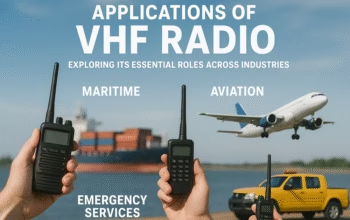
- VHF Radio: Used for short-range voice communication with nearby ships and harbor control.
- MF/HF Radio: Enables long-distance communication, including distress signals.
- Satellite Phones and Internet Systems: Offer global connectivity and data services.
- GMDSS (Global Maritime Distress and Safety System): A standardized system for automated emergency communication.
Read More about Communication Equipment on Ships: Ensuring Safety and Connectivity at Sea
7. Cargo Handling Equipment
Cargo handling tools vary based on the type of ship (e.g., bulk carrier, container ship, tanker).
Examples:
- Container Cranes and Spreaders: Lift and move standardized cargo containers.
- Pipelines and Manifolds (for Tankers): Transfer liquid cargo safely.
- Conveyor Belts (for Bulk Carriers): Automate loading/unloading of loose materials.
- Grabs and Hooks: Facilitate material handling in port operations.
These equipment types boost operational efficiency and minimize port turnaround time.
Read More about Cargo Handling Equipment: Types, Functions, and Importance in Modern Logistics
8. Importance of Ship’s Equipment
✅ Safety
Proper equipment ensures the safety of crew, cargo, and the vessel. Without navigational and life-saving systems, ships are vulnerable to accidents and disasters.
✅ Regulatory Compliance
International conventions such as SOLAS, MARPOL, and ISM Code mandate specific equipment onboard, requiring periodic inspection and certification.
✅ Efficiency
Advanced tools reduce manual labor, improve time management, and ensure smoother sailing and cargo operations.
✅ Cost Savings
Effective use and maintenance of onboard equipment help prevent costly repairs, delays, and legal penalties.
Read More about The Importance of Ship’s Equipment for Safe and Efficient Maritime Operations
9. Emerging Trends in Ship’s Equipment
Maritime technology is constantly evolving. Recent innovations include:
- Autonomous navigation systems
- Green energy equipment (wind-assisted propulsion, hybrid engines)
- Smart sensors and condition monitoring tools
- Ballast Water Treatment Systems (BWTS)
These technologies are designed to improve sustainability and comply with stricter environmental regulations.
Read More about Emerging Trends in Ship’s Equipment: The Future of Maritime Technology
Conclusion of Ship’s Equipment
Ship’s equipment is the backbone of maritime operations. From ensuring navigational accuracy to saving lives in emergencies, each tool plays a unique role. Whether it’s a deck winch or an advanced radar system, understanding and maintaining ship’s equipment is essential for marine professionals.
For shipowners, engineers, and enthusiasts, knowing these components and their functions offers insight into the complex ecosystem that keeps the global maritime industry afloat.