
In modern electrical and electronic systems, voltage surges are a constant threat that can damage sensitive components, reduce system reliability, and cause costly downtime. Two critical devices used to combat this problem are Surge resistors / varistors. These components play a vital role in protecting circuits from transient overvoltage events caused by lightning strikes, switching operations, and sudden load changes.
This article will explore the definition, working principles, types, advantages, and applications of surge resistors and varistors, along with best practices for selection and installation.
1. What Are Surge Resistors / Varistors?
1.1 Surge Resistors
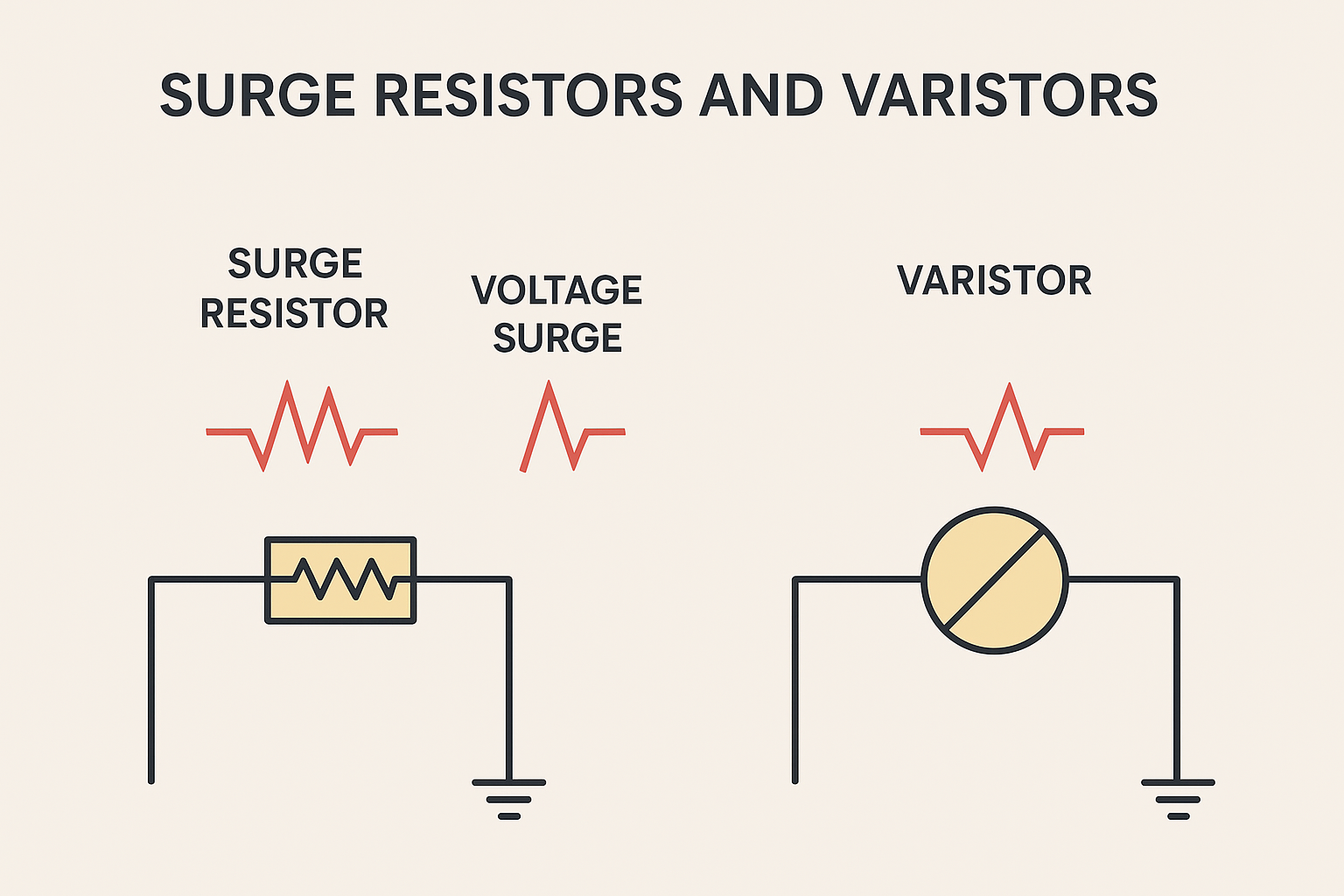
A surge resistor is a type of resistor designed to limit the inrush current or voltage spikes in an electrical circuit. By adding resistance in the path of the surge, it reduces the peak current and protects connected devices from sudden electrical stress.
Surge resistors are often made from materials that can absorb and dissipate high energy without damage, such as metal oxide or carbon composition.
Key Functions:
- Limiting high inrush current
- Reducing voltage transients
- Protecting sensitive components from damage
1.2 Varistors
A varistor (variable resistor) is a voltage-dependent resistor whose resistance decreases significantly when the voltage exceeds a certain threshold. The most common type is the Metal Oxide Varistor (MOV), made primarily from zinc oxide.
Varistors act like an open circuit at normal operating voltage but become conductive when exposed to an overvoltage event, shunting excess energy away from sensitive components.
Key Functions:
- Clamping overvoltage to safe levels
- Protecting circuits from lightning strikes and switching surges
- Enhancing the longevity of electrical systems
2. How Surge Resistors / Varistors Work
2.1 Surge Resistor Working Principle
When a voltage surge occurs, the surge resistor absorbs part of the energy and limits the instantaneous current entering the circuit. The resistor’s material and value are chosen to withstand high-energy pulses without excessive heating or damage.
Example:
In motor control circuits, surge resistors protect switching devices like IGBTs from high current during startup.
2.2 Varistor Working Principle
Varistors exhibit non-linear resistance characteristics. At normal voltage, they have high resistance, but when the voltage rises above the clamping voltage, their resistance drops sharply, allowing them to divert surge energy to the ground.
Example:
In power supply units, MOVs protect the input stage from sudden voltage spikes on the AC mains.
3. Key Specifications Surge Resistors / Varistors
When choosing a surge resistor or varistor, important parameters include:
For Surge Resistors:
- Resistance Value (Ω) – Determines the level of current limitation
- Pulse Energy Rating (Joules) – Maximum energy absorption without damage
- Surge Current Rating – Peak current it can handle in a single event
- Tolerance – Accuracy of resistance value
For Varistors:
- Clamping Voltage (V) – Voltage at which the varistor starts conducting
- Energy Absorption (J) – Maximum energy it can absorb in a single surge
- Response Time (ns) – How fast it reacts to a surge (typically < 25 ns)
- Maximum Continuous Voltage – Voltage it can handle continuously without degradation
4. Types of Surge Resistors / Varistors
4.1 Types of Surge Resistors
- Carbon Composition Surge Resistors – High pulse energy capacity
- Metal Film Surge Resistors – Better accuracy and stability
- Wire-Wound Surge Resistors – Suitable for high-power surge handling
- Non-Inductive Surge Resistors – Used in high-frequency applications
4.2 Types of Varistors
- Metal Oxide Varistors (MOVs) – Most common type for AC and DC protection
- Silicon Carbide Varistors – Higher surge energy capacity, older technology
- Multilayer Varistors (MLVs) – Surface-mount types for PCB-level protection
5. Applications of Surge Resistors / Varistors
5.1 Surge Resistors Applications
- Motor starters and inverters
- Power supply inrush current limitation
- Protection of LED drivers
- Surge absorption in high-voltage test equipment
5.2 Varistors Applications
- AC mains surge protection
- Telecommunication equipment protection
- Lightning protection in outdoor electronics
- Circuit boards for consumer electronics
6. Advantages and Limitations of Surge Resistors / Varistors
Advantages of Surge Resistors:
- Simple and cost-effective
- Can handle high energy surges
- Improve equipment lifespan
Limitations:
- Continuous resistance causes slight power loss
- Limited surge protection compared to active devices
Advantages of Varistors:
- Very fast response time
- Effective over a wide range of voltages
- No effect on normal circuit operation
Limitations:
- Degrades over time with repeated surges
- Limited energy handling compared to gas discharge tubes
7. Best Practices for Selection and Installation
- Choose a device rated higher than the system’s maximum operating voltage but below the maximum safe voltage for the protected equipment.
- Ensure proper energy rating to handle worst-case surge events.
- Place surge protection devices as close as possible to the entry point of the surge.
- Use fuses or thermal disconnects in series with varistors for added safety.
8. Surge Resistors / Varistors in Industrial Settings
In industrial environments, voltage surges are more common due to heavy machinery, large motors, and frequent switching operations. Surge resistors and varistors are often used together in multi-stage protection systems to provide both energy dissipation and voltage clamping.
For example:
- Stage 1: MOVs for high-energy surge suppression
- Stage 2: Surge resistors for inrush current limiting
- Stage 3: Capacitors for noise filtering
This combination ensures comprehensive protection against both short and long-duration overvoltage events.
Conclusion
Surge resistors and varistors are essential components in modern electrical and electronic systems. While surge resistors limit current during inrush or transient events, varistors provide rapid voltage clamping during overvoltage conditions.
By understanding their working principles, specifications, and applications, engineers can design more robust systems that are resilient against voltage surges, reducing downtime and extending the lifespan of equipment.