
Introduction
The Automatic Identification System (AIS) is a critical technology in the maritime industry, designed to improve vessel tracking, navigation, and safety at sea. Since its implementation, AIS has become a standard communication and navigation tool for ships worldwide, allowing vessels to exchange vital information such as identity, position, speed, and course. This real-time data exchange not only enhances maritime traffic management but also helps prevent collisions and supports search and rescue operations.
In this article, we will explore what AIS is, how it works, its importance in modern navigation, its applications, and the future developments in AIS technology.
What is Automatic Identification System (AIS)?
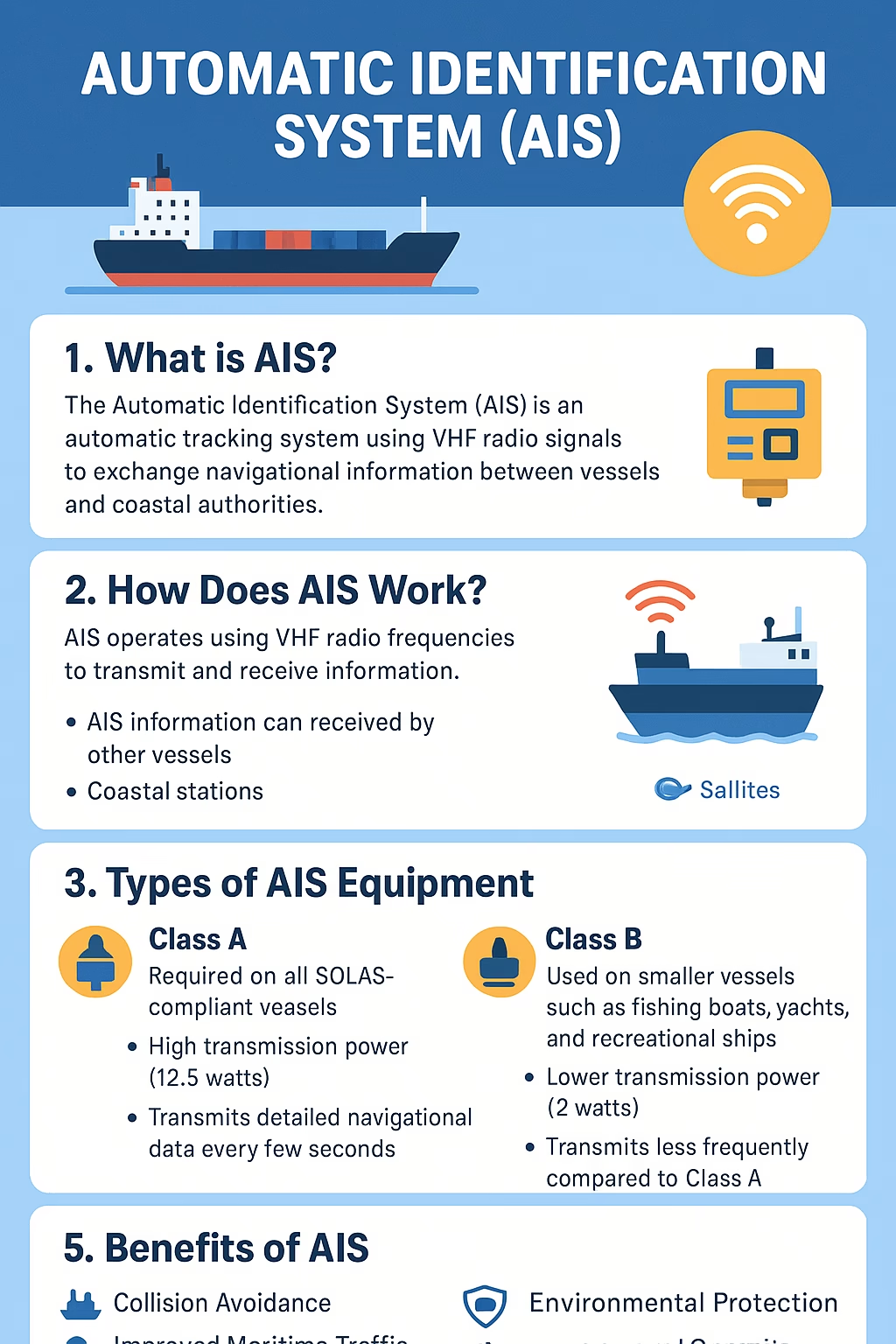
The Automatic Identification System (AIS) is an automatic tracking system that uses VHF radio signals to exchange navigational information between vessels and coastal authorities. AIS transponders installed on ships automatically transmit data such as:
- Vessel name and identification number
- Maritime Mobile Service Identity (MMSI)
- Position (latitude and longitude)
- Course and speed over ground
- Heading and navigational status
- Destination and estimated time of arrival (ETA)
This information can be received by other vessels, base stations, and satellites, ensuring that ships are visible to each other even in poor visibility conditions.
History and Development of Automatic Identification System (AIS)
AIS was first introduced by the International Maritime Organization (IMO) as part of the International Convention for the Safety of Life at Sea (SOLAS) requirements. Since December 2004, most commercial vessels over 300 gross tonnage engaged in international voyages are required to carry AIS transponders.
The development of AIS was driven by the need to improve maritime safety, reduce collisions, and enhance traffic management in congested waterways. Over time, AIS has also become a vital tool for environmental monitoring, fisheries management, and defense operations.
How Does Automatic Identification System (AIS) Work?
AIS operates using VHF radio frequencies to transmit and receive information. Ships equipped with an AIS transponder continuously send their navigational details in short bursts of digital data, which can be received by:
- Other Vessels: Helping ships avoid collisions by providing real-time awareness of nearby traffic.
- Coastal Stations: Allowing port authorities and traffic controllers to monitor maritime movements.
- Satellites (Satellite AIS or S-AIS): Extending the coverage of AIS beyond coastal areas into open oceans.
AIS signals typically have a range of 20–30 nautical miles when received by coastal stations, but satellite AIS enables global tracking.
Types of AIS Equipment
There are two main classes of AIS transponders:
1. Class A AIS
- Required on all SOLAS-compliant vessels.
- Provides high transmission power (12.5 watts).
- Transmits detailed navigational data every few seconds.
- Designed for large commercial ships.
2. Class B AIS
- Used on smaller vessels such as fishing boats, yachts, and recreational ships.
- Lower transmission power (2 watts).
- Transmits less frequently compared to Class A.
- Affordable and suitable for non-commercial use.
Other AIS-related devices include AIS base stations, AIS receivers, and satellite AIS terminals.
Benefits of Automatic Identification System (AIS) in Maritime Navigation
1. Collision Avoidance
AIS provides real-time information about nearby vessels, helping ship navigators assess potential collision risks and take preventive actions.
2. Improved Maritime Traffic Management
Port authorities use AIS data to manage vessel movements in busy shipping lanes, reducing congestion and improving efficiency.
3. Search and Rescue Operations
AIS can transmit distress alerts and vessel details, enabling faster response in emergencies.
4. Environmental Monitoring
AIS data is increasingly used for tracking illegal fishing, pollution control, and monitoring ships in environmentally sensitive areas.
5. Law Enforcement and Defense
Coast guards and naval forces use AIS for border security, anti-smuggling operations, and surveillance.
Applications of Automatic Identification System (AIS) Technology
- Commercial Shipping – Ensures compliance with international safety standards and supports efficient fleet management.
- Fishing Industry – Helps authorities monitor fishing activities and prevent illegal, unreported, and unregulated (IUU) fishing.
- Recreational Boating – Enhances safety for yachts and smaller vessels.
- Port and Harbor Management – Facilitates better scheduling and traffic control.
- Environmental Protection – Enables tracking of vessels in marine protected areas.
- Defense and Security – Provides situational awareness for maritime surveillance.
AIS vs Radar: What’s the Difference?
While AIS and radar are both used for vessel detection and navigation, they serve different purposes:
- Radar detects objects by bouncing radio waves off them, providing distance and bearing but not vessel identity.
- AIS provides detailed vessel information but requires the other ship to be equipped with a transponder.
For maximum safety, modern ships use AIS in combination with radar and electronic chart display systems (ECDIS).
Future of Automatic Identification System (AIS) Technology
With advancements in satellite communication and big data analytics, AIS technology continues to evolve. Key future trends include:
- Integration with IoT and Smart Shipping Systems
- AI-powered maritime traffic prediction
- Enhanced satellite AIS for global coverage
- Cybersecurity improvements to protect AIS data from spoofing or hacking
The integration of AIS with other navigation and monitoring systems will further strengthen maritime safety and efficiency.
Conclusion
The Automatic Identification System (AIS) has transformed maritime navigation by providing real-time information sharing between ships, coastal stations, and satellites. Its role in collision avoidance, traffic management, search and rescue, environmental protection, and defense makes AIS an indispensable tool in the modern maritime industry.
As shipping activities continue to grow globally, AIS technology will remain at the forefront of ensuring safe, efficient, and environmentally responsible navigation at sea.