Introduction of Integrated Bridge Systems (IBS)
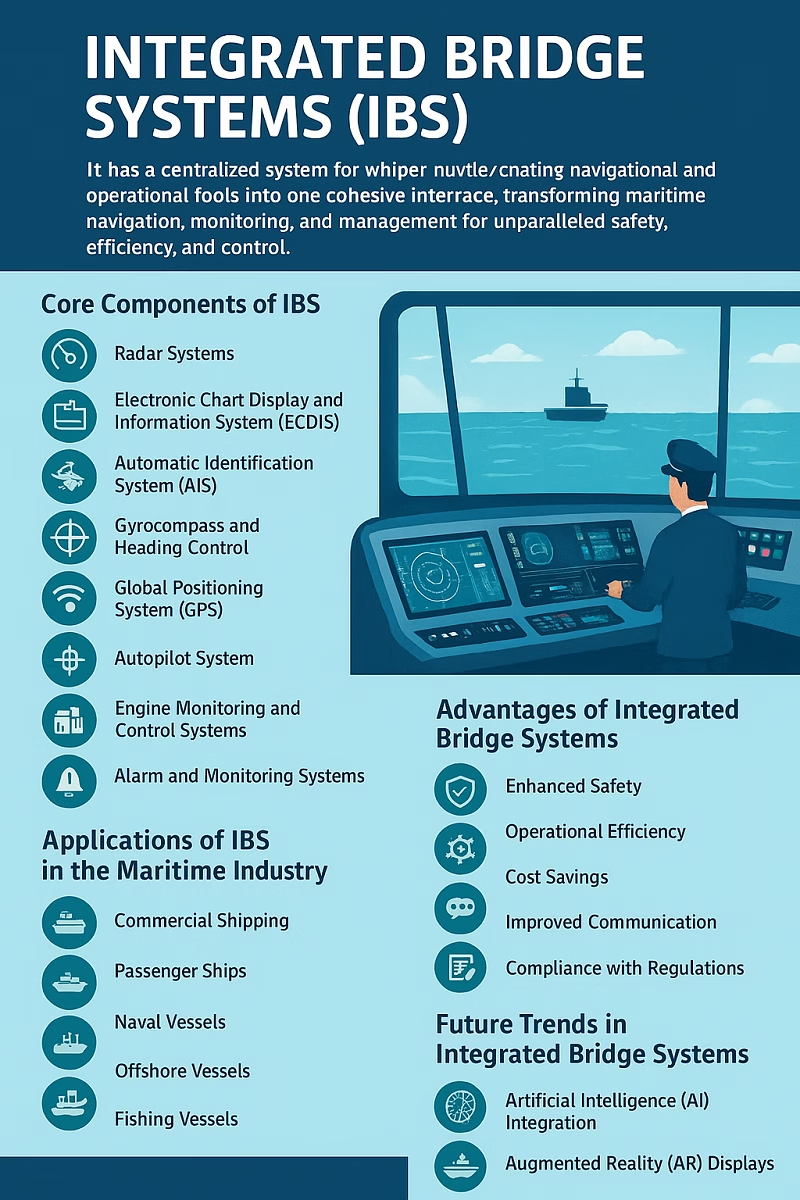
Modern maritime navigation has evolved dramatically with the integration of advanced digital systems. Among the most significant innovations is the Integrated Bridge Systems (IBS), a centralized system that unifies multiple navigational and operational tools into one cohesive interface. IBS has transformed how ships are navigated, monitored, and managed, offering unparalleled safety, efficiency, and control.
This article explores the components, functions, applications, and advantages of IBS in the maritime industry, as well as the regulatory frameworks and future trends shaping its development.
What is an Integrated Bridge System (IBS)?
An Integrated Bridge System (IBS) is a network of interconnected navigational and communication equipment on a ship, designed to streamline ship control and improve decision-making for the crew. By integrating radar, electronic chart display, autopilot, communication, and engine control systems, IBS provides a comprehensive and centralized control interface.
The International Maritime Organization (IMO) defines IBS as a system that supports the decision-making process in ship navigation by integrating data from various sources and ensuring smooth operation.
Core Components of Integrated Bridge Systems (IBS)
IBS consists of several subsystems, each essential for safe navigation and vessel management.
- Radar Systems
- Detects and tracks vessels, landmasses, and potential obstacles.
- Provides collision avoidance support.
- Electronic Chart Display and Information System (ECDIS)
- Replaces paper charts with digital navigation maps.
- Allows route planning and monitoring with real-time updates.
- Automatic Identification System (AIS)
- Transmits and receives vessel information such as position, speed, and course.
- Enhances situational awareness and communication between ships.
- Gyrocompass and Heading Control
- Provides accurate heading information to autopilot and radar systems.
- Global Positioning System (GPS)
- Ensures precise vessel positioning for safe navigation.
- Autopilot System
- Automates steering to maintain a set course.
- Reduces crew workload and increases efficiency.
- Engine Monitoring and Control Systems
- Displays real-time data about propulsion systems.
- Allows integration with navigation for optimal fuel efficiency.
- Alarm and Monitoring Systems
- Alerts crew to potential hazards or system malfunctions.
Functions and Capabilities of Integrated Bridge Systems (IBS)
IBS is designed to integrate and coordinate maritime operations through the following key functions:
- Navigation and Route Planning: Provides efficient route planning using ECDIS and GPS data.
- Collision Avoidance: Combines radar, AIS, and alarms to reduce the risk of accidents.
- Vessel Monitoring: Monitors propulsion, fuel systems, and safety devices in real-time.
- Data Integration: Centralizes information from different systems for quick decision-making.
- Automation: Reduces manual tasks by automating navigation, communication, and control functions.
- Safety Enhancement: Early warning alarms and redundancy features ensure operational reliability.
Advantages of Integrated Bridge Systems (IBS)
The adoption of IBS in maritime operations brings numerous benefits:
- Enhanced Safety
- Minimizes human error through automation and alarms.
- Improves collision avoidance with integrated radar and AIS.
- Operational Efficiency
- Streamlined control reduces crew workload.
- Optimized navigation helps reduce fuel consumption.
- Cost Savings
- Reduced crew requirements and lower operational risks.
- Efficient fuel management lowers operating expenses.
- Improved Communication
- Seamless interaction between crew, shore, and other vessels.
- Real-time data sharing enhances coordination.
- Compliance with Regulations
- Meets IMO and SOLAS requirements for navigational safety.
Applications of Integrated Bridge Systems (IBS) in the Maritime Industry
IBS is widely used across different types of vessels:
- Commercial Shipping: Container ships, bulk carriers, and oil tankers use IBS to manage long voyages and complex operations.
- Passenger Ships: Cruise ships rely on IBS for passenger safety and route efficiency.
- Naval Vessels: Military ships integrate IBS with defense systems for advanced situational awareness.
- Offshore Vessels: Support vessels in oil and gas operations benefit from precise navigation and positioning.
- Fishing Vessels: IBS assists in efficient navigation and resource management.
Regulatory Framework and Standards
IBS design and operation are guided by international regulations to ensure maritime safety:
- International Maritime Organization (IMO): Sets safety and operational standards for IBS.
- SOLAS (Safety of Life at Sea Convention): Requires ships to maintain advanced navigational systems.
- IEC (International Electrotechnical Commission): Defines technical standards for IBS integration.
These regulations ensure interoperability, safety, and reliability of IBS across vessels worldwide.
Challenges of Integrated Bridge Systems (IBS) Implementation
While IBS offers numerous benefits, there are also challenges:
- High Installation Costs: Advanced IBS systems require significant capital investment.
- Cybersecurity Risks: As IBS is highly digital, it is vulnerable to cyberattacks.
- Training Requirements: Crew members need specialized training to operate IBS effectively.
- Maintenance Complexity: Integrated systems require advanced technical support.
Future Trends in Integrated Bridge Systems
The future of IBS is evolving with emerging technologies:
- Artificial Intelligence (AI) Integration
- AI can enhance predictive navigation and automated decision-making.
- Augmented Reality (AR) Displays
- Overlay real-time data onto bridge windows for better situational awareness.
- Autonomous Ships
- IBS will play a critical role in enabling semi- or fully autonomous vessels.
- Cybersecurity Enhancements
- Stronger protocols will protect IBS from digital threats.
- Green Shipping Support
- IBS will help optimize routes to reduce emissions and fuel usage.
Conclusion
The Integrated Bridge System (IBS) is a cornerstone of modern maritime navigation, combining automation, digital integration, and safety features to enhance vessel operations. With the rise of AI, AR, and autonomous technologies, IBS is expected to become even more advanced, shaping the future of global shipping.
For ship operators, investing in IBS means improved safety, compliance with international regulations, and long-term cost efficiency. As maritime challenges grow, IBS will remain an essential tool in navigating the seas securely and sustainably.