The automotive industry is one of the most dynamic and innovative sectors in the global economy. Over the past century, cars have evolved from simple mechanical machines to highly sophisticated systems that integrate advanced electronics, artificial intelligence, and digital connectivity. As we step further into the 21st century, the automotive industry is experiencing a significant transformation driven by new technologies, environmental regulations, and changing consumer preferences.
This article explores the latest trends, innovations, challenges, and opportunities in the automotive industry, giving a comprehensive look into what the future holds for manufacturers, suppliers, and consumers alike.
1. Evolution of the Automotive Industry
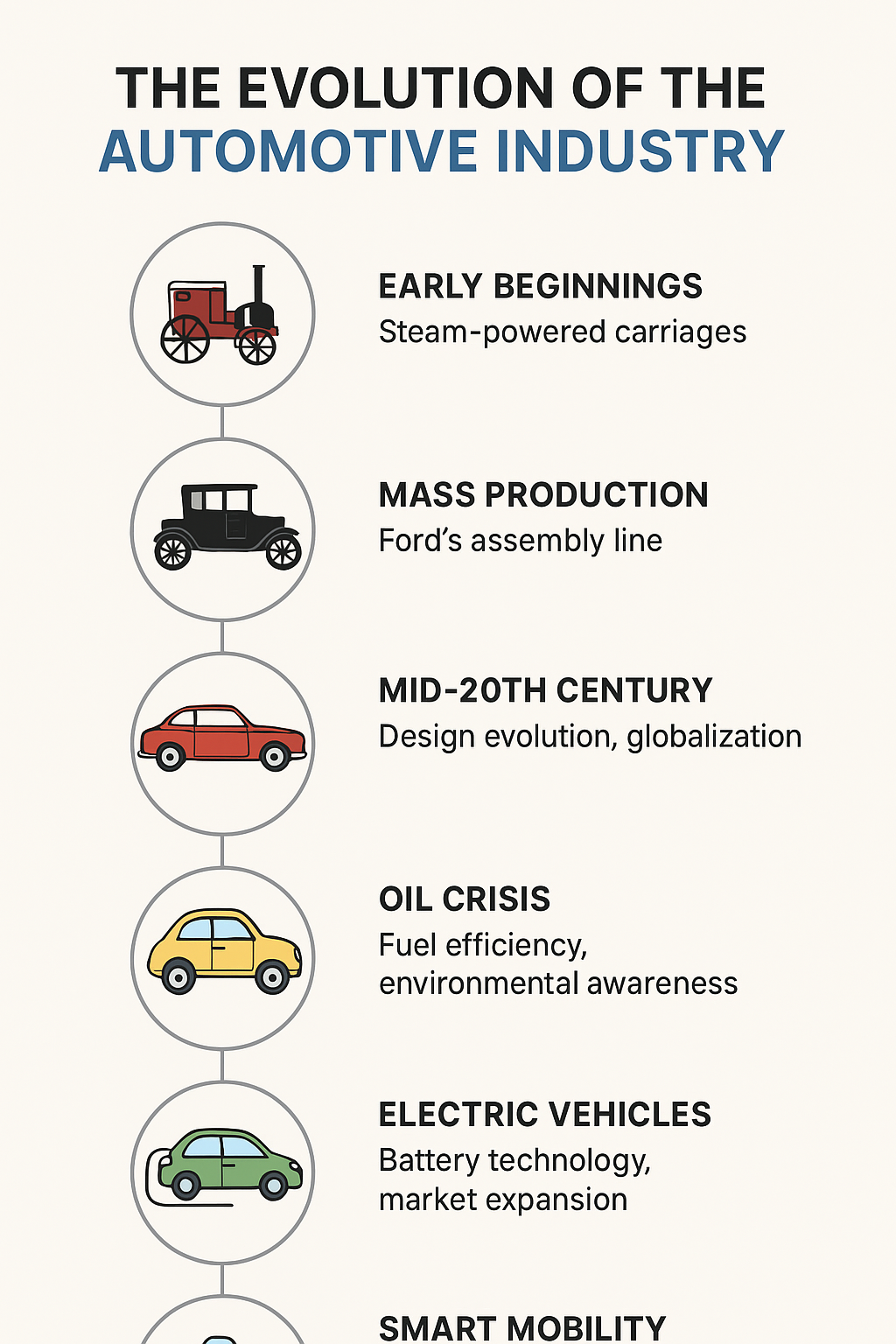
The automotive industry has come a long way since the first automobile was invented in the late 19th century. Initially, vehicles were mechanical innovations powered by internal combustion engines (ICE). Over time, advancements in engineering, materials, and safety standards revolutionized the driving experience.
- 1900s–1950s: Mass production, led by Henry Ford, made cars accessible to the general public.
- 1960s–1980s: Performance and design innovations shaped automotive culture.
- 1990s–2000s: Electronics and digital systems began integrating into cars.
- 2010s–Present: Electric vehicles (EVs), smart mobility, and self-driving technology are reshaping the industry.
The evolution reflects how automotive technology has continually adapted to meet society’s needs for mobility, convenience, and sustainability.
2. Key Innovations Driving the Industry Forward
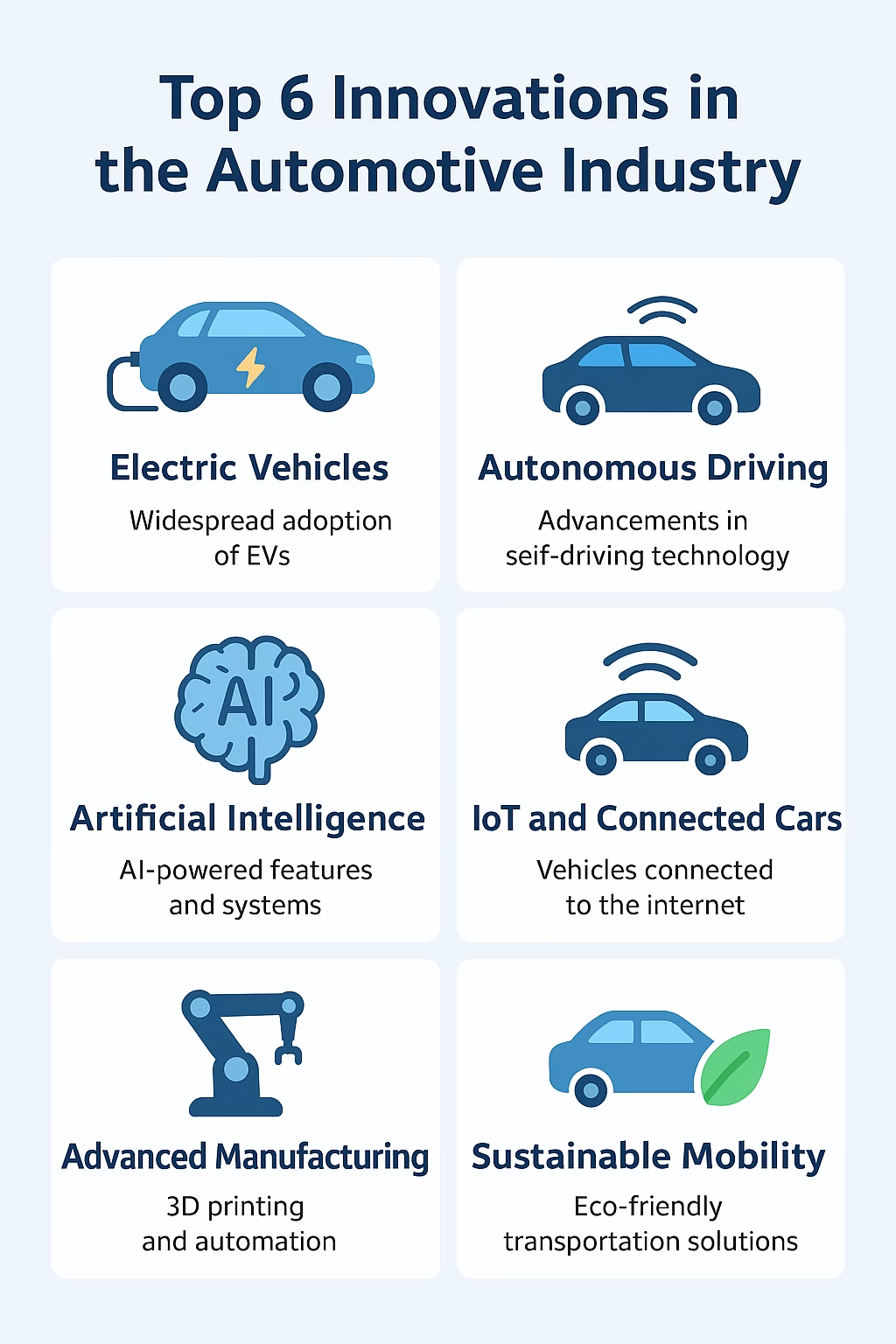
The automotive industry is currently being reshaped by groundbreaking innovations, many of which will define the future of mobility.
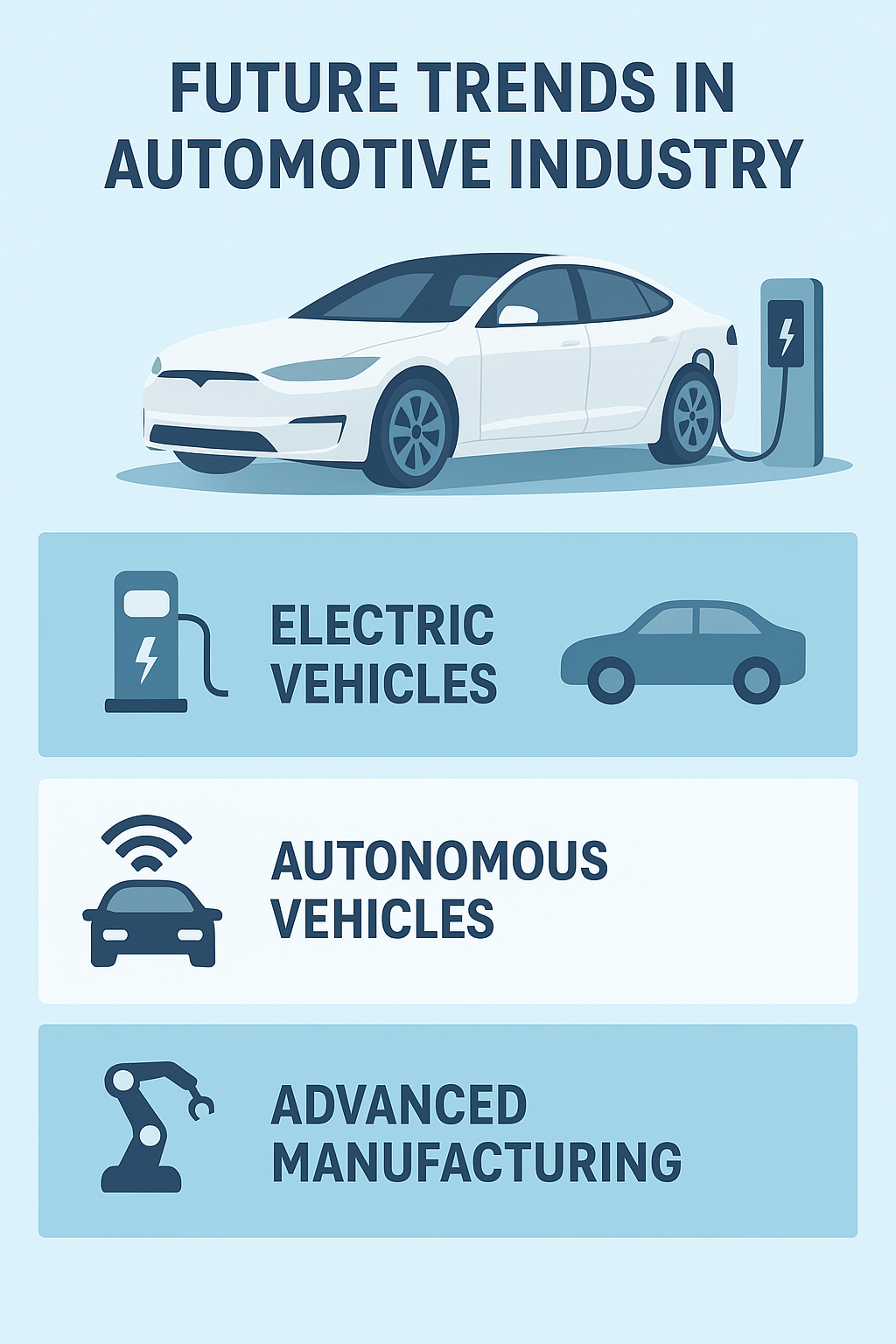
a. Electric Vehicles (EVs)
Electric vehicles are at the forefront of automotive innovation. Companies like Tesla, BYD, and traditional automakers such as Toyota, Ford, and Volkswagen are investing heavily in EV technology. The shift toward EVs is driven by concerns over climate change, fuel efficiency, and stricter emissions regulations.
- EV sales have skyrocketed globally, with government incentives further accelerating adoption.
- Battery technology, including solid-state batteries, promises higher energy density and faster charging times.
- Infrastructure developments, such as charging stations, are expanding rapidly.
b. Autonomous Vehicles (Self-Driving Cars)
Autonomous vehicles (AVs) are no longer just a futuristic dream. Companies like Waymo, Tesla, and Uber are testing self-driving technology with the goal of revolutionizing transportation.
- Levels of autonomy range from driver-assist features (Level 2) to fully autonomous systems (Level 5).
- AVs promise safer roads by reducing accidents caused by human error.
- They can transform logistics, ride-sharing, and public transport systems.
c. Connectivity and Smart Cars
The concept of the “connected car” has emerged, where vehicles are integrated with the Internet of Things (IoT) and cloud-based systems.
- Features like GPS navigation, real-time traffic updates, and voice assistants have become standard.
- Over-the-air (OTA) software updates allow manufacturers to improve car systems remotely.
- Connected cars enable data collection, helping manufacturers enhance safety and efficiency.
d. Advanced Manufacturing and Automation
Industry 4.0 technologies such as robotics, artificial intelligence, and 3D printing are revolutionizing automotive manufacturing.
- Automation ensures precision, efficiency, and reduced production costs.
- 3D printing allows for rapid prototyping and customized vehicle parts.
- AI-driven systems enhance quality control and predictive maintenance.
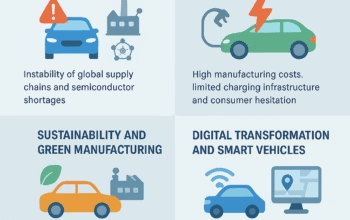
3. Challenges Facing the Automotive Industry
While opportunities are vast, the automotive sector also faces several challenges.
a. Environmental Regulations
Governments worldwide are tightening regulations on vehicle emissions to combat climate change. Automakers must balance performance with sustainability, pushing them toward EV adoption.
b. Supply Chain Disruptions
The COVID-19 pandemic exposed vulnerabilities in global supply chains, particularly in semiconductor production. Since chips are vital for modern vehicles, shortages have slowed production across major automakers.
c. High Development Costs
Developing EVs, autonomous vehicles, and connected technologies requires significant investment. Smaller automakers may struggle to keep up with industry giants.
d. Consumer Adoption Barriers
While interest in EVs and autonomous cars is rising, concerns remain about affordability, charging infrastructure, and safety. Educating consumers is essential for widespread adoption.
4. Opportunities in the Automotive Industry
Despite challenges, the automotive industry is filled with opportunities that can redefine mobility.
a. Green and Sustainable Mobility
The shift to sustainable solutions offers opportunities for innovation in battery recycling, renewable energy integration, and eco-friendly materials.
b. Shared Mobility Solutions
Ride-hailing services, car-sharing platforms, and micro-mobility (such as e-scooters) are transforming urban transportation. These solutions reduce traffic congestion and promote cost-efficient mobility.
c. Smart Infrastructure Development
Smart cities are investing in intelligent transportation systems (ITS), such as smart traffic signals and integrated EV charging networks. The automotive industry can capitalize on these developments.
d. Global Market Expansion
Emerging economies in Asia, Africa, and Latin America present new growth opportunities for automakers. With rising incomes and urbanization, demand for affordable vehicles is increasing.
5. The Role of Artificial Intelligence in Automotive Industry
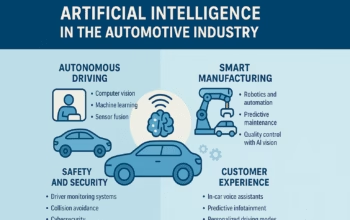
Artificial intelligence (AI) plays a crucial role in shaping the future of the automotive industry.
- Driver Assistance: AI powers features such as adaptive cruise control, lane-keeping assistance, and collision detection.
- Predictive Maintenance: Machine learning models predict vehicle breakdowns before they occur.
- Smart Manufacturing: AI optimizes production processes, reducing waste and improving efficiency.
- Autonomous Driving: AI algorithms process real-time data from cameras, sensors, and radars to navigate safely.
6. Future Outlook of the Automotive Industry
The automotive industry will continue to evolve rapidly over the next decade. Key trends include:
- A global surge in EV adoption as charging infrastructure expands.
- Wider integration of autonomous driving in urban environments.
- Increased use of AI and IoT technologies in vehicles.
- A stronger push toward sustainability and eco-friendly mobility.
By 2035, many countries plan to phase out gasoline-powered vehicles entirely, signaling a new era of transportation that is clean, efficient, and technology-driven.
Conclusion of Automotive Industry
The automotive industry is undergoing one of the most profound transformations in its history. With electric vehicles, autonomous driving, and connected car technologies shaping the future, the opportunities for growth and innovation are immense. However, challenges such as regulatory pressures, supply chain issues, and consumer adoption barriers must be addressed for the industry to thrive.
For manufacturers, suppliers, and consumers, the road ahead is both challenging and exciting. The future of the automotive industry lies in innovation, sustainability, and adaptability, ensuring mobility solutions that meet the demands of a rapidly changing world.