
Introduction
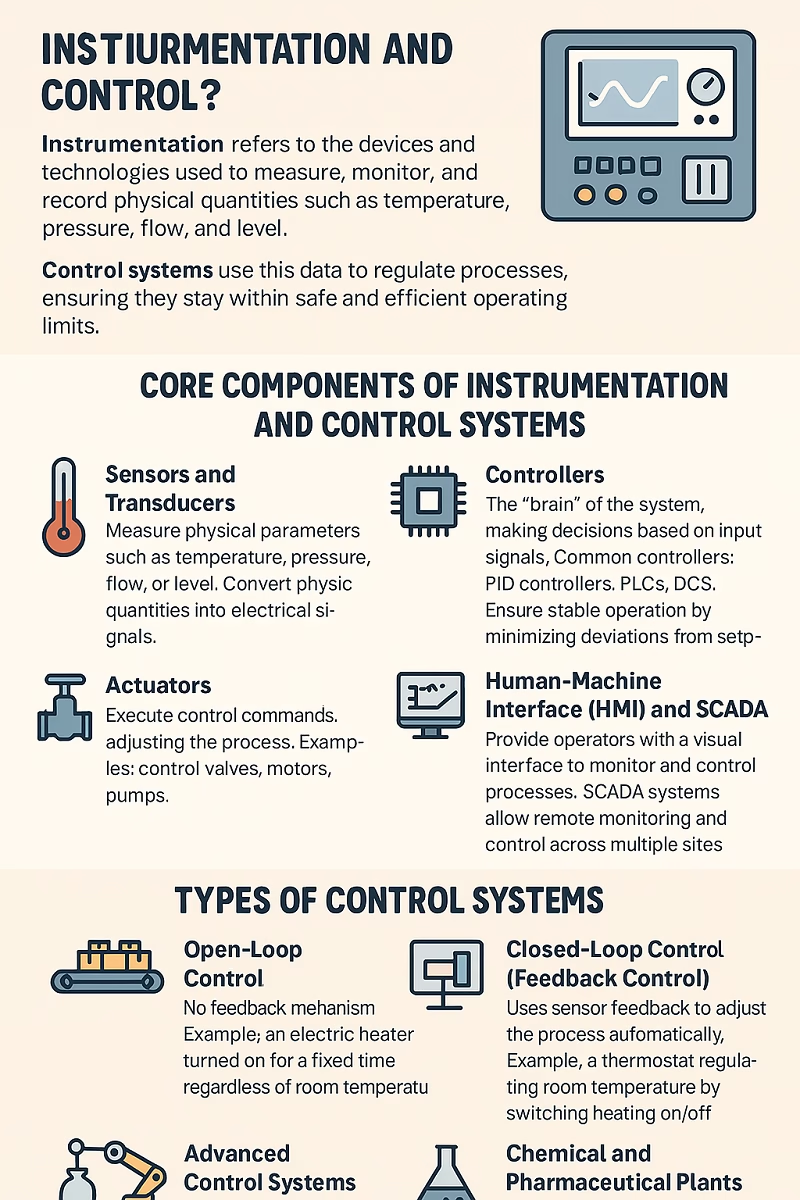
Core Components of Instrumentation Systems ~ Instrumentation systems are the backbone of industrial automation, process control, and monitoring applications. These systems ensure that physical parameters—such as temperature, pressure, flow, and level—are measured, transmitted, processed, and displayed accurately. By integrating multiple components, instrumentation systems provide the data and control needed to optimize processes, enhance safety, and improve efficiency.
This article explores the core components of instrumentation systems, their functions, and how they work together to create reliable measurement and control setups.
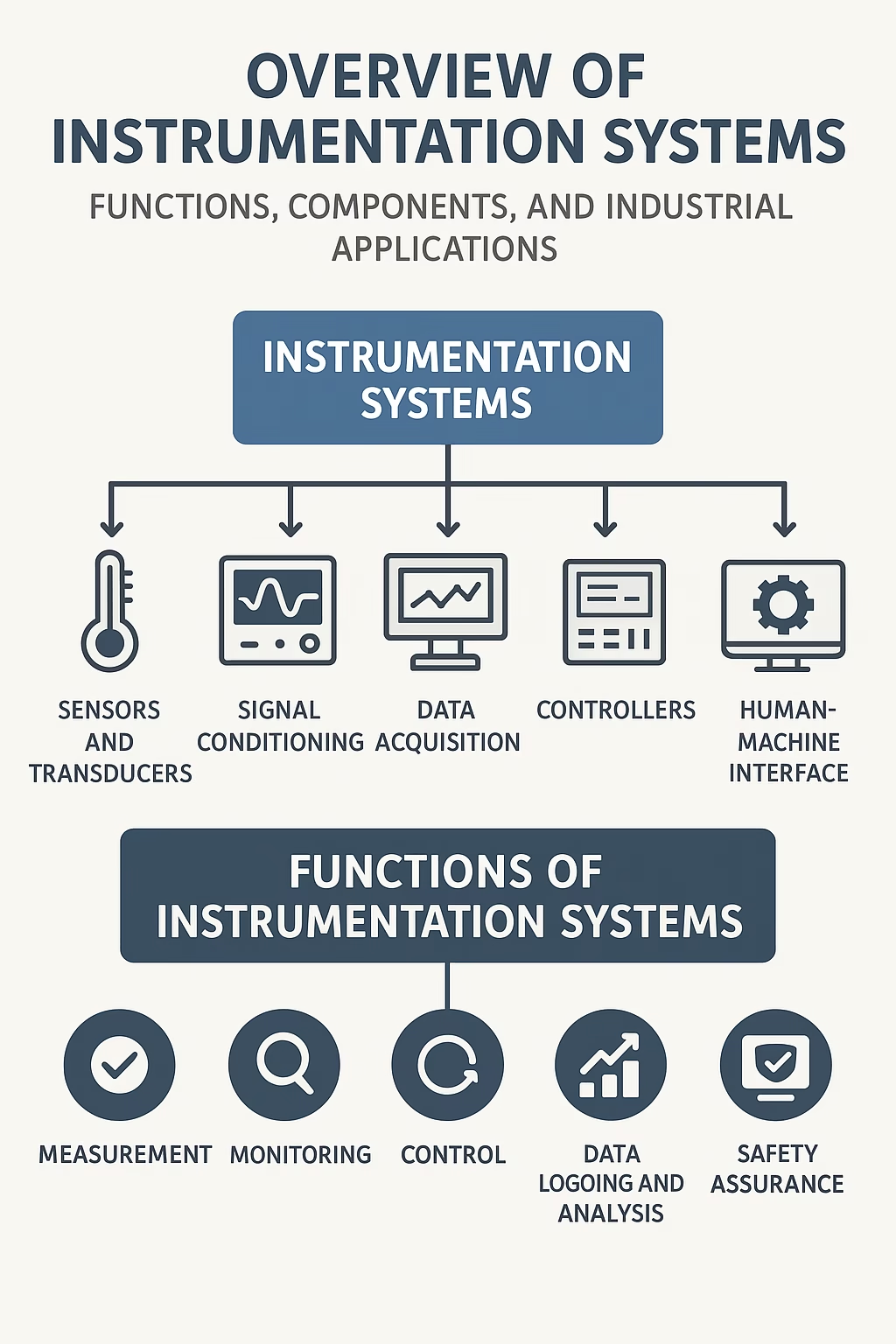
1. Overview of Instrumentation Systems
An instrumentation system typically consists of interconnected components designed to:
- Measure physical quantities.
- Convert measurements into standardized signals.
- Process data for control and monitoring.
- Display results in a user-friendly format.
The four major stages in an instrumentation system are:
- Sensing – Detecting changes in physical parameters.
- Signal Transmission – Sending the measured data to a processing unit.
- Signal Processing – Interpreting and conditioning the signal for use.
- Actuation/Display – Acting upon or presenting the processed information.
Read More about Overview of Instrumentation Systems: Functions, Components, and Industrial Applications
2. Core Components of Instrumentation Systems
2.1 Core Components of Instrumentation: Sensors
Function:
Sensors are the primary interface between the physical world and the instrumentation system. They detect changes in parameters like temperature, pressure, flow, level, humidity, or vibration.
Types of Sensors in Instrumentation:
- Temperature Sensors – Thermocouples, RTDs, thermistors.
- Pressure Sensors – Strain gauge transducers, piezoelectric sensors.
- Flow Sensors – Electromagnetic, ultrasonic, turbine flowmeters.
- Level Sensors – Ultrasonic, capacitive, radar-based.
Key Features:
- High sensitivity.
- Fast response time.
- Suitable for the measurement range.
2.2 Core Components of Instrumentation: Transmitters
Function:
Transmitters convert the raw sensor signal into a standardized electrical signal (e.g., 4–20 mA or 0–10 V) for long-distance transmission to control units.
Types of Transmitters:
- Temperature Transmitters.
- Pressure Transmitters.
- Flow Transmitters.
- Level Transmitters.
Importance:
Transmitters ensure that weak sensor signals are strengthened and formatted for compatibility with control systems, reducing noise and signal degradation.
2.3 Core Components of Instrumentation: Signal Conditioners
Function:
Signal conditioners process signals from sensors or transmitters to make them suitable for processing. This may include amplification, filtering, isolation, and conversion.
Examples of Signal Conditioning Operations:
- Amplification – Increasing signal strength.
- Filtering – Removing unwanted noise.
- Isolation – Protecting systems from high-voltage surges.
- Conversion – Changing voltage signals to current or digital format.
2.4 Core Components of Instrumentation: Controllers
Function:
Controllers receive the processed signal and decide how the system should respond. In industrial applications, this is often done through a PID (Proportional-Integral-Derivative) controller.
Controller Types:
- Manual Controllers – Require human input.
- Automatic Controllers – Adjust output automatically based on setpoints.
- Programmable Logic Controllers (PLCs) – Digital systems used for industrial automation.
Example:
In a heating system, a temperature controller adjusts the heater’s output based on real-time temperature readings to maintain the desired setpoint.
2.5 Core Components of Instrumentation: Final Control Elements (Actuators)
Function:
Actuators are devices that physically implement the commands from the controller. They can open valves, start motors, or adjust mechanical positions.
Common Actuators:
- Control valves.
- Electric motors.
- Pneumatic cylinders.
Role in the System:
They serve as the “muscles” of the instrumentation system, turning processed data into physical action.
2.6 Core Components of Instrumentation: Human-Machine Interface (HMI) & Displays
Function:
HMIs and display units allow operators to monitor real-time process data, adjust setpoints, and analyze performance trends.
Examples:
- Digital displays.
- Touchscreen panels.
- SCADA (Supervisory Control and Data Acquisition) systems.
Importance:
They provide transparency and user control over complex processes, helping operators make informed decisions.
2.7 Data Acquisition Systems (DAQ)
Function:
DAQ systems collect, digitize, and store measurement data for analysis and reporting.
Key Features:
- High sampling rates.
- Multi-channel inputs.
- Integration with analytics software.
Read More about Core Components of Instrumentation Systems: Functions and Applications

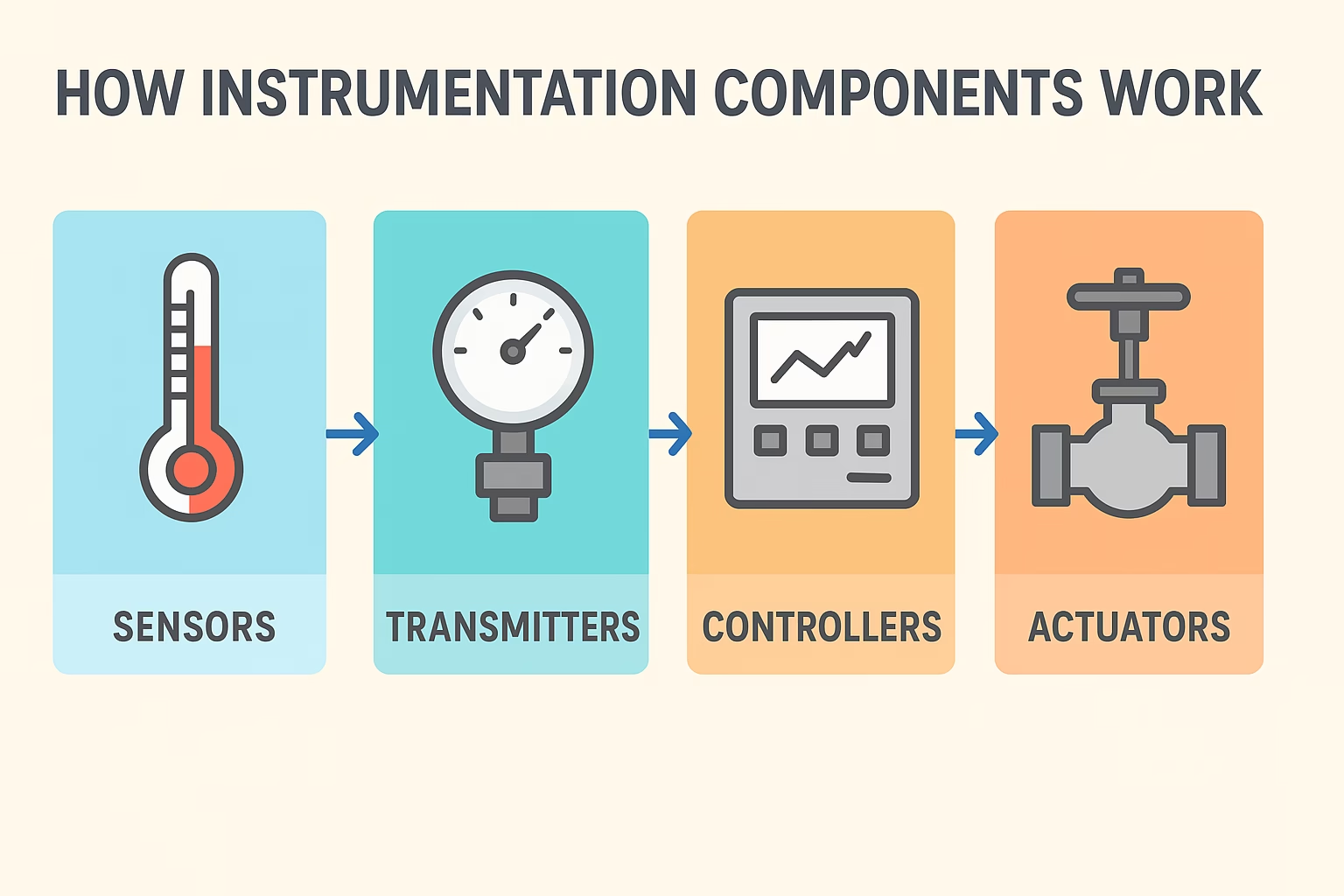
3. How These Components Work Together
An instrumentation system follows a logical sequence:
- Sensors detect physical changes.
- Transmitters send the signals to processing units.
- Signal conditioners refine and prepare signals.
- Controllers analyze data and make decisions.
- Actuators carry out actions.
- HMI displays information for operators.
- DAQ systems record data for future use.
Read More about How Instrumentation Components Work: A Complete Guide
4. Applications of Instrumentation Systems
- Industrial Automation – Monitoring temperature, flow, and pressure in manufacturing plants.
- Power Plants – Controlling steam pressure and turbine speed.
- Oil and Gas Industry – Monitoring pipeline flow and pressure.
- Water Treatment Plants – Regulating chemical dosing and water levels.
- Laboratory Testing – Measuring and recording experimental data.
Read More about Applications of Instrumentation: Enhancing Accuracy, Safety, and Efficiency Across Industries
5. Benefits of a Well-Designed Instrumentation System
- Increased Efficiency – Optimized processes reduce waste.
- Improved Safety – Early detection of abnormal conditions.
- Better Product Quality – Consistent control leads to uniform outputs.
- Reduced Downtime – Predictive maintenance through continuous monitoring.
Read More about The Benefits of Effective Instrumentation for Industrial Performance and Safety
Conclusion
The core components of instrumentation systems—from sensors and transmitters to controllers and HMIs—form a cohesive structure that enables accurate monitoring and control of physical processes. Whether in manufacturing, power generation, or laboratory research, these systems provide the precision, reliability, and responsiveness needed for modern industry.
A thorough understanding of each component’s function is essential for engineers, technicians, and operators aiming to design, maintain, or improve an instrumentation system.