Introduction
The year 1939 marked the beginning of World War II 1939, the deadliest and most devastating conflict in human history. Sparked by the invasion of Poland by Nazi Germany, the war quickly escalated into a global confrontation that lasted until 1945, involving more than 30 countries and resulting in tens of millions of casualties. While the official start date is September 1, 1939, the roots of the conflict lay in the unresolved tensions of World War I, economic turmoil during the Great Depression, and the rise of aggressive totalitarian regimes across Europe and Asia.
This article explores how World War II began, the key events in 1939, and why this conflict reshaped the world forever.
Background of World War II 1939: The Road to 1939
To understand why World War II erupted, it is essential to examine the circumstances leading up to 1939.
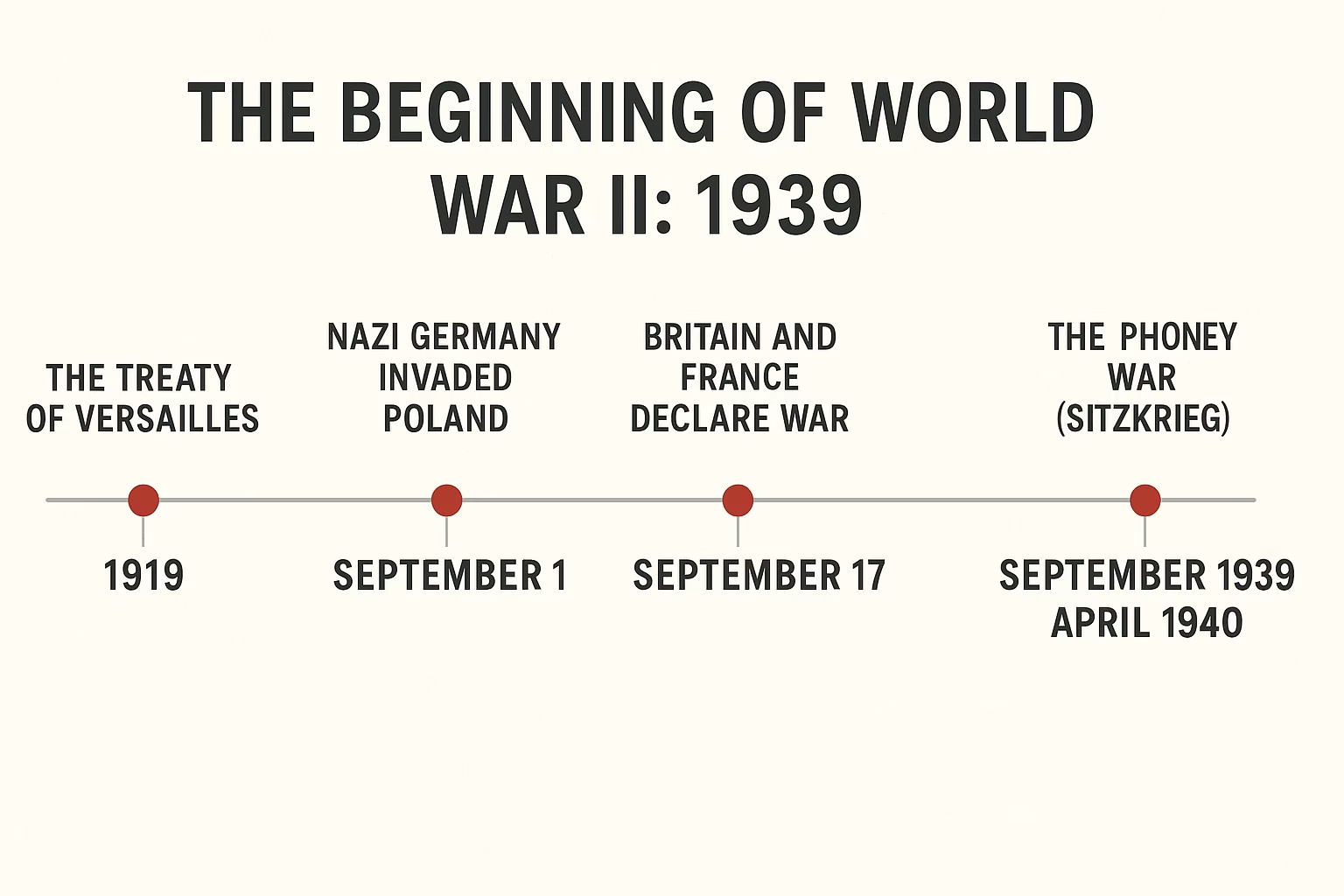
- The Treaty of Versailles (1919):
After World War I, Germany was forced to sign the Treaty of Versailles, which imposed heavy reparations, territorial losses, and strict military restrictions. The treaty created resentment among Germans and laid the groundwork for political instability. - The Rise of Adolf Hitler and Nazi Germany:
Exploiting nationalist sentiments and economic hardships, Adolf Hitler and the Nazi Party rose to power in the early 1930s. Hitler’s expansionist ideology—seeking “Lebensraum” (living space)—pushed Germany toward aggressive military policies. - Failure of the League of Nations:
Established to maintain peace, the League of Nations failed to prevent acts of aggression, such as Japan’s invasion of Manchuria (1931) and Italy’s conquest of Ethiopia (1935). This emboldened dictators to pursue expansion without fear of consequences. - Appeasement Policy:
Britain and France initially adopted a policy of appeasement, allowing Germany to annex Austria (1938) and the Sudetenland in Czechoslovakia (1938) through the Munich Agreement. This strategy, aimed at avoiding war, only encouraged Hitler’s ambitions.
The Spark: Germany Invades Poland
The immediate cause of World War II was Germany’s invasion of Poland on September 1, 1939. Hitler’s justification was the claim that ethnic Germans living in Poland were being mistreated.
- Blitzkrieg Tactics: Germany launched a swift and brutal military assault known as “Blitzkrieg” (lightning war), combining air power, artillery, and mechanized ground forces to overwhelm Polish defenses.
- Soviet Union’s Role: Just weeks later, on September 17, 1939, the Soviet Union invaded Poland from the east under the terms of the Molotov-Ribbentrop Pact, a non-aggression agreement between Germany and the USSR that secretly divided Eastern Europe into spheres of influence.
- Britain and France Declare War: On September 3, 1939, Britain and France declared war on Germany, officially marking the beginning of World War II.
Key Events of 1939
Although the war had just begun, several significant events took place in 1939 that set the stage for the global conflict:
- The Phoney War (Sitzkrieg):
After the fall of Poland, a period of relative inactivity followed on the Western Front. From September 1939 to April 1940, there were few major battles between Germany and the Allies, leading to this phase being called the “Phoney War.” - Formation of Alliances:
- The Axis Powers began to solidify, with Germany, Italy, and later Japan forming a coalition.
- The Allies consisted of Britain, France, and Poland at the beginning, with more nations joining as the war expanded.
- Shifts in Global Politics:
While much of the early fighting was concentrated in Europe, Japan was already engaged in an ongoing war with China, and the Soviet Union expanded its influence in Eastern Europe and the Baltics.
Why Did World War II 1939 Begin?
Historians identify several intertwined causes:
- Aggression by Dictatorships: Germany, Italy, and Japan pursued expansionist policies to dominate regions.
- Economic Instability: The Great Depression of the 1930s fueled extremism and made populations more susceptible to authoritarian promises.
- Failure of Collective Security: International organizations failed to stop aggression.
- Misjudgment by Britain and France: Appeasement gave Hitler time to build military strength, underestimating his true ambitions.
Impact of the Outbreak
The outbreak of World War II in 1939 had immediate and long-lasting consequences:
- Global Scale of Conflict: What began as a European war quickly spread to Africa, Asia, and the Pacific.
- Civilian Suffering: Poland became the first victim of Nazi occupation, facing widespread atrocities and the early stages of the Holocaust.
- Military Innovation: Blitzkrieg tactics revolutionized modern warfare, influencing military strategies worldwide.
- Reshaping Alliances: Countries around the world were drawn into the war, making it the largest global conflict in history.
Legacy of September 1939
The events of September 1939 marked a turning point in modern history. The failure to prevent Germany’s aggression highlighted the weaknesses of diplomacy without enforcement. The invasion of Poland set in motion six years of unprecedented destruction, genocide, and global realignment.
When the war ended in 1945, the world had changed forever: the United States and Soviet Union emerged as superpowers, the United Nations was founded, and the Cold War began.
Conclusion of World War II 1939
The start of World War II in 1939 was not just the result of one invasion but the culmination of decades of unresolved tensions, failed diplomacy, and unchecked aggression. The invasion of Poland by Nazi Germany on September 1, 1939 ignited a chain reaction that drew the world into its deadliest conflict. Understanding why the war began is crucial to remembering the lessons of history and ensuring that such a catastrophic event is never repeated.