
Introduction of Major Types of Computers
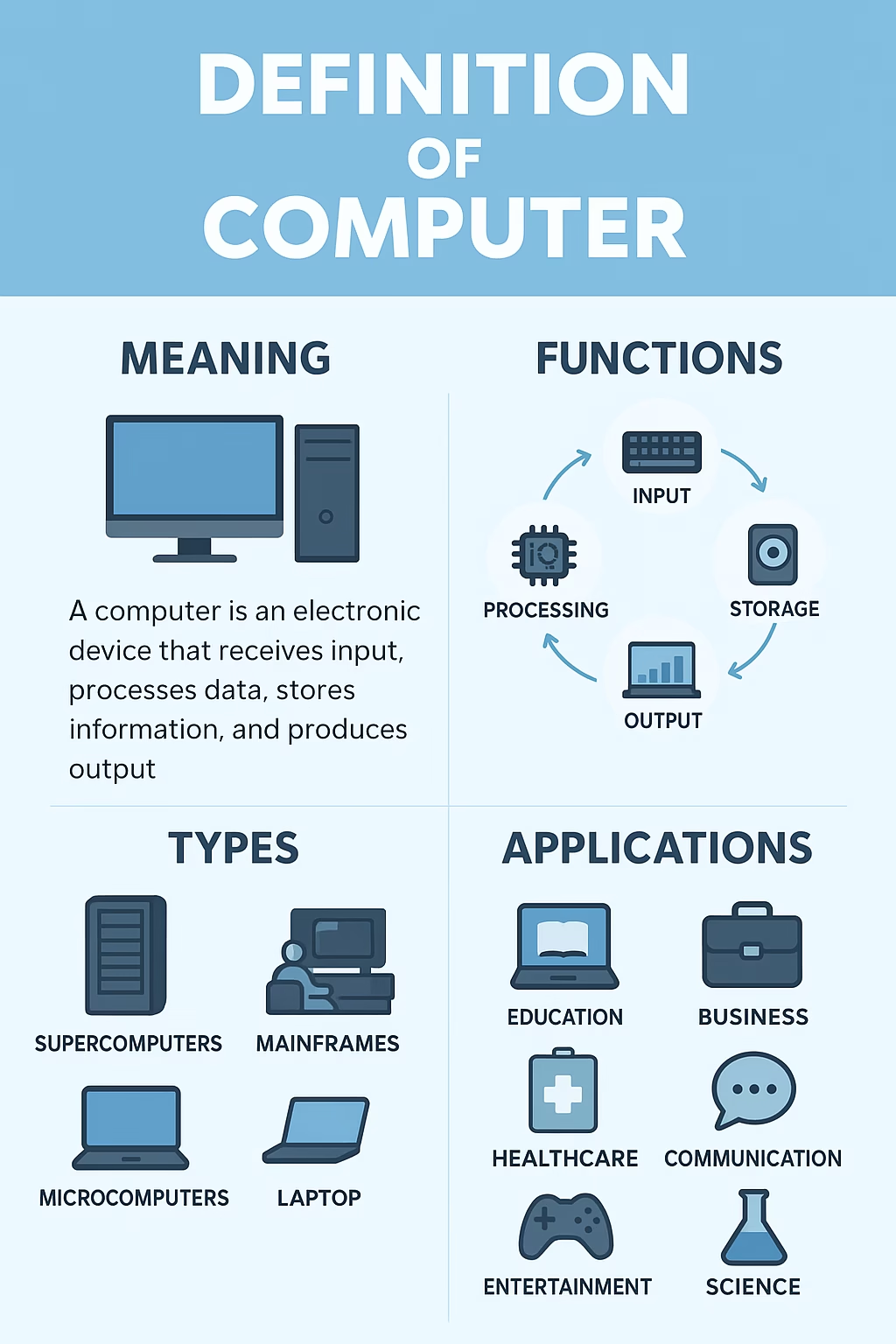
Computers have become an inseparable part of modern life. From personal laptops and smartphones to advanced supercomputers running complex simulations, computers power nearly every aspect of society. But not all computers are built the same. They differ in size, processing power, functionality, and application. Understanding the Major Types of Computers helps us appreciate how technology has evolved and continues to shape the digital world.
This article explores the major classifications of computers, their features, advantages, and real-world examples.
1. Major Types of Computers: Supercomputers
Definition
Supercomputers are the most powerful computers in the world, designed to handle extremely complex calculations at lightning-fast speeds. They are used in scientific research, weather forecasting, nuclear simulations, and artificial intelligence.
Characteristics
- Processing speed measured in petaflops or higher
- Capable of handling billions of operations per second
- Extremely large in size, requiring special cooling systems
- Highly expensive and maintained by governments or large research institutions
Examples
- Fugaku (Japan) – One of the fastest supercomputers, used for medical research and climate modeling
- Summit (USA) – Used for AI, energy research, and material science
- Frontier (USA) – World’s first exascale supercomputer
Applications
- Weather and climate forecasting
- Space exploration research
- Drug discovery and genomics
- Artificial intelligence and deep learning
2. Major Types of Computers: Mainframe Computers
Definition
Mainframes are large, powerful machines designed for bulk data processing and supporting hundreds or thousands of users simultaneously. Unlike supercomputers, mainframes focus more on transaction processing than raw calculation speed.
Characteristics
- Extremely reliable and secure
- Support for virtualization and multiple operating systems
- Designed for continuous operation without downtime
- Handle millions of transactions per second
Examples
- IBM zSeries
- Hitachi and Unisys mainframes
Applications
- Banking and financial systems
- Airline reservation systems
- Government census data processing
- Large-scale enterprise resource planning (ERP)
3. Major Types of Computers: Minicomputers (Midrange Computers)
Definition
Minicomputers, also called midrange computers, are smaller than mainframes but still powerful enough to handle business operations and process control. They serve as a bridge between personal computers and mainframes.
Characteristics
- Medium-sized, designed for small to medium businesses
- Handle multiple users at the same time
- Cost-effective compared to mainframes
- Often used in manufacturing and industrial control
Examples
- Digital Equipment Corporation (DEC) PDP series
- IBM AS/400 (now IBM iSeries)
Applications
- Small enterprise data management
- Process control in factories
- Local database hosting
4. Major Types of Computers: Workstations
Definition
Workstations are high-performance computers designed for technical or scientific applications. They provide greater power than a personal computer but are typically used by a single user.
Characteristics
- Equipped with powerful CPUs and GPUs
- High-resolution displays for design and modeling
- Large memory and storage capacity
- Optimized for engineering, 3D graphics, and scientific research
Examples
- Dell Precision series
- HP Z Workstations
- Lenovo ThinkStation
Applications
- Computer-Aided Design (CAD)
- Video editing and 3D animation
- Scientific simulations
- Data analysis
5. Major Types of Computers: Personal Computers (PCs)
Definition
Personal computers are the most common type, designed for individual use. They come in various forms such as desktops, laptops, and all-in-one PCs.
Characteristics
- Affordable and widely available
- User-friendly operating systems (Windows, macOS, Linux)
- Moderate processing power for general tasks
- Can be customized or upgraded
Subtypes
- Desktop PCs – Traditional tower systems for home or office use
- Laptops/Notebooks – Portable computers with built-in battery
- All-in-One PCs – Compact systems with built-in monitor
- Gaming PCs – Optimized with high-end GPUs and processors
Applications
- Office work and productivity
- Education and e-learning
- Entertainment (gaming, streaming)
- Software development
6. Major Types of Computers: Tablets and Smartphones (Mobile Computers)
Definition
These are portable, handheld devices that function as compact computers, allowing users to perform daily computing tasks anywhere.
Characteristics
- Lightweight and battery-powered
- Touchscreen interface
- Wireless connectivity (Wi-Fi, 4G/5G)
- Use mobile operating systems (Android, iOS)
Examples
- Apple iPhone and iPad
- Samsung Galaxy series
- Microsoft Surface tablets
Applications
- Communication (calls, messages, video conferencing)
- Mobile apps for work and entertainment
- Internet browsing and e-commerce
- Portable gaming and multimedia
7. Major Types of Computers: Embedded Systems
Definition
Embedded computers are specialized systems built into other devices to perform dedicated tasks. They are not general-purpose computers but designed for specific functions.
Characteristics
- Small, lightweight, and cost-effective
- Consume low power
- Often work in real-time environments
- Not user-programmable (pre-installed software)
Examples
- Microcontrollers in home appliances
- Automotive control systems (engine management, ABS)
- Smart TVs and IoT devices
- Medical equipment
Applications
- Consumer electronics
- Industrial automation
- Healthcare monitoring systems
- Robotics
8. Hybrid and Cloud-Based Computers
Hybrid Computers
These combine features of analog and digital computers. They are used for specialized scientific and industrial applications.
- Example: Medical imaging systems, flight simulators
Cloud Computing Devices
Instead of relying on local hardware, these computers use remote servers via the internet to process and store data.
- Examples: Google Cloud, Microsoft Azure, Amazon Web Services (AWS)

Comparison Table of Major Types of Computers
| Type of Computer | Processing Power | Users Supported | Typical Application |
|---|---|---|---|
| Supercomputer | Extremely High | Thousands | Scientific research |
| Mainframe | Very High | Thousands | Banking, ERP |
| Minicomputer | Medium | Hundreds | Manufacturing, SMEs |
| Workstation | High | Single user | CAD, simulations |
| Personal Computer | Moderate | Single user | Office, education |
| Mobile Devices | Moderate (portable) | Single user | Communication, apps |
| Embedded Systems | Low to medium | Dedicated tasks | Appliances, IoT |
| Cloud Computing | Scalable (remote) | Millions | Virtual computing |
Conclusion of Major Types of Computers
The major types of computers demonstrate the diversity of technology, each serving unique roles in society. From the immense processing power of supercomputers to the portability of smartphones, computers continue to evolve and transform daily life.
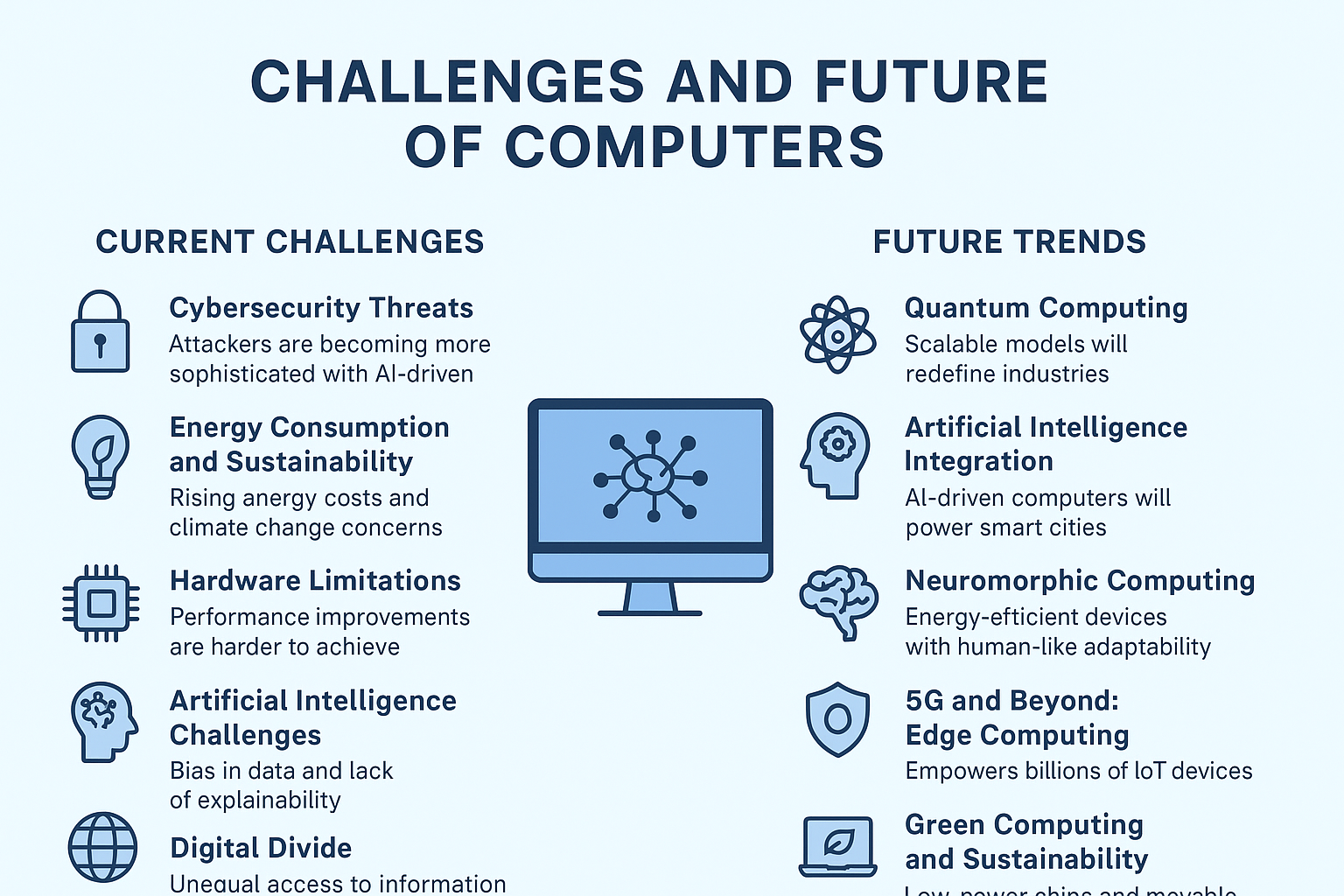
Understanding these categories not only helps us choose the right device for personal or business use but also highlights the importance of computing in driving innovation. As AI, cloud computing, and quantum technology advance, the landscape of computers will continue to expand, shaping the digital future.