Maintaining ship’s deck equipment is vital for the safe and efficient operation of marine vessels. One of the most critical aspects of this maintenance is lubrication of moving parts, which ensures that the machinery performs optimally under extreme environmental conditions. From winches and windlasses to cranes and hatch covers, all moving components require consistent and appropriate lubrication to prevent wear, reduce friction, and extend operational life.
This article explores the importance of lubrication in marine deck equipment maintenance, the types of lubricants used, procedures involved, and best practices for maritime professionals.
1. Importance of Lubrication of Moving Parts in Ship Deck Equipment
Deck equipment aboard ships operates in a harsh environment—saltwater, humidity, temperature fluctuations, and mechanical loads are all constant challenges. Lubrication provides several key benefits:
- Reduces Friction: Minimizes wear and tear between metal surfaces.
- Prevents Corrosion: Forms a protective layer against moisture and salt.
- Enhances Efficiency: Ensures smooth mechanical operation, improving performance.
- Extends Service Life: Decreases the frequency of part replacement and major overhauls.
- Prevents Breakdowns: Reduces unexpected failures, increasing operational reliability.
2. Common Deck Equipment Requiring Lubrication of Moving Parts
Lubrication is essential for various mechanical systems, especially on the ship’s deck. Some common examples include:
- Mooring Winches and Capstans
- Anchor Windlasses
- Cargo Cranes and Davits
- Hatch Cover Systems
- Steering Gear Linkages
- Hydraulic Ram Joints and Bearings
- Roller Fairleads and Sheaves
Each of these systems contains rotating shafts, sliding parts, gears, or linkages that must be properly lubricated.
3. Types of Lubricants Used in Marine Deck Equipment
Different moving parts require specific types of lubrication based on motion type, load, and environmental exposure. Common categories include:
a. Greases
- Thick consistency
- Ideal for bearings, winch gears, and slow-moving components
- Provides long-lasting protection against water and contaminants
b. Oils
- Lower viscosity than grease
- Used in hydraulic systems, gearboxes, and fine-tolerance moving parts
- Often applied through automated systems or oil baths
c. Dry Lubricants (Graphite/Molybdenum Disulfide)
- Useful in dusty environments or where traditional lubricants may attract debris
d. Marine-Specific Lubricants
- Designed for saltwater exposure
- Contains additives to prevent rust, oxidation, and microbial degradation
4. Lubrication of Moving Parts Techniques and Application Methods
Applying lubricant correctly is just as important as choosing the right type. Common methods include:
Manual Lubrication
- Using grease guns or oil cans
- Ideal for fittings with grease nipples (zerk fittings)
- Often part of routine maintenance rounds
Automatic Lubrication Systems
- Delivers precise amounts of lubricant at programmed intervals
- Reduces human error and ensures consistent lubrication
Splash and Bath Systems
- Components are partially submerged in oil
- Common in enclosed gear systems
Spray Lubrication
- For exposed gears and chains
- Quick and efficient, often used in hatch cover mechanisms
5. Lubrication of Moving Parts Schedule and Maintenance Planning
Routine maintenance schedules are vital to effective lubrication. These typically include:
- Daily Inspections – Checking oil levels, grease points, and signs of leaks
- Weekly/Monthly Applications – Adding or replacing grease at critical locations
- Annual Overhauls – Complete cleaning and relubrication of sealed components
To stay organized, many ships maintain lubrication charts or maintenance logs, which record the type, amount, and date of lubrication for every component.
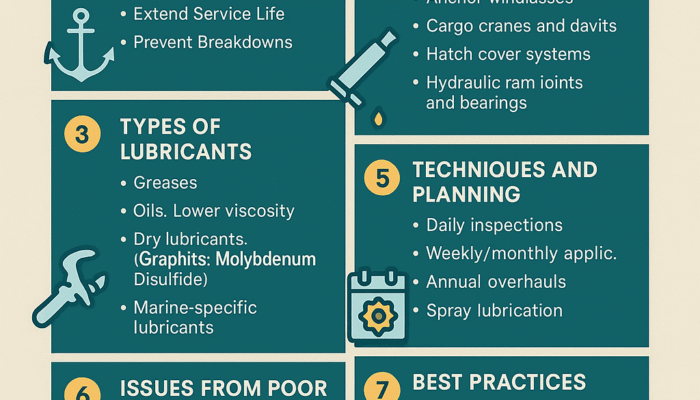
6. Common Issues from Poor Lubrication of Moving Parts
Failure to properly lubricate can lead to a host of problems:
- Increased Friction and Heat – Leading to premature wear
- Rust and Corrosion – Especially in marine environments
- Seized Components – Winches, capstans, or cranes locking during operation
- Unexpected Downtime – Operational delays or safety incidents
Preventive lubrication is far more cost-effective than repairing failed equipment.
7. Best Practices in Marine Lubrication of Moving Parts
To ensure effective lubrication aboard ships:
- Use Marine-Grade Lubricants – Select products rated for salt exposure
- Follow Manufacturer’s Guidelines – Especially regarding oil grades and greasing intervals
- Maintain Cleanliness – Avoid contamination by using clean tools and sealed containers
- Regularly Train Crew – Ensure deck crew understands lubrication points and procedures
- Audit Lubrication Records – Validate that schedule is being followed correctly
8. Environmental and Safety Considerations
Because lubricants can impact the environment:
- Use biodegradable lubricants where possible
- Dispose of used oils and greases according to MARPOL Annex V regulations
- Prevent spills using proper containment and application tools
Crew should wear gloves and goggles when handling lubricants and ensure tools are stored safely.
9. Technological Trends in Lubrication of Moving Parts
Recent advances are improving lubrication efficiency on modern ships:
- Condition Monitoring Sensors – Detect lubricant quality, temperature, and load
- Smart Greasing Systems – Use automated alerts and analytics
- Lubricant Drones or Robots – Emerging tech for hard-to-reach machinery
Such technologies reduce downtime and labor while ensuring optimal machine health.
Conclusion of Lubrication of Moving Parts
Lubrication of moving parts in ship’s deck equipment is a fundamental aspect of marine maintenance. By understanding the types of lubricants, proper application methods, and scheduling practices, vessel operators can significantly improve reliability, reduce repair costs, and extend the service life of critical equipment.
As maritime operations evolve, integrating smart lubrication systems and sustainability practices will become increasingly important. A well-lubricated ship is not only safer but also more efficient and environmentally responsible.
Ready to Learn More About Ship Maintenance?
Visit Abi Royen Marine Engineering for in-depth guides, technical resources, and practical tools for ship maintenance and marine operations.