
In today’s connected world, sensors play a crucial role in enabling machines, devices, and systems to interact with the environment. From smartphones and industrial robots to home automation systems and medical devices, sensors are embedded everywhere. This article explores the types of sensors, their working principles, and how they are revolutionizing modern life.
What is a Sensor?
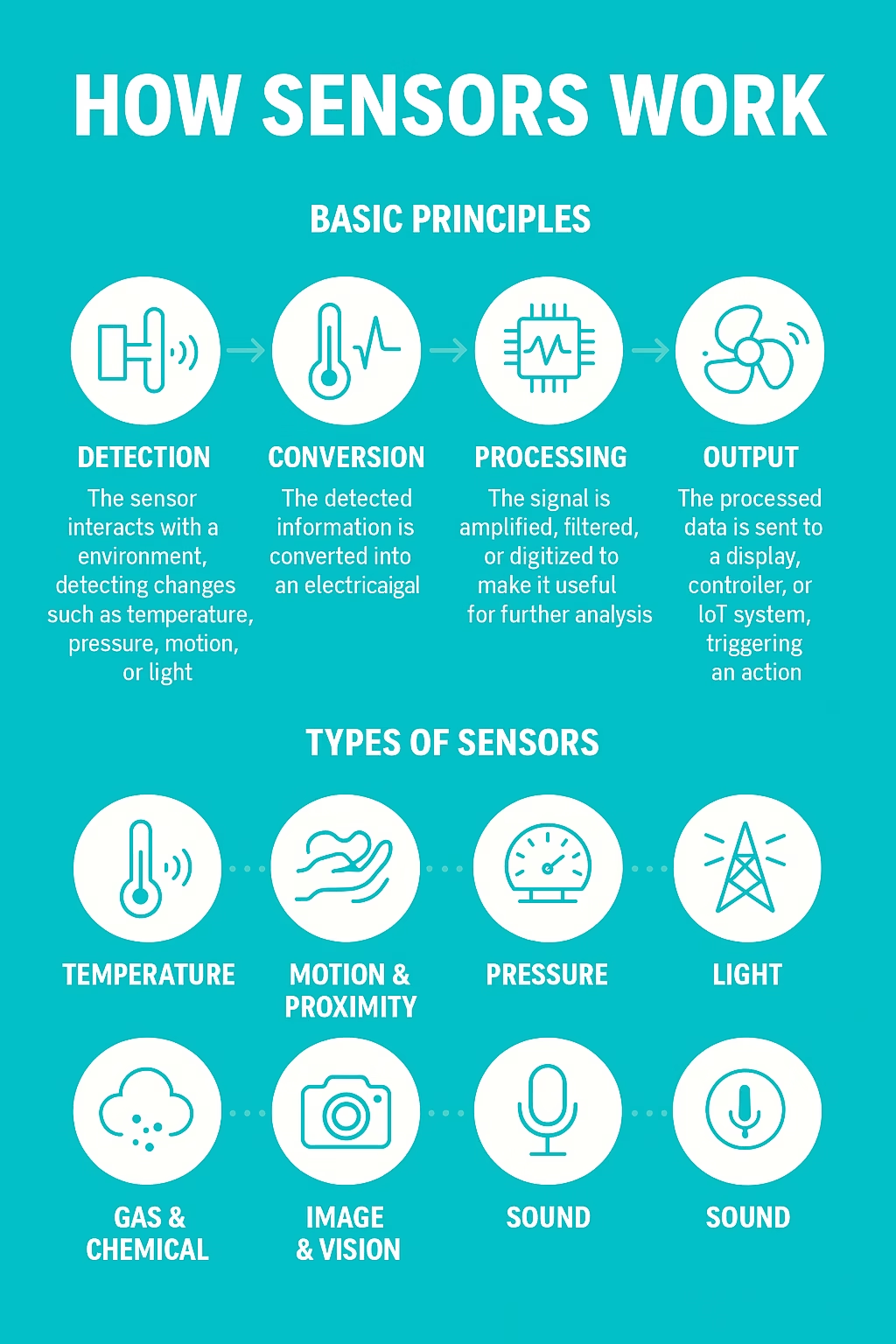
A sensor is a device that detects and responds to input from the physical environment. The input could be light, heat, motion, moisture, pressure, or any other environmental phenomenon. The sensor then converts this input into readable data that can be processed or acted upon.
Types of Sensors
Sensors can be categorized in various ways—by the type of data they measure, their application domain, or their output signal. Below are the most common and widely used types of sensors:
1. Types of Sensors: Temperature Sensors
Function: Measure heat or temperature from a source.
Common Types:
- Thermocouples
- Thermistors
- Resistance Temperature Detectors (RTDs)
- Infrared Temperature Sensors
Applications:
- HVAC systems
- Industrial equipment monitoring
- Medical devices like digital thermometers
- Weather forecasting systems
2. Types of Sensors: Proximity Sensors
Function: Detect the presence or absence of an object or its distance without physical contact.
Common Types:
- Inductive
- Capacitive
- Ultrasonic
- Infrared (IR)
Applications:
- Smartphones (e.g., screen turning off during a call)
- Parking sensors in vehicles
- Conveyor belts in manufacturing
- Touchless switches
3. Types of Sensors: Pressure Sensors
Function: Measure the pressure of gases or liquids.
Common Types:
- Piezoresistive sensors
- Capacitive pressure sensors
- Strain-gauge sensors
Applications:
- Tire pressure monitoring systems (TPMS)
- Weather instruments (barometers)
- Medical devices (blood pressure monitors)
- Industrial automation
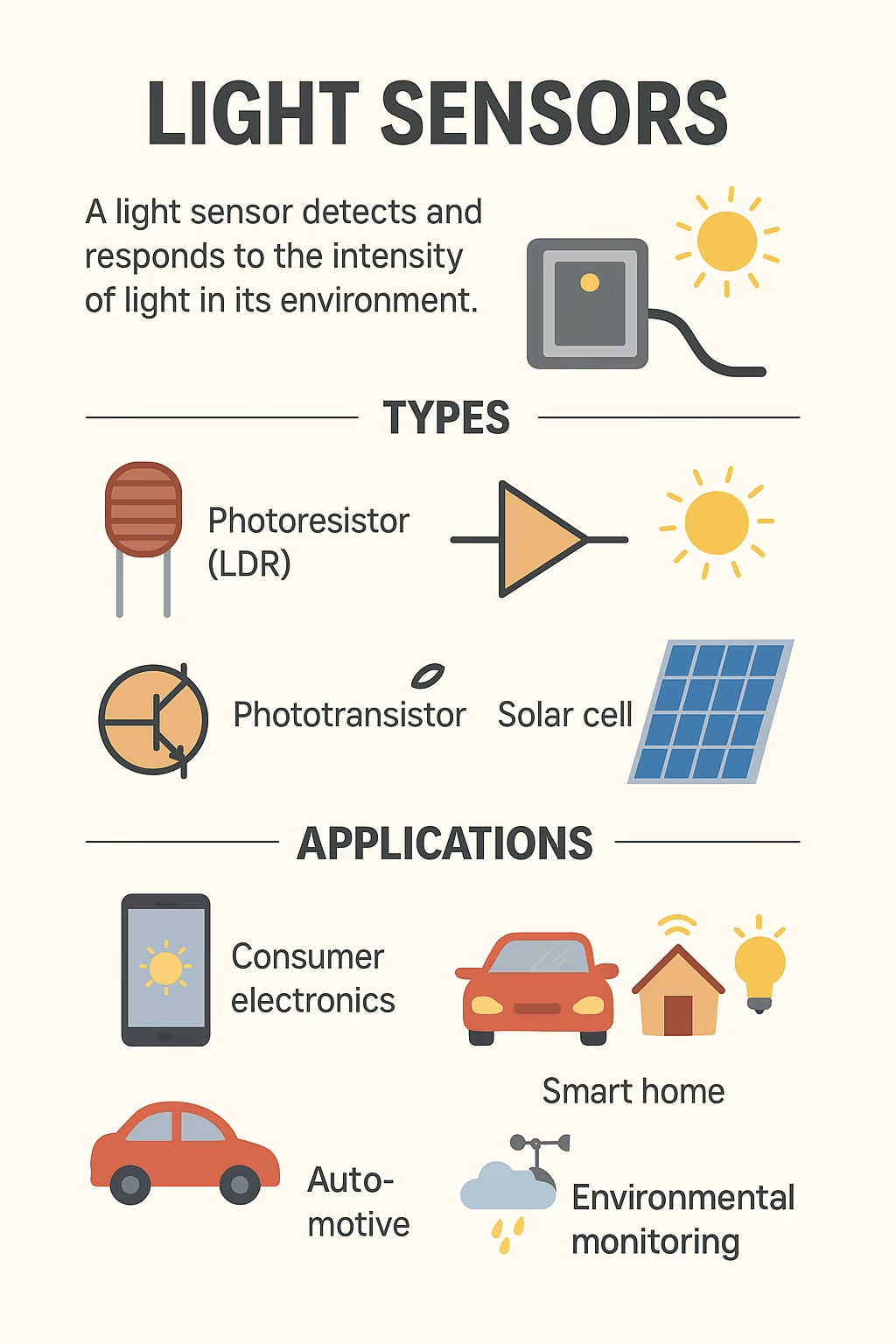
4. Types of Sensors: Light Sensors
Function: Detect light intensity and respond to it.
Common Types:
- Photoresistors (LDR)
- Photodiodes
- Phototransistors
Applications:
- Automatic brightness adjustment in screens
- Solar garden lights
- Photography equipment
- Smart street lighting
5. Types of Sensors: Motion Sensors
Function: Detect movement or acceleration.
Common Types:
- Passive Infrared (PIR) sensors
- Accelerometers
- Gyroscopes
Applications:
- Security systems
- Fitness trackers
- Drones and UAVs
- Game controllers
6. Types of Sensors: Humidity Sensors
Function: Measure moisture levels in the environment.
Common Types:
- Capacitive humidity sensors
- Resistive humidity sensors
Applications:
- Weather monitoring stations
- Greenhouses
- HVAC systems
- Industrial drying processes
7. Gas Sensors
Function: Detect the presence of specific gases.
Common Types:
- Electrochemical
- Infrared (NDIR)
- Metal-Oxide Semiconductor (MOS)
Applications:
- Air quality monitoring
- Industrial safety
- Breath analyzers
- Smart homes
8. Types of Sensors: Touch Sensors
Function: Detect physical touch or pressure.
Common Types:
- Capacitive touch sensors
- Resistive touch sensors
Applications:
- Smartphones and tablets
- Touch-sensitive home appliances
- Interactive kiosks
- Wearable devices
9. Types of Sensors: Level Sensors
Function: Measure the level of substances, typically fluids.
Common Types:
- Ultrasonic level sensors
- Capacitive level sensors
- Optical level sensors
Applications:
- Water tanks
- Chemical processing
- Fuel monitoring
- Food and beverage manufacturing
10. Types of Sensors: Image Sensors
Function: Capture visual information and convert it to digital signals.
Common Types:
- CMOS (Complementary Metal-Oxide-Semiconductor)
- CCD (Charge-Coupled Device)
Applications:
- Digital cameras
- Smartphones
- Medical imaging (X-rays, endoscopy)
- Machine vision in manufacturing
11. Types of Sensors: Sound Sensors
Function: Detect sound waves.
Common Types:
- Microphones (electret, dynamic, condenser)
- Ultrasonic microphones
Applications:
- Voice recognition systems
- Hearing aids
- Acoustic monitoring
- Surveillance systems

12. IR (Infrared) Sensors
Function: Detect infrared radiation from objects.
Common Types:
- Active IR sensors
- Passive IR sensors
Applications:
- Night vision devices
- Remote controls
- Temperature measurement
- Fire detection systems
How Are Sensors Used in Modern Technology?
Sensors are integral to the development of modern smart systems. Below are a few industries where sensor technology is making a significant impact:
1. Internet of Things (IoT):
Sensors collect data from smart home devices, industrial machines, and environmental monitoring systems, enabling real-time insights and automation.
2. Healthcare:
Sensors are used in wearable devices, diagnostic machines, and patient monitoring systems to collect vital data.
3. Automotive:
Modern cars rely on sensors for fuel management, parking assistance, airbags, and autonomous driving features.
4. Industrial Automation:
Sensors help machines and robots monitor parameters like temperature, motion, and fluid levels to improve efficiency and safety.
5. Consumer Electronics:
Smartphones, laptops, and smartwatches incorporate a variety of sensors for enhanced functionality.
Future Trends in Sensor Technology
As industries move toward greater connectivity and automation, sensors are expected to become more intelligent, smaller, and energy-efficient. Key trends include:
- Integration with AI: Smart sensors that process data at the edge using machine learning algorithms.
- Wireless and Battery-less Sensors: Using energy harvesting to power sensor nodes.
- Flexible and Wearable Sensors: Used in healthcare and sports to monitor physiological data in real-time.
Conclusion
Understanding the types of sensors and their applications is essential for anyone working in technology, engineering, or innovation. From basic temperature sensors to complex image sensors used in autonomous vehicles, these devices are at the core of modern smart systems. As sensor technology evolves, it will continue to drive progress in automation, connectivity, and intelligent decision-making.