
Sensors in Modern Technology ~ In today’s digital era, sensors are at the heart of almost every modern technology. From smartphones and wearable devices to industrial automation and healthcare, sensors have become indispensable. They act as the “eyes and ears” of machines, enabling systems to perceive their surroundings, process data, and make intelligent decisions.
This article explores the role of sensors in modern technology, their types, applications, benefits, and future trends that continue to shape industries worldwide.
What Are Sensors?
A sensor is a device that detects and measures physical properties from the environment and converts them into signals that machines or systems can process. These properties can include temperature, pressure, motion, light, sound, or even biological changes.
At their core, sensors bridge the physical and digital worlds, providing real-time data that powers automation, artificial intelligence (AI), and the Internet of Things (IoT).
Types of Sensors in Modern Technology
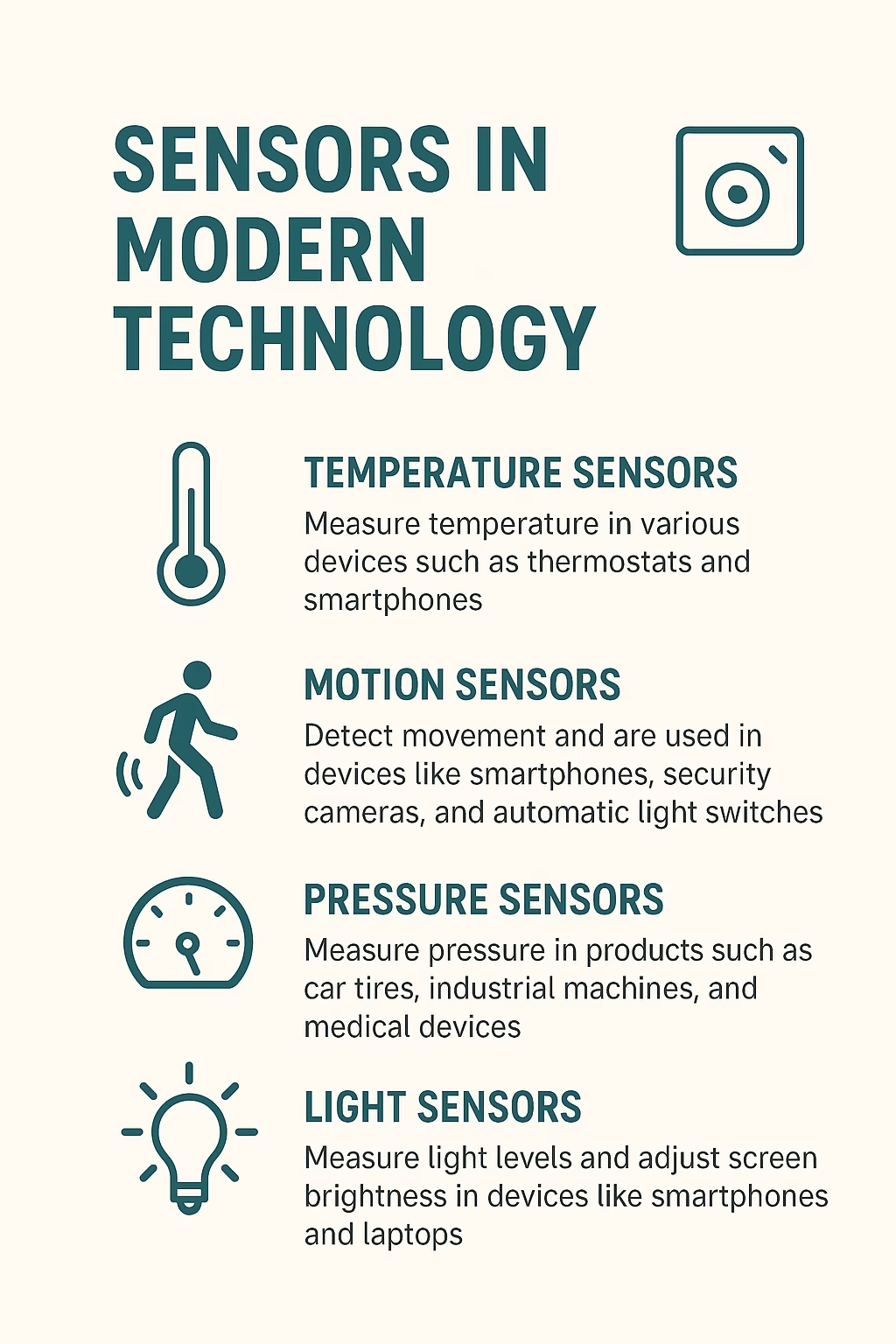
Sensors come in various forms, each designed for specific applications. Below are the most widely used sensor categories:
- Temperature Sensors
- Measure heat or cold levels.
- Common in HVAC systems, industrial equipment, and weather monitoring.
- Pressure Sensors
- Detect pressure changes in gases or liquids.
- Used in automotive systems, aerospace, and manufacturing.
- Proximity Sensors
- Identify the presence of nearby objects without physical contact.
- Found in smartphones, robotics, and automotive parking systems.
- Motion Sensors
- Track movement or acceleration.
- Used in security systems, gaming, and fitness trackers.
- Optical and Light Sensors
- Detect light intensity and changes.
- Applied in cameras, street lighting, and solar panels.
- Biosensors
- Monitor biological changes, such as glucose levels or heart rate.
- Essential in healthcare and medical devices.
- Gas and Chemical Sensors
- Identify the presence of gases or hazardous chemicals.
- Crucial in environmental monitoring and industrial safety.
- Image Sensors
- Convert light into electronic signals for digital imaging.
- Core components in cameras, drones, and autonomous vehicles.
Applications of Sensors in Modern Technology
Sensors have revolutionized how industries operate, enhancing efficiency, safety, and innovation. Below are some of the most impactful applications:
1. Consumer Electronics
- Smartphones use accelerometers, gyroscopes, and proximity sensors for screen rotation, gaming, and touchless features.
- Wearables like smartwatches rely on biosensors to track heart rate, oxygen levels, and sleep cycles.
2. Healthcare and Medical Devices
- Biosensors enable glucose monitoring, wearable ECG devices, and oxygen saturation tracking.
- Smart medical equipment uses sensors to provide accurate diagnostics and remote patient monitoring.
3. Automotive and Transportation
- Modern vehicles integrate sensors for lane assistance, collision avoidance, tire pressure monitoring, and autonomous driving.
- GPS sensors and motion sensors improve navigation and vehicle tracking.
4. Industrial Automation
- Pressure, temperature, and proximity sensors enhance efficiency in manufacturing.
- Predictive maintenance relies on vibration and acoustic sensors to detect early signs of equipment failure.
5. Smart Homes and IoT
- Motion and temperature sensors regulate lighting, heating, and cooling.
- Smart security systems use cameras and sound sensors for intrusion detection.
6. Environmental Monitoring
- Gas and chemical sensors track air and water quality.
- Climate research depends on temperature and pressure sensors to analyze weather patterns.
7. Aerospace and Defense
- Aircraft systems use pressure and motion sensors for flight control.
- Satellites rely on sensors for navigation, imaging, and communication.
Benefits of Sensors in Modern Technology
- Enhanced Efficiency
- Real-time monitoring reduces waste, downtime, and energy consumption.
- Improved Safety
- Sensors in industrial and automotive applications prevent accidents and protect lives.
- Data-Driven Decision Making
- Sensors provide valuable insights for businesses, healthcare providers, and governments.
- Convenience and User Experience
- Everyday devices like smartphones and smart homes improve comfort and usability.
- Cost Savings
- Predictive maintenance and automation minimize repair costs and increase productivity.
The Role of Sensors in IoT and AI
Sensors are the backbone of the Internet of Things (IoT). Without sensors, IoT devices would not be able to collect data or interact intelligently with the environment. AI systems also rely heavily on sensor-generated data for training and decision-making.
For example:
- Smart Cities: Sensors manage traffic flow, monitor pollution, and optimize energy consumption.
- Agriculture: Soil moisture and temperature sensors enable precision farming, reducing water and fertilizer usage.
- Healthcare AI: Biosensors feed data into AI algorithms for early disease detection and personalized treatments.
Challenges Facing Sensors in Modern Technology
While sensors offer immense benefits, there are challenges:
- Data Privacy and Security
- Continuous monitoring raises concerns about personal data misuse.
- Power Consumption
- Portable devices need energy-efficient sensors to extend battery life.
- Cost and Scalability
- High-performance sensors may be expensive for mass deployment.
- Environmental Durability
- Sensors used in harsh conditions must withstand temperature extremes, moisture, and corrosion.
Future Trends in Sensor Technology
- Miniaturization and Wearable Sensors
- Smaller, more efficient sensors will power medical implants and compact devices.
- Integration with AI
- Smarter sensors will have built-in processing power for real-time analytics.
- Wireless and Energy-Harvesting Sensors
- Devices that operate without batteries will revolutionize IoT scalability.
- Advanced Biosensors
- Next-gen biosensors will enable non-invasive disease monitoring and real-time health diagnostics.
- Quantum and Nanotechnology Sensors
- Ultra-sensitive sensors will improve precision in healthcare, defense, and scientific research.
Conclusion of Sensors in Modern Technology
Sensors are a cornerstone of modern technology, enabling innovations across industries. From healthcare and automotive to industrial automation and smart cities, sensors provide real-time data that powers decision-making, efficiency, and safety.
As technology evolves, sensors will continue to advance, becoming smaller, smarter, and more integrated with AI and IoT. The future of sensors promises to shape a world that is more connected, efficient, and intelligent.