Introduction of Characteristics of Display Components
In the world of modern electronics, display components play a vital role in how we interact with devices. From smartphones and laptops to industrial control panels and digital signage, displays are the interface between human users and electronic systems. Understanding the characteristics of display components is essential for engineers, designers, and even consumers who want to make informed choices about technology.
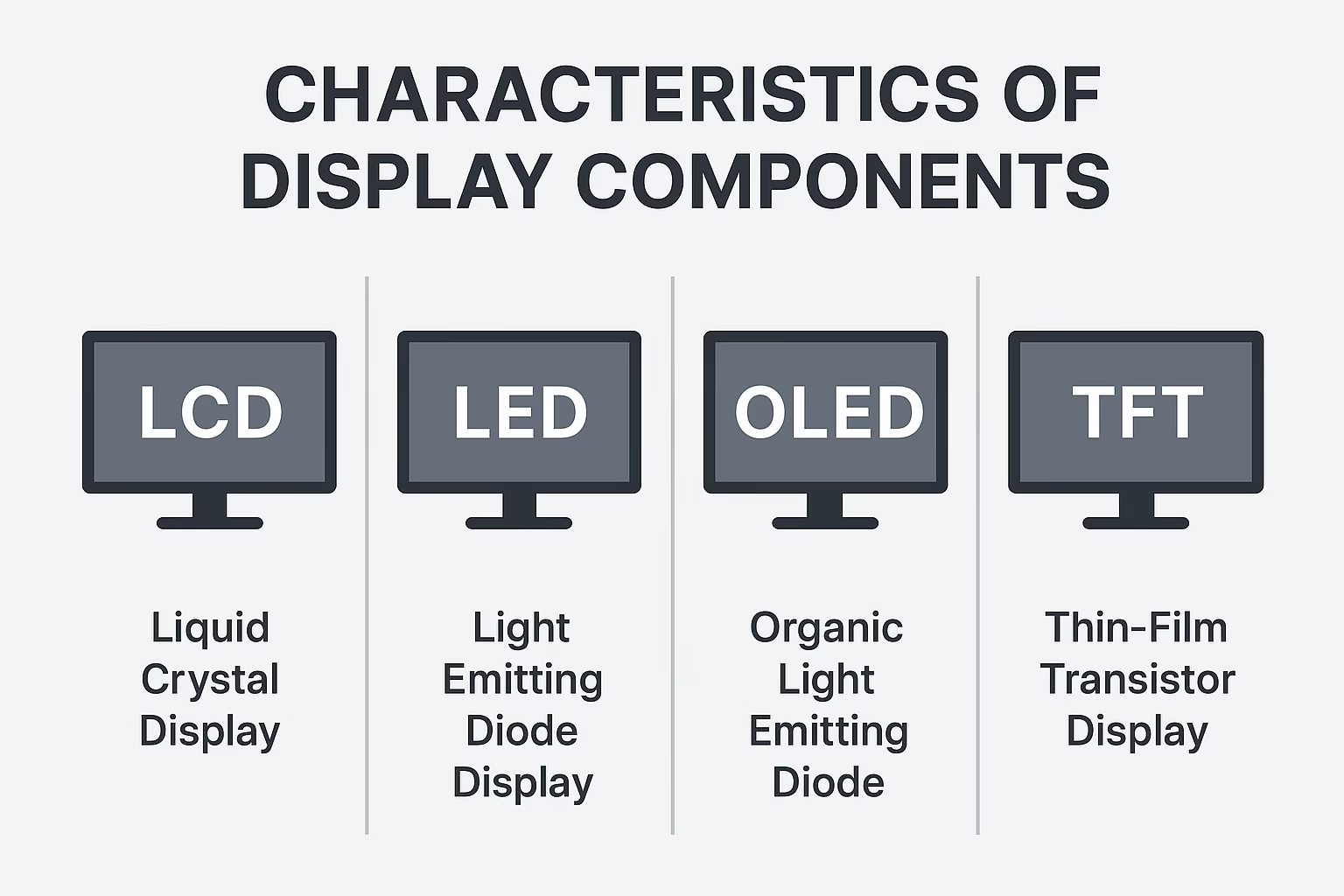
This article will explore the key characteristics of various display technologies, including LCD, LED, OLED, and TFT, highlighting their advantages, limitations, and applications across industries.
What Are Display Components?
Display components are electronic devices or modules that present visual information in the form of text, images, or video. They are designed to convert electrical signals into visible output, enabling user interaction and data visualization.
Common examples include:
- Liquid Crystal Display (LCD)
- Light Emitting Diode (LED) Display
- Organic Light Emitting Diode (OLED)
- Thin-Film Transistor (TFT) Display
- Plasma Display Panels (PDP)
Each type of display component has its own characteristics, such as brightness, resolution, color accuracy, power consumption, and durability.
Key Characteristics of Display Components
1. Resolution
Resolution refers to the number of pixels displayed on the screen, usually measured as width × height (e.g., 1920 × 1080). Higher resolution means better clarity and detail.
- High-resolution displays are common in smartphones, tablets, and televisions.
- Lower-resolution displays may still be used in simple electronics like calculators or industrial meters.
2. Brightness and Luminance
Brightness defines how much light the display emits, measured in nits (cd/m²).
- High brightness displays are necessary for outdoor devices and digital signage.
- Low brightness displays may be suitable for indoor, power-efficient applications.
3. Contrast Ratio
Contrast ratio measures the difference between the darkest black and the brightest white a display can show.
- High contrast ratio improves visibility in various lighting conditions.
- OLED displays are well known for superior contrast because each pixel emits its own light.
4. Viewing Angle
Viewing angle defines how well a display can be seen when viewed from different directions.
- Wide viewing angle displays are crucial for televisions and digital advertising boards.
- Narrow viewing angle displays are often cheaper but may distort colors when viewed off-axis.
5. Response Time
Response time is the speed at which pixels change from one state to another.
- Fast response time is essential for gaming monitors and video playback.
- Slower response time may cause motion blur or ghosting effects.
6. Color Accuracy
Color accuracy determines how precisely a display reproduces real-life colors.
- High color accuracy is needed in graphic design, photography, and medical imaging.
- Basic displays may have limited color ranges but still function effectively in calculators or control panels.
7. Power Consumption
Energy efficiency is critical in portable devices.
- OLED displays consume less power when displaying darker images.
- LCDs require backlighting, which may consume more energy.
8. Durability and Lifespan
Different display components have different lifespans.
- LED and LCD displays generally have longer lifespans.
- OLED displays provide excellent image quality but may suffer from burn-in over time.
9. Cost Efficiency
The choice of display technology often depends on cost.
- LCDs are more affordable and widely used.
- OLEDs and advanced TFTs are more expensive but provide higher quality.
Types of Display Components and Their Characteristics
1. LCD (Liquid Crystal Display)
- Advantages: Lightweight, energy-efficient, affordable.
- Characteristics: Requires backlighting, good resolution, moderate brightness.
- Applications: Calculators, monitors, laptops, control panels.
2. LED (Light Emitting Diode Display)
- Advantages: High brightness, long lifespan, good energy efficiency.
- Characteristics: Uses LED backlighting, excellent for outdoor displays.
- Applications: TV screens, billboards, stadium displays.
3. OLED (Organic Light Emitting Diode)
- Advantages: Superior color accuracy, flexibility, high contrast ratio.
- Characteristics: Self-emissive pixels, thinner and lighter, flexible design options.
- Applications: Smartphones, premium TVs, wearable devices.
4. TFT (Thin-Film Transistor Display)
- Advantages: Improved refresh rate, high-quality images.
- Characteristics: Active-matrix technology for better performance.
- Applications: Smartphones, tablets, digital cameras.
5. Plasma Displays
- Advantages: Wide viewing angle, deep black levels.
- Characteristics: Uses ionized gases to produce light.
- Applications: Large-format televisions, though less common today.
Applications of Display Components
Display components are found in nearly every modern device:
- Consumer Electronics: Smartphones, tablets, TVs, laptops.
- Industrial Systems: Control panels, measurement equipment, digital meters.
- Healthcare: Medical imaging systems, monitoring devices.
- Automotive: Digital dashboards, navigation systems.
- Advertising & Entertainment: Billboards, stadium screens, gaming consoles.
Future Trends in Display Technology
The future of display components is promising, with innovations focused on:
- Flexible and foldable displays (OLED-based).
- MicroLED technology with ultra-high brightness and efficiency.
- Energy-efficient displays for sustainable electronics.
- Higher refresh rates for immersive gaming and VR.
Conclusion of Characteristics of Display Components
Understanding the characteristics of display components helps in selecting the right technology for specific applications. Whether it’s LCD for affordability, LED for brightness, OLED for color accuracy, or TFT for performance, each display type offers unique advantages.
As technology evolves, displays will continue to shape how we interact with electronics—bringing sharper visuals, better energy efficiency, and more immersive experiences.