Introduction
Real-World Inductor Examples ~ Inductors are among the most fundamental passive components in electronics, yet they often receive less attention compared to resistors and capacitors. In simple terms, an inductor is a coil of wire designed to store energy in a magnetic field when electrical current flows through it. Despite their straightforward design, inductors are indispensable in a wide range of applications across industries such as consumer electronics, telecommunications, automotive systems, and even renewable energy.
This article explores real-world inductor examples, diving into their practical uses, how they function in various systems, and why they remain so critical in today’s advanced technologies.
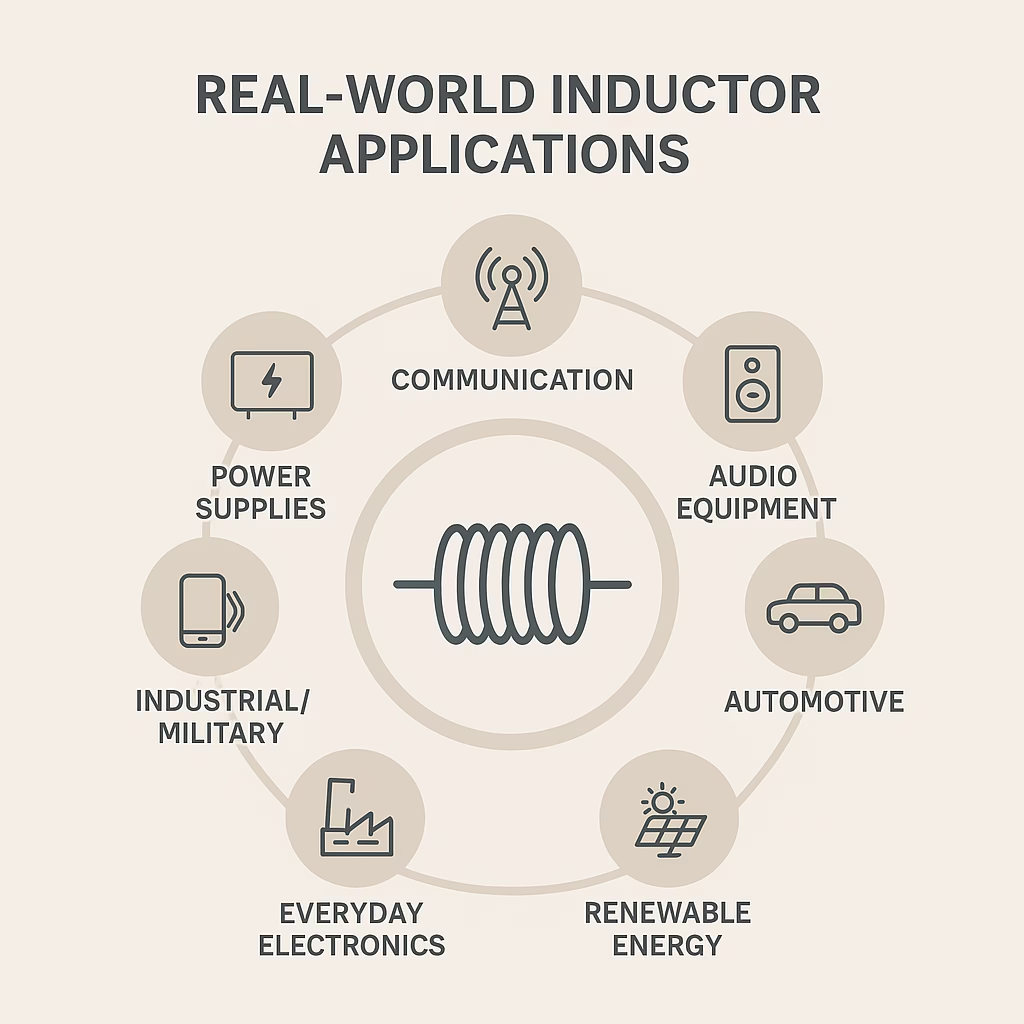
1. Real-World Inductor Examples: Inductors in Power Supplies
One of the most common real-world applications of inductors is in power supply circuits. Switching power supplies, such as those used in laptops, mobile phone chargers, and desktop computers, rely heavily on inductors for energy storage and filtering.
- DC-DC Converters: Inductors regulate voltage in step-up (boost) and step-down (buck) converters. For instance, when powering a smartphone, inductors help ensure the battery voltage is efficiently converted into the required voltage levels for the device.
- AC to DC Conversion: In linear power supplies, inductors act as filters, reducing AC ripple after rectification and providing smoother DC output.
- Power Factor Correction (PFC): Many industrial power systems use inductors for improving efficiency by correcting the power factor.
Real-World Example: Laptop chargers almost always include a high-frequency inductor coil to stabilize power flow and minimize energy losses.
2. Real-World Inductor Examples: Inductors in Communication Systems
In communication devices, inductors play a vital role in transmitting and receiving signals. They are often paired with capacitors to create tuned circuits or filters that allow specific frequency ranges to pass while blocking unwanted signals.
- Radio Tuners: Early analog radios used inductors in LC circuits for tuning into different frequencies. Even modern digital radios and wireless communication systems use inductors in RF circuits.
- Mobile Phones: The antennas inside smartphones rely on inductors for impedance matching, ensuring optimal signal transfer between the antenna and the transceiver.
- Wireless Routers: Inductors are embedded in RF modules to help minimize interference and stabilize signal transmission.
Real-World Example: Wi-Fi routers contain tiny surface-mount inductors that filter noise in RF communication circuits, enabling clear signal transmission.
3. Inductors in Audio Equipment
Sound systems and audio devices rely on inductors for filtering and improving sound quality.
- Crossover Networks: Loudspeakers use inductors in crossover circuits to separate high, mid, and low frequencies. For example, an inductor ensures that only low frequencies reach the subwoofer, preventing distortion.
- Noise Filters: Audio amplifiers use inductors to suppress unwanted noise, ensuring clean sound reproduction.
Real-World Example: Home theater systems and car audio systems use inductors to split frequencies between tweeters, midrange drivers, and woofers.
4. Real-World Inductor Examples: Inductors in Automotive Applications
Modern vehicles integrate advanced electronics where inductors are crucial for efficiency and safety.
- Electric Vehicles (EVs): EVs use inductors in power management systems to control high-voltage battery outputs and ensure smooth energy conversion.
- Ignition Systems: Traditional cars used ignition coils (a form of inductor) to generate high voltages for spark plugs.
- Electronic Control Units (ECUs): Inductors help filter electrical noise in automotive control systems, ensuring stable operation of sensors and processors.
Real-World Example: Tesla electric vehicles rely on powerful inductors in their DC-DC converters to regulate power distribution from high-voltage batteries to low-voltage onboard electronics.
5. Inductors in Renewable Energy Systems
As renewable energy adoption grows, inductors play a crucial role in ensuring efficient energy conversion.
- Solar Power Systems: Inductors are found in solar inverters, converting DC from solar panels into usable AC for homes and businesses.
- Wind Turbines: Power electronics in wind energy systems use inductors to filter noise and regulate power output.
Real-World Example: Residential solar inverters often contain large toroidal inductors to handle high power levels while minimizing energy losses.
6. Real-World Inductor Examples: Inductors in Everyday Electronics
Inductors are also found in everyday household devices, often unnoticed but highly impactful.
- Smartphones and Tablets: Tiny surface-mount inductors stabilize voltage levels, filter signals, and improve battery efficiency.
- Microwave Ovens: Inductors are used in magnetron circuits to help generate microwaves.
- LED Lighting: Many LED drivers include inductors to regulate current flow and prevent flickering.
Real-World Example: LED bulbs contain compact inductors in their driver circuits to ensure steady light output while conserving energy.
7. Inductors in Industrial and Military Applications
Heavy-duty industries and defense systems also depend on inductors for their durability and performance.
- Radar Systems: Inductors in RF circuits ensure precise signal detection and minimal interference.
- Medical Equipment: Devices such as MRI machines use powerful inductors for magnetic field generation.
- Industrial Motors: Large inductors smooth voltage and current in motor drive systems, ensuring efficient and reliable operation.
Real-World Example: MRI machines rely on massive superconducting inductors to create powerful magnetic fields used in medical imaging.
8. Real-World Inductor Examples: Different Types of Real-World Inductors
Inductors come in various forms, each optimized for specific applications:
- Air-Core Inductors: Common in RF applications due to low energy loss.
- Iron-Core Inductors: Used in power supplies for higher inductance values.
- Ferrite-Core Inductors: Popular in communication systems for their high-frequency performance.
- Toroidal Inductors: Found in solar inverters and high-power circuits due to their efficiency.
Conclusion
Inductors, though simple in design, play an indispensable role in modern electronics. From smartphones and Wi-Fi routers to electric vehicles and renewable energy systems, inductors ensure stability, efficiency, and performance across countless applications. By examining these real-world inductor examples, it becomes clear that without inductors, many of the technologies we rely on every day would not function as effectively—or at all.
As technology continues to evolve, inductors will remain a cornerstone of electronic design, adapting to new challenges in power management, communication, and sustainable energy solutions.