Pressure Sensors Measurement Type
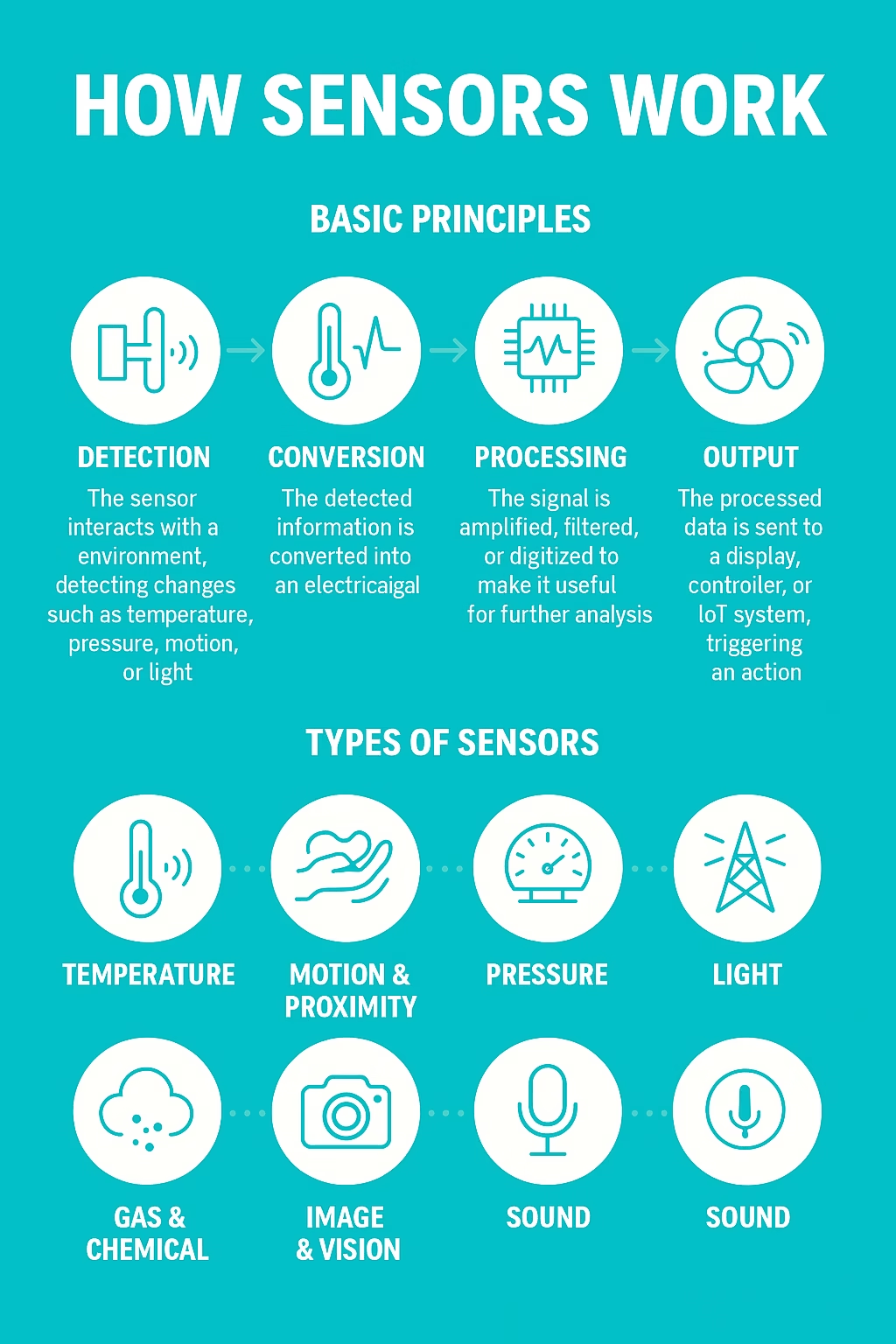
Pressure sensors measurement type ~ Pressure sensors play a pivotal role in various industries, ranging from automotive and aerospace to healthcare and industrial automation. These sensors convert pressure—typically of gases or liquids—into an electrical signal, enabling accurate monitoring and control of pressure-dependent processes.
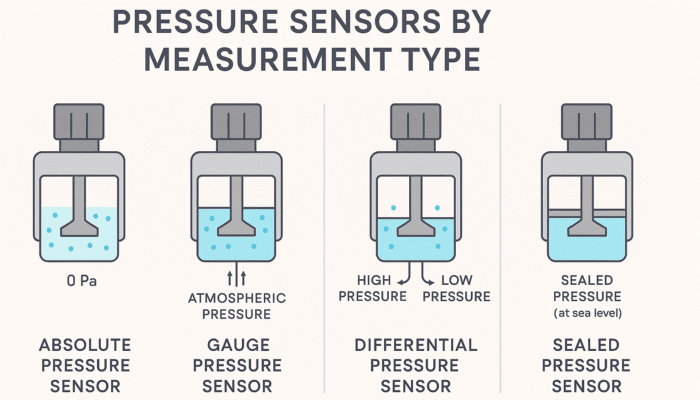
One of the most effective ways to classify pressure sensors is by measurement type. This classification is essential for understanding how a sensor works and determining its ideal applications.
In this article, we explore the four main types of pressure sensors based on their measurement methods:
- Absolute Pressure Sensors
- Gauge Pressure Sensors
- Differential Pressure Sensors
- Sealed Pressure Sensors
1. Pressure Sensors Measurement Type: Absolute Pressure Sensors
Definition:
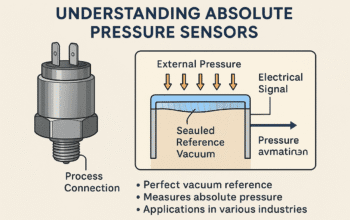
Absolute pressure sensors measure pressure relative to a perfect vacuum (0 Pa). This means they take the total atmospheric pressure into account.
Working Principle:
Inside an absolute pressure sensor is a sealed chamber that is completely evacuated to create a vacuum. The sensor measures the pressure difference between this vacuum and the pressure of the target environment.
Applications:
- Altitude measurement in aircraft and drones
- Weather monitoring systems
- Vacuum packaging
- Space and high-altitude research
Advantages:
- High accuracy in environments with changing atmospheric pressure
- Essential for measurements where total pressure (including atmospheric) is needed
2. Pressure Sensors Measurement Type: Gauge Pressure Sensors
Definition:
Gauge pressure sensors measure pressure relative to ambient atmospheric pressure. When your car tire gauge reads 32 PSI, it is showing gauge pressure.
Working Principle:
Gauge sensors have one side exposed to the medium being measured and the other side vented to the atmosphere. This allows them to subtract atmospheric pressure automatically from the total pressure.
Types:
- Vented Gauge: Has a vent hole to allow equalization with atmospheric pressure
- Vacuum Gauge: Measures pressures below atmospheric pressure
Applications:
- Tire pressure monitoring
- HVAC systems
- Hydraulic systems
- Water pumps and filtration
Advantages:
- Directly correlates with what is commonly needed in everyday applications
- Cost-effective and simple to use
3. Pressure Sensors Measurement Type: Differential Pressure Sensors
Definition:
Differential pressure sensors measure the difference between two pressure sources. These sensors have two ports—one for high pressure and one for low pressure.
Working Principle:
The sensor calculates the pressure differential by comparing the two inputs, rather than comparing to atmospheric or vacuum reference points.
Applications:
- Filter monitoring (e.g., in air conditioning)
- Flow measurement across an orifice or venturi
- Level measurement in pressurized tanks
- Medical respiratory devices
Advantages:
- Enables accurate monitoring in systems where pressure difference is critical
- Useful in dynamic systems with varying pressures
4. Pressure Sensors Measurement Type: Sealed Pressure Sensors
Definition:
Sealed pressure sensors are similar to gauge sensors but are referenced to a fixed, sealed pressure rather than to ambient atmosphere.
Working Principle:
These sensors are factory-calibrated against a known pressure (often standard atmospheric pressure at sea level), and they maintain this reference regardless of the environment.
Applications:
- High-pressure hydraulic systems
- Submarine and marine applications
- Environments with fluctuating external pressure
Advantages:
- Provides consistency in environments where atmospheric pressure is variable or cannot be trusted
- More stable over time compared to gauge sensors
Comparison Table: Pressure Sensors Measurement Type
| Sensor Type | Reference Point | Main Applications | Key Advantage |
|---|---|---|---|
| Absolute Pressure | Vacuum (0 Pa) | Altitude, weather systems | Measures total pressure |
| Gauge Pressure | Atmospheric pressure | Tires, HVAC, water pumps | Common and easy to interpret |
| Differential Pressure | Two pressure points | Filters, flow, level measurement | Measures pressure differences directly |
| Sealed Pressure | Fixed sealed pressure | Submarines, sealed hydraulic systems | Stable in variable environments |
Factors to Consider When Choosing a Pressure Sensors Measurement Type
1. Application Requirements
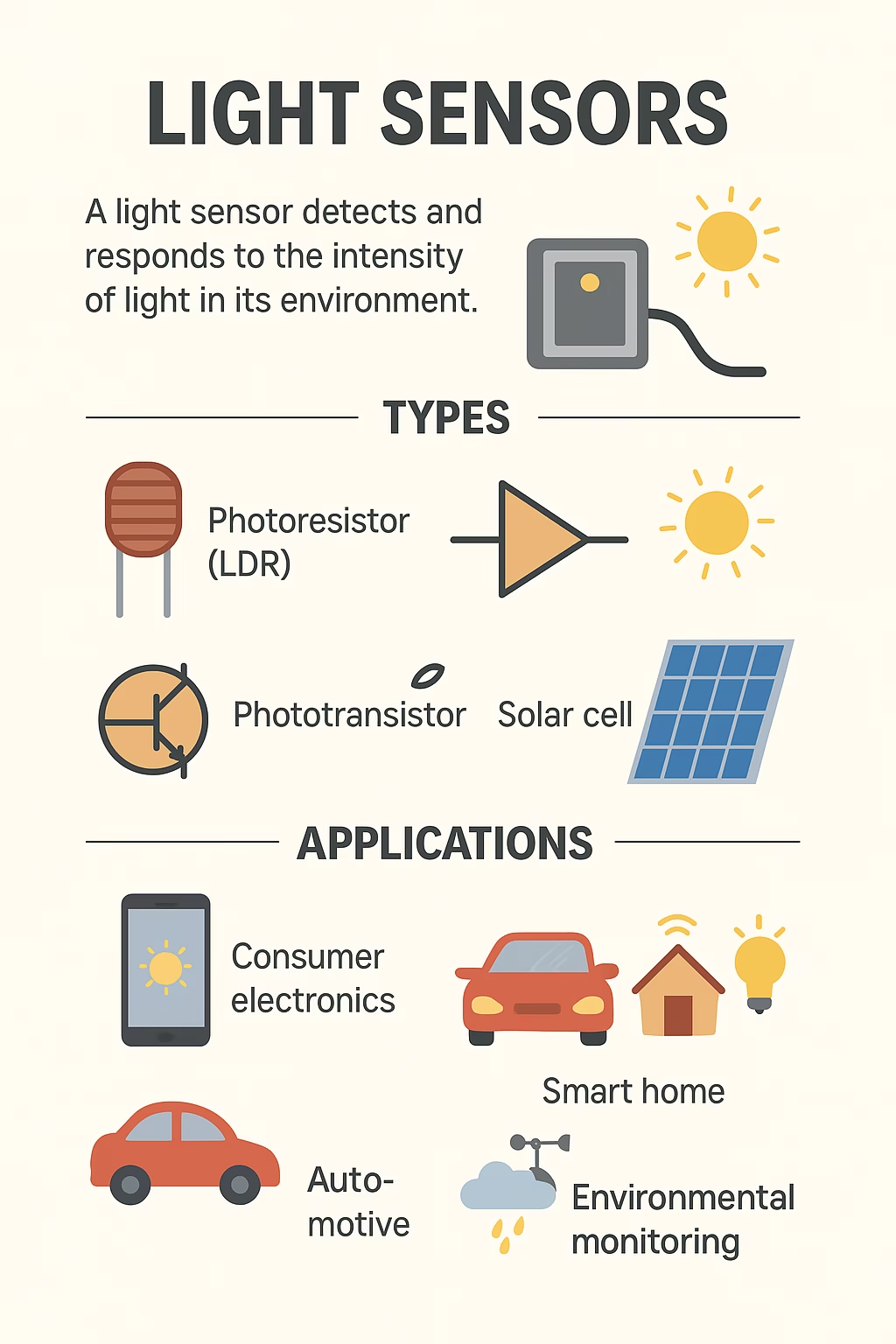
Understand whether your system needs to measure total pressure, pressure difference, or gauge pressure.
2. Environmental Conditions
If the sensor operates in fluctuating ambient conditions, a sealed or absolute sensor might be more appropriate.
3. Accuracy and Sensitivity
Each sensor type offers different levels of precision. For high-accuracy systems (e.g., aerospace), absolute or differential sensors are often preferred.
4. Cost and Complexity
Gauge sensors are generally the most economical. Differential and absolute types may require more complex calibration and setup.
Real-World Industry Use Cases Pressure Sensors Measurement Type
Aerospace:
- Absolute sensors are used for altitude determination in avionics.
- Differential sensors monitor airflow across wings.
Automotive:
- Gauge pressure sensors are used in tire pressure monitoring systems (TPMS).
- Sealed pressure sensors are applied in high-pressure fuel injection systems.
Medical:
- Differential pressure sensors are vital in respiratory monitoring and ventilators.
- Absolute pressure sensors help regulate pressurized oxygen delivery.
Conclusion of Pressure Sensors Measurement Type
Pressure sensors are indispensable in today’s technology-driven industries, and choosing the right type based on measurement method is crucial for performance and reliability. Whether you’re designing a weather balloon, a car engine, or a complex medical device, understanding the distinctions between absolute, gauge, differential, and sealed pressure sensors will ensure optimal system functionality.
For more insights and sensor-related innovations, visit Abi Royen’s official website—your trusted source for industrial and electronics knowledge.