Introduction
A power supply is one of the most fundamental components in any electrical or electronic system. It is responsible for providing the necessary electrical power to devices and ensuring they operate reliably and efficiently. Without a proper power supply, modern technology – from computers and smartphones to industrial machinery – would not function.
This article explores what a power supply is, how it works, the different types available, and where they are commonly used.
What is a Power Supply?
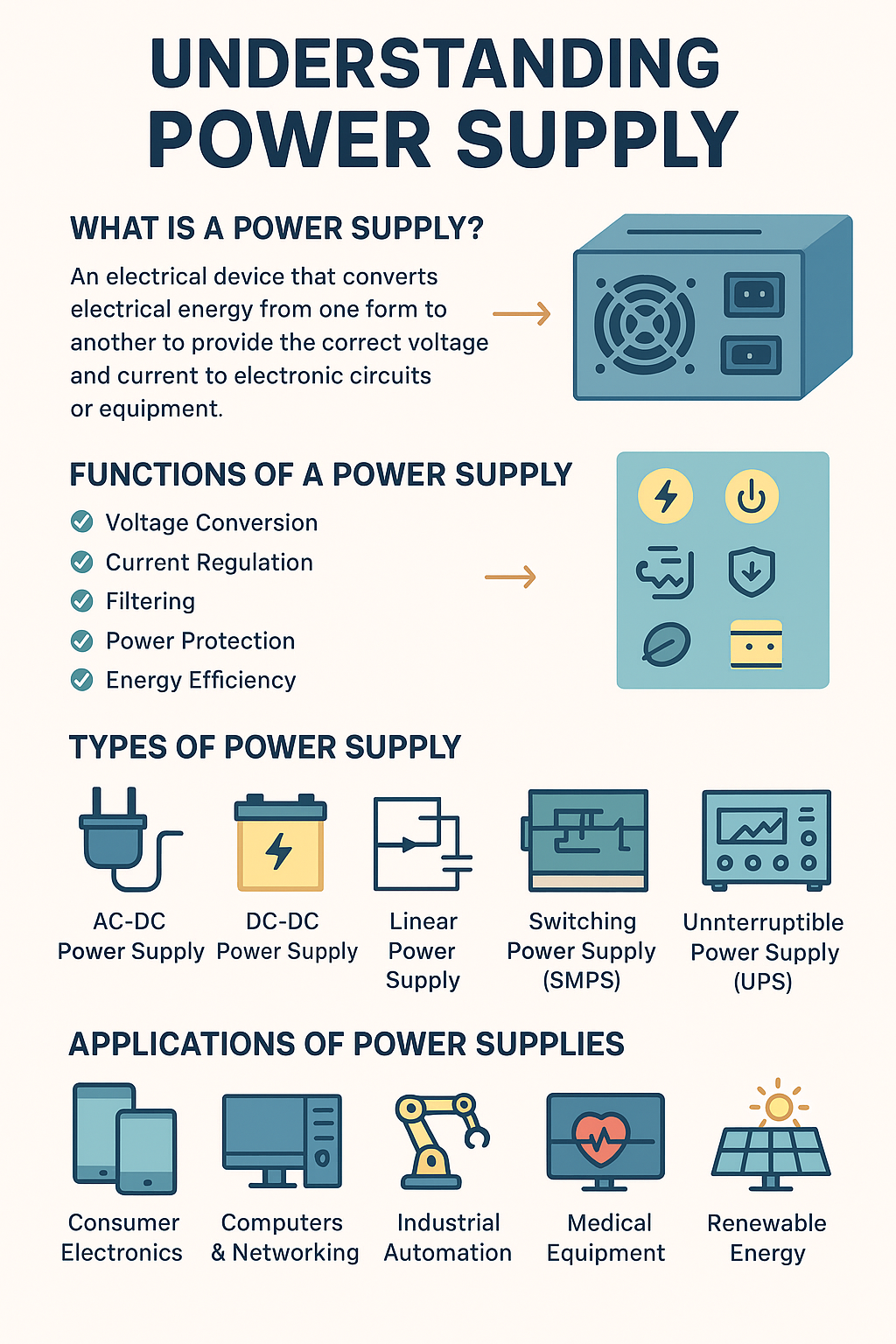
A power supply is an electrical device that converts electrical energy from one form to another to provide the correct voltage and current to electronic circuits or equipment. It ensures that electronic components receive a stable and regulated power source, protecting them from damage caused by fluctuations in voltage or current.
Power supplies can be standalone units (like desktop computer power supplies) or built directly into devices (such as in televisions, smartphones, or industrial machines).
Functions of a Power Supply
The primary functions of a power supply include:
- Voltage Conversion:
Converts high-voltage AC (alternating current) from mains power to a lower voltage suitable for devices. - Current Regulation:
Maintains a consistent current flow to prevent overloads and ensure stable operation. - Filtering:
Removes electrical noise and interference that could damage sensitive components. - Power Protection:
Includes features like short-circuit protection, overvoltage protection, and surge protection. - Energy Efficiency:
Modern power supplies minimize energy waste, improving efficiency and reducing heat output.
Types of Power Supply
Power supplies come in various forms depending on the application and the type of electrical conversion needed. Below are the most common types:
1. AC-DC Power Supply
Converts alternating current (AC) from the power grid into direct current (DC) used by electronic devices. Examples include phone chargers, computer power adapters, and LED drivers.
2. DC-DC Power Supply
Converts one DC voltage level to another. Often used in battery-powered devices like laptops, smartphones, and automotive electronics.
3. Linear Power Supply
Uses transformers and linear regulators to provide stable output voltage. Known for low noise but less efficient compared to switching power supplies. Commonly used in audio equipment and laboratory instruments.
4. Switching Power Supply (SMPS – Switched-Mode Power Supply)
Uses high-frequency switching and transformers to convert power efficiently. SMPS units are compact, lightweight, and widely used in computers, televisions, and industrial equipment.
5. Uninterruptible Power Supply (UPS)
Provides backup power during outages, ensuring continuous operation of critical devices like servers, medical equipment, and communication systems.
6. Programmable Power Supply
Allows users to adjust voltage and current levels as needed. Often used in research, testing, and development environments.
Key Components of a Power Supply
A typical power supply consists of several essential components:
- Transformer: Adjusts voltage levels (mainly in AC-DC supplies).
- Rectifier: Converts AC to DC.
- Filter: Smooths out ripples in the output voltage.
- Regulator: Maintains a stable output despite load changes.
- Protection Circuitry: Prevents damage from surges, short circuits, or overheating.
Applications of Power Supplies
Power supplies are used everywhere, from household electronics to industrial systems:
- Consumer Electronics: Smartphones, laptops, TVs, gaming consoles.
- Computers & Networking: Desktop PCs, servers, routers.
- Industrial Automation: Robotics, CNC machines, process control systems.
- Medical Equipment: Diagnostic machines, patient monitoring systems.
- Telecommunications: Base stations, data centers.
- Renewable Energy: Solar inverters, battery storage systems.
Choosing the Right Power Supply
Selecting the appropriate power supply for an application depends on several factors:
- Voltage and Current Requirements: Ensure compatibility with the device.
- Power Rating: Consider peak and continuous power demands.
- Efficiency: Higher efficiency reduces energy costs and heat output.
- Regulation and Stability: Critical for sensitive electronics.
- Size and Form Factor: Must fit within the device or system.
- Safety and Compliance: Look for certifications like UL, CE, or FCC.
The Future of Power Supply Technology
Advancements in power electronics are making power supplies more efficient, compact, and intelligent. Trends include:
- GaN (Gallium Nitride) Technology: Enables higher efficiency and smaller designs.
- Wireless Power Transfer: Eliminates the need for physical connectors.
- Smart Power Supplies: Integrated monitoring, diagnostics, and remote control.
- Green Energy Integration: Optimized for solar, wind, and battery storage systems.
Conclusion
A power supply is a vital component in any electrical system, ensuring devices operate safely, efficiently, and reliably. With ongoing innovations, power supplies are becoming more advanced, supporting the growth of modern technology and sustainable energy solutions.
Whether you are an electronics enthusiast, engineer, or simply curious about how your devices work, understanding power supplies provides valuable insight into the backbone of our digital world.