Introduction to Office Automation
In today’s fast-paced business world, efficiency and productivity are more critical than ever. Organizations across industries are turning to office automation as a way to streamline workflows, reduce manual errors, and enable employees to focus on higher-value tasks. Office automation refers to the use of digital systems, software, and processes that automate routine tasks such as document management, scheduling, communication, data entry, and reporting.
With the increasing adoption of Artificial Intelligence (AI), Cloud Computing, and Internet of Things (IoT), office automation has transformed from simple word processing tools into advanced, integrated systems capable of managing entire business operations.
What is Office Automation?
Office automation is the process of using technology-driven solutions to perform repetitive business tasks with minimal human intervention. These systems are designed to enhance accuracy, speed, and efficiency while allowing employees to focus on strategic decision-making.
Some common examples of office automation include:
- Document Management Systems (DMS): Automating document storage, retrieval, and sharing.
- Workflow Automation: Tools that streamline approvals, reporting, and task assignments.
- Communication Platforms: Automated email responders, chatbots, and scheduling assistants.
- Data Processing Software: Automated data entry, analysis, and report generation.
- Accounting Automation: Tools for invoicing, expense tracking, and payroll management.
The Evolution of Office Automation
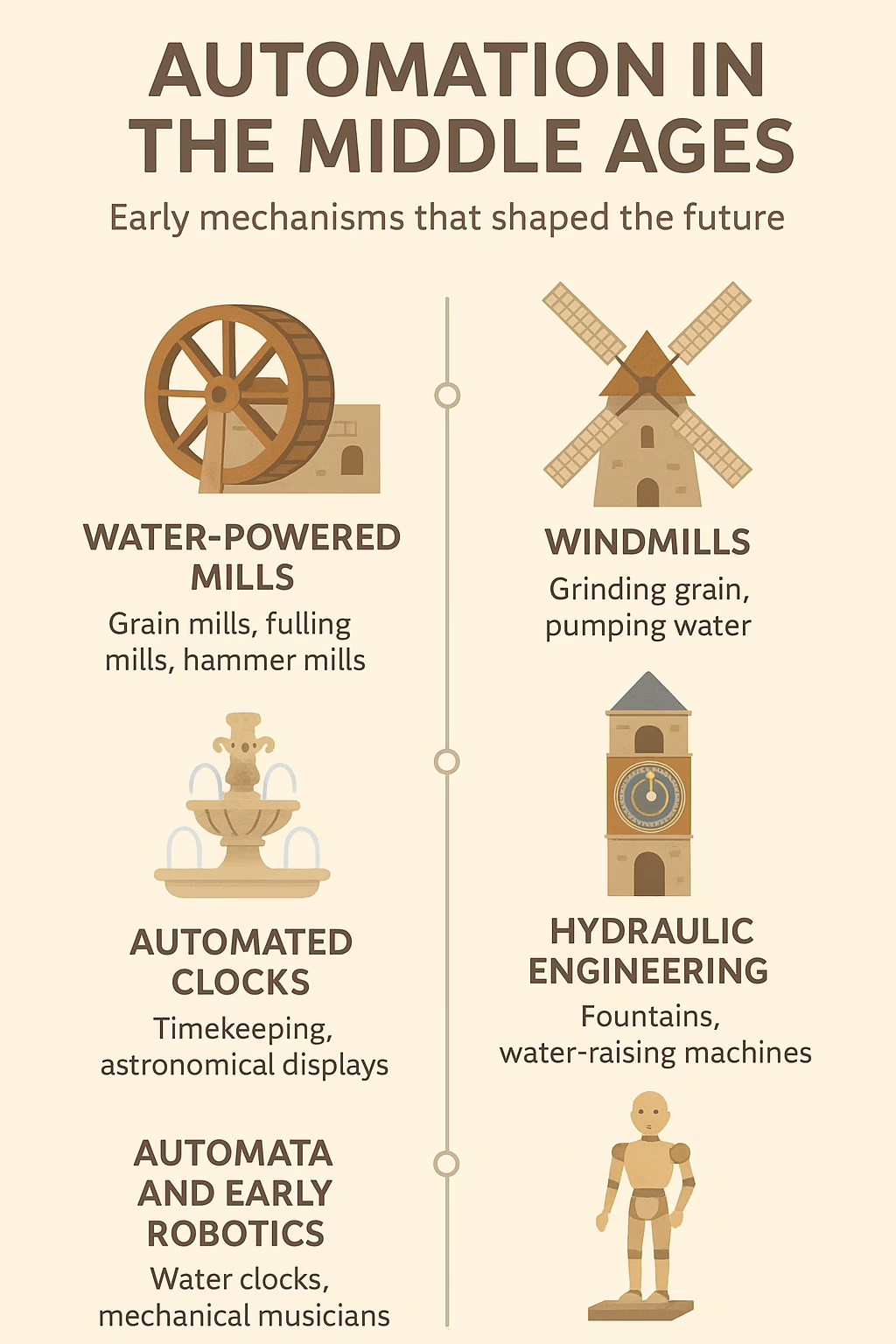
The concept of office automation is not new. In the early 20th century, businesses relied on typewriters, calculators, and filing cabinets to handle routine tasks. With the introduction of computers in the 1980s and the internet in the 1990s, office automation expanded significantly.
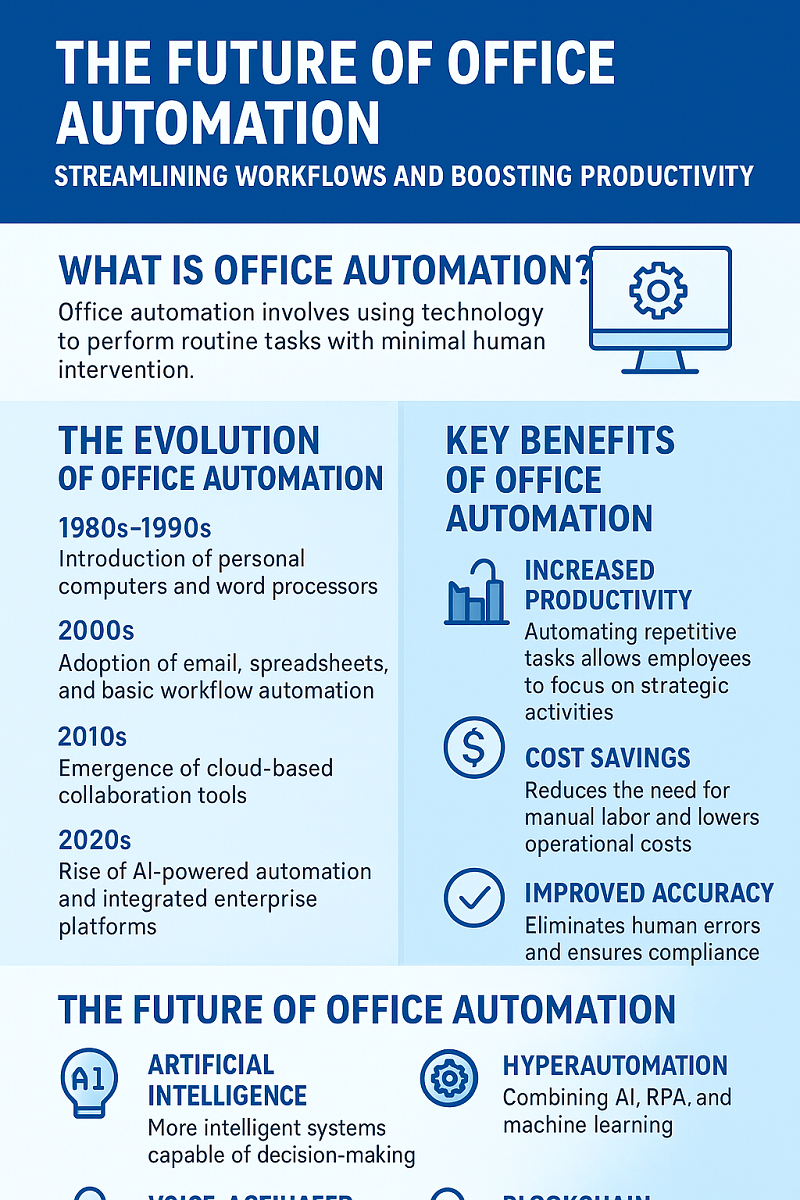
- 1980s–1990s: Introduction of personal computers and word processors.
- 2000s: Email, spreadsheets, and basic workflow automation became standard.
- 2010s: Cloud-based collaboration tools such as Google Workspace and Microsoft Office 365 emerged.
- 2020s: AI-powered automation tools, robotic process automation (RPA), and integrated enterprise platforms are redefining workplaces.
Key Benefits of Office Automation
Implementing office automation provides a wide range of benefits for businesses of all sizes:
1. Increased Productivity
By automating repetitive tasks, employees can spend more time on creative, analytical, and strategic activities that contribute directly to business growth.
2. Cost Savings
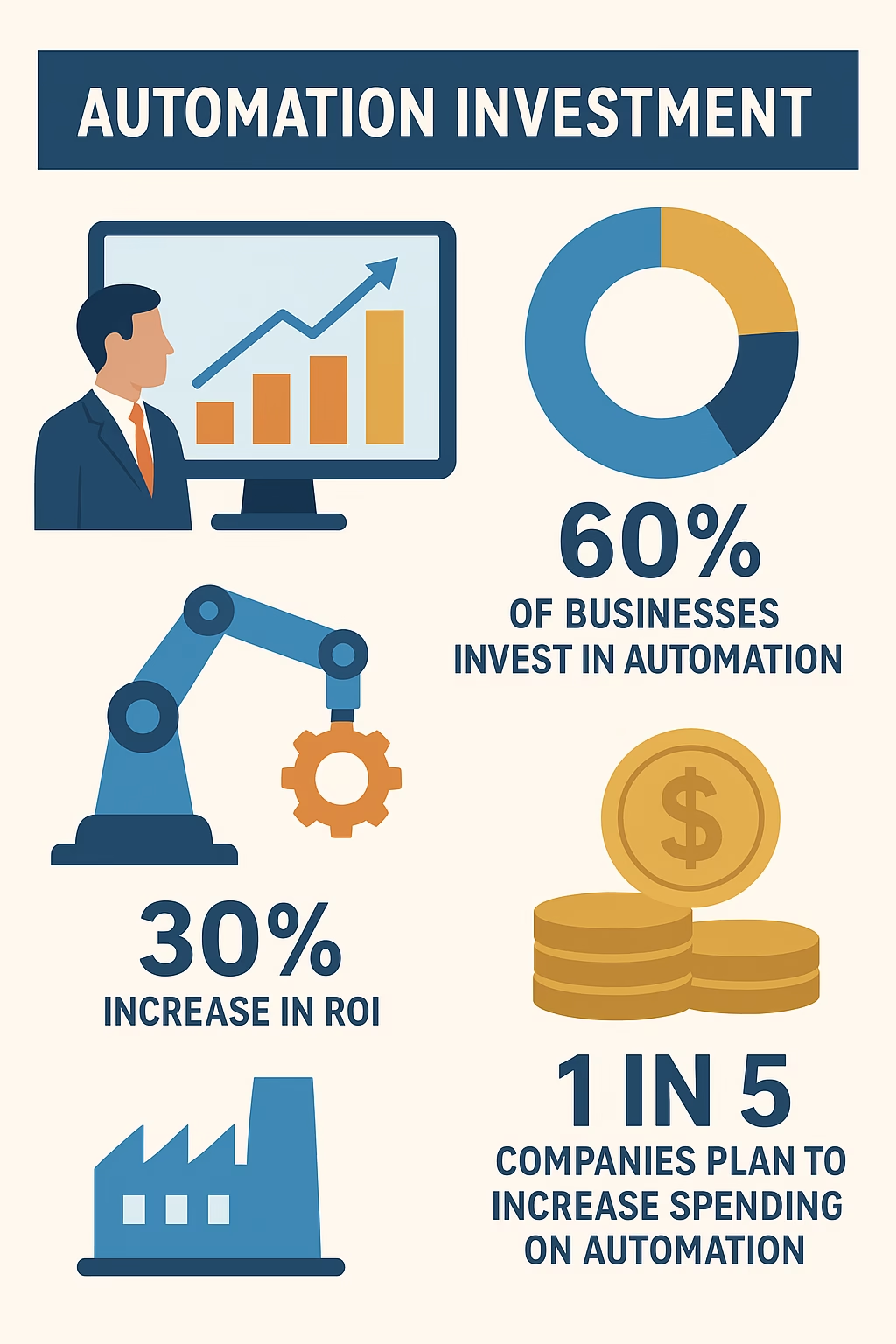
Automation reduces the need for manual labor, lowers operational costs, and minimizes human error, ultimately saving companies money.
3. Improved Accuracy and Compliance
Automated systems eliminate data entry errors and ensure compliance with regulatory requirements by maintaining accurate records.
4. Better Collaboration
Cloud-based tools allow employees to collaborate in real time, regardless of their location. This is especially vital in today’s remote and hybrid work environments.
5. Enhanced Customer Experience
Automation enables faster response times, personalized communication, and efficient service delivery, which improves customer satisfaction.
Core Components of Office Automation Systems
Office automation integrates multiple tools and technologies. The most essential components include:
- Word Processing & Document Editing Tools – Microsoft Word, Google Docs.
- Data Storage & Management Systems – Cloud storage platforms like OneDrive, Dropbox, and SharePoint.
- Communication Tools – Slack, Microsoft Teams, Zoom, and email automation.
- Workflow Automation Software – Monday.com, Asana, Trello, and Jira.
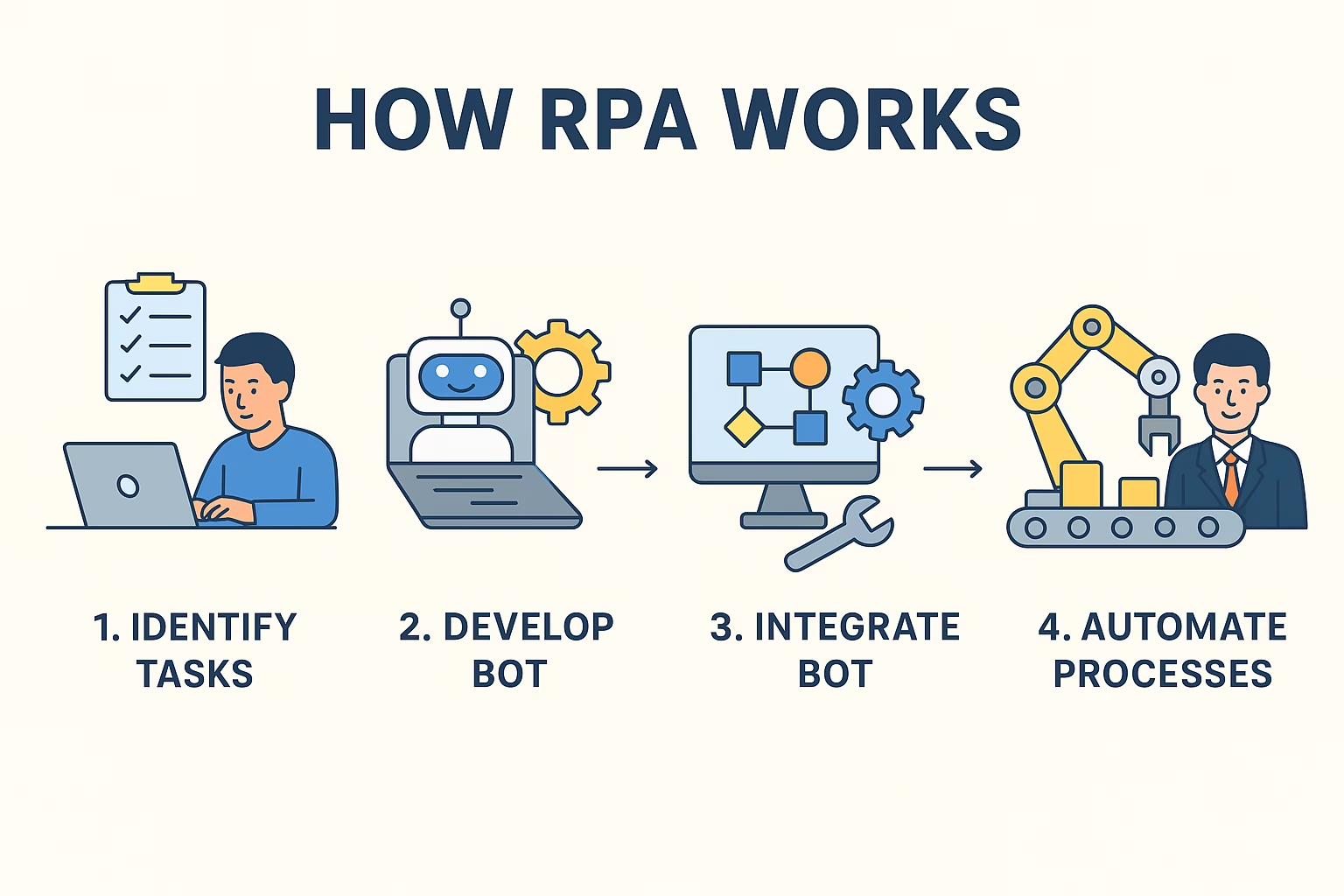
- Robotic Process Automation (RPA) – Tools like UiPath and Automation Anywhere for automating repetitive digital tasks.
- Artificial Intelligence & Machine Learning – AI-powered chatbots, predictive analytics, and smart assistants.
How Office Automation is Transforming Workplaces
Office automation is not just about convenience—it is a strategic advantage. Modern businesses use automation to:
- Enable remote work by providing cloud-based access to essential tools.
- Reduce operational risks by ensuring data security and compliance.
- Boost decision-making through real-time analytics and reporting.
- Support scalability by allowing businesses to expand without proportionally increasing workforce size.
For example, companies in finance automate invoice processing and compliance checks, while healthcare providers use automation to manage patient records and appointment scheduling.
Challenges of Office Automation
Despite its benefits, office automation comes with certain challenges:
- High Implementation Costs – Advanced automation tools may require significant investment.
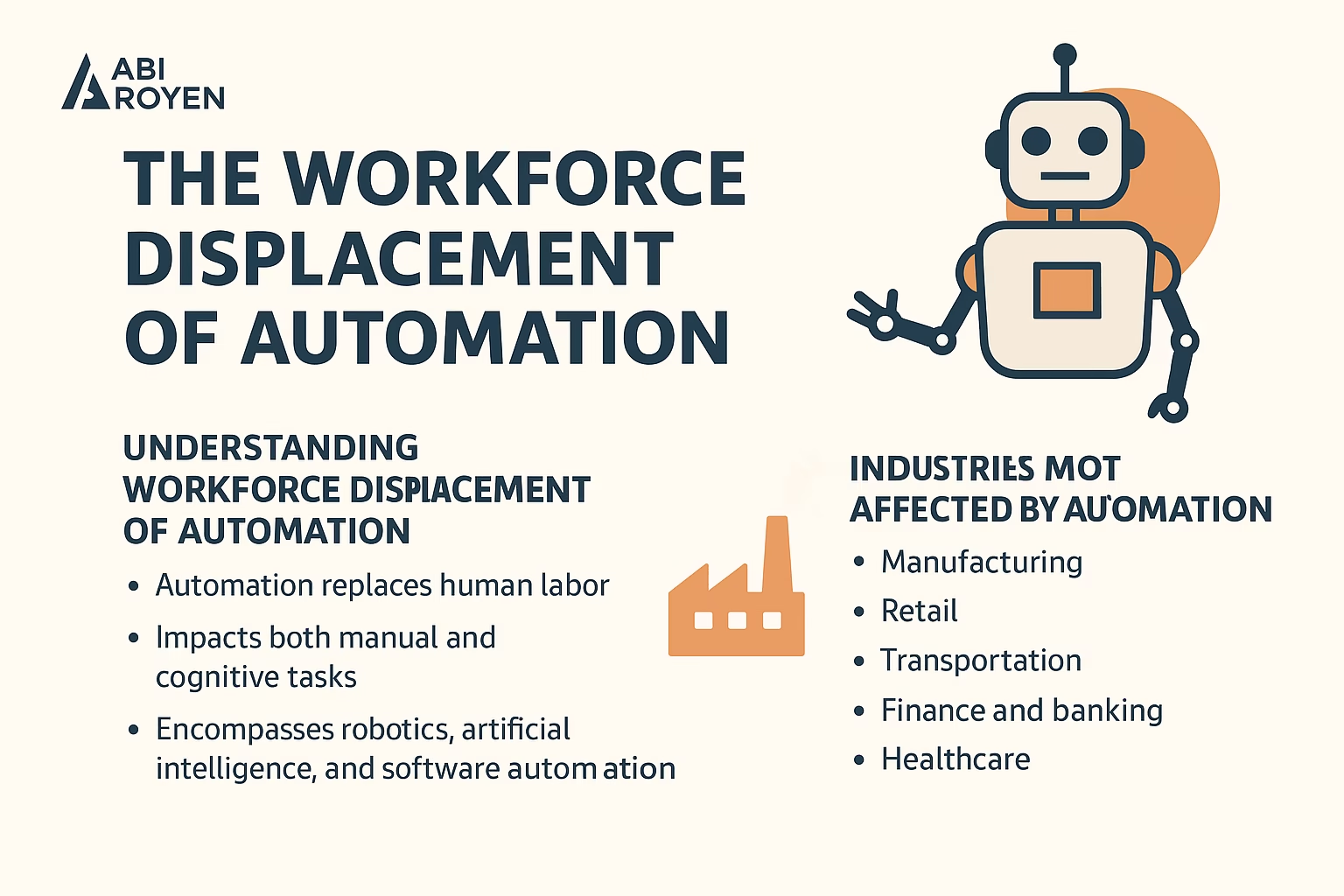
- Employee Resistance – Some workers may fear job loss due to automation.
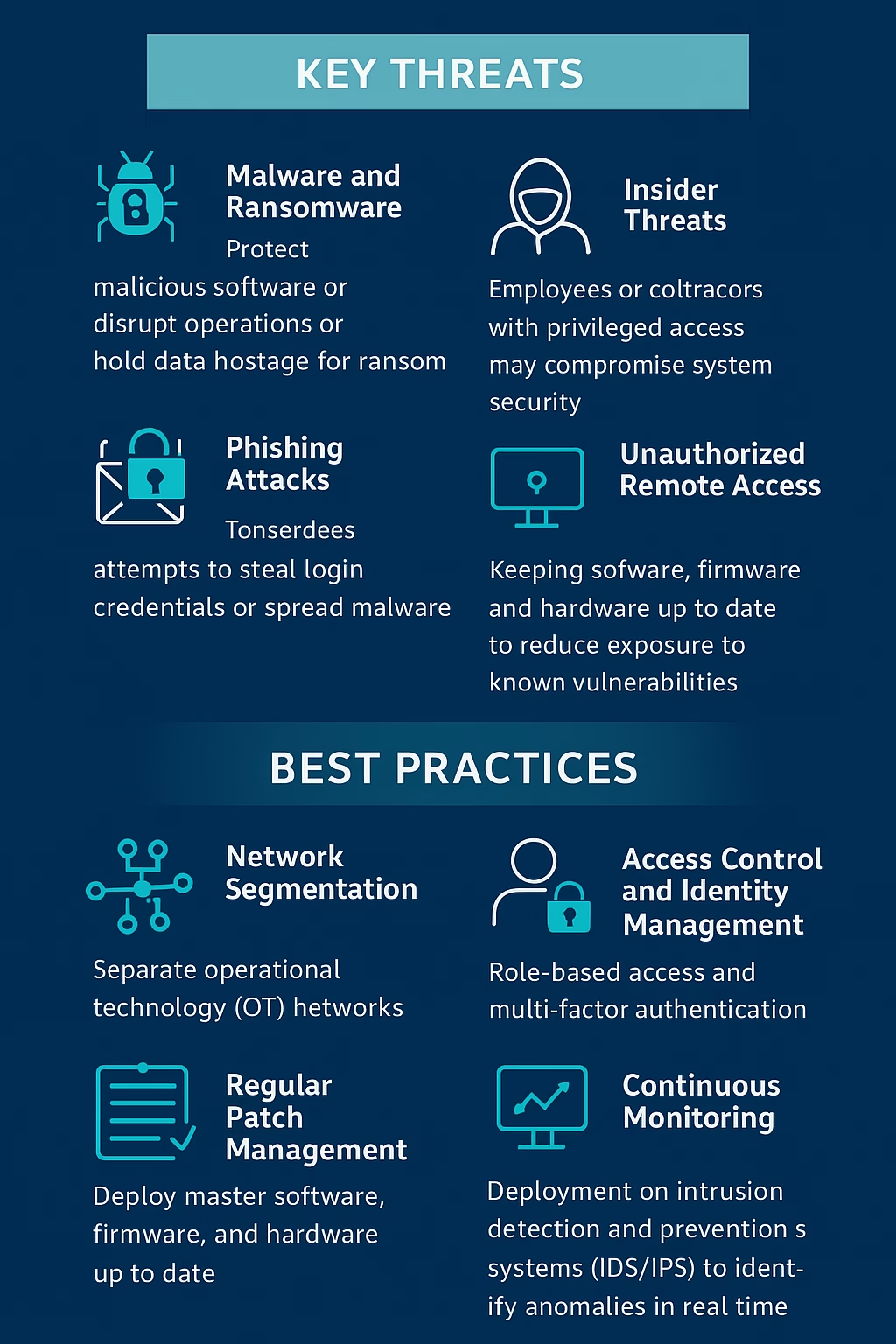
- Cybersecurity Risks – Automated systems must be protected from cyber threats.
- Integration Issues – Legacy systems may not always be compatible with new automation tools.
Businesses need to address these challenges with proper training, strong cybersecurity policies, and phased implementation strategies.
The Future of Office Automation
Looking ahead, office automation will continue to evolve, driven by emerging technologies. Key trends include:
- Artificial Intelligence (AI) Integration: More intelligent systems capable of decision-making.
- Hyperautomation: Combining AI, RPA, and machine learning to automate complex processes.
- Voice-Activated Assistants: Smart devices that respond to voice commands for scheduling and communication.
- Blockchain in Office Automation: Enhancing data security and transparency.
- IoT Integration: Smart office environments with connected devices for energy management, attendance tracking, and security.
The future workplace will likely be a fully digital ecosystem where automation, AI, and human expertise work together to maximize efficiency.
Conclusion
Office automation is no longer a luxury—it is a necessity for modern businesses. From improving productivity and reducing costs to enhancing customer satisfaction and enabling remote work, automation provides countless advantages. However, organizations must also address potential challenges such as implementation costs, cybersecurity, and employee adaptation.
As businesses continue to adopt digital technologies, office automation will play a crucial role in shaping the future of work, creating smarter, more efficient, and highly connected workplaces.