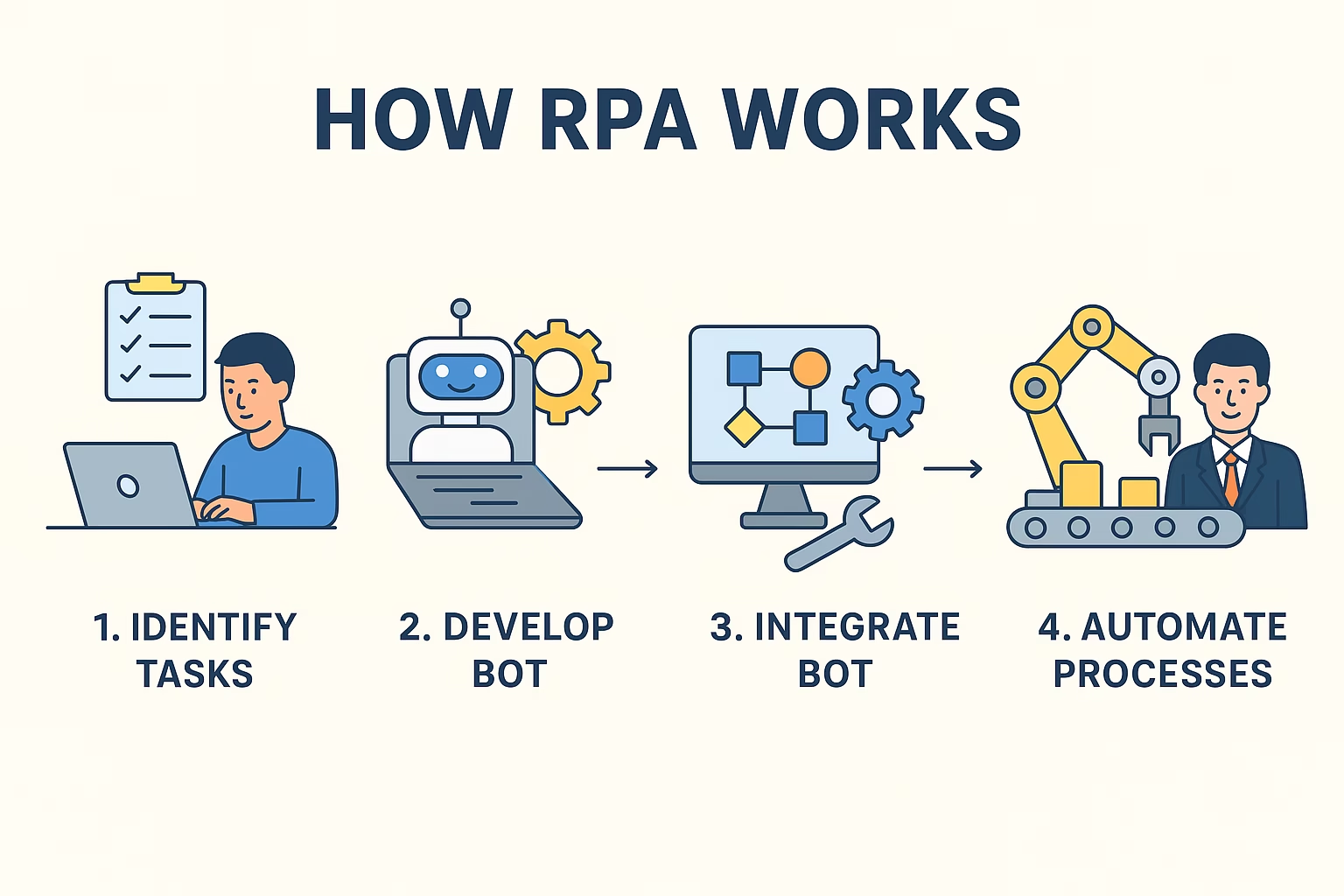

Introduction of Workforce Displacement of Automation
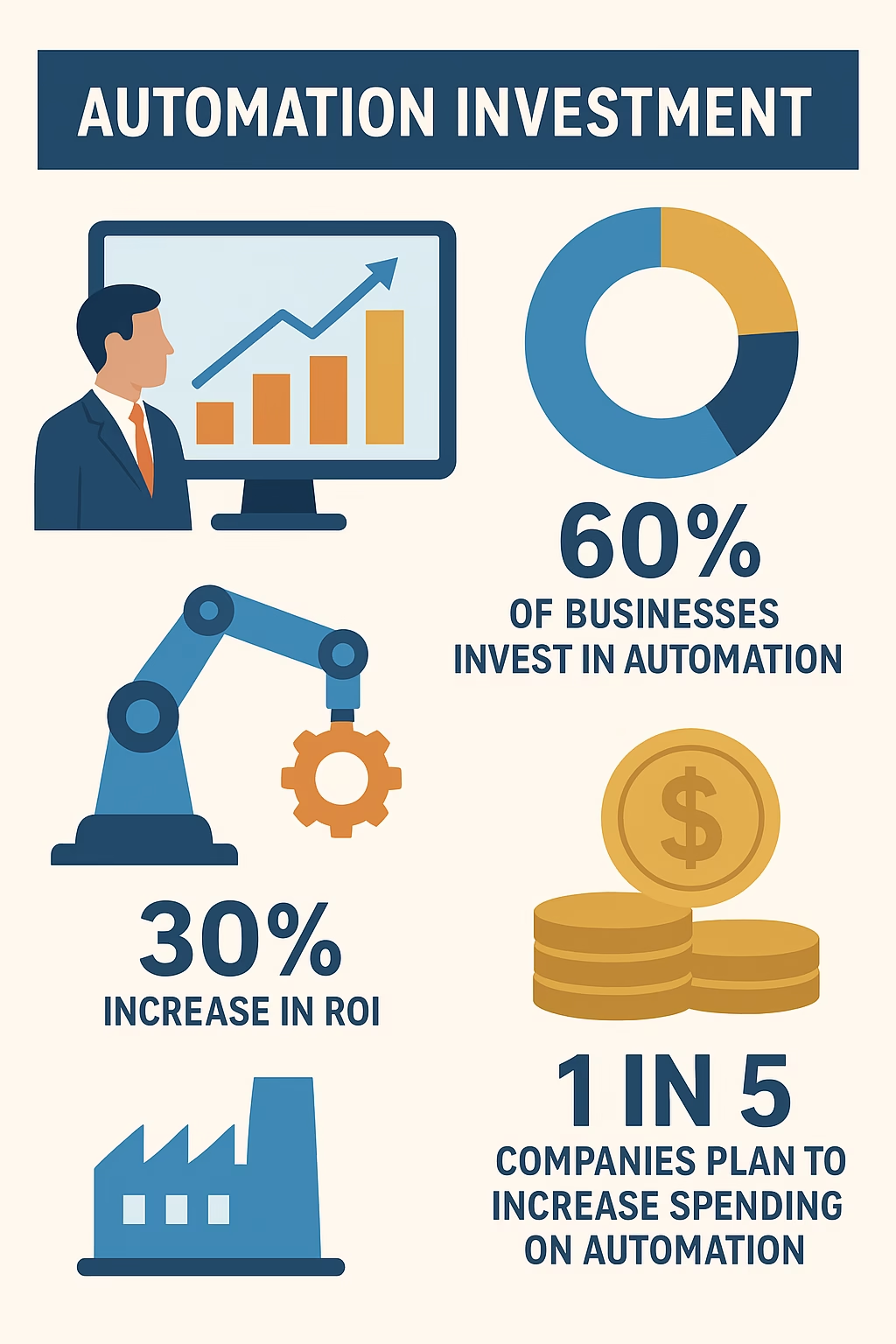
The rapid growth of automation and artificial intelligence (AI) has transformed the modern workplace. From manufacturing plants to customer service centers, automation is streamlining processes, reducing costs, and increasing efficiency. However, this advancement brings with it a critical challenge: workforce displacement of automation. Millions of workers around the globe face uncertainty as machines, robotics, and intelligent systems take over tasks that were traditionally performed by humans.
This article explores the concept of workforce displacement caused by automation, its impact on industries and employees, and the strategies that can help societies adapt to this inevitable transformation.
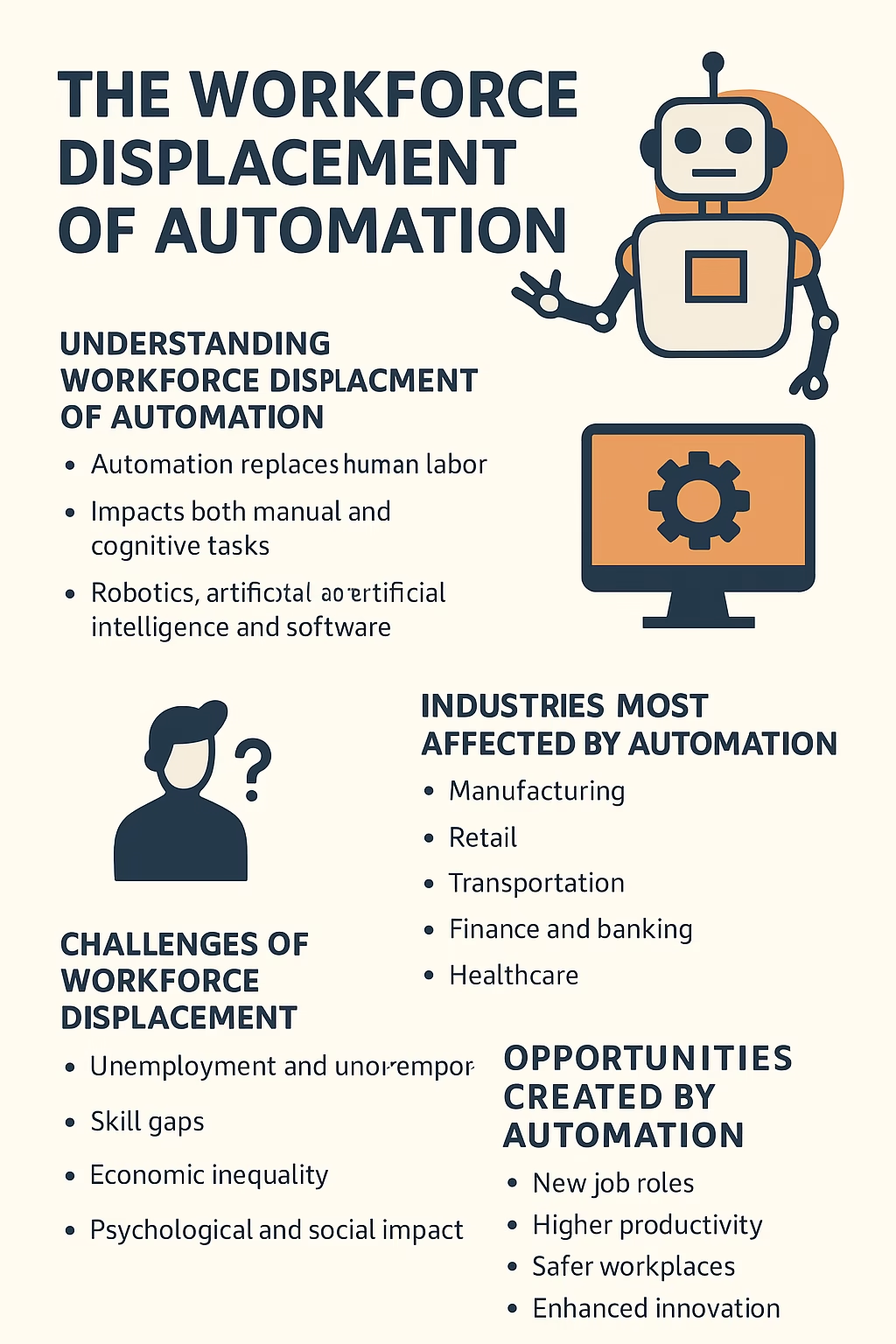
Understanding Workforce Displacement of Automation
Workforce displacement occurs when technological innovations, particularly automation, replace human labor. Unlike earlier industrial revolutions that primarily transformed physical labor, the current wave of automation affects both manual and cognitive tasks.
Automation now encompasses:
- Robotics in manufacturing and logistics.
- Artificial intelligence in customer support, finance, and healthcare.
- Software automation in data entry, analysis, and administrative tasks.
As a result, the scope of jobs affected has broadened, reaching blue-collar workers, white-collar professionals, and even highly skilled experts.
Industries Most Affected by Automation
Automation does not impact all industries equally. Certain sectors are more vulnerable to workforce displacement due to the repetitive and rule-based nature of their tasks.
1. Manufacturing
- Industrial robots perform welding, assembly, and packaging at speeds and precision beyond human capacity.
- Countries with strong manufacturing bases, such as China, the US, and Germany, are seeing massive shifts in employment structures.
2. Retail
- Automated checkout systems and e-commerce platforms reduce the demand for retail staff.
- Warehouse automation through robotics enhances efficiency but reduces low-skill labor opportunities.
3. Transportation
- The development of autonomous vehicles threatens jobs in trucking, delivery, and taxi services.
- Logistics companies are investing heavily in self-driving fleets to cut long-term labor costs.
4. Finance and Banking
- AI-driven algorithms now handle fraud detection, loan approvals, and financial analysis.
- Customer service chatbots replace human agents in many financial institutions.
5. Healthcare
- While automation aids in diagnosis and treatment, some roles such as administrative support are increasingly at risk.
- AI-powered diagnostic systems also reduce reliance on manual processes.
The Global Impact on Jobs
The International Labour Organization (ILO) and other economic bodies predict that automation could displace hundreds of millions of jobs worldwide by 2030. While many new jobs will be created, the challenge lies in the mismatch between skills required for future jobs and those that displaced workers currently possess.
Some key statistics include:
- McKinsey Global Institute estimates that up to 30% of global work activities could be automated by 2030.
- The World Economic Forum predicts automation will create 97 million new roles but displace 85 million jobs by 2025.
This highlights the dual nature of automation—job destruction and job creation—making adaptation strategies essential.
Challenges of Workforce Displacement of Automation
The workforce displacement caused by automation presents several challenges:
1. Unemployment and Underemployment
Workers whose jobs are automated may struggle to find new roles that match their skill sets.
2. Skill Gaps
The rise of automation requires digital literacy, coding, robotics maintenance, and data analysis skills—competencies many workers currently lack.
3. Economic Inequality
Automation can widen the gap between high-skilled and low-skilled workers, concentrating wealth among those who control technology.
4. Psychological and Social Impact
Job loss not only affects income but also influences mental well-being, identity, and social stability.
Opportunities Created by Automation
While automation poses challenges, it also creates new opportunities:
- New Job Roles – Fields like AI development, robotics engineering, and cybersecurity are rapidly expanding.
- Higher Productivity – Automation boosts efficiency, leading to economic growth and potentially more diverse job markets.
- Safer Workplaces – Robots take over hazardous tasks in mining, construction, and chemical industries.
- Enhanced Innovation – By automating repetitive tasks, human workers can focus on creativity, problem-solving, and innovation.
Adapting to Workforce Displacement of Automation
Governments, businesses, and individuals must collaborate to minimize the negative impacts of automation. Key strategies include:
1. Reskilling and Upskilling Programs
Workers must be trained in digital and technical skills to remain relevant in the labor market.
2. Lifelong Learning Culture
Encouraging continuous education ensures adaptability as technology evolves.
3. Public Policies and Safety Nets
Governments can implement unemployment support, universal basic income (UBI), and job transition programs to cushion displaced workers.
4. Industry Collaboration
Companies should invest in employee training and reallocation rather than mass layoffs.
5. Human-Machine Collaboration
Instead of full replacement, many industries can adopt hybrid models where humans and machines work together.
Case Studies
Amazon’s Warehouse Automation
Amazon uses robots for logistics but has simultaneously created thousands of tech-oriented jobs, such as robot maintenance and system programming.
Healthcare AI
AI systems support doctors in diagnosis, but human expertise remains critical for empathy, decision-making, and ethical judgments.
Future Outlook
Automation is not a threat to humanity but a challenge to adapt. The future of work depends on how societies manage the transition. A balanced approach, where innovation coexists with human development, will determine whether automation becomes a tool of empowerment or a driver of inequality.
Workers, industries, and policymakers must recognize automation as an unstoppable force and respond with resilience, adaptability, and forward-thinking strategies.
Conclusion of Workforce Displacement of Automation
The workforce displacement of automation is one of the most significant socio-economic challenges of the 21st century. While it disrupts traditional job structures, it also opens pathways to new opportunities and innovations. By embracing reskilling, lifelong learning, and human-machine collaboration, societies can ensure that automation enhances human potential rather than diminishes it.
Automation should not be feared but managed responsibly, ensuring a future where technological progress benefits all.