Introduction of How Sensors Work
How Sensors Work ~ In today’s digital era, sensors have become the invisible backbone of modern technology. From smartphones and cars to industrial machines and medical devices, sensors play a critical role in detecting, measuring, and responding to changes in the environment. But how do sensors actually work? This article provides a comprehensive explanation of the principles behind sensors, the various types available, and their practical applications in everyday life and industry.
What Are Sensors?
A sensor is a device that detects physical, chemical, or biological changes in its environment and converts them into measurable signals, usually electrical. These signals can then be processed by electronic systems, such as computers, microcontrollers, or IoT platforms, to make informed decisions or trigger automatic actions.
In simple terms, sensors act as the eyes and ears of modern technology, enabling machines to perceive the world around them.
Basic Principles of How Sensors Work
While there are many types of sensors, they generally follow a similar working principle:
- Detection – The sensor interacts with the environment, detecting changes such as temperature, pressure, motion, or light.
- Conversion – The detected information is converted into an electrical signal. For example, a temperature change may alter resistance, voltage, or current.
- Processing – The signal is amplified, filtered, or digitized to make it useful for further analysis.
- Output – The processed data is sent to a display, controller, or IoT system, triggering an action such as turning on a fan, adjusting brightness, or alerting a user.
This workflow highlights how sensors bridge the gap between the physical and digital worlds.
Types of Sensors and How Sensors Work
Sensors come in a wide range of designs, each tailored to measure specific parameters. Below are some of the most common types:
1. Temperature Sensors
- Principle: Detects changes in temperature through variations in electrical resistance, voltage, or infrared radiation.
- Examples: Thermocouples, RTDs (Resistance Temperature Detectors), infrared thermometers.
- Applications: Climate control, industrial heating systems, medical thermometers.
2. Motion and Proximity Sensors
- Principle: Use infrared, ultrasonic waves, or electromagnetic fields to detect motion or distance.
- Examples: PIR (Passive Infrared) sensors, ultrasonic sensors.
- Applications: Security systems, automatic doors, gesture recognition in smartphones.
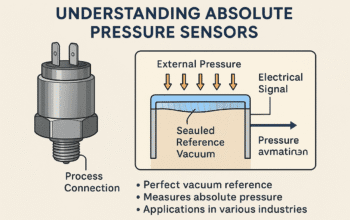
3. Pressure Sensors
- Principle: Measure force exerted on a surface and convert it into electrical signals.
- Examples: Strain gauge sensors, piezoelectric sensors.
- Applications: Tire pressure monitoring, weather forecasting, industrial hydraulics.
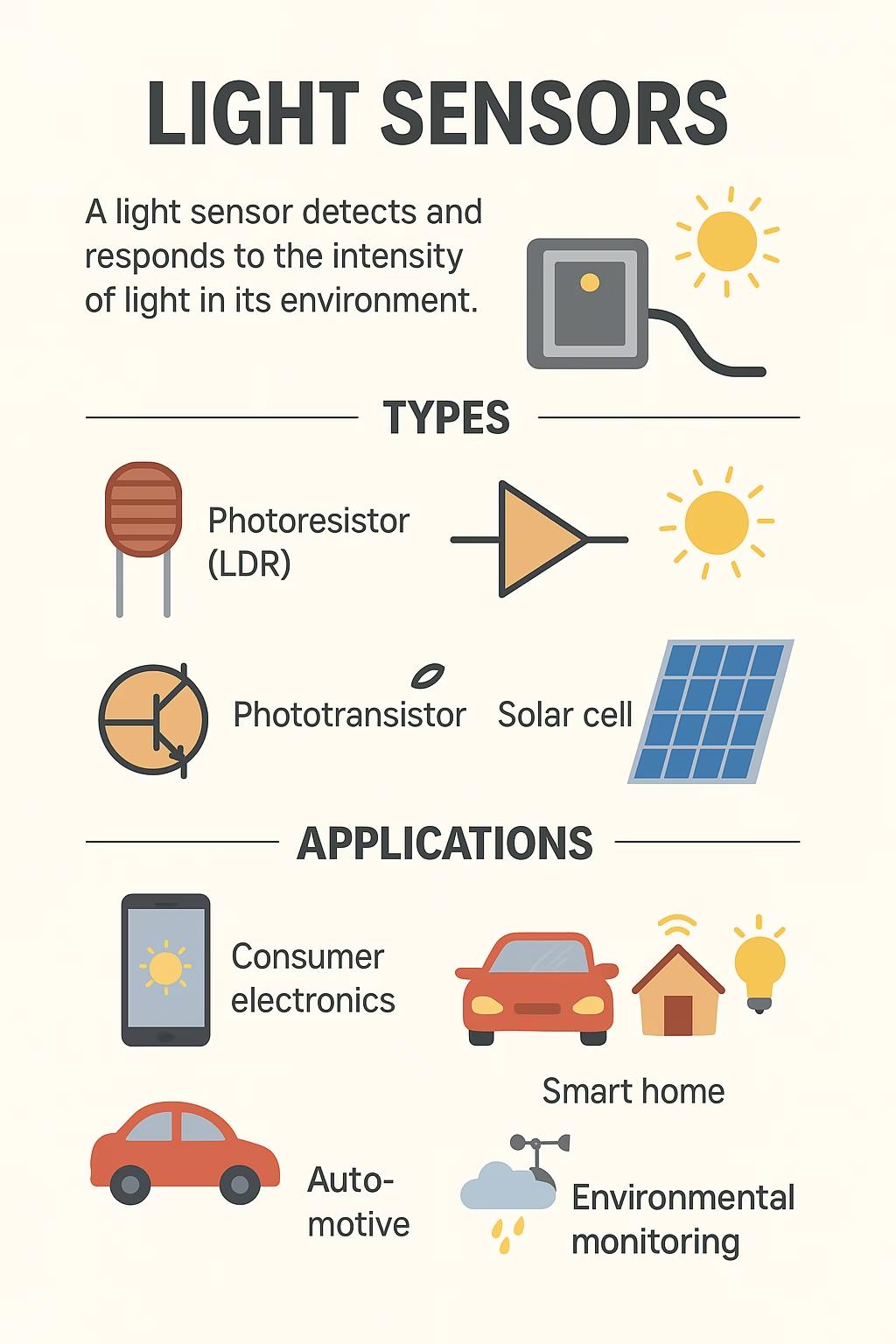
4. Light Sensors
- Principle: Detect intensity of light and convert it into electrical current.
- Examples: Photodiodes, LDRs (Light Dependent Resistors).
- Applications: Automatic lighting, smartphone brightness adjustment, solar tracking systems.
5. Gas and Chemical Sensors
- Principle: React with specific gases or chemicals, producing a measurable electrical change.
- Examples: CO2 sensors, oxygen sensors, pH sensors.
- Applications: Air quality monitoring, industrial safety, medical diagnostics.
6. Image and Vision Sensors
- Principle: Capture and process light signals to form digital images.
- Examples: CMOS sensors, CCD sensors.
- Applications: Digital cameras, autonomous vehicles, medical imaging.
7. Sound Sensors
- Principle: Detect vibrations in the air and convert them into electrical signals.
- Examples: Microphones, ultrasonic microphones.
- Applications: Voice recognition, hearing aids, industrial monitoring.
How Sensors Work Used in Modern Technology
Sensors are embedded in almost every technological system. Some notable applications include:
1. Consumer Electronics
- Smartphones use accelerometers, gyroscopes, and proximity sensors for gaming, screen rotation, and call management.
- Smartwatches employ heart rate sensors and GPS sensors for fitness tracking.
2. Industrial Automation
- Pressure, vibration, and temperature sensors are used to monitor machinery and ensure safe operation.
- IoT sensors enable predictive maintenance, reducing downtime and costs.
3. Automotive Industry
- Vehicles rely on sensors for airbags, tire pressure monitoring, engine control, and driver-assist features like parking sensors.
- Autonomous cars use a combination of lidar, radar, and vision sensors to navigate safely.
4. Healthcare and Medical Devices
- Sensors are critical in monitoring vital signs such as heart rate, oxygen levels, and blood pressure.
- Advanced imaging systems use vision sensors for diagnostics.
5. Environmental Monitoring
- Sensors measure pollution levels, water quality, and weather conditions.
- Smart agriculture uses soil moisture and temperature sensors to optimize crop yield.
The Role of Sensors in IoT (Internet of Things)
The Internet of Things (IoT) would not exist without sensors. They act as the foundation for smart homes, smart cities, and connected industries. For example:
- Smart thermostats use temperature sensors to optimize energy consumption.
- Smart traffic systems use motion and proximity sensors to reduce congestion.
- Wearable health devices rely on biosensors to track patient health in real time.

Challenges in Sensor Technology
Despite their benefits, sensors face certain challenges:
- Accuracy – Sensors must deliver reliable and precise data.
- Power Consumption – Especially important in portable or IoT devices.
- Environmental Conditions – Extreme temperatures, humidity, or dust may affect sensor performance.
- Cost and Miniaturization – Balancing affordability with advanced functionality is key.
Future of Sensor Technology
With advancements in nanotechnology, artificial intelligence (AI), and machine learning, sensors are becoming smaller, more accurate, and more intelligent. Future sensors will not just measure data but also analyze and respond autonomously, playing a crucial role in robotics, autonomous systems, and smart healthcare solutions.
Conclusion of How Sensors Work
Sensors are the unsung heroes of modern technology, silently powering the devices and systems we rely on every day. From detecting simple environmental changes to enabling complex autonomous machines, sensors bridge the physical and digital worlds. Understanding how sensors work, their principles, and applications gives us valuable insight into the technological innovations shaping our present and future.