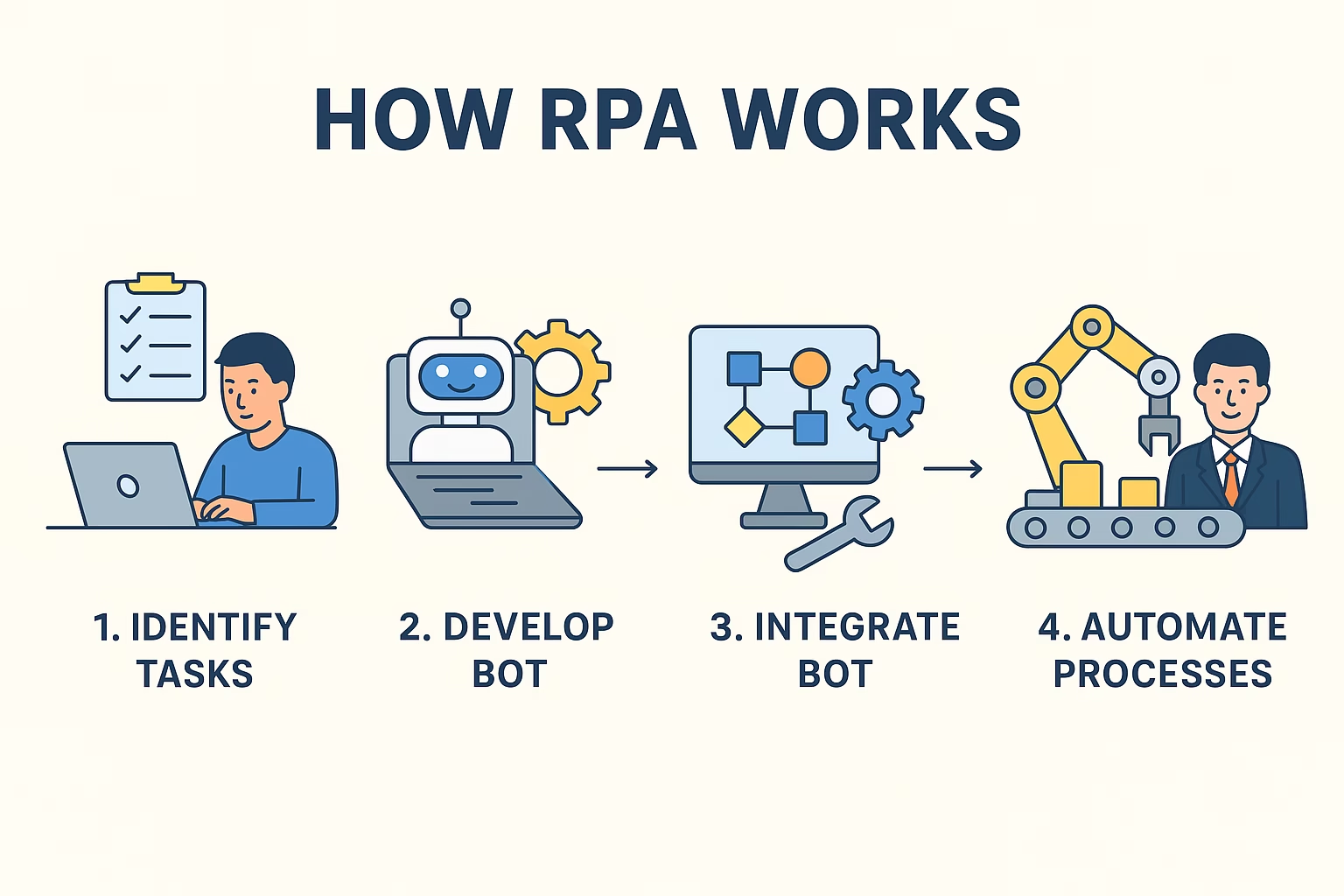

Future Trends in Automation ~ Automation has become the backbone of modern industries, reshaping the way businesses operate and redefining productivity. From robotic process automation (RPA) in offices to collaborative robots in factories, automation has expanded far beyond simple mechanical systems. With rapid advancements in artificial intelligence (AI), the Internet of Things (IoT), and cloud computing, the future of automation promises even more groundbreaking changes.
This article explores the key future trends in automation and how they will shape industries, economies, and the workforce in the coming decades.
1. Future Trends in Automation: Artificial Intelligence-Powered Automation
AI is at the core of next-generation automation. Unlike traditional machines that follow predefined instructions, AI-driven systems can analyze data, learn patterns, and make intelligent decisions.
- Predictive Maintenance: AI enables equipment to predict failures before they occur, reducing downtime and costs.
- Quality Control: Automated vision systems powered by machine learning can detect defects more accurately than humans.
- Autonomous Operations: AI is driving self-operating factories and logistics systems, reducing the need for constant human intervention.
In the future, AI will be seamlessly integrated into all levels of automation, from office workflows to manufacturing processes.
2. Robotics and Collaborative Robots (Cobots)
Robotics is evolving from traditional, rigid machines into flexible, intelligent, and collaborative systems.
- Cobots in Manufacturing: Unlike industrial robots that work in isolation, cobots are designed to safely work alongside humans. They are widely used for assembly, packaging, and material handling.
- Service Robots: From healthcare assistance to warehouse management, robots are expanding beyond factories into everyday services.
- Autonomous Mobile Robots (AMRs): Future warehouses and logistics hubs will be filled with AMRs that can navigate independently, optimizing supply chain efficiency.
The future of robotics lies in adaptability, intelligence, and human-robot collaboration.
3. Future Trends in Automation: The Internet of Things (IoT) and Industrial IoT (IIoT)
IoT is creating smart, connected systems where machines, sensors, and devices communicate in real time.
- Smart Manufacturing: IIoT enables factories to track production lines, monitor energy usage, and optimize performance.
- Supply Chain Visibility: Connected devices provide real-time updates, reducing inefficiencies and bottlenecks.
- Remote Monitoring and Control: Future automation will allow operators to manage facilities from anywhere in the world.
As 5G networks expand, IoT will become even faster and more reliable, unlocking new possibilities for automation.
4. Hyperautomation: Beyond RPA
Hyperautomation combines RPA, AI, IoT, and machine learning to automate complex business processes. Unlike simple task automation, hyperautomation allows organizations to streamline entire workflows.
- End-to-End Process Automation: Businesses can automate decision-making, document processing, and customer interactions.
- Data-Driven Insights: Hyperautomation provides real-time analytics for smarter decision-making.
- Scalability: It enables organizations to expand automation across multiple departments seamlessly.
Future enterprises will rely heavily on hyperautomation to remain competitive in an increasingly digital world.
5. Future Trends in Automation: Cloud and Edge Computing in Automation
Cloud technology is enabling centralized automation platforms, while edge computing brings real-time processing closer to the source.
- Cloud Automation: Businesses can scale their automation systems without heavy investments in infrastructure.
- Edge Automation: In manufacturing, edge devices reduce latency by processing data locally, crucial for time-sensitive operations like robotics.
- Hybrid Systems: The future will see a balance of cloud and edge computing for maximum efficiency.
This trend will empower industries with faster, more flexible, and cost-effective automation solutions.
6. Sustainability and Green Automation
The future of automation is not just about efficiency—it’s about sustainability.
- Energy-Efficient Manufacturing: Smart systems optimize energy usage, reducing carbon footprints.
- Circular Economy Automation: Automated recycling systems sort and process materials more effectively.
- Green Robotics: Future robots will be designed to minimize waste and use renewable energy sources.
Sustainable automation will play a key role in achieving global climate goals.

7. Future Trends in Automation: Human-Machine Collaboration and the Future Workforce
As automation grows, the relationship between humans and machines is evolving.
- Upskilling Workforce: Workers will need to focus on creativity, problem-solving, and digital skills.
- AI Assistants: Employees will rely on AI tools to handle repetitive tasks, allowing them to focus on innovation.
- Ethical Automation: Future trends will emphasize ethical practices to ensure fairness, transparency, and inclusivity in automation.
Rather than replacing humans, future automation will augment human capabilities.
8. Future Trends in Automation: Cybersecurity in Automated Systems
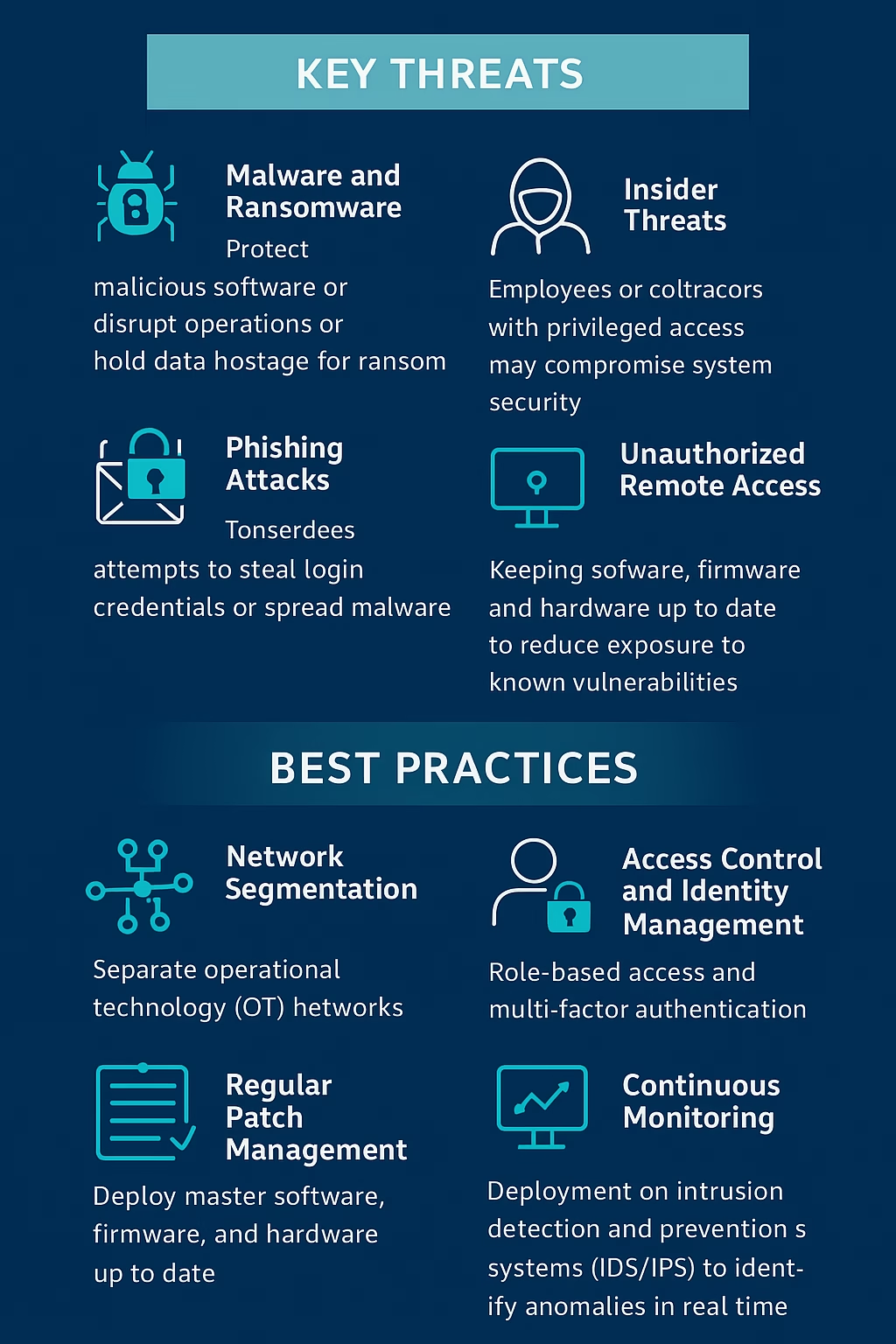
With increasing connectivity comes greater risk. Cybersecurity will be crucial in future automation.
- Protecting Industrial Systems: IIoT devices are vulnerable to cyberattacks, requiring advanced security protocols.
- AI-Driven Security: Automation itself will play a role in detecting and preventing threats in real time.
- Regulatory Compliance: Future industries will adopt stricter standards to secure data and systems.
Secure automation will build trust and resilience in digital ecosystems.
Conclusion: Future Trends in Automation
The future trends in automation are set to transform industries, businesses, and societies at an unprecedented scale. From AI and robotics to hyperautomation and sustainable practices, the next industrial revolution will be defined by intelligent, connected, and human-centered systems.
Organizations that embrace these trends early will gain a competitive edge, while those who resist may struggle to keep up in the digital era. As automation evolves, it will not eliminate humans but empower them to achieve more—ushering in a future where technology and people work together in harmony.