


Advantages of using thyristors in modern electronics, including efficiency, reliability, cost-effectiveness, and high-power applications.
Thyristor
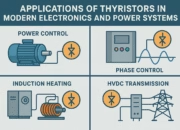
Applications of Thyristors in Modern Electronics and Power Systems
Applications of thyristors in electronics, power control, motor drives, inverters, industrial automation. Thyristors are essential in modern electrical systems.
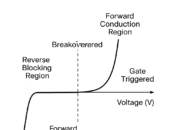
Characteristics of Thyristors: A Comprehensive Guide
Characteristics of thyristors, including structure, operation, and performance parameters. Learn how these semiconductor devices are used in power electronics.
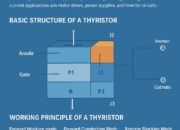
Structure of a Thyristor: A Comprehensive Guide
Structure of a thyristor, layers, junctions, and working principle. Learn how this semiconductor device operates and its practical applications in electronics.
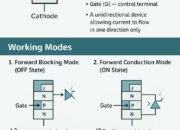
Working Principle of Thyristors: A Complete Guide
Working principle of thyristors, structure, operation, key applications in electronics and power control systems. A detailed guide for engineers and students.




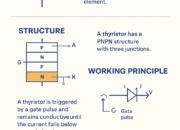
What is a Thyristor? A Complete Guide to Its Functions, Types, and Applications
What is a Thyristor? how it works, its key functions, different types, and industrial applications. Discover why thyristors are essential in power electronics.
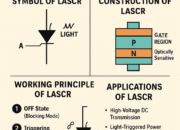
Understanding LASCR (Light Activated Silicon Controlled Rectifier): Working, Applications, and Advantages
Light Activated Silicon Controlled Rectifier
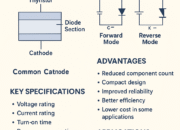
Understanding Reverse Conducting Thyristor (RCT): Structure, Working, and Applications
Reverse Conducting Thyristor (RCT)






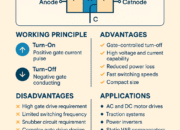
Gate Turn-Off Thyristor (GTO): Working Principle, Applications, and Advantages
Gate Turn-Off Thyristor (GTO)
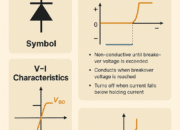
DIAC (Diode for Alternating Current): Working Principle, Characteristics, and Applications
DIAC (Diode for Alternating Current)
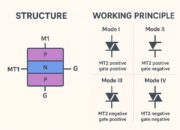
Understanding TRIAC (Triode for Alternating Current): Structure, Working Principle, and Applications
TRIAC (Triode Alternating Current)
No More Posts Available.
No more pages to load.