Introduction
Autonomous Automation ~ Automation has been a cornerstone of technological progress for decades, but the landscape is rapidly evolving with the integration of Artificial Intelligence (AI) and Machine Learning (ML). What was once limited to rule-based automation is now shifting toward Autonomous Automation—a system that can make decisions, adapt to changes, and improve itself without constant human intervention. This transformation is not only driving efficiency but also reshaping the future of work, industry, and digital transformation.
In this article, we will explore the concept of autonomous automation, how AI and ML enable its advancement, its benefits, use cases, challenges, and what the future holds for this revolutionary approach.
What is Autonomous Automation?
Autonomous automation is the next generation of automation that integrates AI and ML to allow systems to operate intelligently without manual oversight. Unlike traditional automation, which follows predefined workflows and rules, autonomous automation can:
- Perceive and understand data in real time.
- Decide the best course of action based on learned patterns.
- Adapt to new conditions without human programming.
- Improve continuously as more data becomes available.
This makes it a crucial enabler for smart factories, autonomous vehicles, digital assistants, and self-healing IT infrastructures.
Role of AI and Machine Learning in Autonomous Automation
AI and ML are the core engines that power autonomous automation:
- Artificial Intelligence (AI):
AI provides cognitive capabilities, enabling machines to analyze unstructured data, recognize patterns, and simulate human-like decision-making. - Machine Learning (ML):
ML enhances automation by allowing systems to learn from data, predict future outcomes, and improve processes dynamically.
Together, AI and ML elevate automation from static rule-based execution to self-learning intelligent systems that can handle unpredictability.
Benefits of Autonomous Automation
The adoption of AI-driven automation brings several advantages:
- Higher Efficiency and Productivity
By eliminating manual intervention, businesses can run 24/7 operations with minimal downtime. - Cost Reduction
Automation reduces labor costs and prevents errors that could lead to financial losses. - Improved Decision-Making
AI algorithms can process massive data sets faster than humans, leading to more accurate insights. - Scalability
Autonomous systems can scale operations rapidly without requiring proportional increases in manpower. - Innovation Enablement
By automating routine tasks, organizations can focus on creativity and strategic initiatives.
Real-World Applications of Autonomous Automation
- Manufacturing and Industry 4.0
Smart factories use AI and ML for predictive maintenance, quality assurance, and fully automated production lines. - Healthcare
AI-driven automation supports diagnostics, patient monitoring, robotic surgery, and administrative efficiency. - Autonomous Vehicles
Self-driving cars are a prime example of autonomous automation, processing sensor data to make split-second driving decisions. - Financial Services
Banks and fintechs use AI-powered bots for fraud detection, algorithmic trading, and customer service. - IT and Cybersecurity
Autonomous automation enables self-healing networks, proactive cybersecurity defenses, and intelligent system monitoring. - Retail and E-Commerce
Personalized recommendations, supply chain optimization, and automated customer support are transforming consumer experiences.
Challenges of Autonomous Automation
Despite its promise, autonomous automation faces hurdles:
- Data Quality and Availability
AI and ML systems depend on high-quality data. Incomplete or biased data can lead to inaccurate outcomes. - Ethical and Trust Concerns
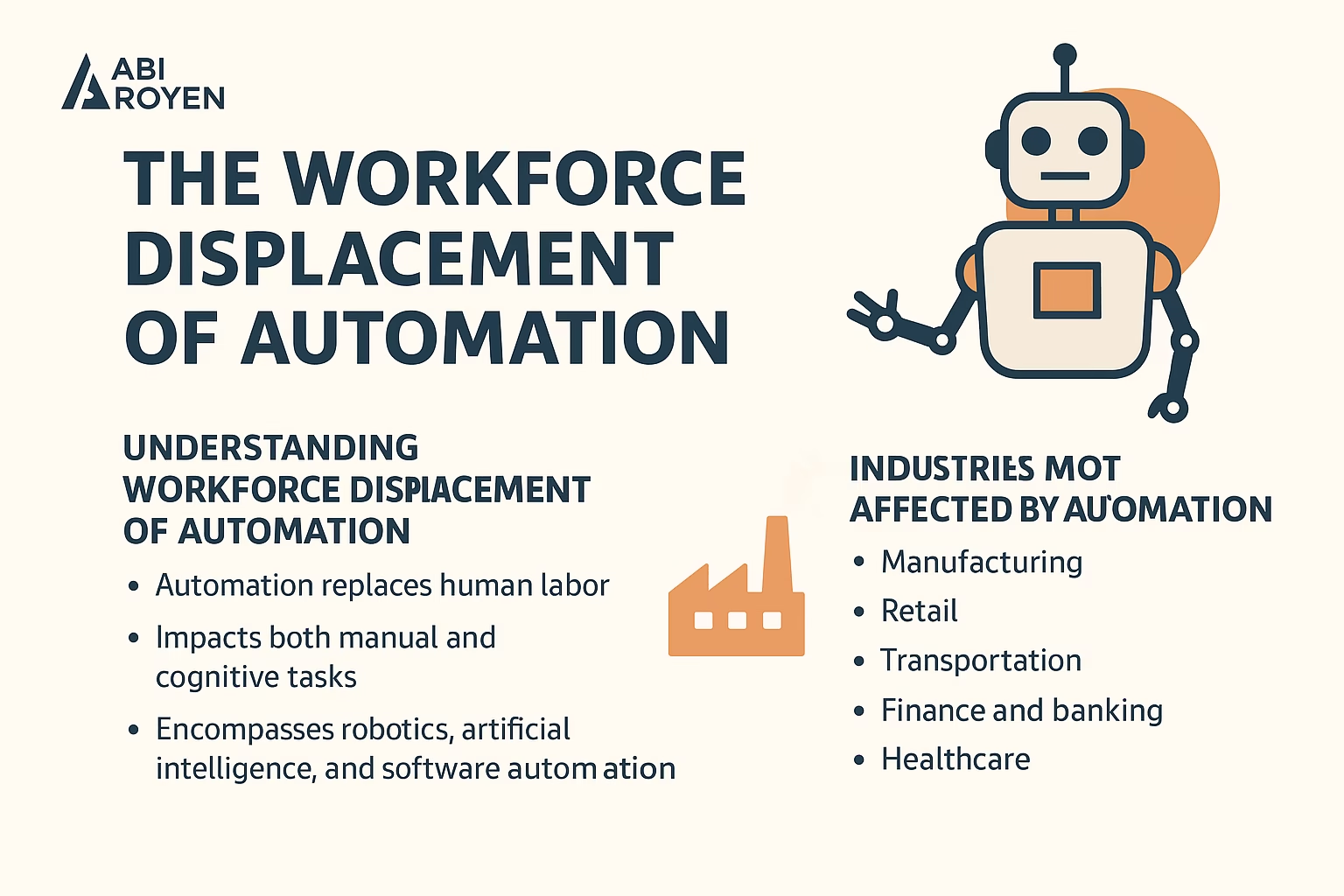
The “black-box” nature of AI decision-making raises transparency and accountability issues. - Job Displacement
Routine jobs may be replaced, requiring workforce reskilling and adaptation. - High Implementation Costs
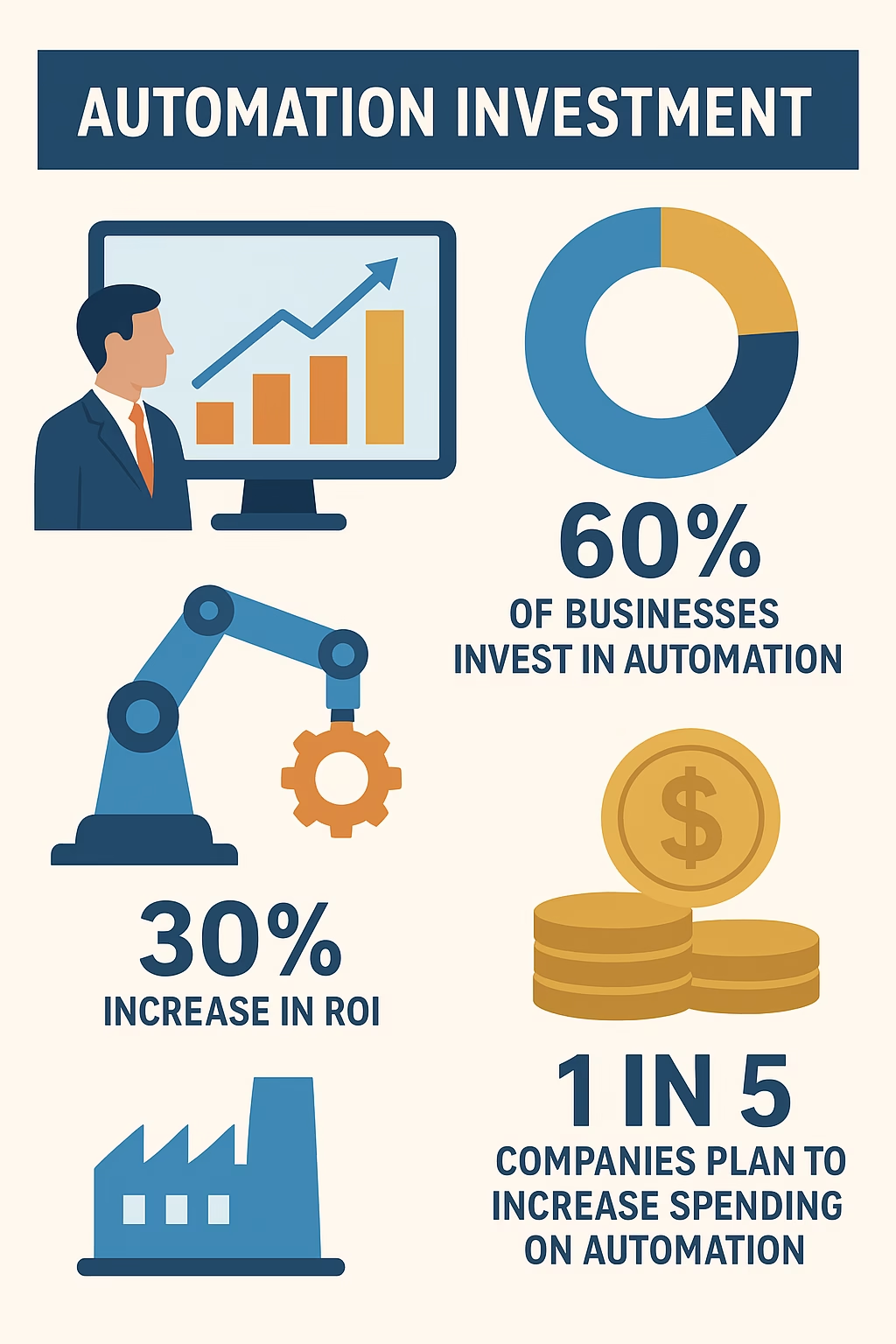
Initial investment in AI infrastructure can be a barrier for small and medium-sized businesses. - Cybersecurity Risks
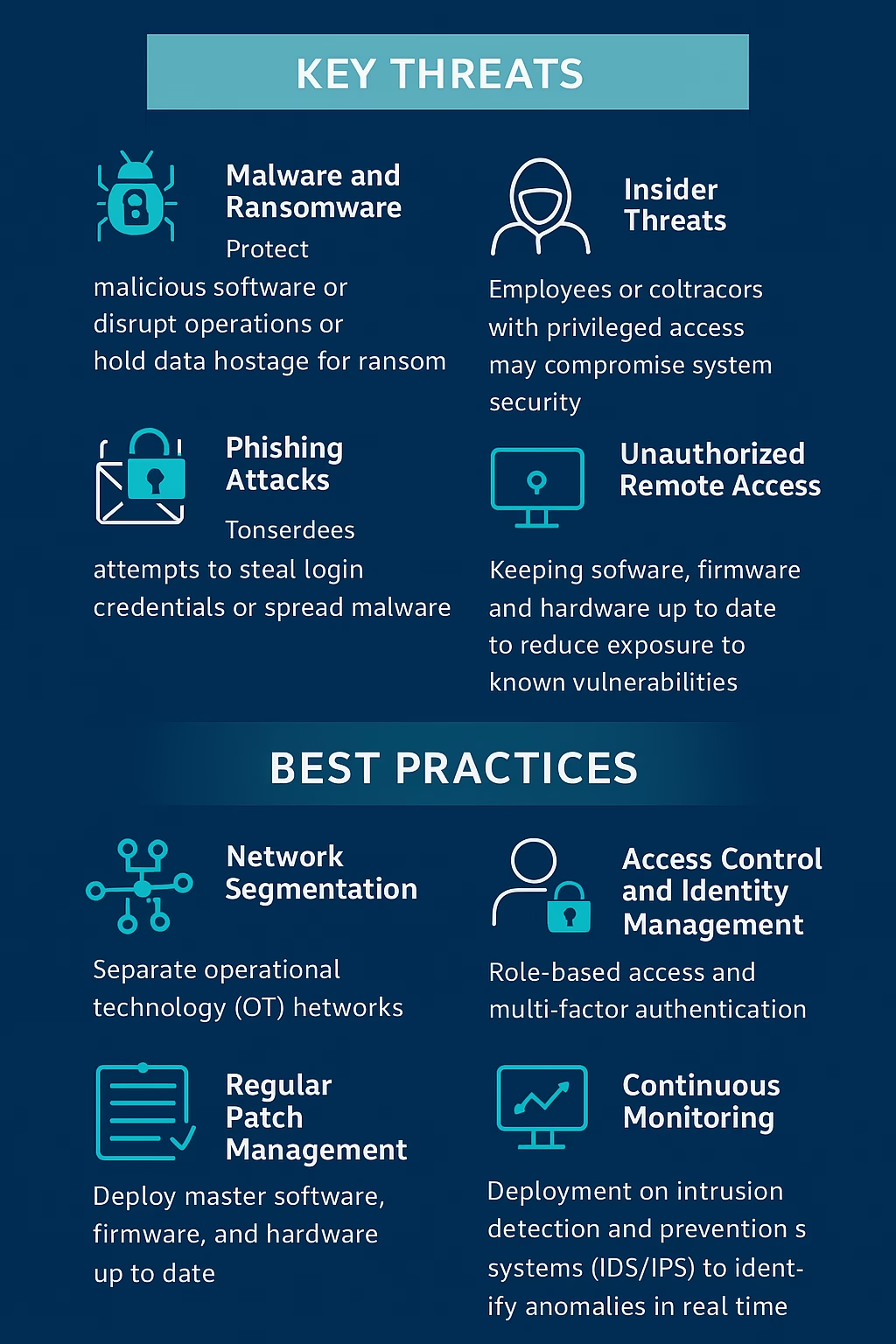
Autonomous systems, if compromised, can cause significant disruptions.

The Future of Autonomous Automation
The future of automation lies in systems that are self-sufficient, adaptive, and collaborative with humans. Some key trends include:
- Hyperautomation: Combining RPA (Robotic Process Automation), AI, and analytics for end-to-end automation.
- Explainable AI (XAI): Improving trust by making AI-driven decisions transparent and understandable.
- Human-AI Collaboration: Instead of replacing humans, AI will increasingly augment human intelligence.
- Decentralized Autonomous Systems: Using blockchain and AI to enable secure, independent automation across industries.
By 2030, autonomous automation is expected to be a driving force in global competitiveness, with businesses that adopt it early gaining a significant advantage.
Conclusion
Autonomous automation, driven by AI and ML, is more than just a technological trend—it is a paradigm shift. It allows systems to think, learn, and act independently, transforming industries from manufacturing to healthcare. While challenges remain in terms of ethics, cost, and workforce adaptation, the benefits of efficiency, accuracy, and scalability make autonomous automation an essential component of future digital transformation.
Businesses that embrace AI-powered autonomous automation today will be the leaders of tomorrow’s intelligent economy.