Introduction
Industrial manufacturing has undergone a remarkable transformation over the past few decades. Once heavily reliant on manual labor and mechanical systems, the manufacturing sector is now at the forefront of automation and digital innovation. Automation in industrial manufacturing combines advanced machinery, robotics, control systems, and artificial intelligence to optimize production, reduce costs, and enhance quality.
In today’s competitive global market, automation is no longer optional—it is a necessity for companies that want to stay ahead. From assembly lines to quality control and logistics, automated systems are reshaping every aspect of industrial manufacturing.
This article explores the benefits, applications, challenges, and future trends of automation in industrial manufacturing, helping businesses and professionals understand its growing importance.
What is Automation in Industrial Manufacturing?
Automation in industrial manufacturing refers to the use of control systems, robotics, computer software, and advanced technologies to operate equipment, manage processes, and streamline production with minimal human intervention.
Key Components of Industrial Automation:
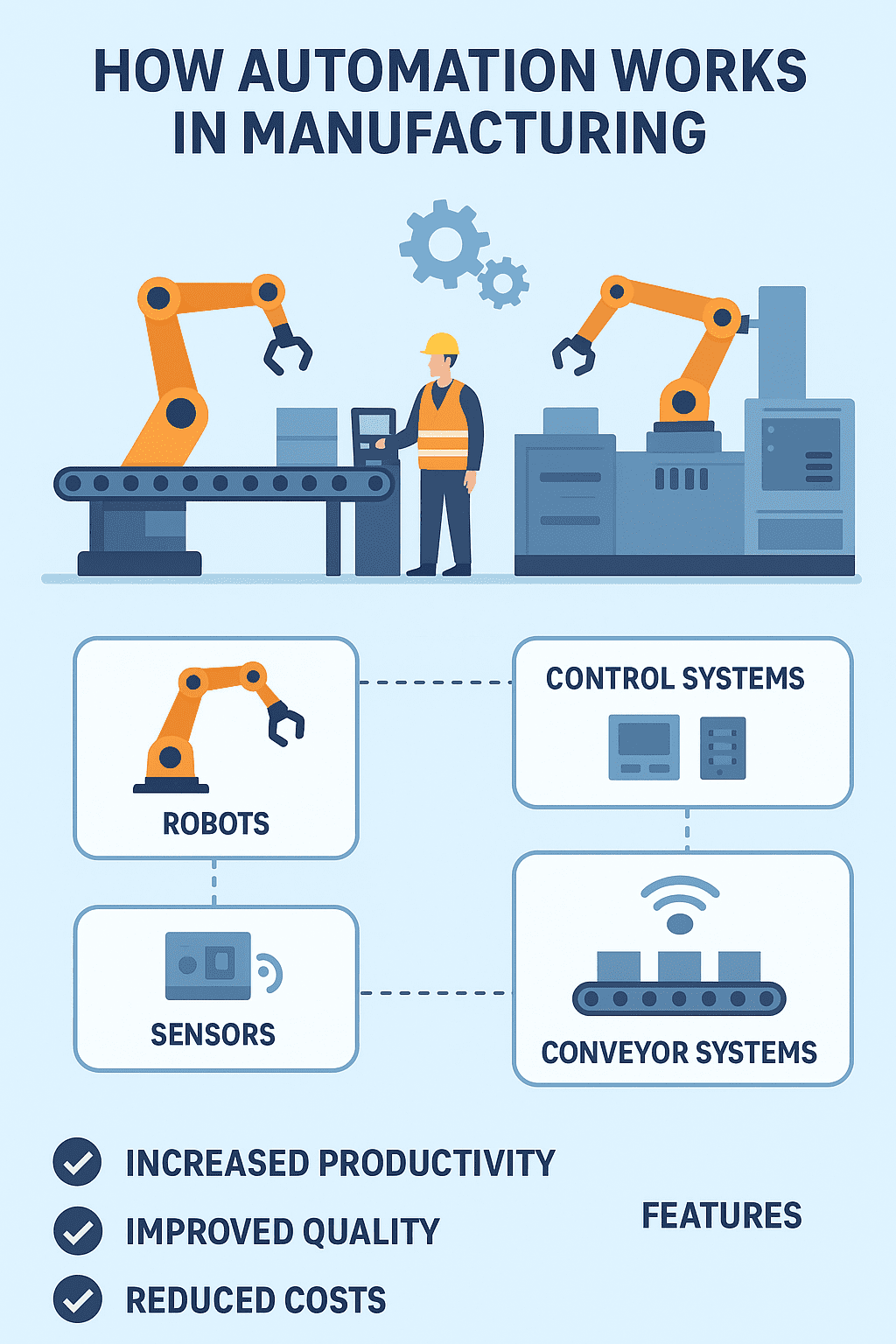
- Robotics – Used for assembly, welding, painting, packaging, and material handling.
- Programmable Logic Controllers (PLCs) – Manage automated systems with precision and reliability.
- Sensors and Actuators – Detect and control physical parameters like temperature, pressure, and motion.
- Supervisory Control and Data Acquisition (SCADA) – Allows centralized monitoring and control of manufacturing systems.
- Artificial Intelligence (AI) and Machine Learning (ML) – Enable predictive maintenance, process optimization, and intelligent decision-making.
Benefits of Automation in Industrial Manufacturing
1. Increased Productivity
Automated machines work faster and more consistently than human workers, significantly boosting production capacity and reducing downtime.
2. Enhanced Quality and Precision
Automation ensures consistent quality by minimizing human error. Precision robotics can perform delicate tasks with accuracy, improving overall product reliability.
3. Reduced Operational Costs
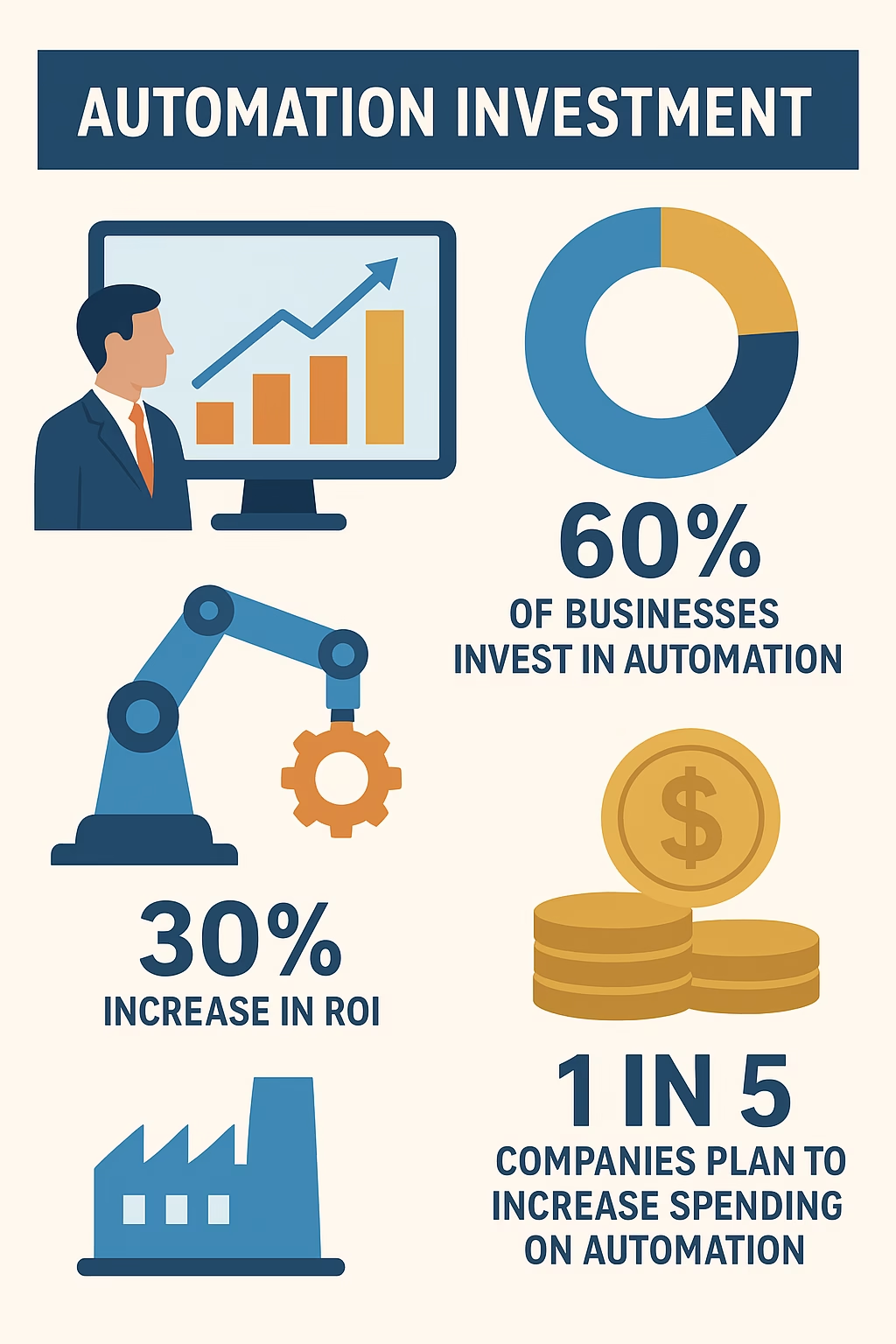
Although the initial investment may be high, automation reduces long-term labor costs, energy usage, and waste, resulting in overall cost savings.
4. Improved Workplace Safety
Automation helps reduce accidents by handling dangerous tasks such as heavy lifting, working with hazardous materials, or operating in extreme environments.
5. Flexibility and Scalability
Modern automated systems can adapt to changing demands quickly, allowing manufacturers to scale production efficiently.
6. Data-Driven Decision Making
With Industry 4.0 technologies, automated systems collect and analyze real-time data, enabling predictive maintenance and smarter production planning.
Applications of Automation in Industrial Manufacturing
Automation is widely applied across different industries, from automotive to electronics and pharmaceuticals.
1. Automotive Industry
- Robotic arms for assembly and welding
- Automated guided vehicles (AGVs) for material transport
- Vision systems for quality inspection
2. Electronics Manufacturing
- Precision robots for micro-assembly
- Automated soldering and testing systems
- Smart logistics for component handling
3. Food and Beverage Industry
- Automated packaging and labeling
- Robotic pick-and-place systems
- AI-based quality control for food safety
4. Pharmaceutical Industry
- Automated drug manufacturing and packaging
- Robotic systems for sterile environments
- AI-driven research and development
5. Heavy Industries (Mining, Steel, Oil & Gas)
- Remote-controlled machinery for hazardous environments
- Automated drilling and refining systems
- Predictive maintenance powered by AI
Challenges of Implementing Automation in Industrial Manufacturing
While automation offers immense benefits, it also presents challenges that manufacturers must address:
- High Initial Investment – Setting up automation systems requires significant capital.
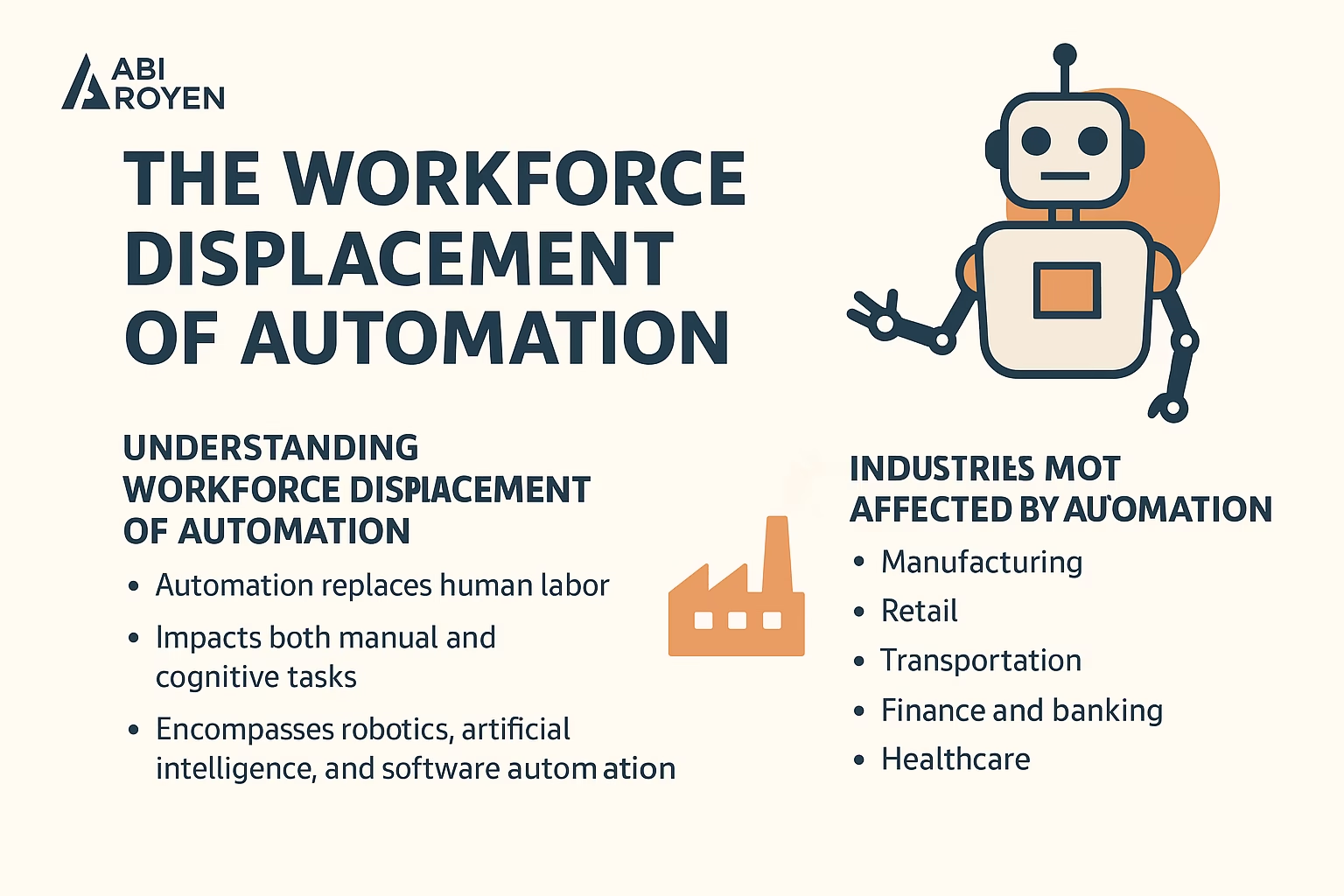
- Workforce Displacement – Employees may need retraining as traditional roles are replaced by automated systems.
- Integration Issues – Combining automation with existing legacy systems can be complex.
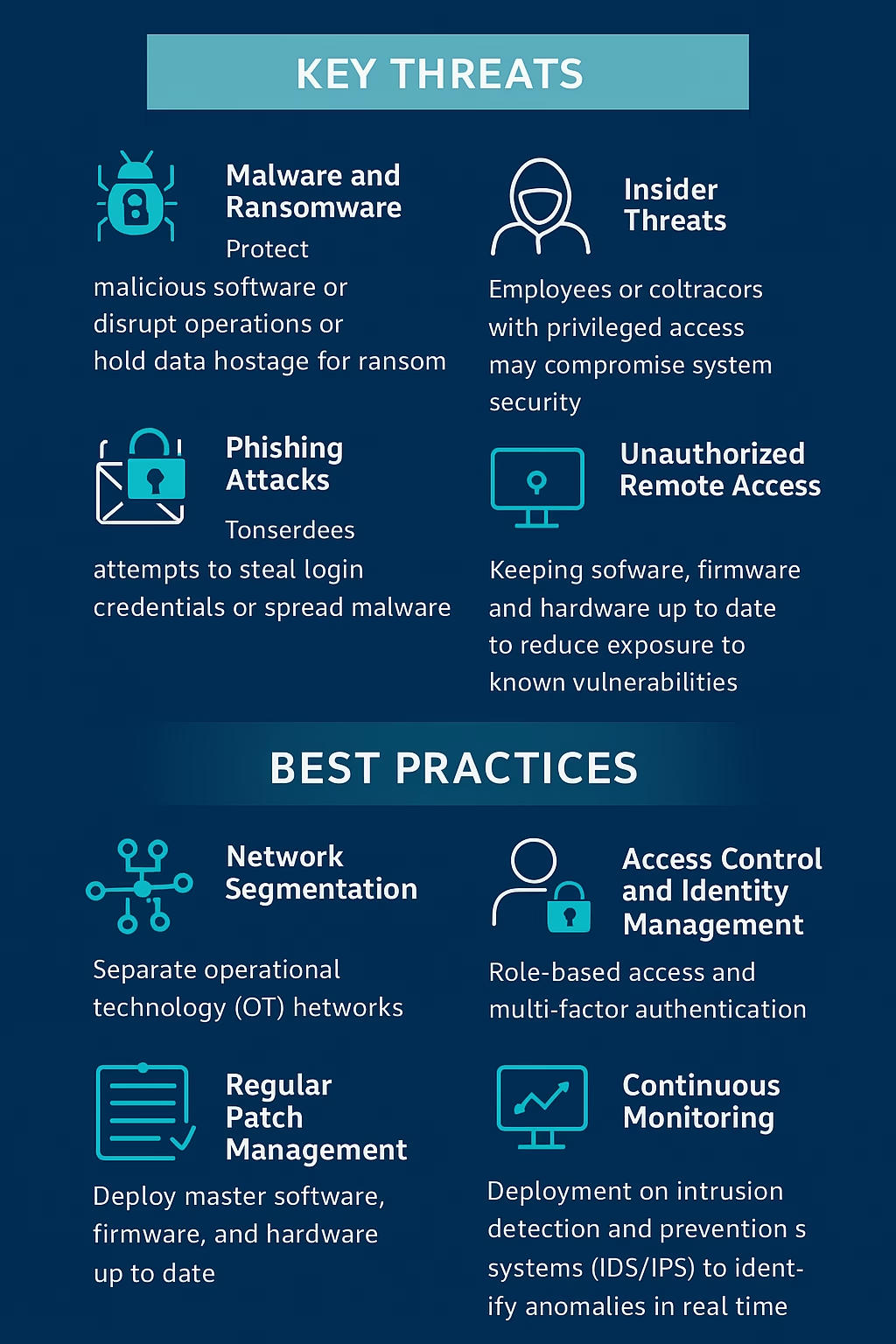
- Cybersecurity Risks – Connected systems increase the risk of cyberattacks.
- Maintenance and Upgrades – Advanced machinery requires skilled technicians for upkeep.
The Future of Automation in Industrial Manufacturing
The future of automation is closely tied to the evolution of Industry 4.0, which integrates advanced digital technologies into manufacturing. Some key trends include:
- Collaborative Robots (Cobots) – Designed to work safely alongside humans in manufacturing environments.
- Artificial Intelligence and Machine Learning – Smarter machines capable of autonomous decision-making.
- Internet of Things (IoT) in Manufacturing – Connected sensors for real-time monitoring and predictive analytics.
- Digital Twins – Virtual simulations of manufacturing processes for optimization and innovation.
- Sustainable Manufacturing – Automation systems designed to reduce waste, energy consumption, and environmental impact.
Conclusion of Automation in Industrial Manufacturing
Automation in industrial manufacturing is more than just a technological upgrade—it is a strategic necessity for industries to remain competitive in the global market. By enhancing productivity, improving safety, and enabling data-driven operations, automation is revolutionizing how products are designed, manufactured, and delivered.
As Industry 4.0 continues to evolve, the integration of robotics, AI, IoT, and advanced analytics will further transform manufacturing into a smarter, more efficient, and sustainable sector.
Businesses that embrace automation today will be better positioned to thrive in the future of industrial manufacturing.