
Introduction Automation Business Office Processes
In today’s fast-paced digital era, businesses are constantly searching for ways to enhance efficiency, cut costs, and stay competitive. One of the most impactful strategies driving transformation is Automation Business Office Processes. By integrating automation tools, companies can streamline repetitive tasks, reduce human error, and empower employees to focus on more strategic and creative work.
This article explores the importance, benefits, tools, and future trends of business and office process automation, providing a comprehensive guide for organizations looking to embrace digital transformation.
What is Automation Business Office Processes?
Business and office process automation refers to the use of technology and software solutions to execute routine tasks with minimal human intervention. Instead of employees spending hours on repetitive tasks such as data entry, invoicing, scheduling, or email responses, automation systems handle these efficiently and accurately.
Automation encompasses various levels, including:
- Basic Automation: Simple rule-based tasks such as sending email reminders or file storage.
- Process Automation: Streamlining workflows such as approvals, expense reporting, or employee onboarding.
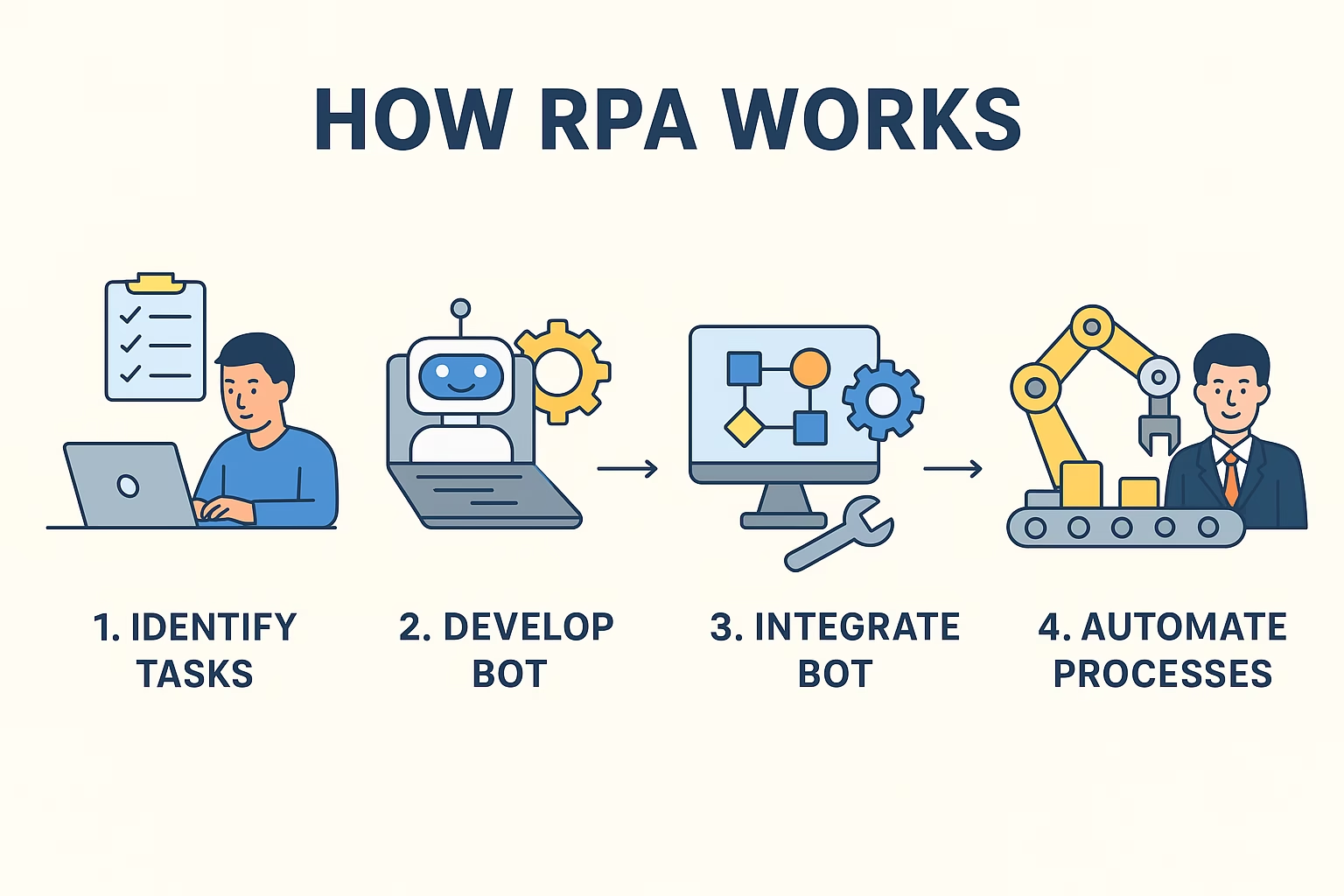
- Robotic Process Automation (RPA): Using bots to mimic human actions in handling digital tasks.
- Intelligent Automation: Combining AI and machine learning to handle complex, decision-based processes.
Key Benefits of Automation Business Office Processes
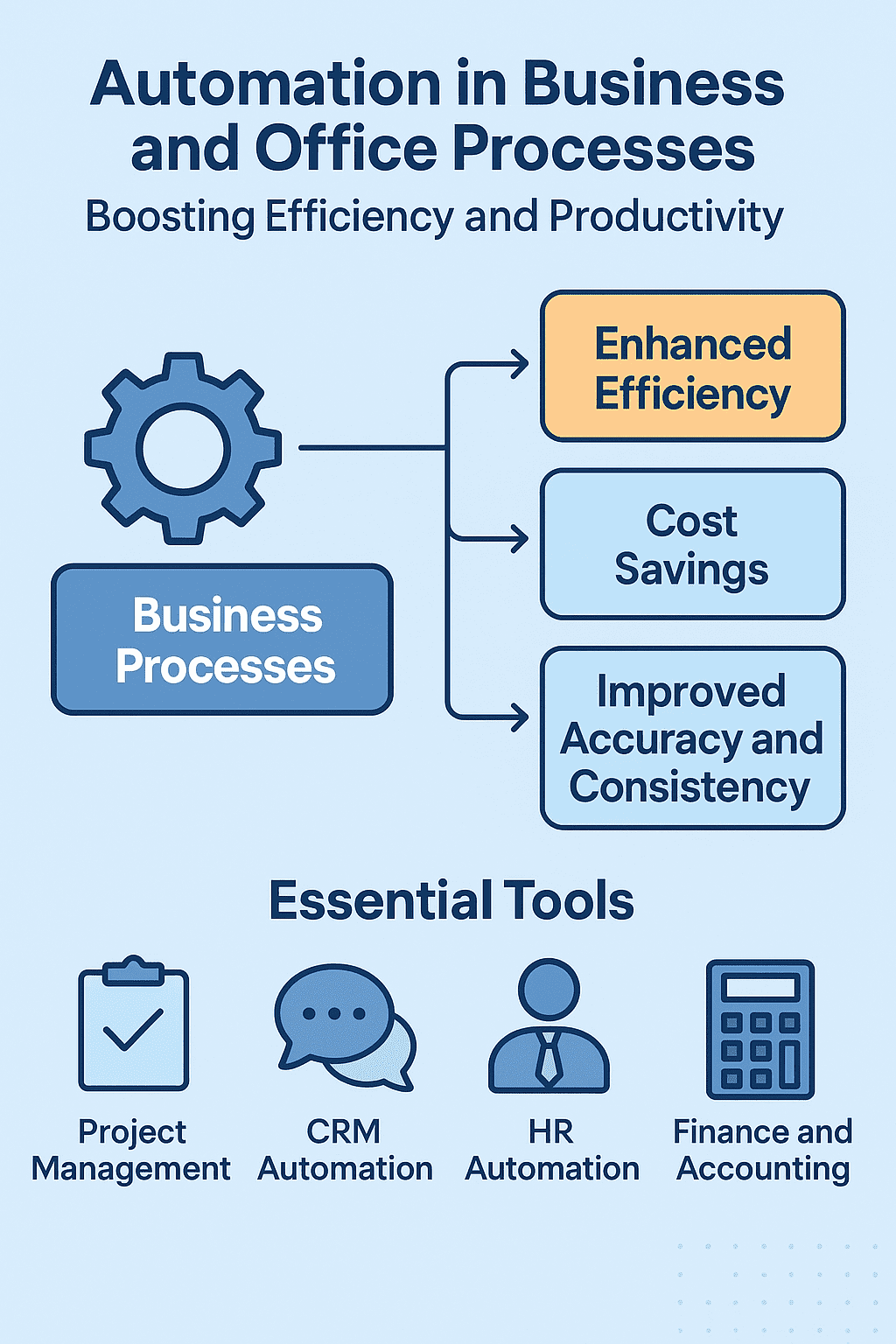
1. Enhanced Efficiency
Automation reduces manual effort, allowing organizations to complete tasks much faster. Workflows that used to take hours or days can now be accomplished in minutes.
2. Cost Savings
By reducing the need for manual labor on repetitive tasks, companies cut operational expenses significantly. This also minimizes costly human errors.
3. Improved Accuracy and Consistency
Automated systems follow rules without deviation, ensuring accuracy in data processing, compliance, and reporting.
4. Employee Productivity and Engagement
Automation frees employees from monotonous tasks, enabling them to focus on value-added activities such as problem-solving, creativity, and customer interaction.
5. Better Decision-Making
With automation, businesses gain access to real-time data and analytics, supporting faster and more informed decisions.
6. Scalability
As businesses grow, automation systems can easily handle increased workloads without requiring significant additional resources.
Examples of Automation Business Office Processes
1. Document Management
Automated document storage and retrieval systems reduce paperwork, improve accessibility, and enhance security.
2. Email Marketing Automation
Tools like Mailchimp or HubSpot automate email campaigns, follow-ups, and customer segmentation.
3. Accounting and Finance
Automation in invoicing, expense tracking, and payroll management ensures accuracy and reduces manual workload.
4. Customer Relationship Management (CRM)
Automated CRM systems manage leads, track customer interactions, and schedule follow-ups.
5. Human Resources (HR)
From recruitment to employee onboarding and performance management, HR automation speeds up the entire workflow.
6. Scheduling and Calendar Management
Automated scheduling tools like Calendly simplify appointment booking and reduce back-and-forth communication.
Essential Tools for Automation Business Office Processes
Here are some popular categories of automation tools:
- Project Management: Asana, Trello, Monday.com
- CRM Automation: Salesforce, HubSpot, Zoho CRM
- HR Automation: BambooHR, Workday, Gusto
- Finance and Accounting: QuickBooks, Xero, FreshBooks
- RPA Solutions: UiPath, Automation Anywhere, Blue Prism
- Collaboration Tools: Slack, Microsoft Teams, Google Workspace
These tools help businesses achieve seamless communication, efficient workflows, and data-driven insights.
Challenges of Implementing Automation Business Office Processes
While automation brings numerous advantages, organizations must also address potential challenges:
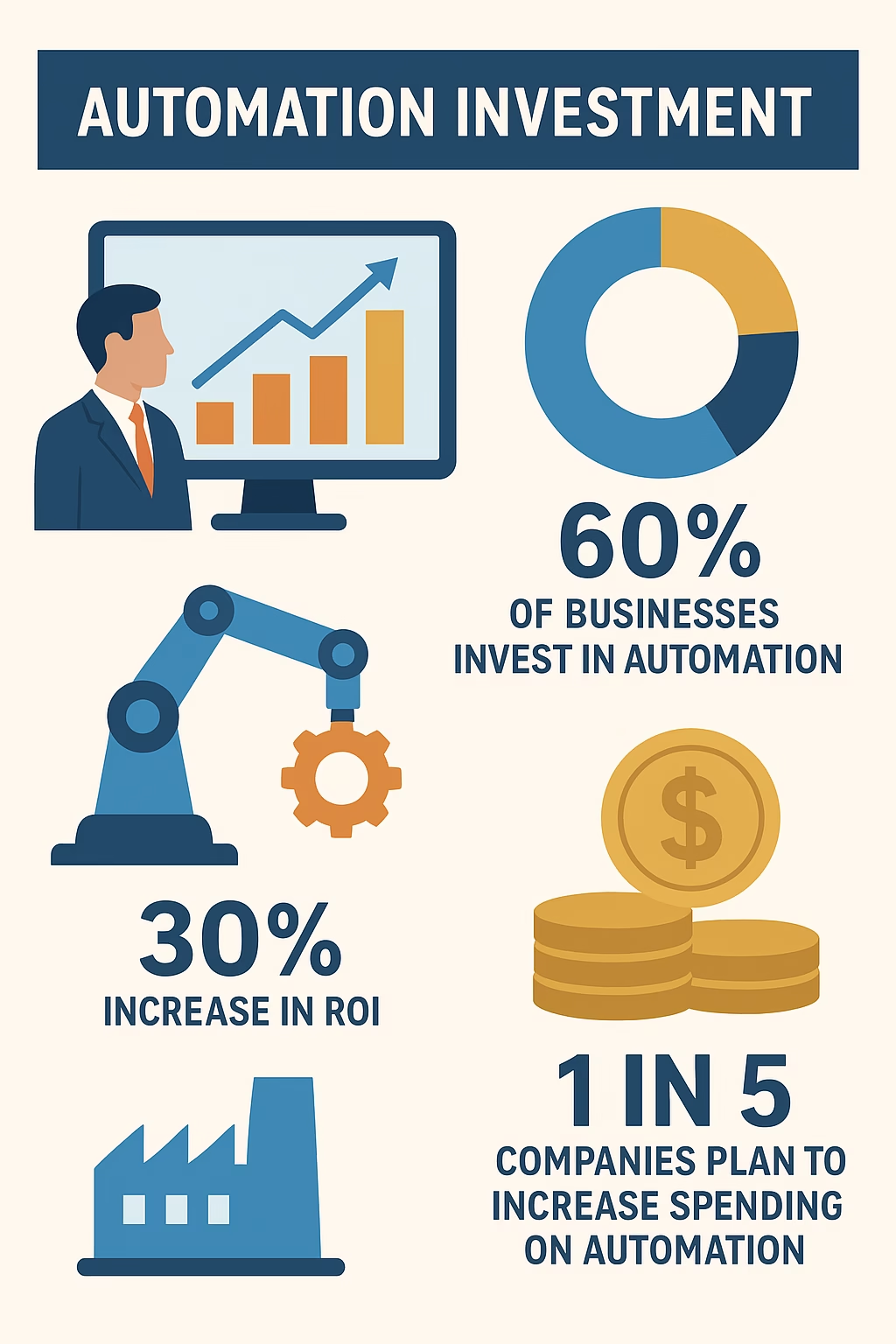
- High Initial Investment – Setting up automation tools requires upfront costs, though the long-term benefits outweigh them.
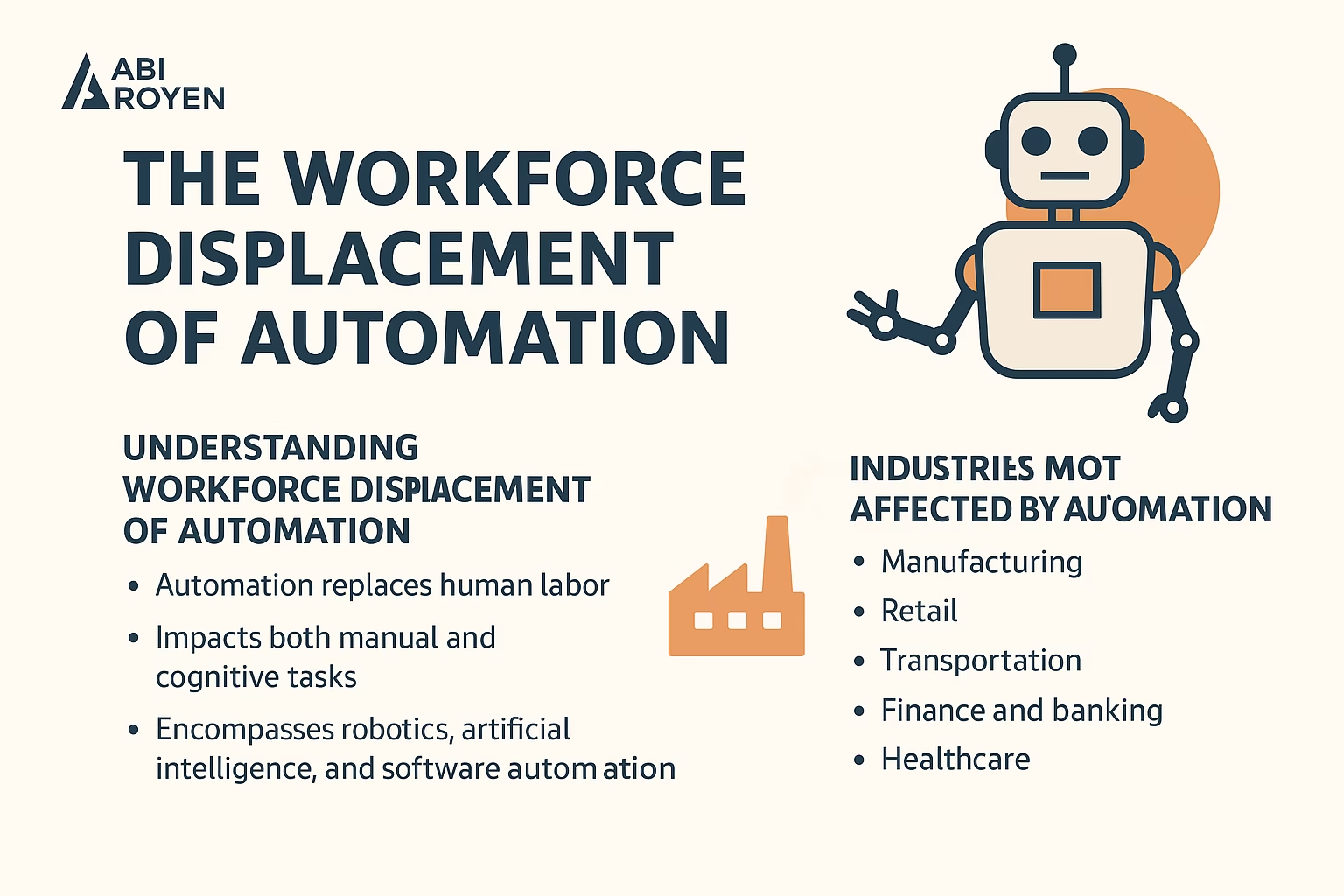
- Employee Resistance – Staff may fear job losses due to automation, making proper training and communication essential.
- Integration Issues – Ensuring compatibility between new automation tools and existing systems can be complex.
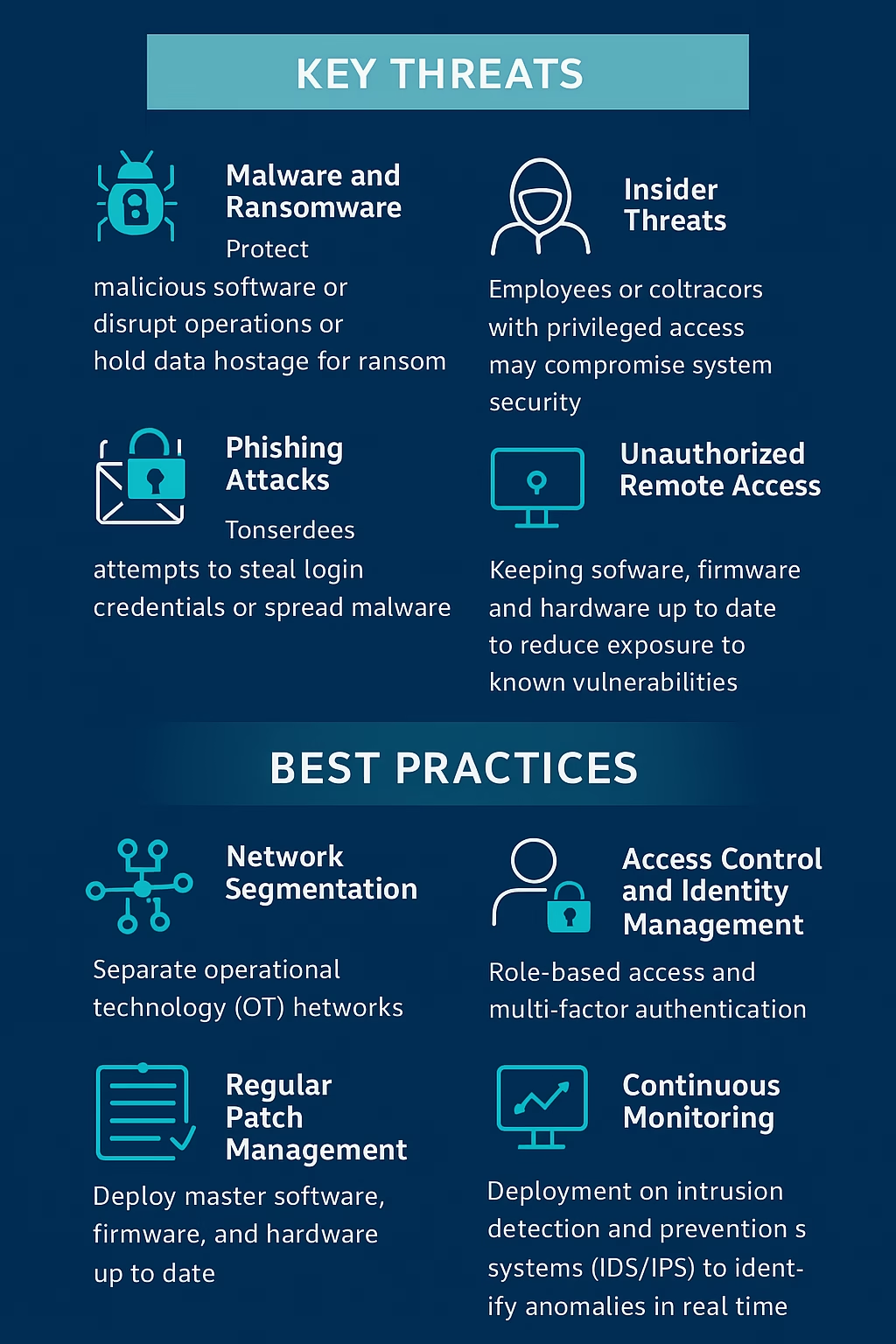
- Cybersecurity Concerns – Automated systems handling sensitive data must be well-secured against cyber threats.
The Future of Automation Business Office Processes
The future of business automation is deeply tied to artificial intelligence (AI), machine learning (ML), and advanced analytics. Here’s what we can expect:
- AI-Powered Workflows: Smart automation systems that make predictive decisions.
- Hyperautomation: Combining multiple technologies such as RPA, AI, and machine learning for end-to-end automation.
- Virtual Assistants: Increased use of chatbots and digital assistants to handle customer support and internal communication.
- Cloud-Based Automation: Businesses will adopt cloud platforms for scalable and accessible automation solutions.
- Sustainable Automation: Companies will focus on eco-friendly digital processes, reducing paper and energy consumption.
How to Get Started with Automation Business Office Processes
- Identify Repetitive Tasks – Start by listing processes that consume time but add little value.
- Choose the Right Tools – Select automation software that fits your business size and goals.
- Train Employees – Provide training to ensure employees can collaborate effectively with automation systems.
- Start Small, Scale Later – Begin with a single department or process before expanding automation company-wide.
- Measure Results – Continuously track performance improvements to refine automation strategies.
Conclusion
Automation in business and office processes is no longer optional—it is a necessity for organizations aiming to remain competitive in today’s digital landscape. From streamlining workflows and reducing costs to improving accuracy and enhancing employee productivity, automation delivers measurable benefits across industries.
Companies that embrace automation strategically will not only save time and resources but also gain a significant edge in innovation, efficiency, and customer satisfaction.