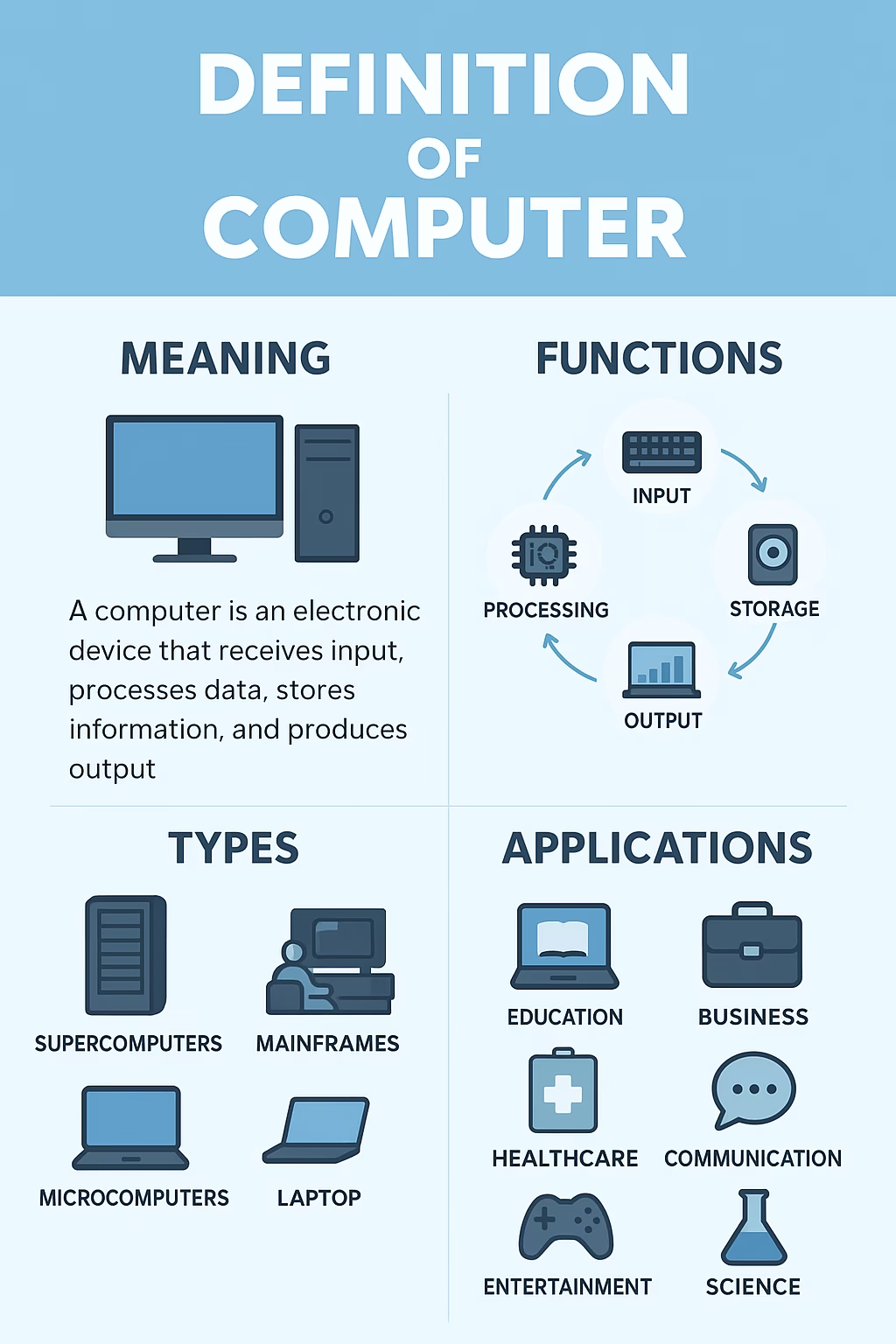
Introduction
Role Computers Modern Life ~ Computers have become an inseparable part of modern human life. From smartphones and laptops to cloud servers and artificial intelligence, computers shape the way we communicate, work, study, and even entertain ourselves. What started as a machine for calculations in the mid-20th century has now evolved into an indispensable tool for nearly every aspect of society.
This article explores the role of computers in modern life, covering their applications in education, healthcare, business, communication, research, and personal use. We will also examine both the benefits and challenges computers bring to our lives in the digital era.
1. Role Computers Modern Life: Computers in Education
One of the most significant roles of computers is in education. Traditional classrooms are no longer limited to chalkboards and printed textbooks. Computers have introduced digital classrooms, online resources, and e-learning platforms.
- E-Learning and Online Classes: Platforms such as Coursera, Udemy, and Khan Academy allow students to access knowledge from anywhere in the world.
- Interactive Learning: Multimedia tools, simulations, and virtual labs enhance understanding of complex subjects.
- Research and Information Access: With the internet, students and researchers can access millions of academic journals, books, and research papers instantly.
Computers have essentially democratized education by making quality learning accessible to all.
2. Computers in Business and Economy
In the modern economy, businesses cannot function without computers. From small startups to global corporations, computers streamline operations, enhance productivity, and enable global connectivity.
- Data Management: Companies store and analyze massive amounts of data to make better business decisions.
- E-Commerce: Platforms like Amazon, Alibaba, and Shopify rely on computers for transactions, logistics, and customer service.
- Remote Work: Cloud computing and collaboration tools like Zoom, Slack, and Microsoft Teams make remote work possible.
- Financial Services: Banking, stock trading, and digital payments all rely heavily on computer systems.
Thus, computers are not just tools—they are the backbone of the global economy.
3. Role Computers Modern Life in Communication
Communication has been revolutionized by computers. In the past, sending a letter could take days or weeks; today, information is exchanged within seconds.
- Email and Instant Messaging: Gmail, WhatsApp, and other services have made global communication effortless.
- Social Media: Platforms like Facebook, Instagram, and Twitter enable people to connect, share, and collaborate worldwide.
- Video Conferencing: Tools such as Zoom, Google Meet, and Skype are essential for virtual meetings, online learning, and global teamwork.
Computers have eliminated geographical barriers, bringing people closer than ever before.
4. Role Computers Modern Life in Healthcare
The healthcare industry relies heavily on computers to save lives and improve efficiency.
- Medical Records: Digital databases store patient information securely and allow doctors to access it instantly.
- Medical Imaging: Computers are used in technologies like MRI, CT scans, and ultrasound for accurate diagnosis.
- Telemedicine: Patients can consult doctors online, especially in remote or rural areas.
- Research and Drug Development: Computers help analyze genetic data, simulate drug effects, and speed up medical discoveries.
Computers are not just improving healthcare but also expanding its reach to people who previously had limited access.
5. Computers in Daily Life
Beyond professional sectors, computers play a massive role in personal and daily living.
- Entertainment: Online streaming, video games, and digital media provide countless options for leisure.
- Smart Homes: Computers power IoT (Internet of Things) devices like smart speakers, security systems, and home automation.
- Shopping: Online platforms allow people to buy anything from groceries to electronics with a click.
- Personal Finance: Budgeting apps, online banking, and digital wallets simplify money management.
In essence, daily life today is deeply intertwined with computers, from morning alarms on smartphones to late-night entertainment on streaming platforms.
6. Computers in Science and Research
Advancements in scientific research would be impossible without computers.
- Data Analysis: Scientists process massive datasets to make breakthroughs in physics, chemistry, and biology.
- Space Exploration: NASA and other agencies use computers for space simulations, navigation, and communication.
- Climate Studies: Computers model weather patterns and predict natural disasters.
- Artificial Intelligence (AI): Machine learning and AI research rely entirely on computer processing power.
Computers act as a catalyst for innovation and discovery across multiple disciplines.
7. Benefits of Role Computers Modern Life
The role of computers brings countless advantages, including:
- Speed and Efficiency: Tasks that once took weeks can now be completed in minutes.
- Global Connectivity: Communication and collaboration happen in real time, regardless of location.
- Cost Savings: Automation reduces labor costs and increases productivity.
- Access to Knowledge: Information is available at our fingertips 24/7.
- Improved Quality of Life: From healthcare to entertainment, computers enhance overall living standards.
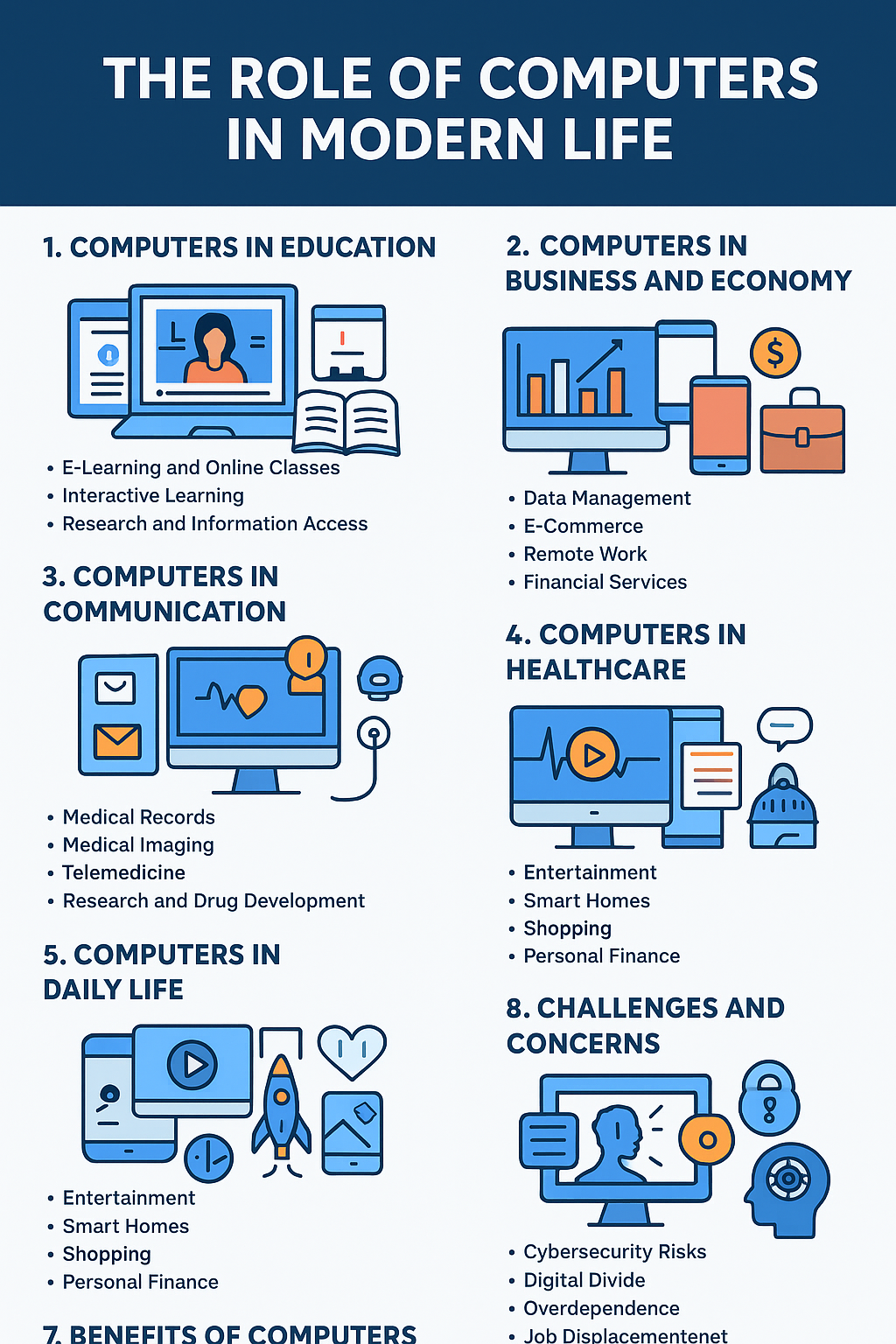
8. Challenges and Concerns
Despite their benefits, computers also introduce challenges:
- Cybersecurity Risks: Hacking, identity theft, and data breaches are growing threats.
- Digital Divide: Not everyone has equal access to computers and the internet.
- Overdependence: Excessive reliance on computers may reduce critical thinking and interpersonal skills.
- Job Displacement: Automation threatens some traditional jobs, requiring workforce adaptation.
Addressing these challenges requires responsible use and policy development.
9. Future of Role Computers Modern Life
Looking ahead, computers will continue to shape the future of society.
- Artificial Intelligence and Machine Learning will transform industries with smarter automation.
- Quantum Computing will solve problems previously considered impossible.
- Virtual and Augmented Reality will redefine education, entertainment, and communication.
- Sustainable Technology will focus on energy-efficient computing.
The future role of computers is limitless, but it must be guided by ethical and sustainable practices.
Conclusion
The role of computers in modern life is undeniable. From education and business to healthcare and entertainment, computers are central to human progress. They provide opportunities for growth, innovation, and connection, but also require responsible use to address challenges such as cybersecurity and digital inequality.
As technology advances, the impact of computers will only deepen, shaping the future of human civilization. Embracing this transformation with awareness and responsibility will ensure that computers continue to enhance life in the modern world.