

Introduction of What is Temperature Instrumentation?
What is Temperature Instrumentation? ~ Temperature is one of the most fundamental physical parameters measured across industries and scientific fields. From ensuring the safety of chemical processes to maintaining the quality of food products, accurate temperature measurement is essential. This is where temperature instrumentation comes into play.
Temperature instrumentation refers to devices and systems designed to measure, monitor, and control temperature in various environments. These instruments range from simple thermometers to advanced digital sensors integrated into process automation systems.
In this article, we will explore the definition of temperature instrumentation, its working principles, common types, and the critical role it plays in different industries.
What is Temperature Instrumentation?
Temperature instrumentation is the branch of instrumentation engineering that deals with tools and methods used to measure and monitor temperature. It includes both sensors that detect temperature changes and control systems that use this data to maintain desired conditions.
Essentially, temperature instrumentation ensures that processes are carried out within the correct temperature range, which is vital for safety, efficiency, and product quality.
Why is Temperature Measurement Important?
Temperature measurement is crucial because it directly affects:
- Process Efficiency – Many industrial processes, such as refining, manufacturing, and energy production, require strict temperature control to maximize efficiency.
- Safety – Overheating can lead to fires, explosions, or equipment failures. Accurate monitoring prevents dangerous conditions.
- Product Quality – In industries like food, pharmaceuticals, and chemicals, maintaining the correct temperature is vital to meet standards and regulations.
- Energy Management – Monitoring and optimizing temperature reduces energy waste, lowering costs and environmental impact.
Working Principles of Temperature Instrumentation
Temperature instrumentation operates based on physical principles that relate temperature changes to measurable signals. The most common principles include:
- Thermal Expansion – Materials expand or contract with temperature changes (e.g., mercury-in-glass thermometers).
- Electrical Resistance – Metals such as platinum change resistance with temperature (used in RTDs).
- Thermoelectric Effect – When two dissimilar metals are joined, they generate a voltage proportional to temperature (used in thermocouples).
- Infrared Radiation – Objects emit infrared radiation based on their temperature (used in infrared thermometers).
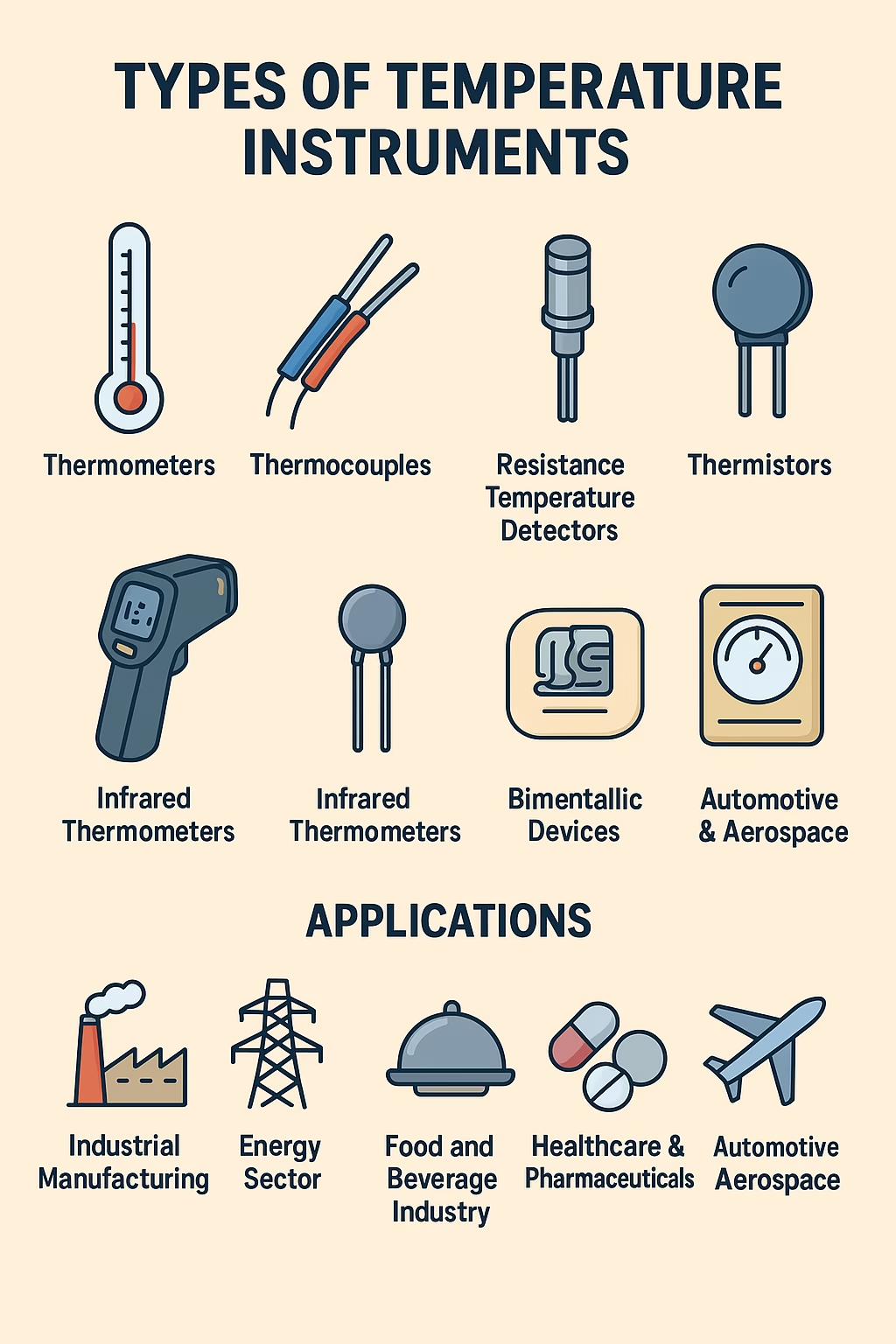
Types of Temperature Instruments
1. Thermometers
- The simplest and oldest form of temperature measurement.
- Includes liquid-in-glass thermometers and digital thermometers.
- Commonly used in laboratories, medical applications, and weather monitoring.
2. Thermocouples
- Widely used in industrial applications.
- Made from two dissimilar metals that generate a voltage proportional to temperature.
- Advantages: rugged, wide temperature range, and cost-effective.
3. Resistance Temperature Detectors (RTDs)
- Made from pure metals like platinum.
- Measure resistance changes with temperature.
- Known for accuracy and stability, often used in scientific and industrial applications.
4. Thermistors
- Made from semiconductor materials.
- Provide high sensitivity within limited temperature ranges.
- Often used in medical devices and household electronics.
5. Infrared Thermometers
- Measure the infrared radiation emitted by an object.
- Useful for non-contact temperature measurements.
- Common in food safety, HVAC, and preventive maintenance.
6. Bimetallic Devices
- Use two bonded metals with different expansion rates.
- Often used in thermostats and mechanical indicators.
Applications of Temperature Instrumentation
1. Industrial Manufacturing
- Ensures proper heating and cooling during production.
- Used in metallurgy, glass, ceramics, and chemical plants.
2. Energy Sector
- Monitors boilers, turbines, and reactors.
- Prevents overheating and improves efficiency in power plants.
3. Food and Beverage Industry
- Maintains safe cooking, processing, and storage conditions.
- Essential for meeting health and safety regulations.
4. Healthcare and Pharmaceuticals
- Critical for maintaining precise conditions in labs and production facilities.
- Used in sterilization, storage of vaccines, and medical equipment.
5. Environmental Monitoring
- Helps study climate, weather forecasting, and greenhouse monitoring.
6. Automotive and Aerospace
- Monitors engine temperatures, exhaust gases, and aircraft systems.
- Ensures safety, performance, and compliance with regulations.
Advantages of Modern Temperature Instrumentation
- High Accuracy – Digital sensors can detect even minor fluctuations.
- Remote Monitoring – Wireless and IoT-based systems enable remote tracking.
- Integration with Automation – Works seamlessly with PLCs and SCADA systems.
- Durability – Designed to withstand harsh industrial environments.
Challenges in Temperature Measurement
Despite technological advances, temperature instrumentation faces challenges such as:
- Calibration Needs – Instruments must be regularly calibrated to maintain accuracy.
- Environmental Factors – Dust, moisture, and vibration may affect readings.
- Response Time – Some sensors may react slowly to rapid changes.
- Cost Considerations – High-precision instruments can be expensive.
Future Trends in Temperature Instrumentation
As industries embrace Industry 4.0 and IoT (Internet of Things), temperature instrumentation is evolving rapidly:
- Smart Sensors – Equipped with self-diagnostics and real-time monitoring.
- Wireless Technology – Reducing installation complexity and enabling remote control.
- AI and Data Analytics – Predictive maintenance using temperature data trends.
- Miniaturization – Compact sensors for medical and wearable applications.
Conclusion of What is Temperature Instrumentation?
Temperature instrumentation is an essential component of modern industries, laboratories, and daily life. Whether it’s monitoring industrial furnaces, ensuring food safety, or preserving medical products, accurate temperature measurement safeguards processes, people, and products.
As technology advances, the integration of IoT and smart systems will make temperature monitoring even more precise, efficient, and accessible. For businesses and industries, investing in reliable temperature instrumentation is not just about compliance—it is about achieving safety, efficiency, and long-term sustainability.