Types of conductors ~ Electrical conductors are materials that allow the flow of electric current with minimal resistance. They are essential in every electrical system, from home wiring to power transmission lines. The performance, efficiency, and cost of an electrical system largely depend on the type of conductor used.
In this article, we will explore the various types of electrical conductors, their properties, advantages, and ideal applications. Whether you’re a student, technician, or electrical engineer, understanding conductor materials is crucial for selecting the right one for any electrical task.
What is a Conductor?
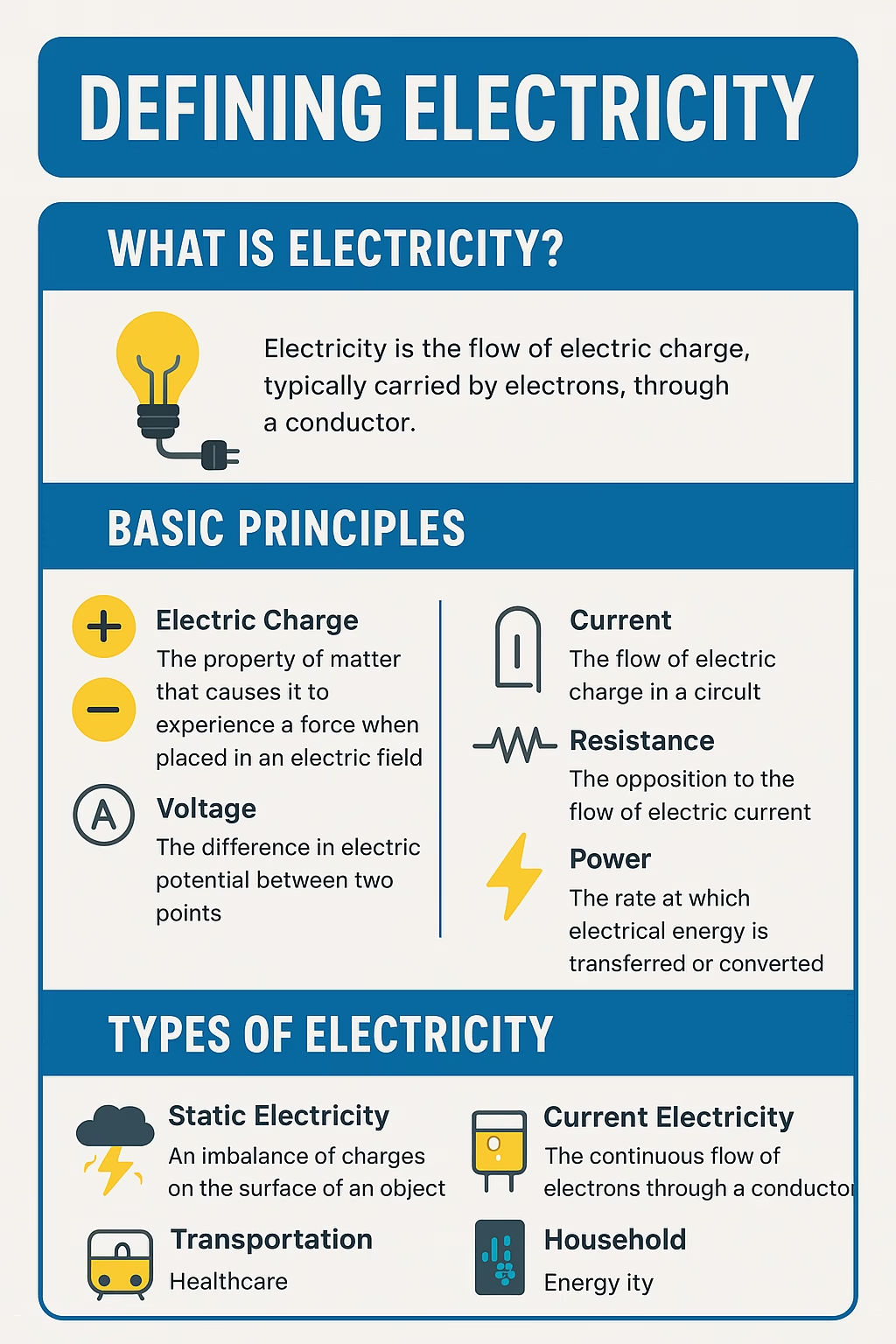
A conductor is a substance, typically a metal, that permits the easy flow of electrical current. This ability is due to the presence of free-moving electrons in their atomic structure. When a voltage is applied across a conductor, these electrons move, creating an electric current.
Characteristics of a Good Conductor:
- Low electrical resistance
- High conductivity
- High tensile strength (for wiring applications)
- Corrosion resistance
- Cost-effectiveness
- Flexibility and durability
Types of Conductors Based on Material
1. Copper Conductors
Copper is the most widely used conductor in electrical systems due to its excellent electrical conductivity and mechanical strength.
Properties:
- High conductivity (second only to silver)
- Good tensile strength
- Corrosion resistance
- Easily soldered and flexible
- Long lifespan
Applications:
- House wiring
- Industrial machinery
- Power cables
- Electric motors and generators
Advantages:
- High efficiency
- Reliable performance over time
Disadvantages:
- More expensive than aluminum
- Heavier in weight
2. Aluminum Conductors
Aluminum is the second most common conductor material and is often used where weight and cost are concerns.
Properties:
- Lower conductivity than copper (about 61%)
- Lightweight
- More affordable
- Easy to shape
Applications:
- Overhead power transmission lines
- Substation connections
- Aircraft and automotive wiring
Advantages:
- Lightweight and easy to handle
- Cost-effective for large-scale applications
Disadvantages:
- Higher resistance than copper
- Requires larger cross-sectional area
- More prone to oxidation
3. Silver Conductors
Silver has the highest electrical conductivity of all metals but is rarely used due to its high cost.
Properties:
- Best conductor of electricity
- Highly resistant to corrosion
- Expensive
Applications:
- High-frequency circuits
- Aerospace and satellite systems
- Precision electronics
- Military-grade applications
Advantages:
- Exceptional conductivity and performance
- Excellent for low-current, high-sensitivity applications
Disadvantages:
- Extremely expensive
- Soft and easily damaged
4. Gold Conductors
Gold is another excellent conductor that is primarily used for its resistance to corrosion and oxidation.
Properties:
- High conductivity
- Chemically stable
- Resistant to tarnishing
Applications:
- Connector pins
- Printed circuit boards (PCBs)
- Medical equipment
Advantages:
- Long-term reliability
- Superior contact surface
Disadvantages:
- Very high cost
- Not suitable for power transmission
5. Steel Conductors (Used in Combination)
Steel itself is not a great conductor but is often used in combination with other materials like aluminum (ACSR – Aluminum Conductor Steel Reinforced).
Properties:
- High tensile strength
- Poor conductivity
- Often used as reinforcement
Applications:
- Long-span overhead transmission lines
- Harsh environmental conditions
Advantages:
- Strong and durable
- Withstands mechanical stress
Disadvantages:
- High resistance
- Used only as reinforcement, not the main conductor
Types of Conductors Based on Structure
1. Solid Conductors
Solid conductors consist of a single, solid piece of metal wire.
Advantages:
- Simple and reliable
- Suitable for short distances
- Less susceptible to corrosion
Disadvantages:
- Less flexible
- Can break under repeated bending
Common Use: Residential wiring (e.g., inside walls)
2. Stranded Conductors
Made of multiple thin wires twisted together, stranded conductors are more flexible than solid wires.
Advantages:
- High flexibility
- Ideal for applications with movement or vibration
- Easier to install in tight spaces
Disadvantages:
- Slightly higher resistance
- More expensive than solid conductors
Common Use: Extension cords, vehicle wiring, machinery

Specialty Types of Conductors
1. Tinsel Wire
Used in low-current applications like headphones and telephone cords. Made of fine wires wrapped around a textile core.
2. Bimetallic Conductors
Combination of two different metals (e.g., copper-clad aluminum) to balance conductivity and cost.
3. High-Temperature Conductors
Made for extreme conditions, often using alloys or special insulation to handle high heat without degradation.
Choosing the Right Types of Conductors
When selecting a conductor, consider the following factors:
- Current carrying capacity
- Length of the conductor
- Voltage drop requirements
- Environmental conditions
- Budget and cost-effectiveness
- Mechanical strength needs
Infographic: Types of Conductors and Their Properties
(Recommended to be included visually on the webpage)
| Material | Conductivity (%) | Cost | Flexibility | Application Example |
|---|---|---|---|---|
| Silver | 100 | Very High | Low | Aerospace, RF Systems |
| Copper | 97 | High | Medium | Household Wiring |
| Gold | 70 | Very High | Medium | PCBs, Medical Devices |
| Aluminum | 61 | Low | High | Power Lines |
| Steel | 10 | Very Low | Low | Reinforced Power Conductors |
Conclusion of Types of Conductors
Understanding the types of electrical conductors is essential for designing safe and efficient electrical systems. Copper remains the industry standard, but aluminum, silver, and other materials play important roles in specific scenarios. Always consider the physical, electrical, and economic factors before choosing the best conductor for your application.
For more guides and explanations on electrical components and systems, visit Abi Royen — your trusted source for engineering knowledge.