
Introduction
In the world of modern electronics and communication, Radio Control Interface (RC Interfaces) play a vital role in connecting humans with machines. From remote-controlled cars and drones to advanced industrial automation systems, radio control technology has evolved into a sophisticated communication medium that enables wireless operation, precision, and convenience.
This article explores the definition, history, components, working principles, applications, and future trends of Radio Control Interfaces. By the end, you will gain a deep understanding of why this technology is so essential in both consumer electronics and professional industries.
What is a Radio Control Interface?
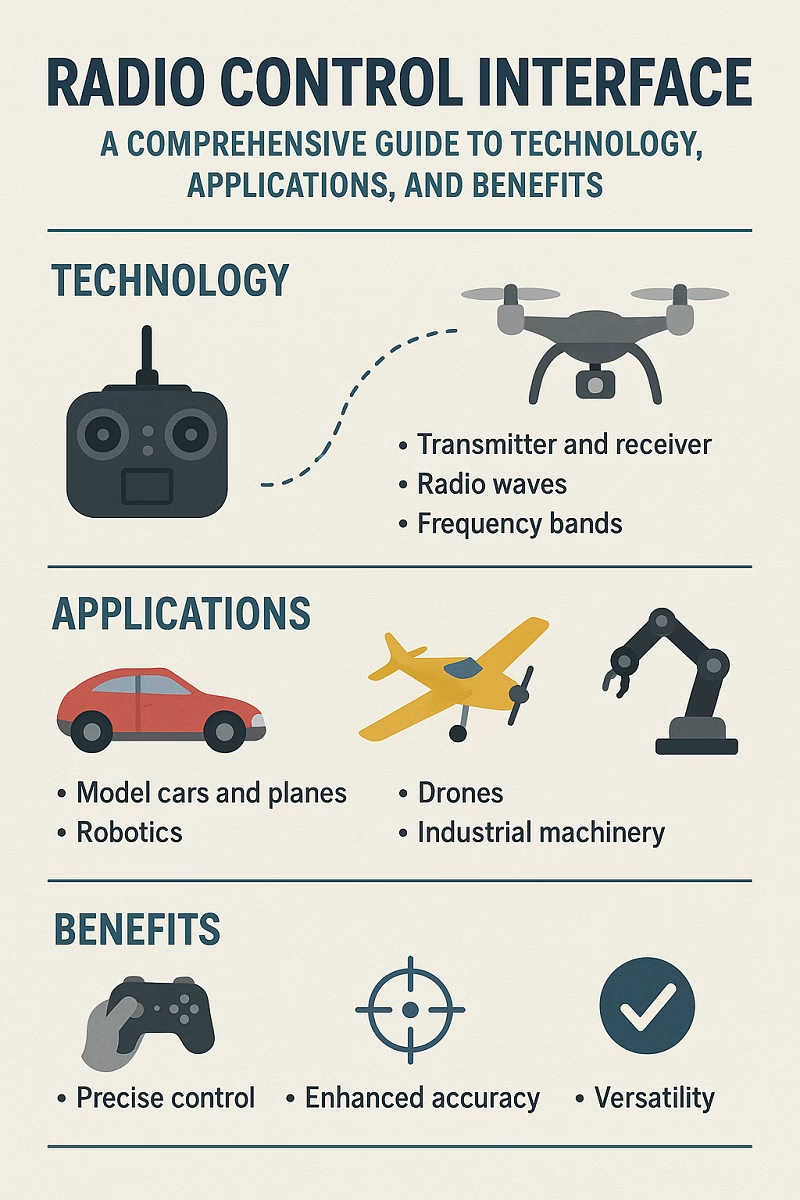
A Radio Control Interface (RCI) is a system that allows devices to communicate and operate wirelessly through radio frequency (RF) signals. It serves as the bridge between a transmitter (controller) and a receiver (the device being controlled).
In simple terms, it enables a person to control an object remotely using radio waves instead of wired connections. For example, when you use a joystick to fly a drone, the joystick sends radio signals to the drone’s receiver, which translates those signals into movement commands.
History and Evolution of Radio Control Interface
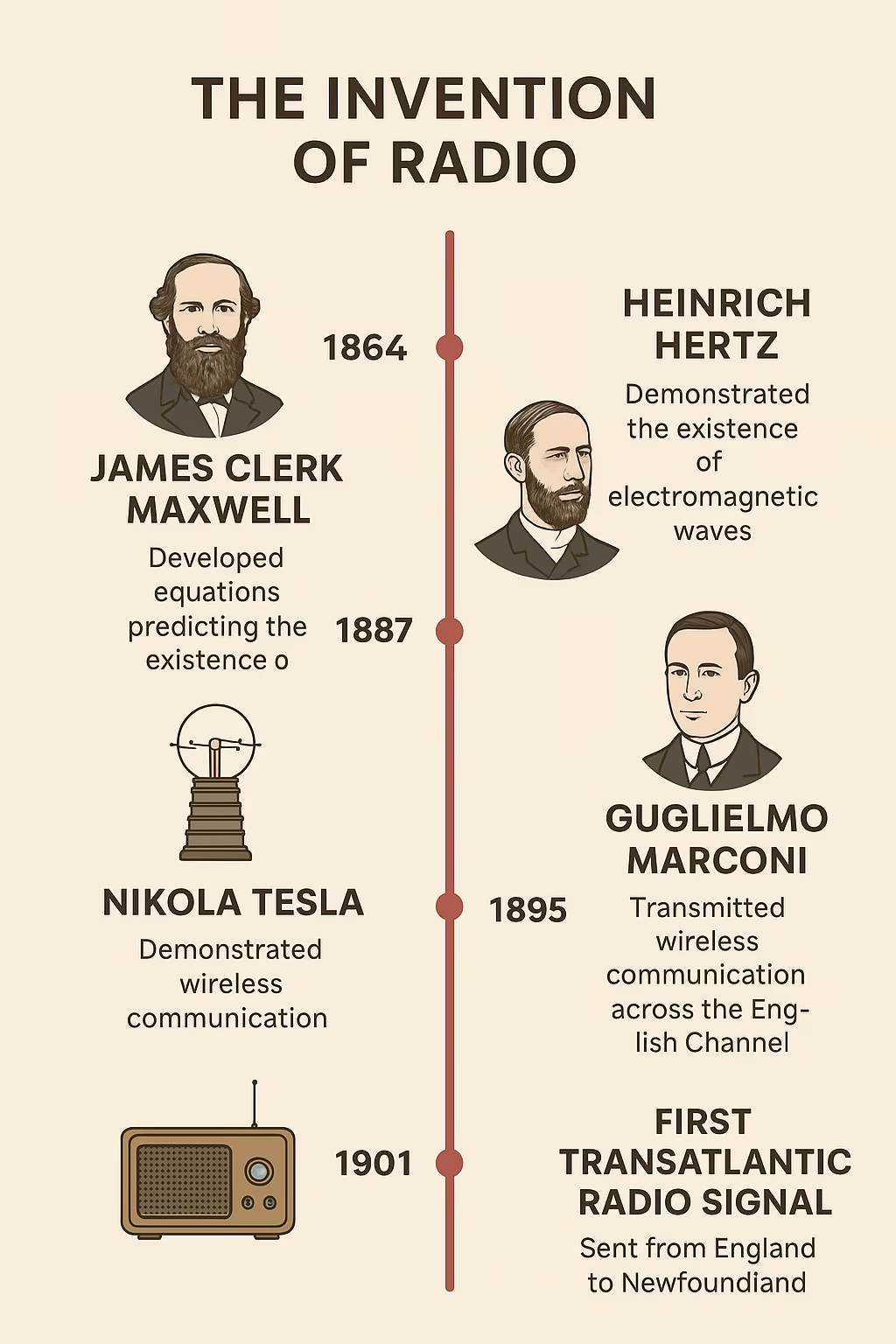
The development of radio control technology dates back to the late 19th and early 20th centuries, when radio waves were first discovered and applied. Some key milestones include:
- 1898 – Nikola Tesla’s Radio Boat: Tesla demonstrated one of the earliest examples of remote control using radio waves to operate a boat.
- 1930s – Military Applications: Early RC systems were developed for military purposes, such as guiding torpedoes and unmanned vehicles.
- 1950s – Consumer Electronics: Toy manufacturers began introducing RC cars, airplanes, and boats for recreational purposes.
- 2000s – Advanced Robotics and Drones: With improvements in microcontrollers, sensors, and wireless communication, RC interfaces became more sophisticated, leading to widespread use in drones, robotics, and industrial systems.
Today, RC interfaces are widely used in industries ranging from aviation and robotics to automotive systems and home automation.
How Does a Radio Control Interface Work?
The operation of a radio control interface involves signal transmission, reception, and interpretation.
1. Transmitter (TX)
The transmitter is the handheld device or controller that sends commands. It typically includes:
- Control sticks or buttons (for user input)
- Radio frequency module (to send signals)
- Power source (usually batteries)
2. Receiver (RX)
The receiver is mounted on the controlled device. It captures the radio signals and interprets them into electrical signals.
3. Communication Protocols
Modern RC interfaces use advanced protocols for reliable communication, such as:
- Pulse-Position Modulation (PPM)
- Pulse-Code Modulation (PCM)
- Spread Spectrum Technology (e.g., DSSS, FHSS)
4. Actuators and Control Systems
Once the receiver interprets the signal, it sends commands to actuators, motors, or servos to perform the intended action, such as moving a wheel, rotating a propeller, or changing direction.
Key Components of a Radio Control Interface
A typical RC system includes:
- Transmitter (remote controller)
- Receiver unit
- Power supply (batteries or rechargeable packs)
- Servos or actuators
- Communication protocol/software
Applications of Radio Control Interface
Radio control interfaces have countless applications across different sectors.
1. Consumer Electronics and Toys
- Remote-controlled cars, boats, airplanes, and helicopters.
- Drones for recreational purposes.
2. Aviation and Aerospace
- Drones for aerial photography, mapping, and surveillance.
- Remote piloting systems for unmanned aerial vehicles (UAVs).
3. Industrial Automation
- Wireless operation of cranes, forklifts, and machinery.
- Remote monitoring and control in hazardous environments.
4. Military and Defense
- Remote-guided drones and robots for reconnaissance.
- Explosive ordnance disposal (EOD) robots.
5. Healthcare and Assistive Technology
- Remote-controlled surgical robots.
- Assistive devices for disabled individuals.
6. Home Automation and IoT
- Smart appliances controlled via radio signals.
- Garage doors, lighting systems, and security devices.
Advantages of Radio Control Interface
Radio Control Interfaces bring several benefits compared to wired systems:
- Wireless Convenience: No need for physical cables.
- Extended Range: Devices can be controlled from long distances.
- Precision and Responsiveness: Modern RC protocols ensure low latency.
- Versatility: Applicable in toys, industries, and high-tech systems.
- Safety: Operators can control devices in hazardous or inaccessible areas.
Challenges and Limitations
Despite their advantages, RC interfaces also have limitations:
- Interference: Signals can be disrupted by other RF sources.
- Power Consumption: Devices require consistent battery or power management.
- Security Risks: Unsecured RC systems may be vulnerable to hacking.
- Range Limitations: Limited by frequency and power of the transmitter.
Future Trends in Radio Control Interface Technology
The future of RC interfaces is strongly tied to advancements in wireless communication, artificial intelligence, and IoT integration. Some emerging trends include:
- 5G-Powered Remote Control: Enabling ultra-low latency for real-time applications.
- AI Integration: Smarter decision-making in autonomous robots and drones.
- Enhanced Security Protocols: Stronger encryption to prevent signal hijacking.
- Miniaturization: Smaller and more energy-efficient components.
- Hybrid Interfaces: Combination of radio, Wi-Fi, and Bluetooth for flexibility.
Conclusion
The Radio Control Interface is more than just a tool for toy cars or drones—it is a foundational technology that drives advancements in robotics, aviation, healthcare, military, and home automation. Its wireless convenience, precision, and adaptability make it an essential part of modern electronics and communication systems.
As industries continue to embrace automation and connectivity, radio control interfaces will evolve to provide greater efficiency, security, and intelligence, shaping the future of human-machine interaction.