Introduction Marco Polo Shipyard
Situated in Batu Aji, Batam, Indonesia, PT Marco Polo Shipyard (part of Marco Polo Marine) plays a vital role in the maritime industry of Southeast Asia. Leveraging its strategic location and extensive expertise, the shipyard delivers shipbuilding, repair, conversion, and green recycling services. Recently, it has also emerged as a key player in servicing vessels for the rapidly expanding offshore wind energy sector.
Strategic Location & Infrastructure Marco Polo Shipyard
Located a mere 45 minutes by ferry from Singapore and 1.5 hours by flight from Changi Airport, the Batam shipyard is extremely accessible, giving it a competitive edge over Singapore-based yards.
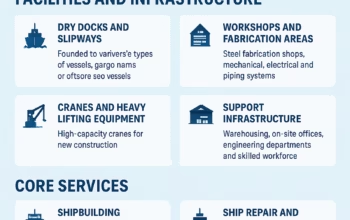
The shipyard boasts impressive facilities:
- Total land area: 34 hectares (348,705 m²)
- Seafront access: 650 meters
- Sheltered workshops & warehouses: 18,000 m²
- 3 dry docks and 1 slipway (170 m × 40 m)
With such infrastructure, the yard supports a broad range of operations—from new builds to repairs and conversions.
Comprehensive Shipyard Services
Marco Polo Shipyard provides a full spectrum of maritime services:
- Design & Build: Custom ship design tailored to specific missions.
- Repairs & Maintenance: Keeping vessels fully operational and seaworthy.
- Conversions: Repurposing existing vessels—e.g., for offshore wind support.
- Green Ship Recycling: ISO 30000:2009-certified, EU-compliant decommissioning and recycling.
Through these services, the shipyard enhances vessel lifecycles and ensures environmental responsibility.
Pioneering for Offshore Wind Energy Marco Polo Shipyard
In August 2025, Marco Polo Marine inaugurated its fourth dry dock at Batam—expected to generate revenue by late Q4 of fiscal 2025. Their first repair contract for this facility is valued at approximately SGD 5 million, with the vessel arriving end of August for a two-month overhaul.
Simultaneously, the shipyard secured a three-year Master Service Agreement (MSA) with Cyan Renewables, enabling long-term maintenance, repair, and conversion of vessels dedicated to offshore wind projects.
These developments underscore Marco Polo’s strategic positioning in the green energy value chain and reflect the broader shift toward sustainable maritime services.
Transition Journey & Sustainability Focus MarcoPolo Shipyard
Marco Polo Marine’s transformation began years earlier. Originally focused on offshore oil & gas, the company pivoted amid declining oil prices and industry volatility. By selectively repurposing offshore support vessels for offshore wind farm maintenance, it aligned with global energy transition trends.
Backed by Enterprise Singapore, Marco Polo introduced Asia’s first Commissioning Service Operation Vessel (CSOV) in 2025—costing around US$60 million—to provide a safer, more comfortable offshore environment for technicians, complete with recreation and gym facilities.
Financially, the turnaround is remarkable:
- From a US$16.9 million net loss in 2016,
- to a net profit of US$21.7 million in 2024,
- with total revenue hitting US$123.5 million and chartering alone contributing US$71.9 million.
To further reduce its environmental footprint, the company is collaborating with Amogy on developing zero-emission ammonia-based fuel systems, ensuring future vessels (like the CSOV) can be upgraded accordingly.

Why Marco Polo Shipyard Matters
- Cutting-edge infrastructure: Multiple dry docks and large-scale facilities tailored for diverse maritime tasks.
- Strategic access: Proximity to Singapore gives it logistical and cost advantages.
- Sustainability integration: Green recycling and alignment with global wind energy makes it a future-ready shipyard.
- Growth drivers: New dry dock, agreements with offshore wind firms, and a bold pivot away from oil-dependent services.
- Resilience: Transformed losses into significant profits through diversification and innovation.
Conclusion of MarcoPolo Shipyard
Marco Polo Shipyard in Batam has evolved into a maritime powerhouse—melding traditional shipyard functions with green technology and offshore wind capabilities. With strong leadership, robust infrastructure, and strategic partnerships, the yard is not only servicing ships but also fueling a cleaner, more sustainable maritime future.