Introduction
The global manufacturing industry is undergoing a massive transformation driven by industrial automation. Companies are increasingly adopting robotics, artificial intelligence (AI), and smart technologies to optimize efficiency, reduce costs, and improve product quality. Manufacturing and industrial automation are no longer futuristic concepts—they are the present and the foundation of the Industry 4.0 revolution.
From automotive production lines to food processing plants, automation is redefining how businesses operate. This article explores what manufacturing and industrial automation mean, their benefits, applications, challenges, and what the future holds for the industry.
What Is Manufacturing and Industrial Automation?
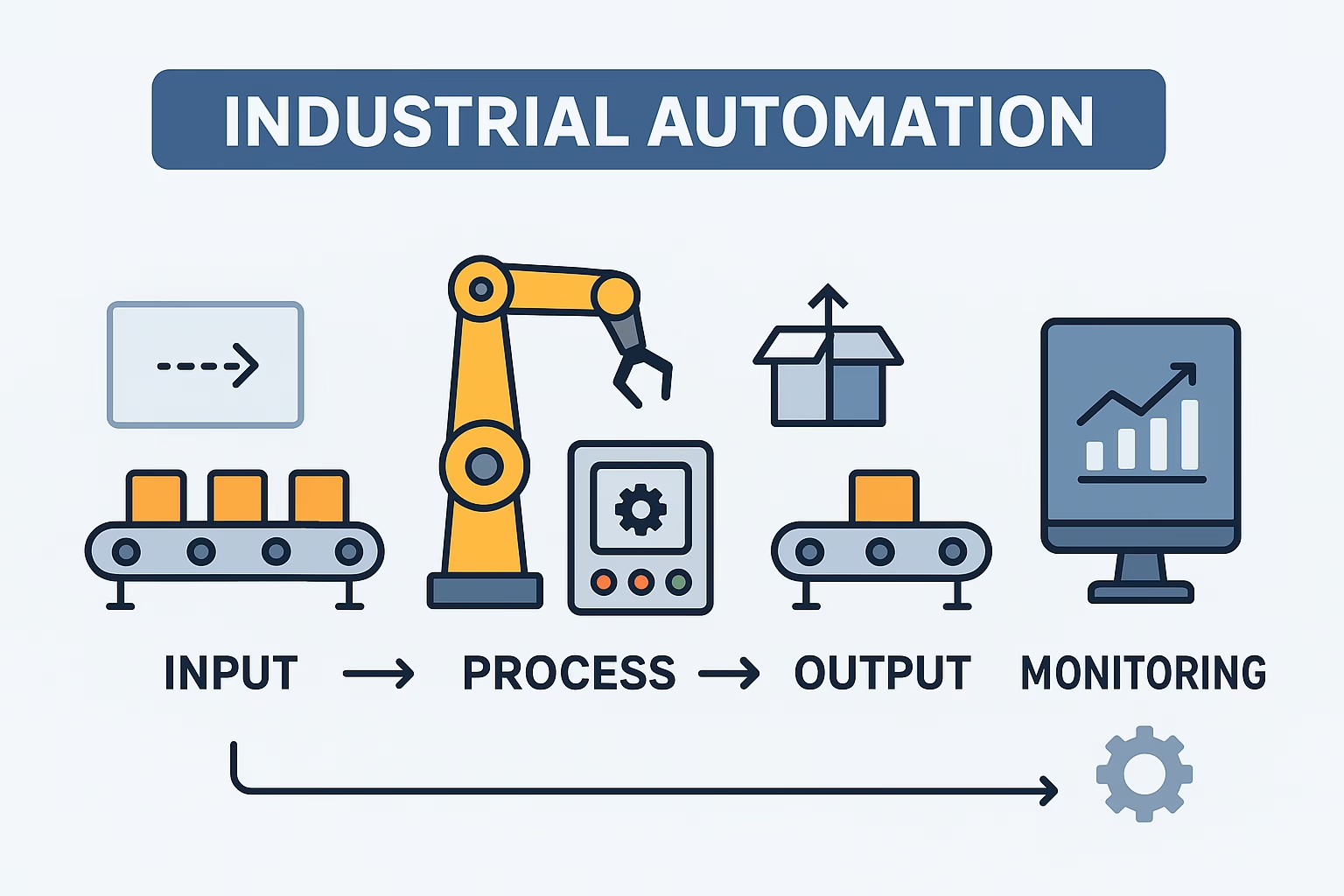
Manufacturing automation refers to the use of machines, control systems, and information technologies to handle production processes with minimal human intervention.
Industrial automation, on the other hand, extends beyond manufacturing and includes the automation of entire industrial operations such as material handling, quality control, logistics, and system monitoring.
Together, they create a system where advanced technologies manage repetitive tasks, ensure precision, and enable large-scale production at high speed and lower cost.
Key Components of Industrial Automation
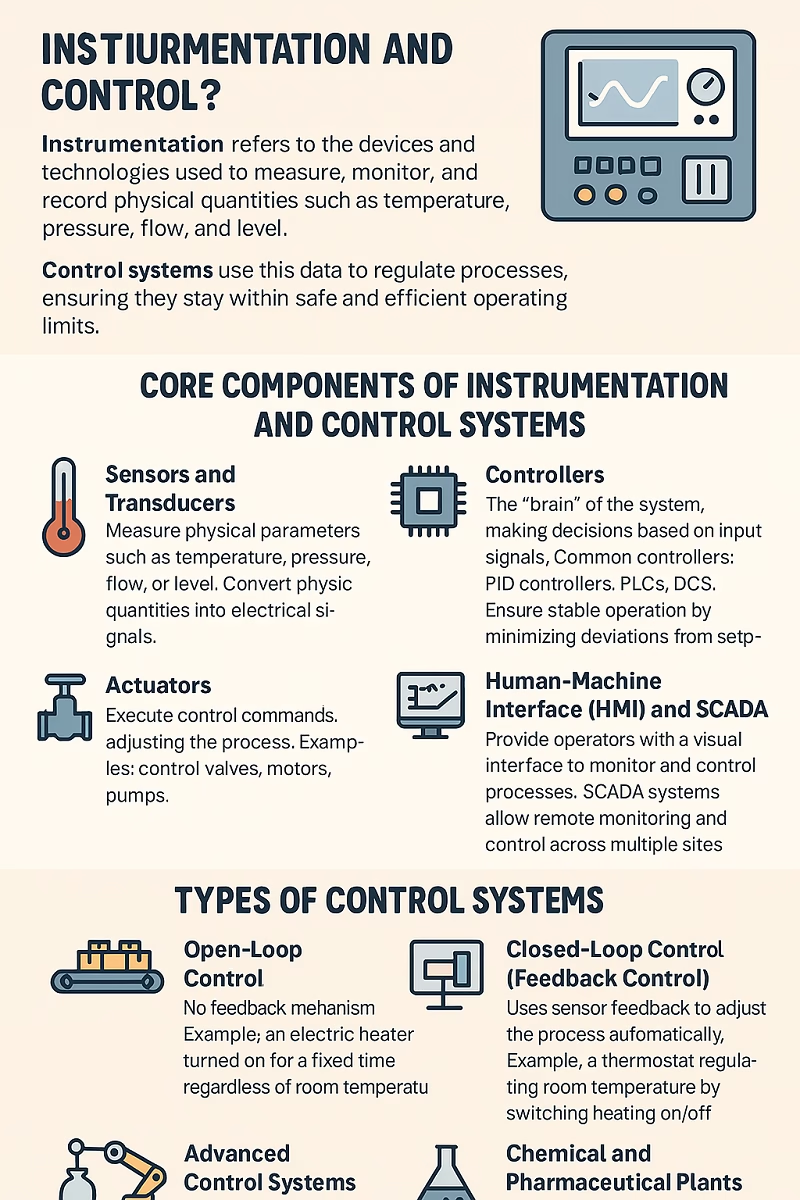
Industrial automation is made possible through a combination of advanced technologies, including:
- Robotics
Robots are widely used in manufacturing for assembly, welding, painting, and packaging. They enhance precision and reduce workplace accidents. - Programmable Logic Controllers (PLCs)
PLCs are industrial computers designed to control machinery and processes in real time. - Human-Machine Interface (HMI)
HMIs allow operators to interact with machines, monitor processes, and make adjustments efficiently. - Supervisory Control and Data Acquisition (SCADA)
SCADA systems provide real-time monitoring and control over industrial processes, ensuring better decision-making. - Artificial Intelligence (AI) and Machine Learning (ML)
AI-powered automation enables predictive maintenance, defect detection, and optimization of production lines. - Industrial Internet of Things (IIoT)
IIoT connects machines, sensors, and systems, allowing seamless data exchange for smarter manufacturing.
Benefits of Manufacturing and Industrial Automation
The adoption of automation provides significant advantages to manufacturers:
- Increased Productivity
Automated systems can run 24/7 without fatigue, boosting output. - Enhanced Precision and Quality
Robotics and AI reduce human error, ensuring consistent product quality. - Cost Reduction
While the initial investment is high, automation reduces long-term labor and operational costs. - Improved Workplace Safety
Robots handle hazardous tasks, minimizing risks for human workers. - Data-Driven Insights
IIoT and AI systems provide real-time data that helps in predictive maintenance and better decision-making. - Flexibility and Scalability
Automated systems can adapt quickly to product design changes and market demands.
Applications of Industrial Automation
Industrial automation is applied across multiple sectors:
- Automotive Industry: Robots assemble vehicles, weld frames, and apply coatings.
- Electronics Manufacturing: Precision assembly of microchips, circuit boards, and devices.
- Food and Beverage: Automated packaging, sorting, and quality inspection.
- Pharmaceuticals: Automated drug production, labeling, and safety checks.
- Textiles: Smart machinery for weaving, dyeing, and fabric cutting.
- Energy Sector: Automation in power plants and oil refineries for safety and efficiency.
These applications demonstrate the versatility and necessity of automation in modern industries.
Challenges in Implementing Industrial Automation
Despite its benefits, automation faces challenges that industries must address:
- High Initial Investment
Installing robots, AI systems, and control networks requires significant capital. - Skilled Workforce Requirement
Automation demands skilled technicians and engineers for operation and maintenance. - Cybersecurity Risks
With connected systems, industries are vulnerable to cyberattacks. - Job Displacement Concerns
Automation replaces some manual jobs, creating concerns about unemployment. - Integration Complexity
Combining legacy systems with modern automation technologies can be challenging.
Future Trends in Manufacturing and Industrial Automation
The future of manufacturing lies in smart, connected, and autonomous systems. Some key trends include:
- Collaborative Robots (Cobots): Designed to work safely alongside humans.
- AI-Powered Predictive Maintenance: Machines self-diagnose and predict breakdowns.
- Additive Manufacturing (3D Printing): Enables rapid prototyping and on-demand production.
- Digital Twins: Virtual models of physical processes for real-time optimization.
- Sustainable Manufacturing: Automation for energy efficiency and reduced waste.
- 5G-Enabled Smart Factories: Faster, more reliable communication between machines.
These trends are shaping the factories of the future, where automation and human expertise work hand in hand.
Conclusion
Manufacturing and industrial automation are not just technological upgrades—they are strategic necessities for modern industries. By embracing automation, businesses can achieve higher efficiency, maintain competitiveness, and prepare for future challenges. While obstacles like high investment and workforce reskilling exist, the long-term benefits far outweigh the risks.
As industries continue moving towards Industry 4.0 and beyond, automation will remain the driving force behind global innovation, sustainability, and productivity.