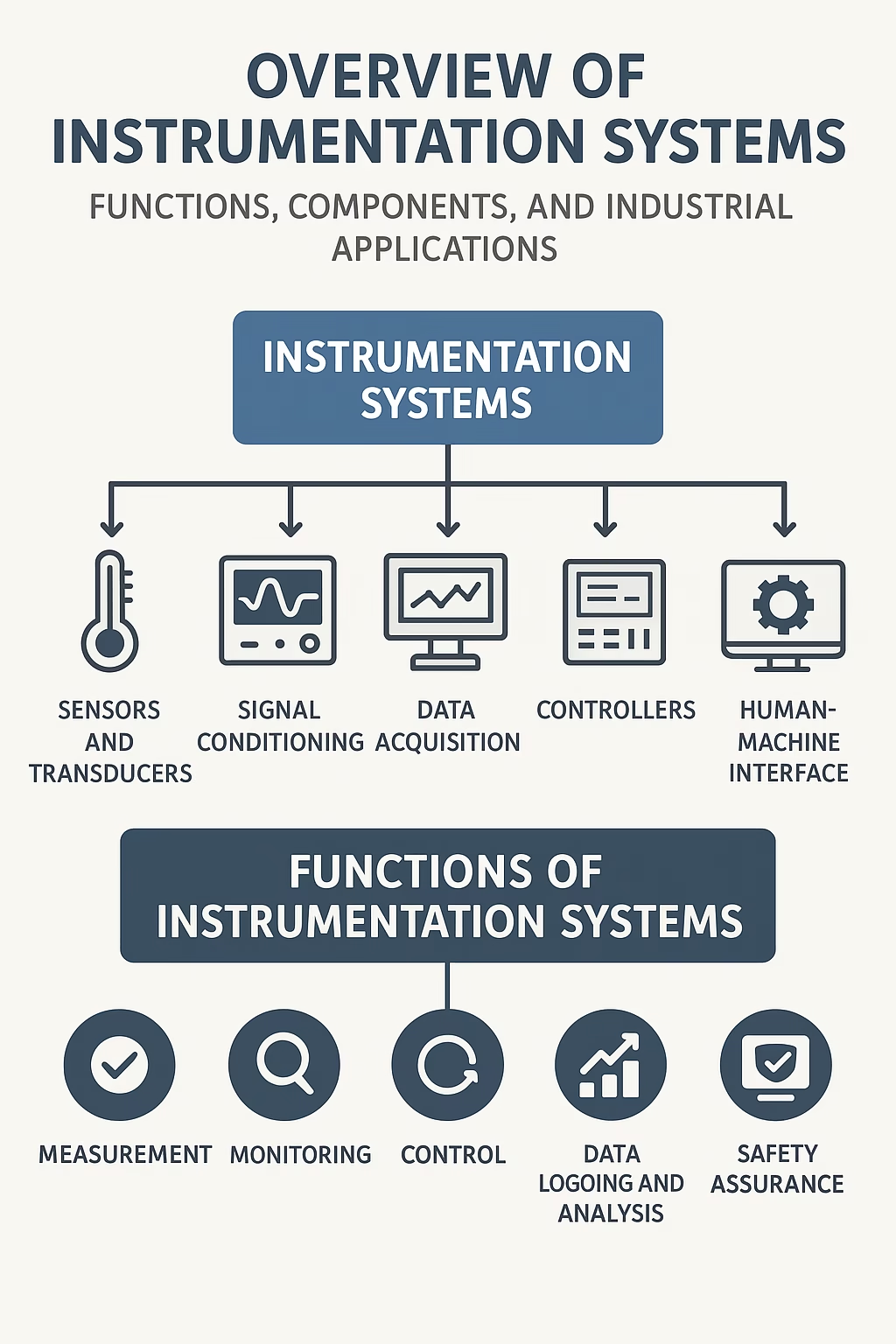
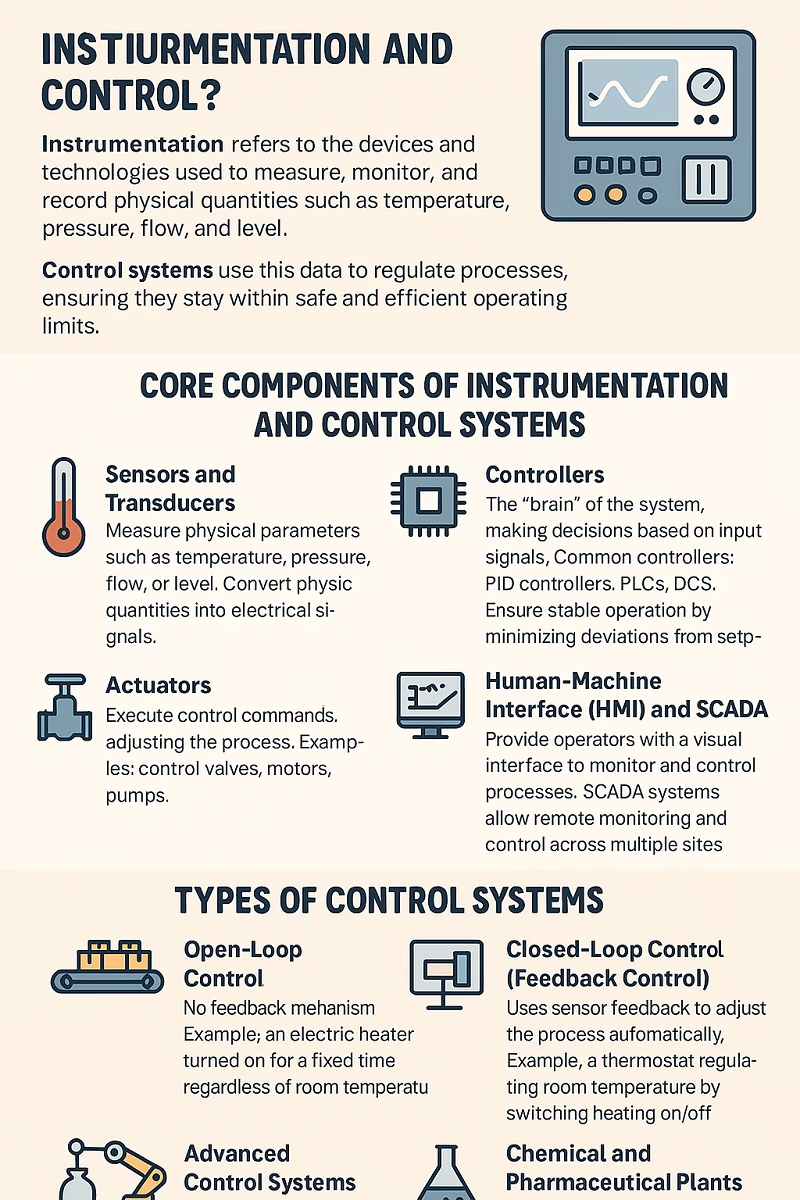
In modern engineering, manufacturing, healthcare, and scientific research, accurate measurement is the foundation of reliability and quality. Whether it’s a thermometer measuring temperature in a chemical plant, a pressure gauge in an oil refinery, or a medical device monitoring vital signs, instrumentation accuracy plays a critical role in ensuring that processes are safe, efficient, and consistent.
This article explores the definition of instrumentation accuracy, why it matters, the challenges industries face, the factors affecting precision, and best practices for maintaining accurate measurement systems.
What is Instrumentation Accuracy?
Instrumentation accuracy refers to the degree of closeness between the value indicated by an instrument and the true value of the measured quantity. In simpler terms, it is a measure of how correct or error-free an instrument is when taking a reading.
For example:
- If a thermometer shows 100.0°C while the true temperature is 100.1°C, the instrument is highly accurate.
- On the other hand, if it shows 102.0°C, the accuracy is poor despite the instrument still functioning.
Accuracy is often expressed as a percentage of the full-scale reading or as an absolute error margin. In industries where safety and precision are critical, even small inaccuracies can have significant consequences.
Importance of Instrumentation Accuracy
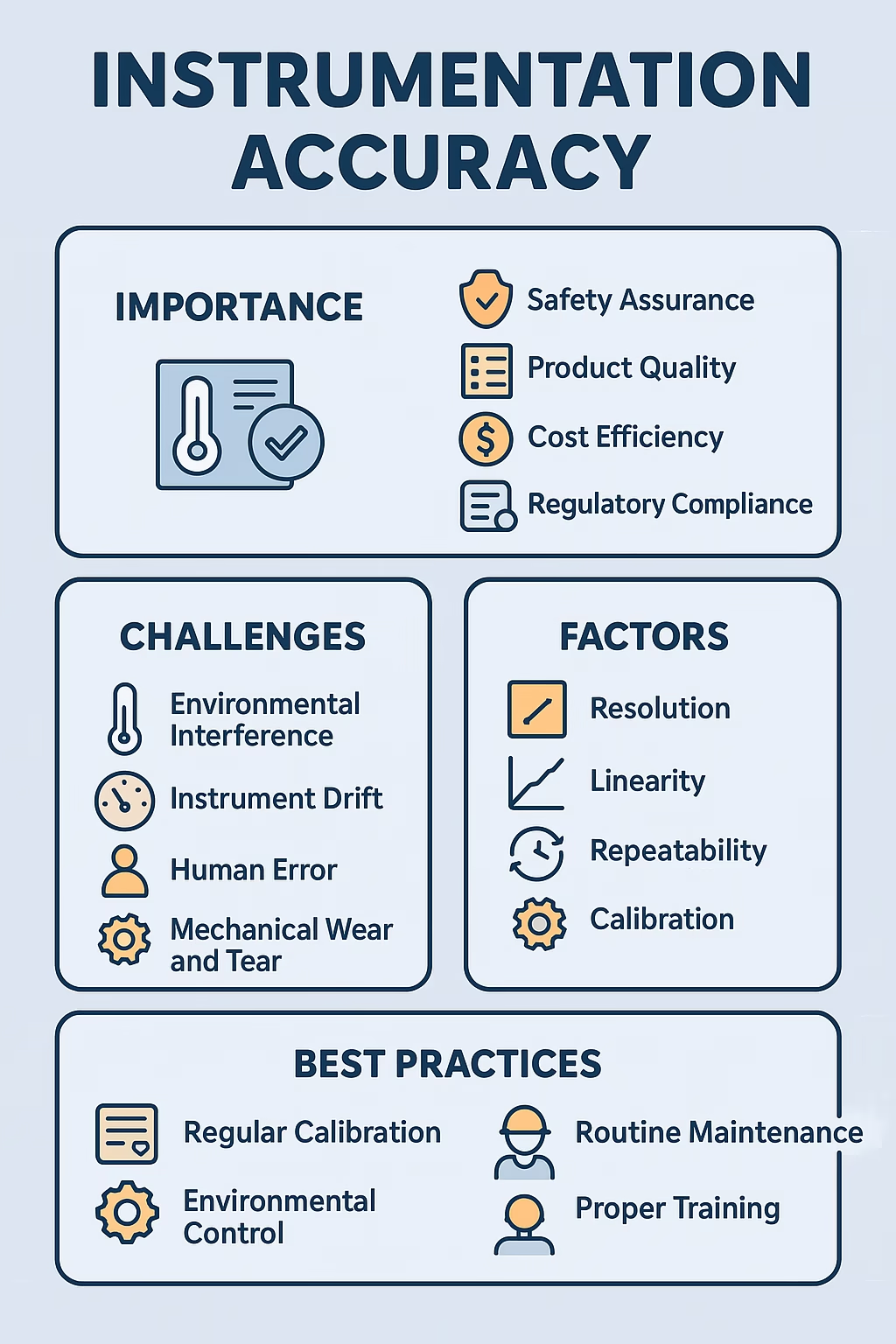
- Safety Assurance
In sectors like chemical processing, nuclear plants, and aerospace, even minor inaccuracies can lead to catastrophic failures. Accurate instruments ensure safety protocols are met. - Product Quality
Manufacturing industries depend on precise measurements to maintain product specifications. Any deviation caused by inaccurate instruments can lead to defective goods and financial losses. - Cost Efficiency
Accurate instrumentation reduces waste, rework, and unnecessary downtime. It allows companies to optimize resources and maintain profitability. - Regulatory Compliance
Many industries are governed by strict standards (ISO, IEC, ASTM, etc.). Accurate measurement systems help meet compliance requirements and avoid legal issues. - Scientific Validity
In laboratories and research, reliable data depends on precise instrumentation. Without accuracy, experimental results lose credibility.
Challenges in Maintaining Instrumentation Accuracy
Despite technological advancements, ensuring measurement accuracy is not without obstacles. Some common challenges include:
- Environmental Interference: Temperature changes, humidity, vibration, and electromagnetic interference can distort readings.
- Instrument Drift: Over time, instruments may lose calibration and deviate from the true value.
- Human Error: Mistakes in reading, recording, or handling instruments can reduce accuracy.
- Mechanical Wear and Tear: Moving parts in mechanical instruments degrade with use, leading to less reliable readings.
- Complexity of Processes: In modern industries, multiple interconnected instruments increase the possibility of compounded inaccuracies.
Factors Affecting Instrumentation Accuracy
Several technical and operational factors influence the accuracy of instruments:
- Resolution – The smallest detectable change in measurement an instrument can display. Higher resolution typically means higher accuracy.
- Linearity – The ability of an instrument to produce readings that are directly proportional to the true input value.
- Repeatability – The consistency of an instrument to produce the same result under the same conditions.
- Sensitivity – The ability to detect small changes in the measured variable.
- Calibration – Regular calibration against standard references improves accuracy.
- Range and Span – Instruments are more accurate within a defined range; exceeding this range may reduce accuracy.
Best Practices to Ensure Instrumentation Accuracy
- Regular Calibration
- Instruments must be calibrated periodically against known standards to minimize error.
- Use traceable calibration references to international standards.
- Environmental Control
- Protect instruments from harsh conditions such as extreme temperatures, dust, vibration, and electromagnetic interference.
- Routine Maintenance
- Clean and service instruments regularly to prevent wear and drift.
- Replace aging sensors and components before they fail.
- Proper Training
- Ensure operators and technicians understand how to correctly use and read instruments.
- Reduce human error through standard operating procedures (SOPs).
- Redundancy in Critical Systems
- For critical applications (aviation, nuclear, healthcare), use multiple instruments to cross-check accuracy.
- Digital and Smart Systems
- Modern digital instruments often provide higher accuracy, self-calibration, and error detection features.
Instrumentation Accuracy in Different Industries
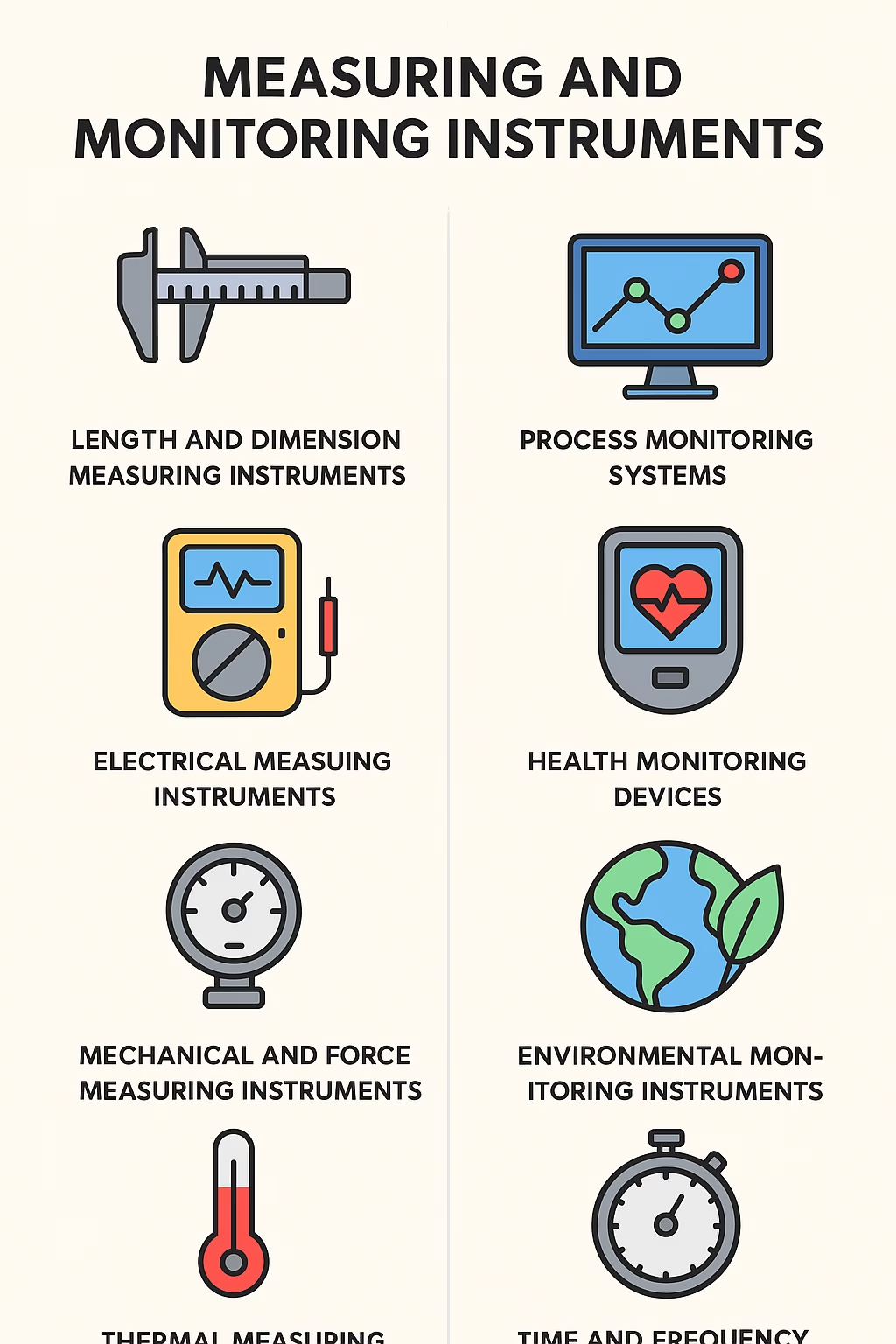
- Healthcare – Medical devices like blood pressure monitors, ECG machines, and thermometers must be extremely accurate to safeguard patient health.
- Manufacturing – Dimensional accuracy in machining ensures components fit perfectly, preventing costly defects.
- Energy Sector – Accurate pressure, temperature, and flow measurements prevent accidents and improve energy efficiency.
- Environmental Monitoring – Instruments measuring air quality, pollution levels, and water purity must deliver precise results for reliable data.
- Scientific Research – From particle physics experiments to pharmaceutical testing, accuracy ensures trustworthy findings.
Future Trends in Instrumentation Accuracy
With Industry 4.0 and digital transformation, instrumentation is becoming smarter and more reliable. Some future trends include:
- AI and Machine Learning Integration – Instruments that self-diagnose and auto-correct measurement errors.
- IoT-Based Monitoring – Remote, real-time monitoring for instant accuracy checks.
- Self-Calibrating Instruments – Devices that adjust automatically to maintain precision without human intervention.
- Nano-Scale Measurement Tools – Advanced sensors capable of measuring at atomic and molecular levels.
Conclusion
Instrumentation accuracy is not just a technical concept—it is a critical factor that determines safety, efficiency, and reliability across industries. From healthcare and manufacturing to energy and research, accurate measurements form the backbone of progress.
By addressing challenges, controlling environmental factors, and following best practices like calibration and maintenance, organizations can ensure their instruments deliver precise and trustworthy results.
As technology evolves, the future of instrumentation accuracy promises even greater reliability, empowering industries to achieve new heights of innovation and efficiency.