
Introduction
History of Integrated Circuits ~ The integrated circuit (IC), also known as a microchip, is one of the most revolutionary inventions in the history of technology. Its development transformed electronics from bulky, power-hungry devices into compact, efficient, and reliable systems that power everything from smartphones and computers to medical devices and satellites.
The history of integrated circuits is a fascinating journey that began in the mid-20th century and continues to evolve today. This article explores the invention, evolution, and impact of ICs on modern society.
The Predecessors: Vacuum Tubes and Transistors
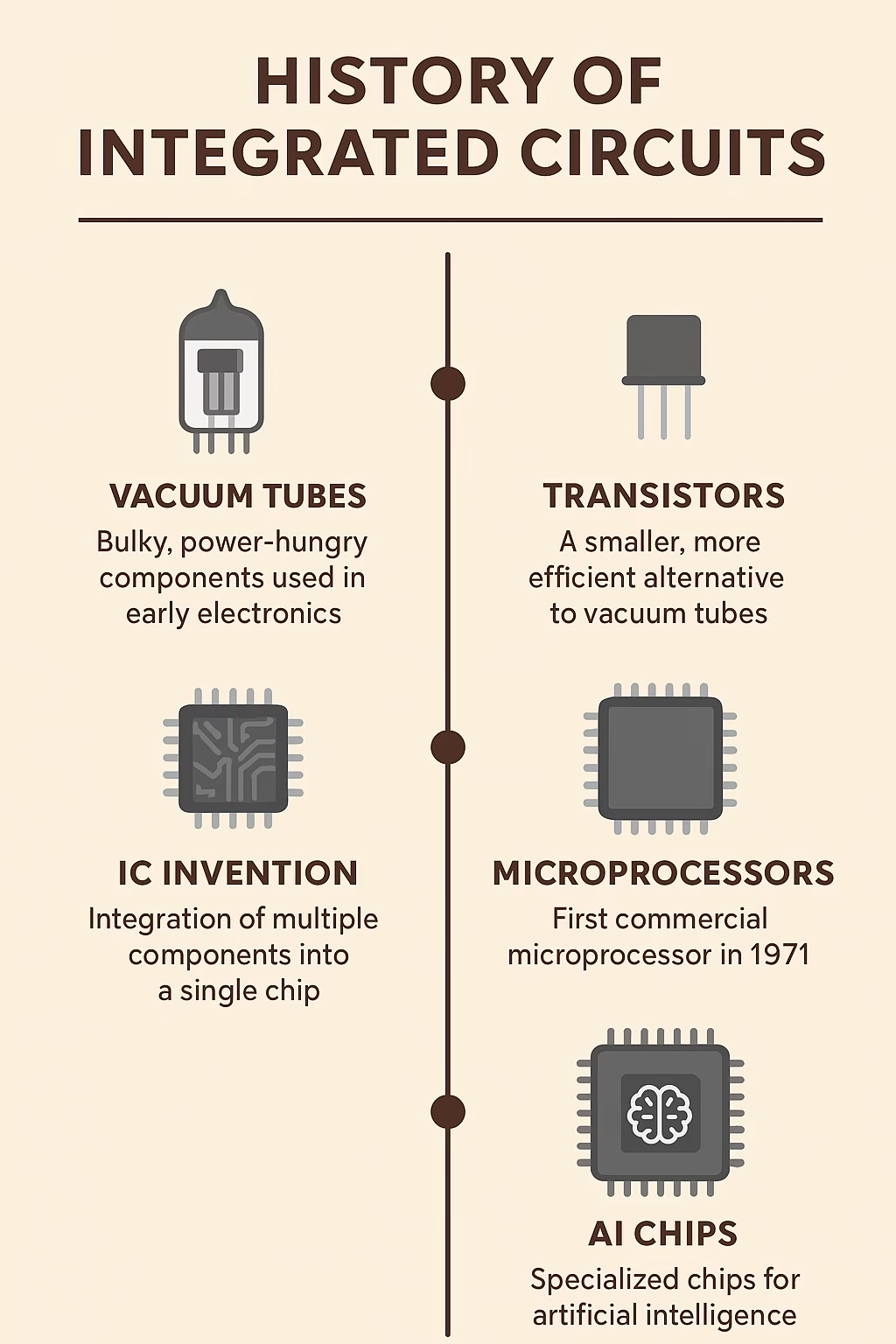
Before integrated circuits, electronic devices relied heavily on vacuum tubes. These glass tubes controlled the flow of electricity and were used in early radios, televisions, and computers. However, vacuum tubes were large, fragile, and consumed significant amounts of power.
In 1947, the transistor was invented at Bell Laboratories by John Bardeen, William Shockley, and Walter Brattain. The transistor was a smaller, more efficient alternative to vacuum tubes, but building complex systems still required thousands of individual transistors, resistors, and capacitors. This led to what engineers called the “tyranny of numbers”—the challenge of assembling and wiring millions of components together.
The Invention of the Integrated Circuit
The breakthrough came in 1958, when Jack Kilby of Texas Instruments demonstrated the first working integrated circuit. His prototype used germanium and combined multiple electronic components into a single block of semiconductor material. Just one year later, in 1959, Robert Noyce of Fairchild Semiconductor developed a silicon-based version that used a process known as planar technology, which allowed for easier manufacturing and mass production.
These two inventions are considered the birth of the integrated circuit. Kilby and Noyce are often credited as co-inventors, and in 2000, Jack Kilby received the Nobel Prize in Physics for his contribution.
Early Development and Adoption
In the 1960s, integrated circuits began to replace discrete transistor-based designs. At first, ICs were expensive and limited in function, but as manufacturing improved, costs dropped, and adoption increased rapidly.
Some key milestones in early IC development include:
- Small-Scale Integration (SSI): Early ICs in the 1960s contained only a few transistors per chip, typically fewer than 10. They were mainly used in military and aerospace applications.
- Medium-Scale Integration (MSI): By the mid-1960s, ICs contained hundreds of transistors, allowing more complex logic circuits.
- Large-Scale Integration (LSI): In the 1970s, thousands of transistors could be integrated onto a single chip, paving the way for microprocessors.
One of the first major adopters of ICs was the U.S. space program, particularly the Apollo missions. ICs were used in the Apollo Guidance Computer, which helped astronauts navigate to the Moon.
History of Integrated Circuits: The Rise of Microprocessors
The most significant milestone in IC history came in 1971, when Intel introduced the first commercial microprocessor, the Intel 4004. This tiny chip integrated the functions of a computer’s central processing unit (CPU) into a single integrated circuit.
Microprocessors revolutionized computing by making it possible to build affordable personal computers. Companies like Apple, IBM, and Microsoft built their success on the foundation of integrated circuit technology.
History of Integrated Circuits: Moore’s Law and the Growth of IC Technology
In 1965, Gordon Moore, co-founder of Intel, observed that the number of transistors on an integrated circuit doubled approximately every two years, while costs decreased. This observation, known as Moore’s Law, became a guiding principle in the semiconductor industry.
Over the decades, IC technology advanced from:
- VLSI (Very Large-Scale Integration): Tens of thousands to millions of transistors per chip in the 1980s.
- ULSI (Ultra-Large-Scale Integration): Hundreds of millions of transistors in the 1990s.
- Modern Microchips: Today’s ICs contain billions of transistors, enabling artificial intelligence, quantum computing research, and high-performance processors.
Applications of Integrated Circuits
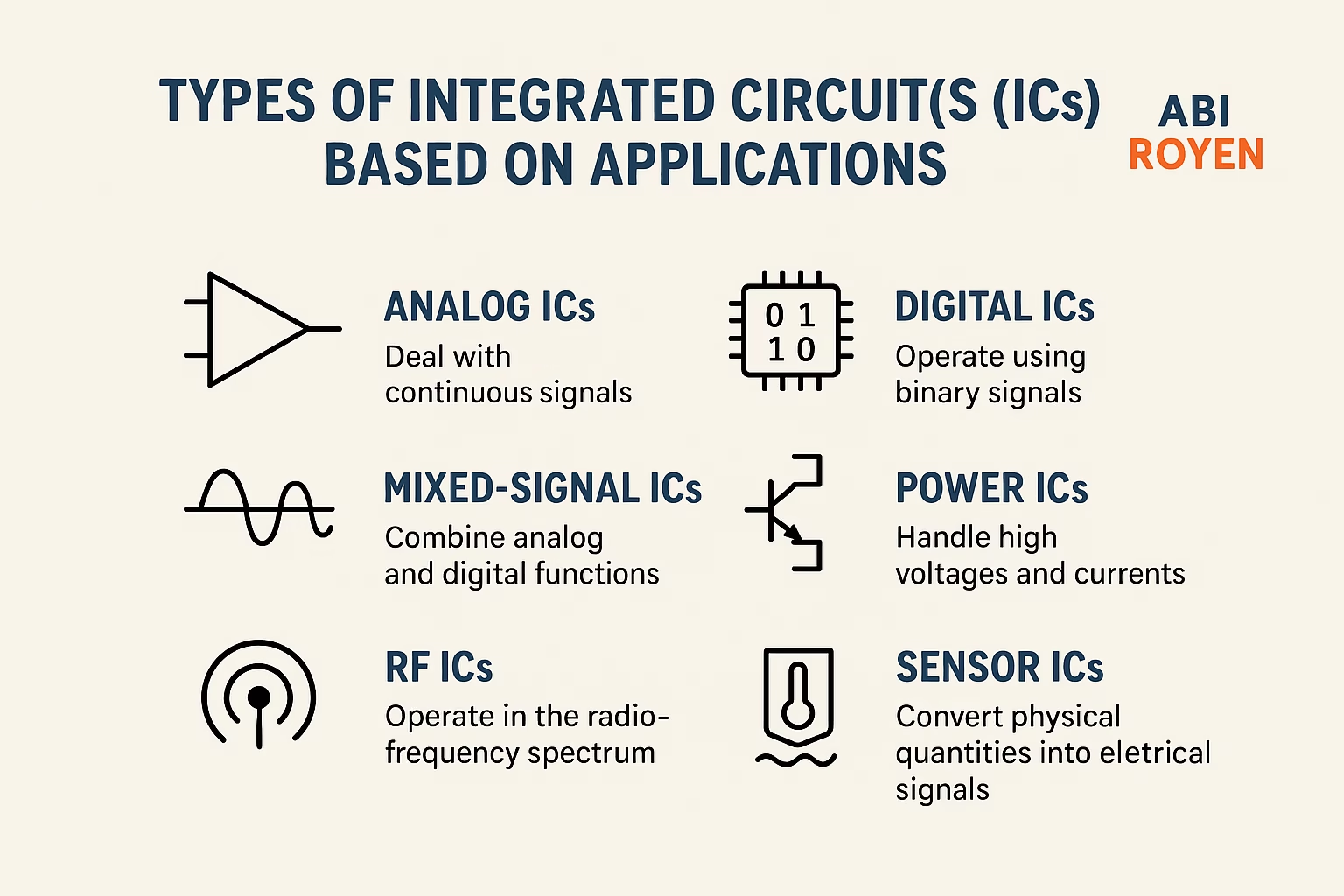
Today, integrated circuits are found in virtually every electronic device. Their applications include:
- Consumer Electronics: Smartphones, laptops, TVs, and gaming consoles.
- Automotive Systems: Advanced driver-assistance systems (ADAS), sensors, and engine control units.
- Healthcare: Medical imaging equipment, pacemakers, and diagnostic devices.
- Telecommunications: 5G networks, satellites, and internet infrastructure.
- Industrial Automation: Robotics, manufacturing systems, and IoT (Internet of Things).
- Military and Aerospace: Navigation, communication, and defense systems.
The Future of Integrated Circuits
As technology continues to evolve, integrated circuits are expected to play an even greater role in shaping the future. Some emerging trends include:
- Nanotechnology and 3D ICs: Packing more transistors into smaller spaces.
- Artificial Intelligence Chips: Specialized ICs designed for machine learning and neural networks.
- Quantum Computing Integration: Combining ICs with quantum processors for next-generation computing.
- Green Electronics: Designing ICs with energy efficiency and sustainability in mind.
Conclusion
The history of integrated circuits is a story of innovation, collaboration, and technological progress. From Jack Kilby’s first prototype in 1958 to today’s advanced microchips containing billions of transistors, ICs have shaped the digital age.
Without integrated circuits, modern society—smartphones, the internet, medical advancements, and space exploration—would not exist as we know it. As research continues, ICs will remain at the heart of technological evolution, driving progress for decades to come.