Introduction
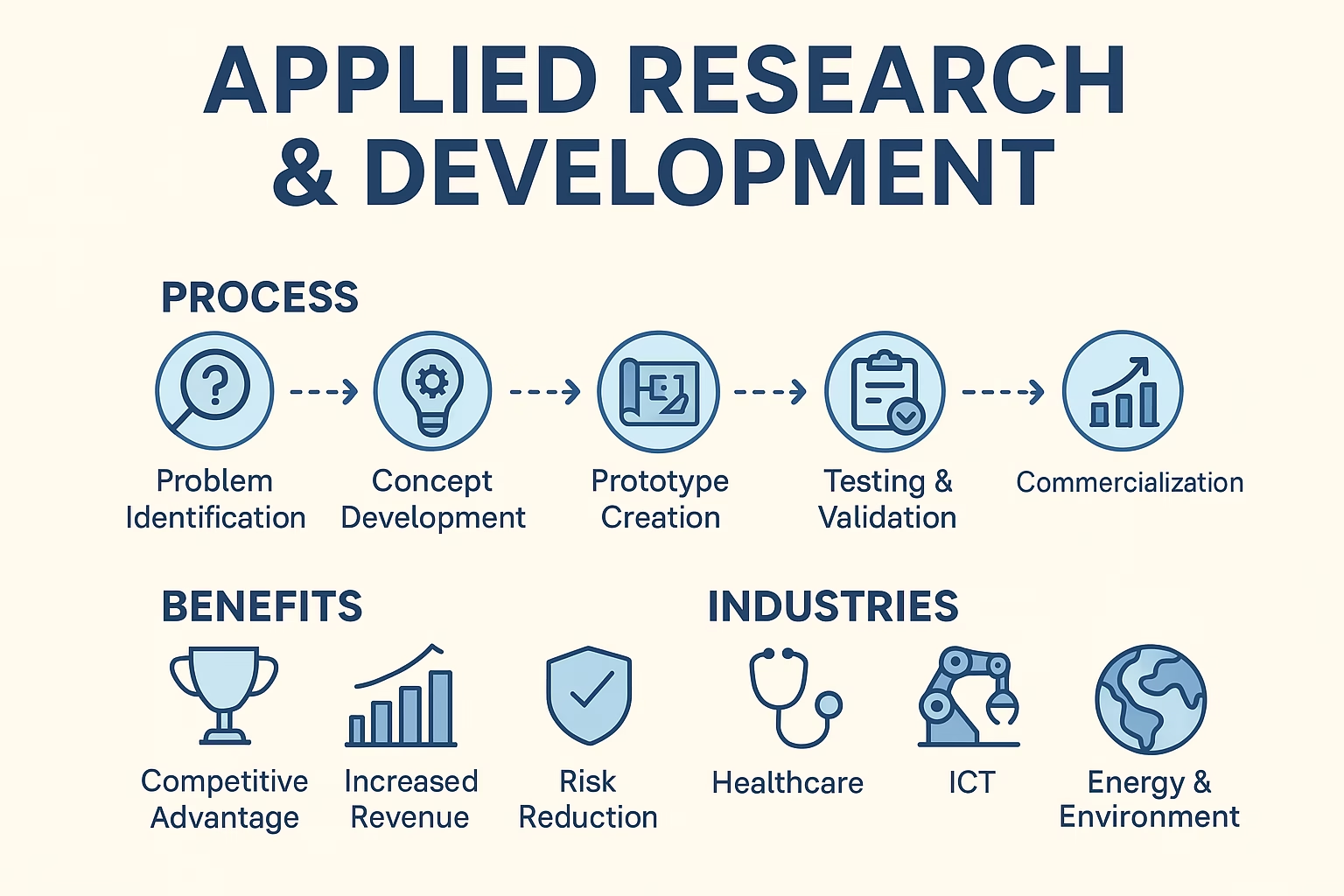
Government and R&D ~ Research and Development (R&D) has always been a cornerstone of technological progress, industrial growth, and societal advancement. While private companies and academic institutions play a vital role in driving innovation, governments are often the backbone that supports, regulates, and funds R&D activities. Without government involvement, many large-scale projects, such as space exploration, renewable energy systems, and medical research, would remain unrealized.
This article explores the relationship between governments and R&D, highlighting their role in shaping innovation policies, providing funding, and creating ecosystems that drive sustainable progress.
The Role of Government and R&D
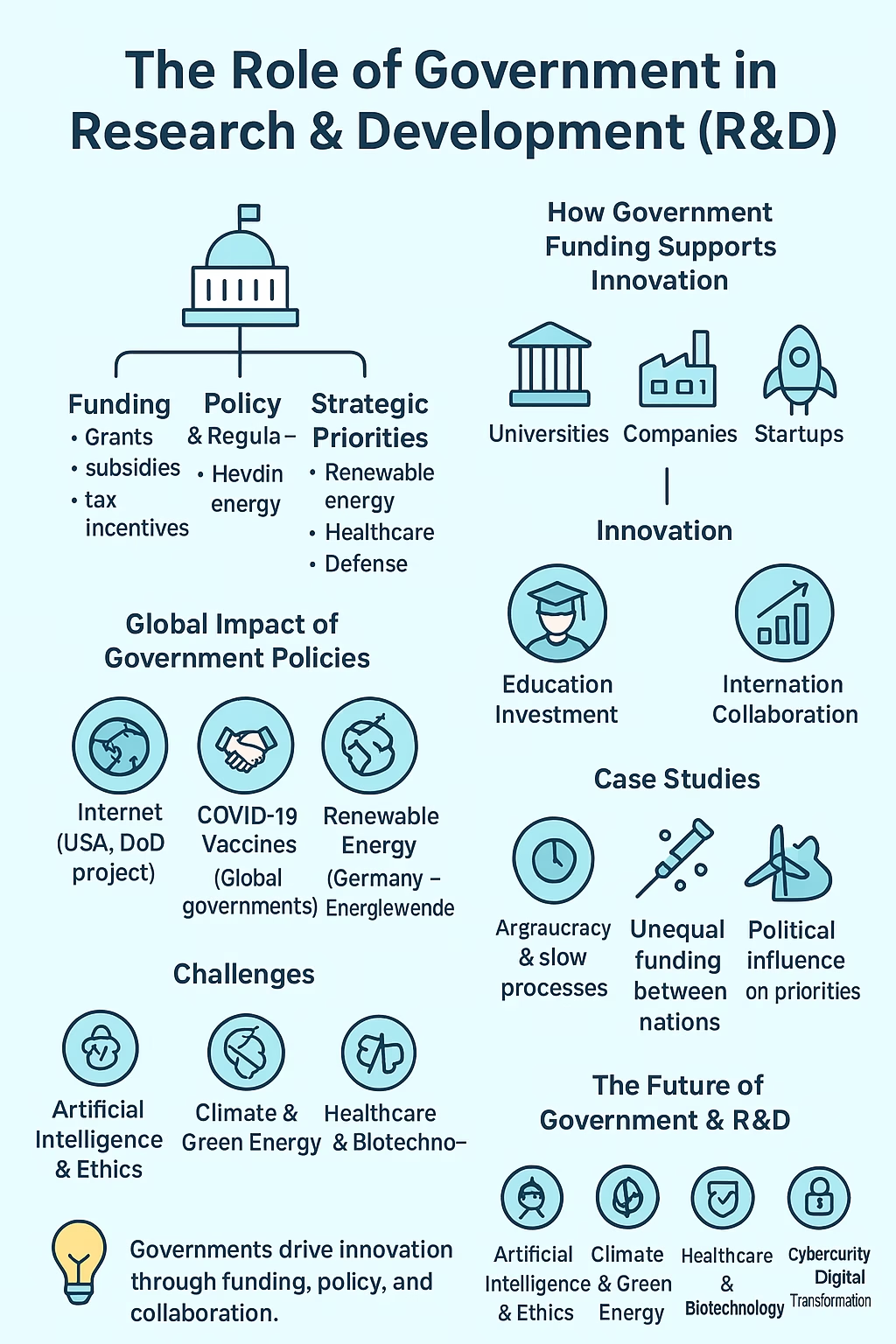
Governments worldwide act as enablers, facilitators, and regulators in R&D. Their involvement can be categorized into three primary functions:
- Funding Research Projects
Governments allocate significant budgets to support R&D activities in sectors like healthcare, defense, agriculture, and renewable energy. For example, the United States invests billions of dollars annually in institutions like NASA and the National Institutes of Health (NIH). - Setting Strategic Priorities
Governments determine which areas of research deserve priority funding, often based on national needs. For instance, renewable energy receives special attention due to climate change concerns, while biotechnology has become a priority for future healthcare development. - Policy and Regulation
By establishing clear laws and policies, governments regulate intellectual property rights, ethical standards, and safety guidelines to ensure responsible innovation.
Government Funding in R&D
Funding is one of the most influential tools governments use to stimulate R&D. Public investment helps reduce financial risks for private companies and encourages collaboration between industries and universities.
- Grants and Subsidies
Direct financial support is often provided for startups, universities, and research institutions. - Tax Incentives
Many governments introduce tax relief policies for companies investing in R&D activities. - Public-Private Partnerships (PPP)
Collaboration between the private sector and government ensures that research outcomes are both practical and market-driven.
For example, the European Union’s Horizon Europe program has allocated billions of euros to promote collaborative research across member states.
Impact of Government Policies on Innovation
Government policies shape how R&D evolves. Supportive policies lead to breakthroughs, while restrictive measures may hinder progress. Some impactful areas include:
- Intellectual Property Rights (IPR)
Protecting patents encourages innovators to develop new technologies without fear of exploitation. - Education and Talent Development
Governments invest in education and skill-building programs to nurture future researchers and engineers. - Global Collaboration
International cooperation between governments fosters large-scale projects, such as climate monitoring and space exploration.
Case Studies: Successful Driven Government and R&D
- The Internet (United States)
Originally funded by the U.S. Department of Defense, the internet has become one of the most transformative technologies in human history. - COVID-19 Vaccines (Global Collaboration)
Governments worldwide provided billions in funding to accelerate vaccine development, saving millions of lives. - Green Energy in Germany
The German government’s Energiewende policy has turned the country into a global leader in renewable energy research and implementation.
Challenges in Government and R&D
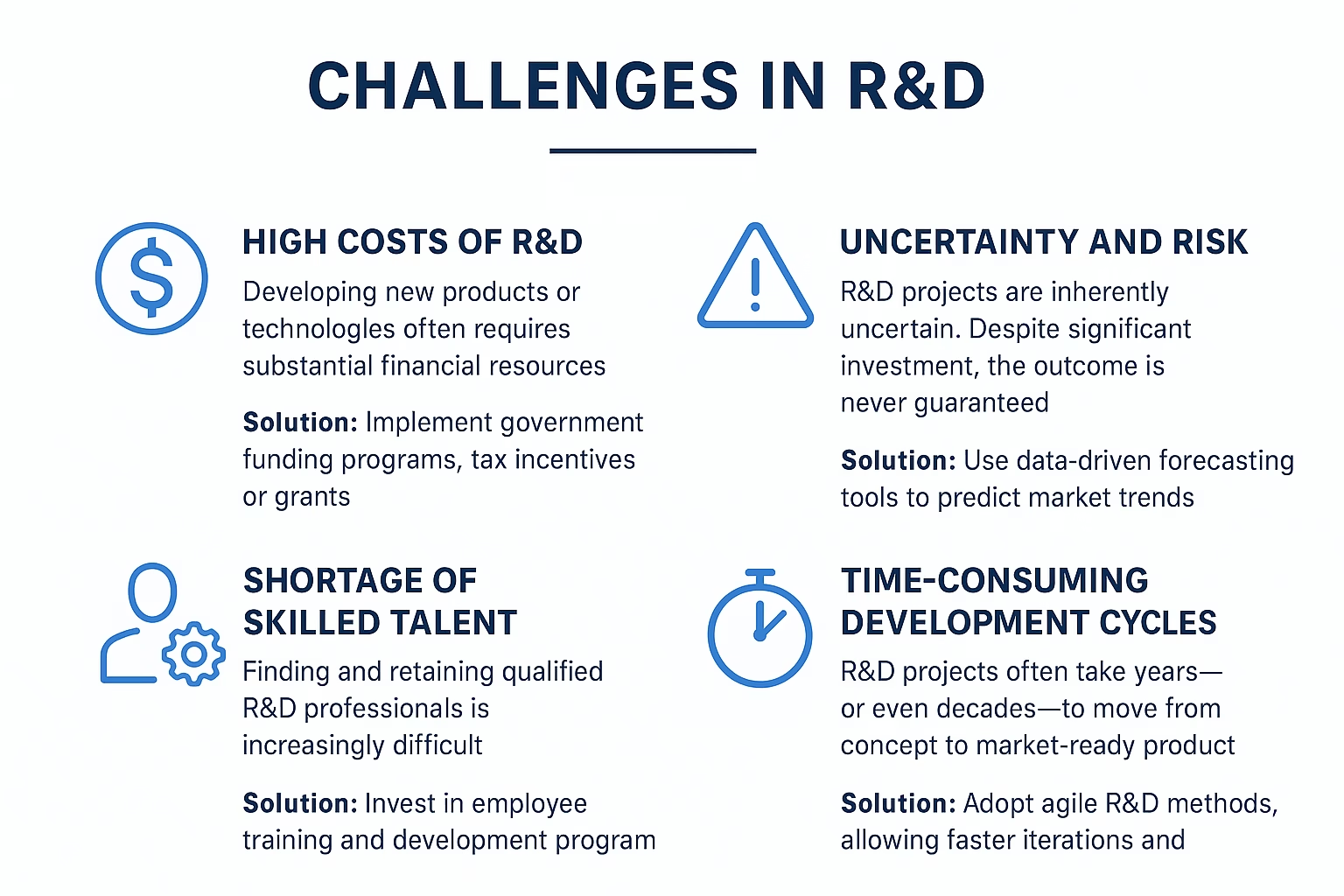
While government involvement is crucial, challenges remain:
- Bureaucracy and Slow Processes
Excessive regulations can delay project execution. - Unequal Distribution of Resources
Developing countries often struggle with limited budgets for R&D. - Political Influence
Research priorities sometimes shift with changing governments, leading to instability in long-term projects.
The Future of Government and R&D
The future of government involvement in R&D is expected to focus on global challenges such as:
- Artificial Intelligence (AI) Regulation and Development
Governments will play a central role in regulating and funding AI research while ensuring ethical use. - Sustainable Energy and Climate Solutions
With climate change posing existential threats, R&D in clean energy and carbon reduction technologies will remain a top priority. - Healthcare and Biotechnology
Post-pandemic, governments will likely increase investments in medical research, biotechnology, and global health preparedness. - Digital Transformation and Cybersecurity
As economies become more digitized, investments in cybersecurity R&D will be critical to protect infrastructure.
Conclusion
Government involvement in R&D is indispensable for sustainable progress. Through funding, policy-making, and international cooperation, governments act as catalysts for groundbreaking innovations that benefit society as a whole. However, to maximize the impact of R&D, governments must address challenges like bureaucracy, resource inequality, and political instability.
Ultimately, the collaboration between governments, industries, and academic institutions will determine how effectively societies can tackle future challenges and create a more innovative and sustainable world.