Functions active electronic components ~ In the world of electronics, components are typically classified into two major categories: passive and active. While passive components like resistors and capacitors can only store or dissipate energy, active components are the real game-changers. They are responsible for amplifying, switching, and controlling the flow of electric current in a circuit. These components are essential in almost all modern electronic systems, from smartphones and computers to industrial machinery and medical devices.
This article explores the functions and roles of electronic active components, providing detailed insights into how these crucial elements operate and their impact on circuit performance.
What Are Active Electronic Components?
Active components are devices that can control the flow of electricity and are capable of amplification or signal modulation. These components require an external power source to operate and can inject power into a circuit. Unlike passive components, active components have the ability to generate gain, meaning they can increase the amplitude or strength of a signal.
Main Characteristics of Active Components:
- Require external energy for operation
- Capable of amplification and signal modulation
- Exhibit non-linear behavior
- Typically built from semiconducting materials
Types of Electronic Active Components and Their Roles
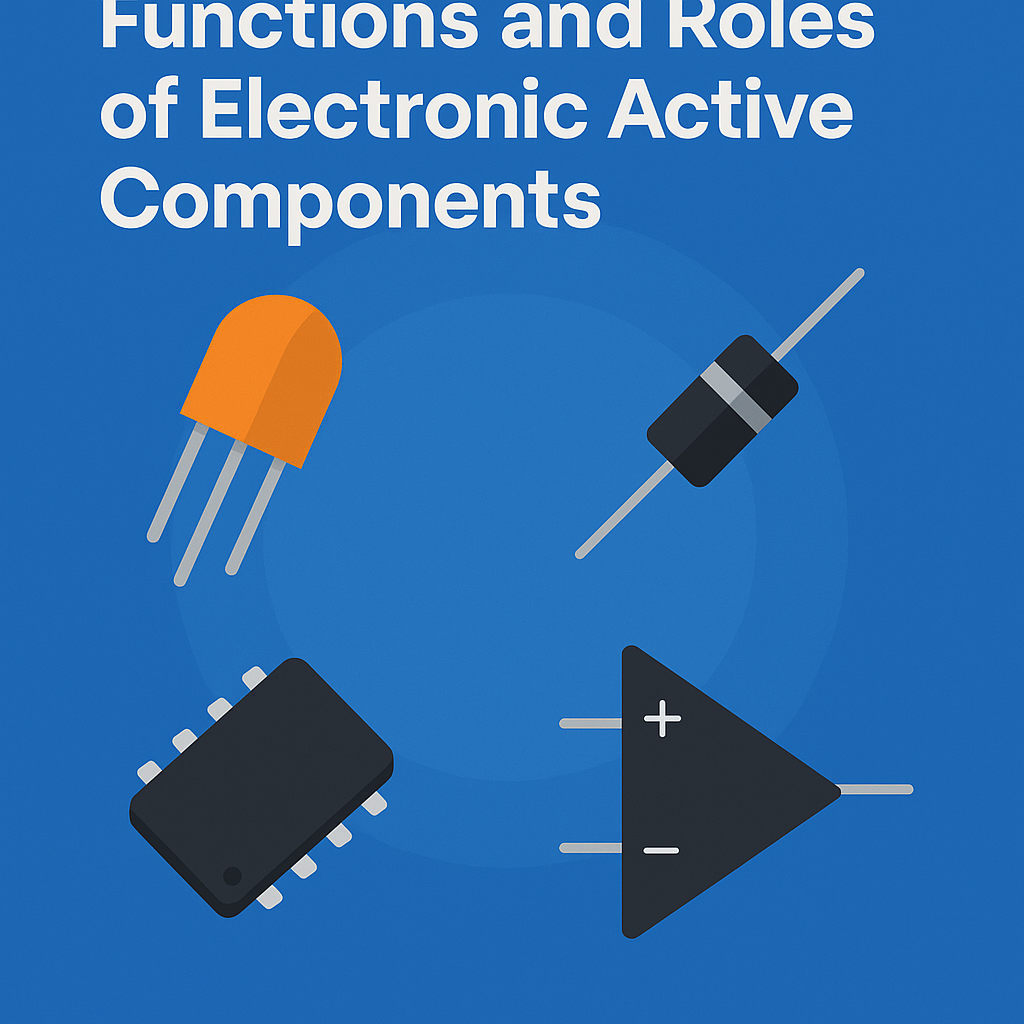
Below are some of the most commonly used active components in electronic circuits, along with their functions and applications:
1. Functions Active Electronic Components: Transistors
Function:
Transistors act as switches and amplifiers. They are the backbone of digital logic and analog amplification systems.
Types of Transistors:
- Bipolar Junction Transistor (BJT)
- Field Effect Transistor (FET)
- MOSFET (Metal-Oxide-Semiconductor FET)
Roles in Circuits:
- Amplifying audio and radio signals
- Switching digital signals in processors
- Power regulation and voltage control
- Oscillators and modulators in communication systems
Real-world Applications:
- Audio amplifiers
- Microprocessors and digital systems
- Voltage regulators
- RF circuits
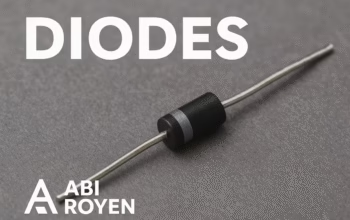
2. Functions Active Electronic Components: Diodes
Function:
Diodes allow current to flow in only one direction, acting as a one-way valve for electrical current.
Common Types:
- Standard (PN) Diode
- Zener Diode – used for voltage regulation
- Light Emitting Diode (LED)
- Schottky Diode – fast switching applications
Roles in Circuits:
- Rectification of AC to DC
- Voltage protection
- Signal demodulation
- Light emission (in LEDs)
Real-world Applications:
- Power supplies
- Battery chargers
- LED lighting
- Radio receivers
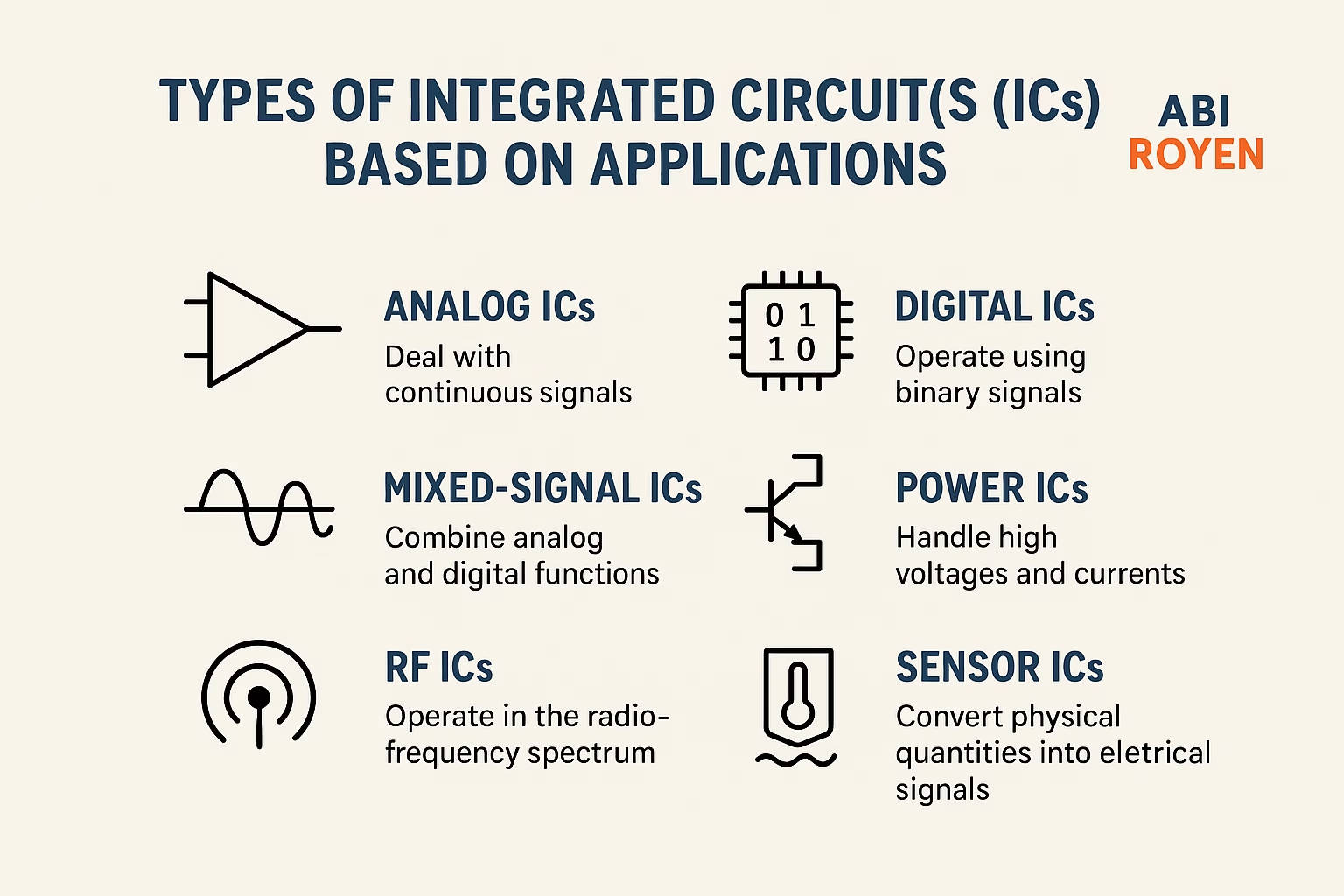
3. Integrated Circuits (ICs)
Function:
Integrated circuits are miniaturized assemblies of multiple electronic components, such as transistors, resistors, and capacitors, on a single semiconductor chip.
Types of ICs:
- Analog ICs – such as op-amps and voltage regulators
- Digital ICs – like microcontrollers and memory chips
- Mixed-signal ICs – combining analog and digital circuits
Roles in Circuits:
- Performing logical operations (in CPUs)
- Signal processing (in DACs and ADCs)
- System control and automation (in embedded systems)
- Memory storage (RAM, ROM, flash)
Real-world Applications:
- Computers and mobile devices
- Smart home electronics
- Digital watches
- Robotics and automation systems
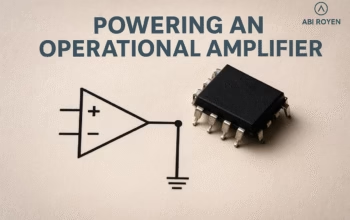
4. Operational Amplifiers (Op-Amps)
Function:
Op-amps are used to amplify voltage signals and are highly versatile for analog signal processing.
Roles in Circuits:
- Signal amplification
- Filtering (active filters)
- Comparators
- Oscillators and waveform generators
Real-world Applications:
- Audio equipment
- Biomedical signal processing
- Analog sensors
- Control systems
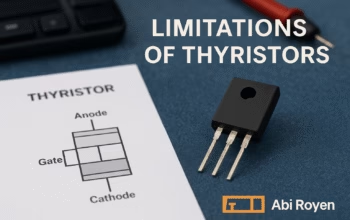
5. Thyristors and Triacs
Function:
Thyristors and triacs are used in power control and switching applications, especially in AC circuits.
Roles in Circuits:
- Phase control
- Switching high voltages
- Dimming lights
- Motor speed regulation
Real-world Applications:
- Light dimmers
- AC motor drives
- Power supply circuits
- Industrial automation
Core Functions Active Electronic Components
1. Amplification
Active components can increase the amplitude of a signal without altering its content. For example, transistors and op-amps are commonly used in audio amplifiers and communication systems.
2. Switching
Many active components serve as switches to turn parts of a circuit on or off. Transistors are especially critical in digital circuits for this role, forming the foundation of logic gates and microprocessors.
3. Rectification and Signal Direction Control
Diodes are responsible for ensuring the flow of current in a preferred direction, converting AC to DC, and protecting sensitive components.
4. Oscillation and Signal Generation
Components like transistors and op-amps are used in generating repetitive signals (oscillators) which are essential in clock generation, waveform generation, and radio transmission.
5. Voltage Regulation and Power Management
Zener diodes, IC voltage regulators, and transistors help stabilize voltage levels across components, ensuring safe and stable circuit operation.
Why Functions Active Electronic Components Are Essential
Without active components, modern electronics would not exist in their current form. Their capabilities allow for:
- Processing and storing data (ICs)
- Communicating wirelessly (RF amplifiers, modulators)
- Automating tasks (microcontrollers and logic circuits)
- Interfacing with the environment (sensor signal conditioning)
- Powering devices efficiently (switch-mode power supplies)
Functions Active Electronic Components vs. Passive Components: A Quick Comparison
| Feature | Active Components | Passive Components |
|---|---|---|
| Requires external power | Yes | No |
| Can amplify signals | Yes | No |
| Controls signal flow | Yes | Limited |
| Examples | Transistors, ICs, Diodes | Resistors, Capacitors |
Conclusion of Functions Active Electronic Components
Electronic active components are the driving force behind all intelligent and functional circuits. Whether it’s processing complex algorithms in a computer or simply amplifying a music signal in your earphones, these components play a critical role. Understanding their functions and roles is essential for anyone working in electronics, engineering, or simply interested in how modern devices operate.
From basic signal amplification to advanced data processing, the scope of active components is vast and continues to grow with technological advancements. As circuit design becomes increasingly sophisticated, the demand for innovative and efficient active components is only set to rise.