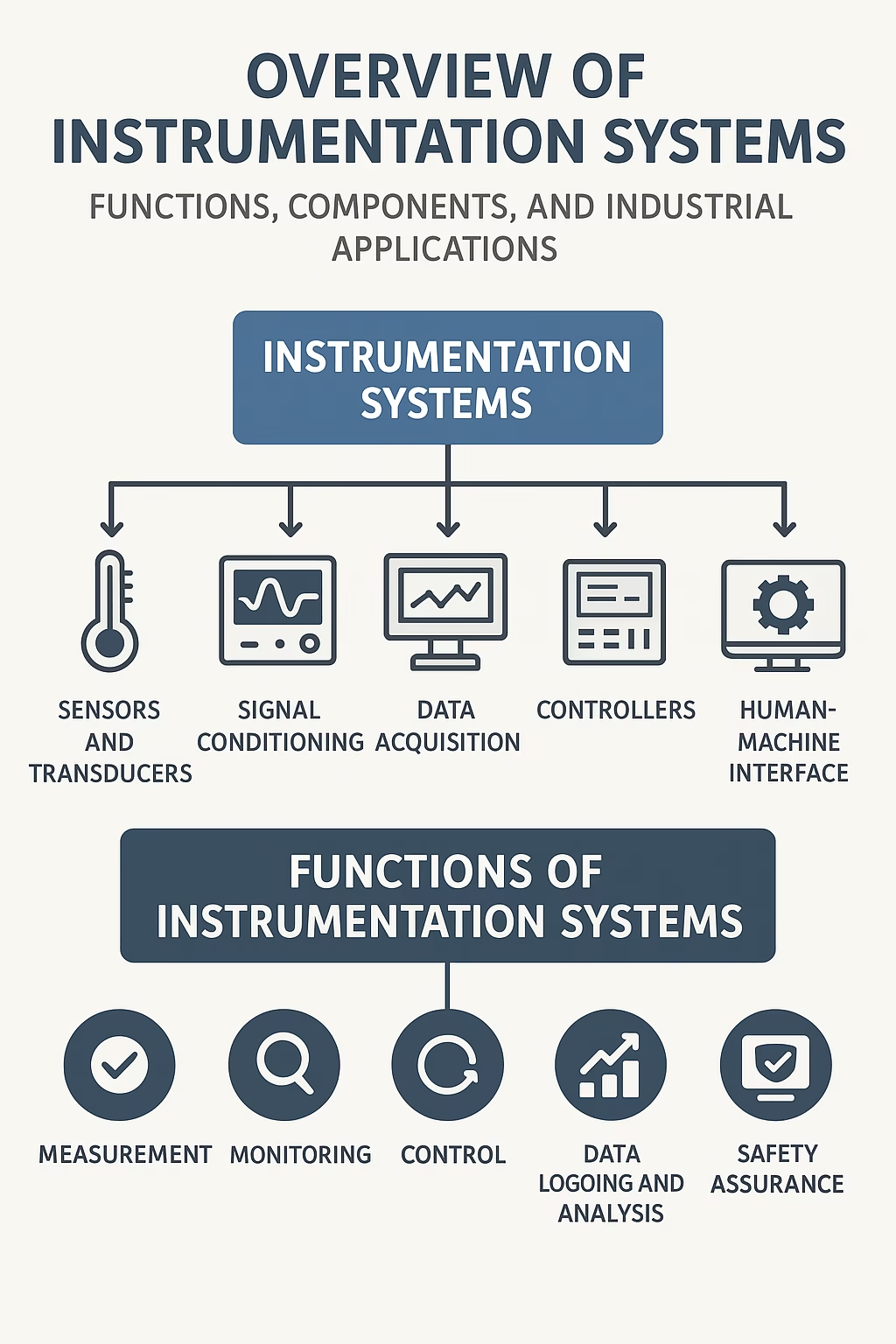
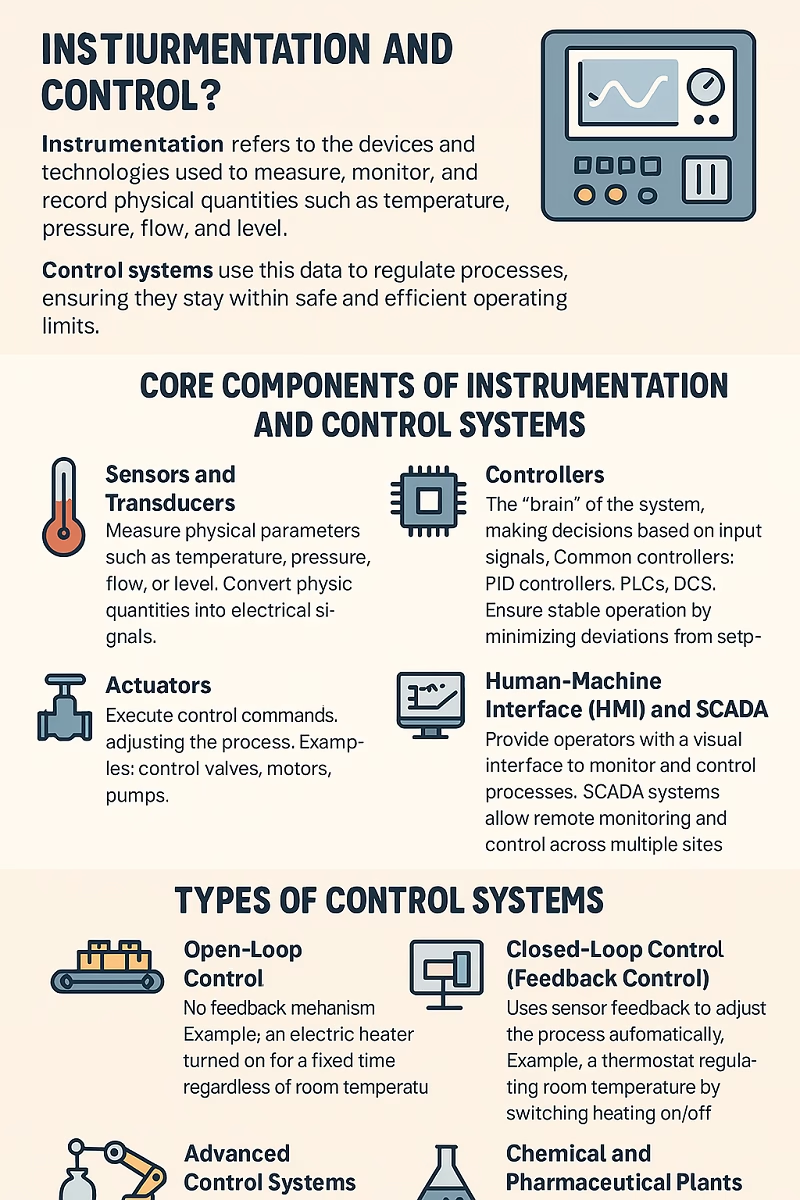
In today’s world, the growing concerns over climate change, air pollution, water contamination, and natural resource depletion have made environmental instrumentation more critical than ever. Environmental instrumentation refers to the tools, devices, and systems used to measure, monitor, and analyze environmental parameters, helping scientists, engineers, and policymakers make informed decisions to protect the planet.
This article explores the types, importance, and applications of environmental instrumentation, highlighting the latest technologies shaping environmental monitoring worldwide.
1. What is Environmental Instrumentation?
Environmental instrumentation encompasses a wide range of sensors, analyzers, and monitoring systems designed to collect data about environmental conditions. These instruments can measure air quality, water purity, soil composition, radiation levels, meteorological conditions, and other critical factors impacting ecosystems and human health.
By providing accurate and real-time data, environmental instrumentation enables early detection of pollution, compliance with environmental regulations, and sustainable resource management.
2. Importance of Environmental Instrumentation
Environmental instrumentation plays a vital role in:
- Protecting Public Health: Detecting harmful pollutants in air, water, and soil helps prevent diseases and improve living conditions.
- Regulatory Compliance: Governments and industries rely on monitoring tools to meet environmental standards.
- Climate Change Research: Accurate measurements of temperature, greenhouse gases, and atmospheric conditions aid in climate modeling.
- Disaster Prevention: Instruments that track air quality, water contamination, and weather changes can provide early warnings for natural disasters.
- Industrial Sustainability: Industries use environmental monitoring to reduce emissions, manage waste, and minimize ecological impact.
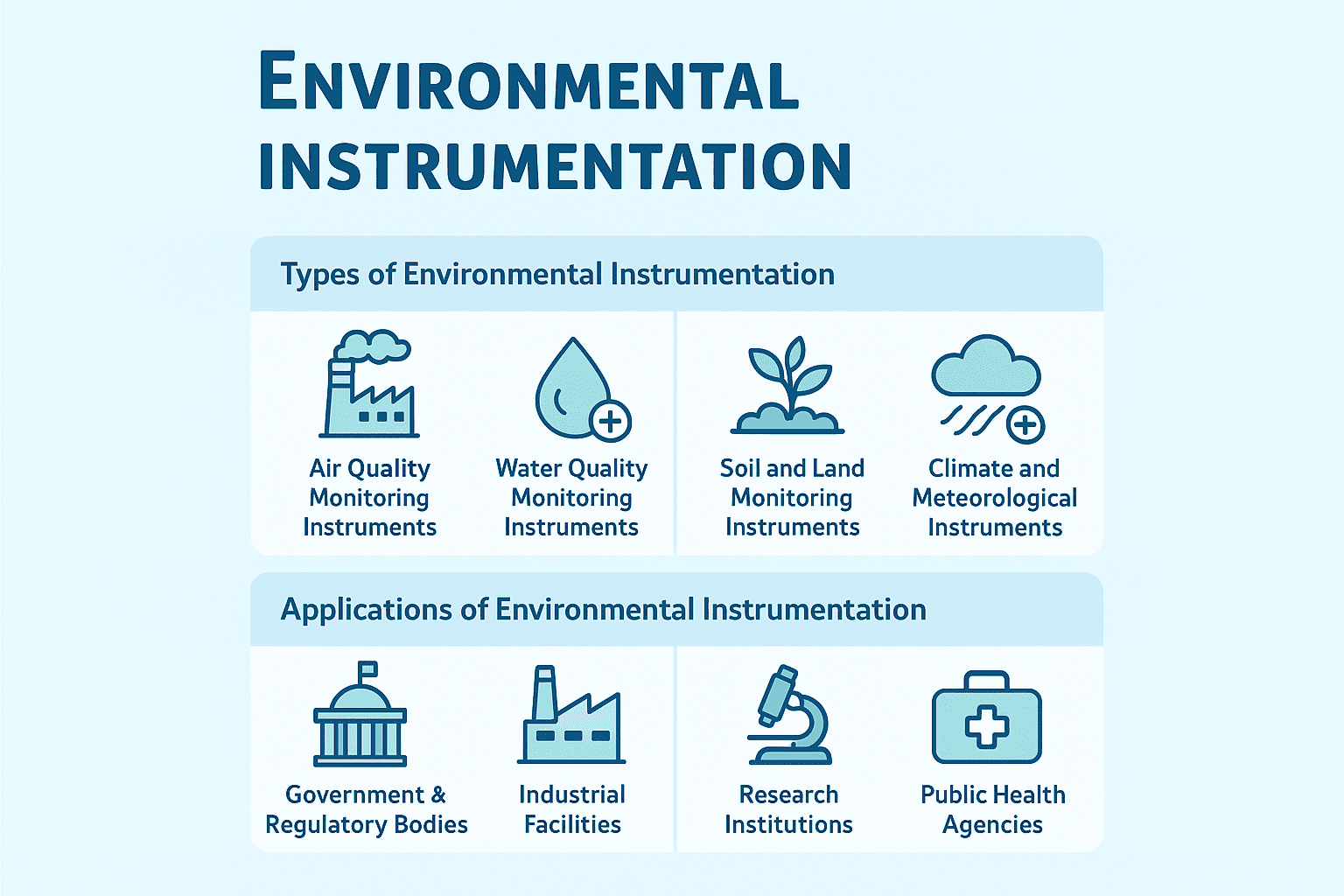
3. Types of Environmental Instrumentation
a. Air Quality Monitoring Instruments
Air pollution remains one of the leading environmental challenges. Instruments used to measure air quality include:
- Gas Analyzers: Detect pollutants such as CO, NOx, SO2, and ozone.
- Particulate Matter (PM) Sensors: Measure airborne particles (PM2.5, PM10) harmful to respiratory health.
- Continuous Emission Monitoring Systems (CEMS): Used in industrial settings to ensure compliance with emission limits.
b. Water Quality Monitoring Instruments
Clean water is essential for life, making water instrumentation crucial for environmental protection. Key tools include:
- pH Meters: Measure acidity or alkalinity of water.
- Dissolved Oxygen Sensors: Indicate water’s ability to support aquatic life.
- Turbidity Sensors: Detect suspended particles affecting water clarity.
- Nutrient Analyzers: Monitor nitrogen, phosphates, and other chemicals linked to pollution.
c. Soil and Land Monitoring Instruments
Healthy soil is vital for agriculture and biodiversity. Common instruments include:
- Soil Moisture Sensors: Measure water content in soil for efficient irrigation.
- Soil Nutrient Analyzers: Detect levels of essential nutrients like nitrogen, phosphorus, and potassium.
- Contamination Detectors: Identify heavy metals, pesticides, and other pollutants.
d. Climate and Meteorological Instruments
Weather and climate monitoring provide data for agriculture, disaster preparedness, and climate science:
- Weather Stations: Record temperature, humidity, wind speed, and precipitation.
- Radiometers: Measure solar radiation impacting climate and energy balance.
- Greenhouse Gas Sensors: Detect levels of CO2, CH4, and other gases driving climate change.
4. Modern Technologies in Environmental Instrumentation
With advancements in technology, environmental instrumentation has evolved into more accurate, automated, and connected systems:
- IoT-based Sensors: Enable remote and real-time environmental monitoring.
- Satellite-Based Observation: Provides large-scale data on deforestation, ice melting, and pollution spread.
- Machine Learning & AI: Enhance data analysis, enabling predictive environmental modeling.
- Portable Instruments: Allow field scientists to collect data on-site, improving efficiency and accuracy.
5. Applications of Environmental Instrumentation
Environmental instrumentation finds applications in various sectors:
- Government & Regulatory Bodies: Ensure compliance with environmental laws.
- Industrial Facilities: Monitor emissions and waste to reduce environmental impact.
- Research Institutions: Support studies on climate change, biodiversity, and pollution control.
- Public Health Agencies: Track and manage environmental health risks.
6. Challenges in Environmental Instrumentation
Despite technological advancements, challenges remain:
- High Costs: Advanced instruments can be expensive to install and maintain.
- Data Management: Large volumes of data require robust systems for storage and analysis.
- Calibration & Maintenance: Ensuring accuracy over time needs regular calibration and skilled personnel.
- Accessibility: Developing countries may lack access to modern environmental monitoring tools.
7. The Future of Environmental Instrumentation
The future of environmental instrumentation is promising, driven by green technologies, digital transformation, and global sustainability initiatives. We can expect:
- More affordable, compact, and user-friendly instruments.
- Integration with smart cities for continuous environmental monitoring.
- Advanced predictive analytics using AI and big data.
- Stronger international cooperation for environmental data sharing.
Conclusion
Environmental instrumentation is an essential pillar of modern environmental management. By leveraging advanced technologies to monitor air, water, soil, and climate, we can make informed decisions to protect ecosystems, ensure public health, and combat climate change.
As the demand for sustainability grows, environmental instrumentation will continue to evolve, becoming smarter, more accessible, and more impactful in safeguarding our planet for future generations.