Introduction
Emergency Radios War Time ~ Communication has always been a cornerstone of military strategy and survival. In times of war, the ability to send and receive information can determine victory or defeat, safety or danger. Among the various tools developed for communication, emergency radios have stood out as essential devices. They served not only as lifelines for soldiers on the battlefield but also as critical survival equipment for civilians caught in conflict zones. This article explores the history, usage, and importance of emergency radios in times of war.
The Origins of Emergency Radios War Time
The concept of wireless communication through radio waves dates back to the late 19th century, with pioneers like Guglielmo Marconi. By World War I, radio technology had already begun to transform military communication. However, it was during World War II that emergency radios became indispensable.
Military forces realized that wired communication lines were vulnerable to bombing and sabotage. Radios, which required no physical cables, became a safer and more reliable option. Compact emergency radios were developed for use by soldiers, pilots, and naval forces. These devices often worked on shortwave frequencies, allowing communication across long distances.
Functions of Emergency Radios War Time
Emergency radios served multiple functions in wartime scenarios:
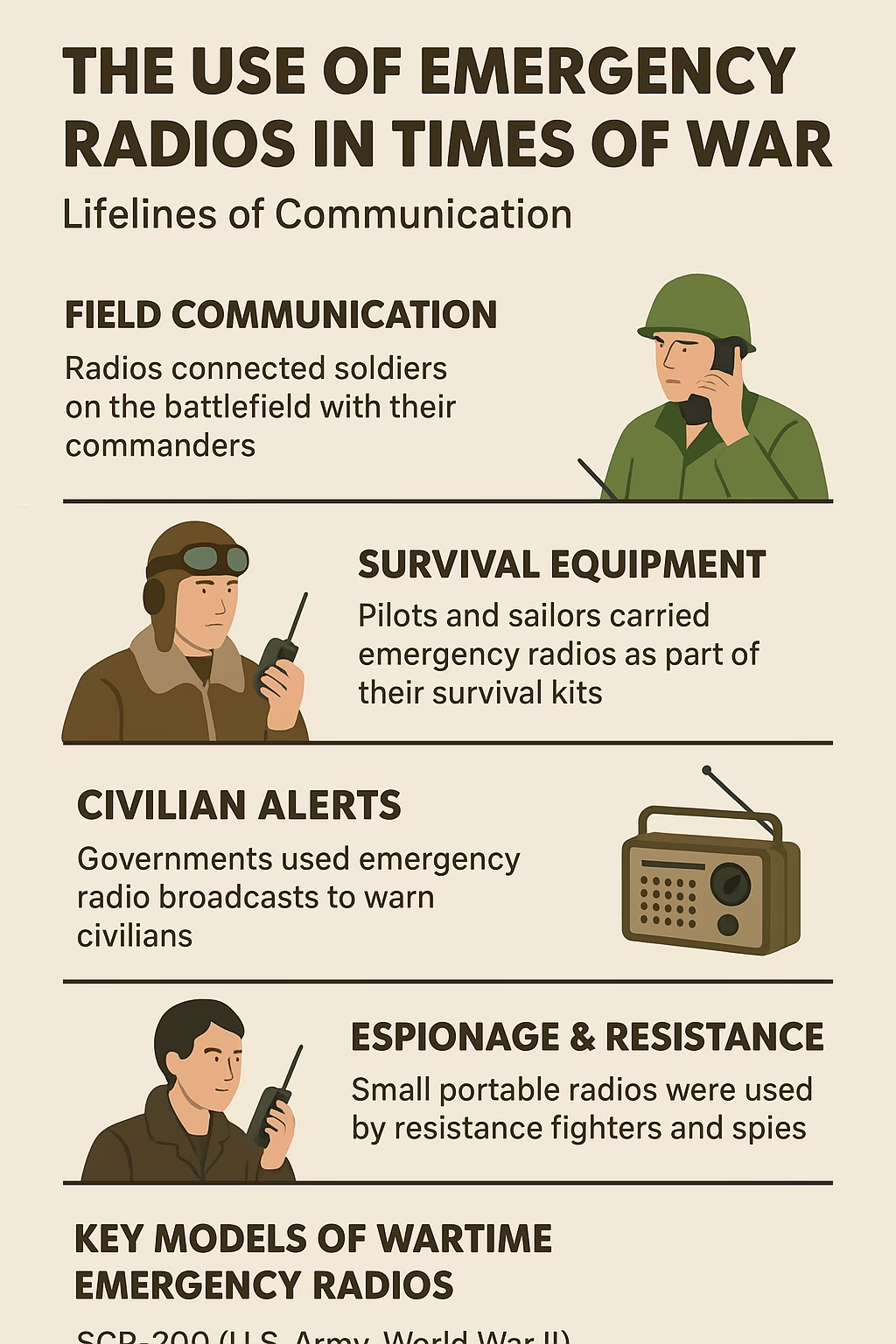
- Field Communication
Radios connected soldiers on the battlefield with their commanders. This real-time communication enabled coordinated troop movements, strategic planning, and swift response to enemy actions. - Survival Equipment
Pilots and sailors carried emergency radios as part of their survival kits. If an aircraft was shot down or a ship sank, these radios were used to send distress signals for rescue operations. - Civilian Alerts
Governments used emergency radio broadcasts to warn civilians about air raids, bombings, and evacuation orders. In many cities, people relied on radio messages for updates on safety measures and wartime news. - Espionage and Resistance Movements
Small portable radios were also used by resistance fighters and spies to communicate covertly. Secret broadcasts and coded messages were transmitted to organize underground operations.
Key Models of Emergency Radios War Time
Several iconic models of emergency radios were developed during wars:
- SCR-300 (U.S. Army, World War II): A backpack radio that became the standard for infantry communication.
- BC-611 “Handie-Talkie”: A portable two-way radio used extensively in the field.
- Gibson Girl (SCR-578): A hand-cranked emergency radio used by downed airmen to send SOS signals from life rafts.
- German Torn.Fu series: Used by the Wehrmacht for battlefield communication.
These devices were designed to be durable, portable, and reliable, often operating under harsh battlefield conditions.
The Role of Emergency Radios in Survival Situations
During wartime, survival depended heavily on communication. Emergency radios allowed stranded or injured soldiers to call for rescue. Many radios were equipped with hand-crank generators, ensuring they could operate without batteries, which were scarce during war.
In addition, emergency radios often transmitted signals on international distress frequencies, making it easier for allied forces to locate and assist survivors. This technology saved countless lives during World War II and subsequent conflicts.
Civilian Use of Emergency Radios War Time
For civilians, emergency radios were vital tools for receiving wartime broadcasts. Governments established emergency broadcasting systems to:
- Inform the public about enemy air raids.
- Provide evacuation instructions.
- Boost morale through patriotic messages and music.
In occupied territories, clandestine radios became symbols of resistance. Civilians secretly tuned in to foreign broadcasts like the BBC, gaining access to uncensored news and hope during oppression.
Technological Evolution After the Wars
The experiences of World War II and later conflicts, such as the Korean and Vietnam Wars, pushed the development of more advanced communication devices. Emergency radios gradually evolved into modern survival radios equipped with features like:
- Solar charging panels.
- Built-in flashlights.
- Weather alerts.
- Digital frequency tuners.
Today, these devices remain essential in military, humanitarian, and disaster-response operations.
The Psychological Impact of Radio Communication
Beyond its technical utility, the radio carried significant psychological value during war. For soldiers, hearing a friendly voice over the radio was reassuring in the chaos of battle. For civilians, radio broadcasts offered hope, information, and a sense of connection when cut off from the outside world.
The Legacy of Emergency Radios in Modern Conflicts
Even in the digital age, emergency radios remain relevant. During modern conflicts and natural disasters, internet and mobile networks are often disrupted. Radios, which function independently of complex infrastructure, still provide a reliable means of communication.
Military forces continue to use advanced radio systems, while survivalists and civilians rely on portable emergency radios during crises. The legacy of wartime emergency radios lives on in these modern devices.
Conclusion
The use of emergency radios in times of war demonstrates the indispensable role of communication in survival and strategy. From saving downed pilots to keeping civilians informed, these devices were more than just machines—they were lifelines. As technology advances, the spirit of the emergency radio lives on, reminding us that in times of uncertainty, reliable communication can mean the difference between life and death.