
Electronic components are the backbone of all electronic circuits and systems. From mobile phones to industrial machines, every electronic device relies on a range of components that control current, perform logic operations, and convert signals. Understanding these components is essential not only for electronics engineers but also for hobbyists, students, and anyone interested in how electronic devices work.
In this article, we’ll explore the main types of electronic components, their functions, applications, and how they work together to form functional systems.
1. What Are Electronic Components?
Electronic components are basic discrete devices or physical entities in an electronic system used to affect electrons or their associated fields. These components are connected together to form circuits that perform various functions such as amplification, signal processing, data computation, and power regulation.
Electronic components fall into two major categories:
- Passive components – do not require electrical power to operate.
- Active components – require external energy and can control the flow of electricity.
2. Passive Electronic Components
a) Resistors
A resistor limits the flow of electric current in a circuit. It is one of the most basic and commonly used components in electronics.
- Unit: Ohms (Ω)
- Types: Fixed resistors, Variable resistors (potentiometers), Thermistors
- Applications: Voltage division, LED current limiting, signal conditioning
b) Capacitors
Capacitors store and release electrical energy. They are widely used for filtering, timing, and smoothing circuits.
- Unit: Farads (F)
- Types: Ceramic, Electrolytic, Tantalum, Film
- Applications: Power supply filters, Audio circuits, Oscillators
c) Inductors
Inductors resist changes in current and store energy in a magnetic field.
- Unit: Henry (H)
- Types: Air-core, Iron-core, Ferrite-core
- Applications: Transformers, Filters, Energy storage in power supplies
d) Transformers
Transformers transfer electrical energy between circuits using inductive coupling. They can step up or step down voltage levels.
- Applications: Power supplies, Audio systems, Isolation between circuits
3. Active Electronic Components
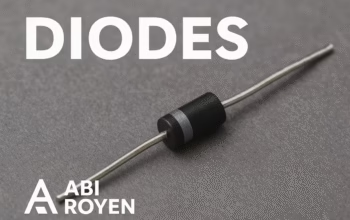
a) Diodes
Diodes allow current to flow in only one direction and are used for rectification and protection.
- Types: General-purpose diodes, Zener diodes, Schottky diodes, Light Emitting Diodes (LEDs)
- Applications: Power rectification, Voltage regulation, Signal demodulation
b) Transistors
Transistors act as electronic switches or amplifiers. They are essential in modern electronics.
- Types: Bipolar Junction Transistors (BJT), Field Effect Transistors (FET), Metal Oxide Semiconductor FETs (MOSFET)
- Applications: Amplifiers, Switches, Digital logic circuits
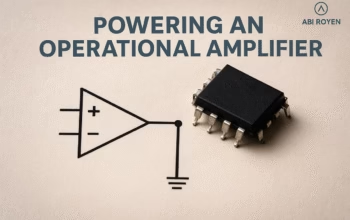
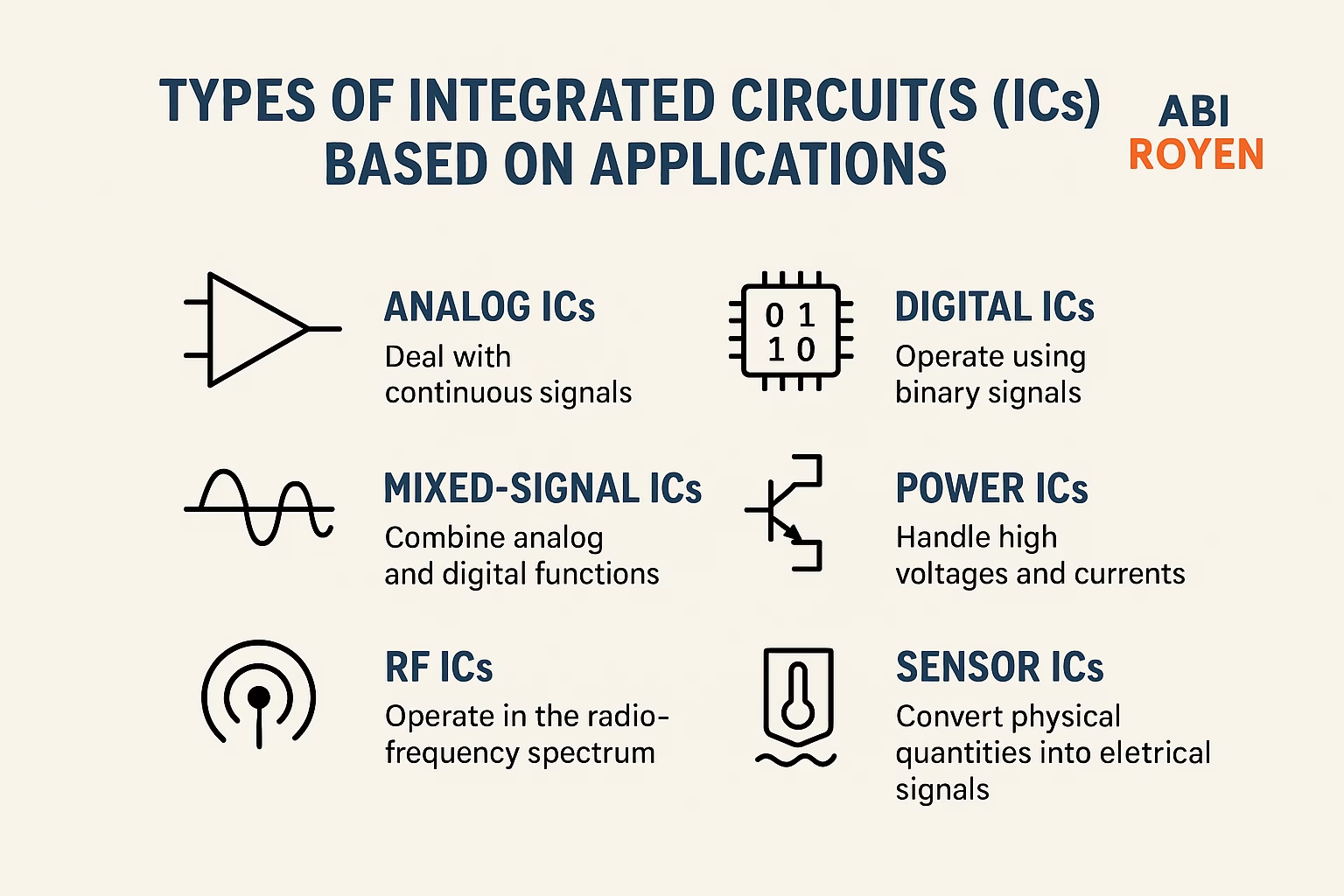
c) Integrated Circuits (ICs)
ICs are complete circuits embedded in a small semiconductor package. They may contain millions of transistors.
- Types: Analog ICs, Digital ICs, Mixed-signal ICs
- Applications: Microcontrollers, Processors, Memory, Amplifiers
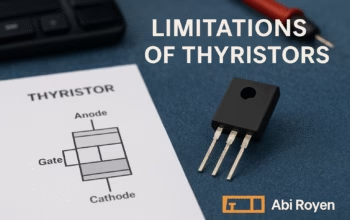
d) Thyristors and Triacs
These components control large amounts of power and are used in industrial and power electronics.
- Applications: Motor control, Light dimmers, AC power regulation
4. Electronic Components Sensors and Actuators
a) Sensors
Sensors convert physical phenomena (light, heat, pressure, motion) into electrical signals.
- Examples: Temperature sensors, Proximity sensors, Motion detectors
- Applications: Automation, IoT, Robotics
b) Actuators
Actuators do the reverse by converting electrical signals into mechanical movement.
- Examples: Motors, Solenoids, Relays
- Applications: Robotics, HVAC, Home automation
5. Display Components
Display components show visual information in electronic systems.
- Types: LCD, OLED, LED, 7-segment display
- Applications: Smartphones, Digital clocks, Instrument panels
6. Power Supply Electronic Components
These components manage the distribution and conversion of electrical power.
- Voltage regulators: Maintain a constant output voltage.
- Rectifiers: Convert AC to DC.
- Inverters: Convert DC to AC.
7. Circuit Protection Devices
a) Fuses and Circuit Breakers
They protect components from overcurrent conditions.
b) TVS Diodes and Varistors
They safeguard against voltage spikes and surges.
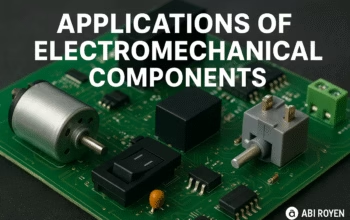
8. Connectors and Switches
Connectors join electrical terminations. Switches control the flow of electricity by opening or closing the circuit.
- Types: Toggle switches, Push-button switches, Rotary switches
- Applications: User interfaces, Control systems, PCBs
9. Printed Circuit Boards (PCBs)
Though not a component itself, PCBs provide the physical platform on which components are mounted and interconnected. They are vital for the functionality of modern electronics.
10. Applications of Electronic Components
Electronic components are found in:
- Consumer electronics: Phones, TVs, computers
- Automotive systems: Engine control units, infotainment, sensors
- Medical devices: ECG machines, X-ray systems
- Industrial automation: PLCs, sensors, actuators
- Telecommunications: Routers, switches, satellites
11. How Electronic Components Work Together
In any functional circuit:
- Resistors control current,
- Capacitors smooth out signals,
- Transistors switch signals,
- ICs provide complex logic or computing,
- Sensors gather data,
- Actuators respond,
- Power components ensure correct voltages.
Understanding how each part contributes helps in circuit design and troubleshooting.
12. Future Trends in Electronic Components
- Miniaturization: Components are getting smaller yet more powerful.
- Integration: More functions integrated into single ICs.
- Smart Components: Built-in intelligence and connectivity.
- Sustainability: Development of eco-friendly and energy-efficient components.
Conclusion of Electronic Components
Electronic components are the essential building blocks that power the digital and analog world around us. From the smallest resistor to complex microprocessors, each component plays a specific and irreplaceable role. For students, hobbyists, and engineers, understanding these components is the first step toward mastering electronics.
Whether you’re building a DIY robot or designing industrial automation systems, the knowledge of electronic components will guide you in creating functional and innovative circuits.
Written for Abi Royen – https://abiroyen.com
Sharing insights and technical resources for engineers, makers, and innovators.