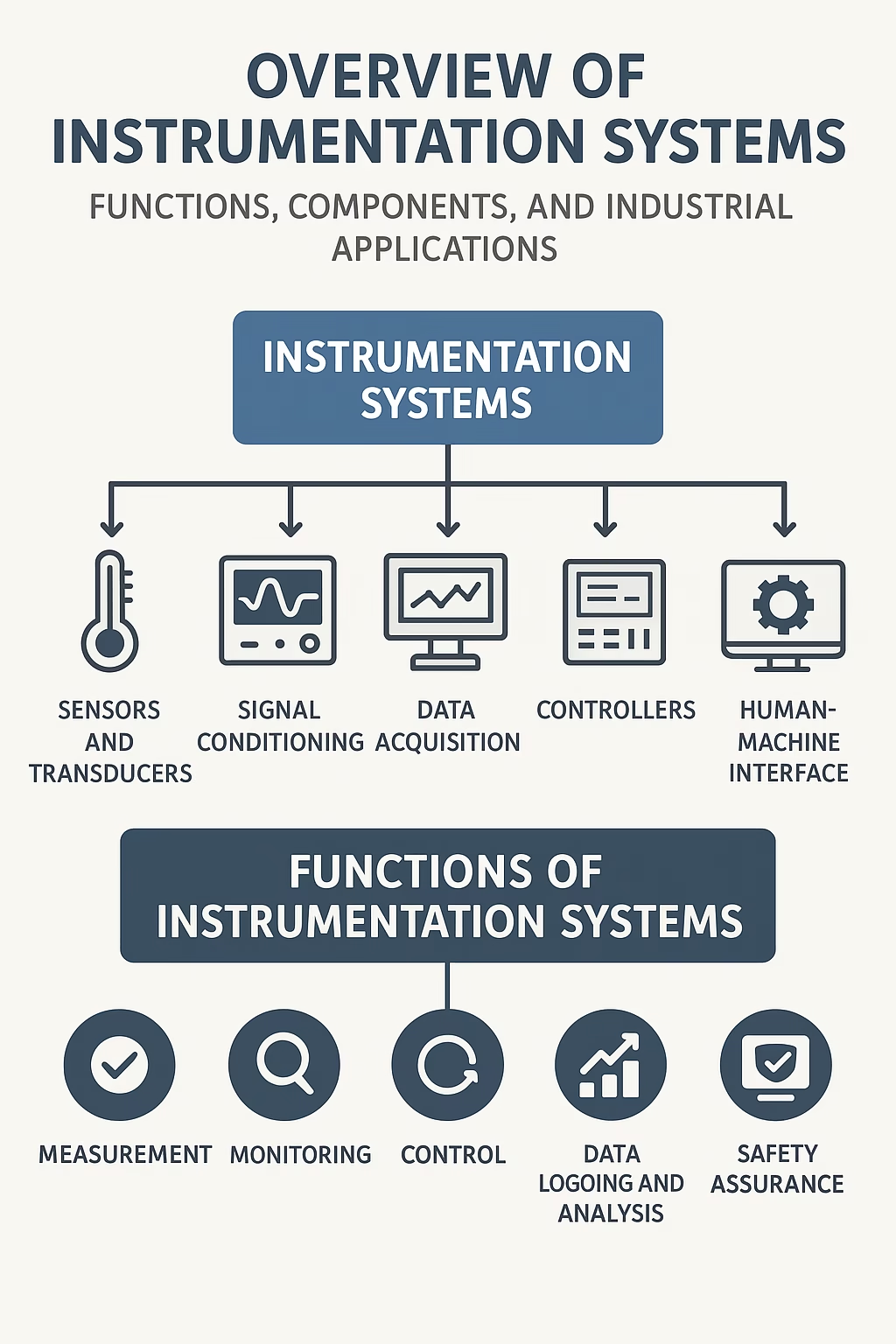
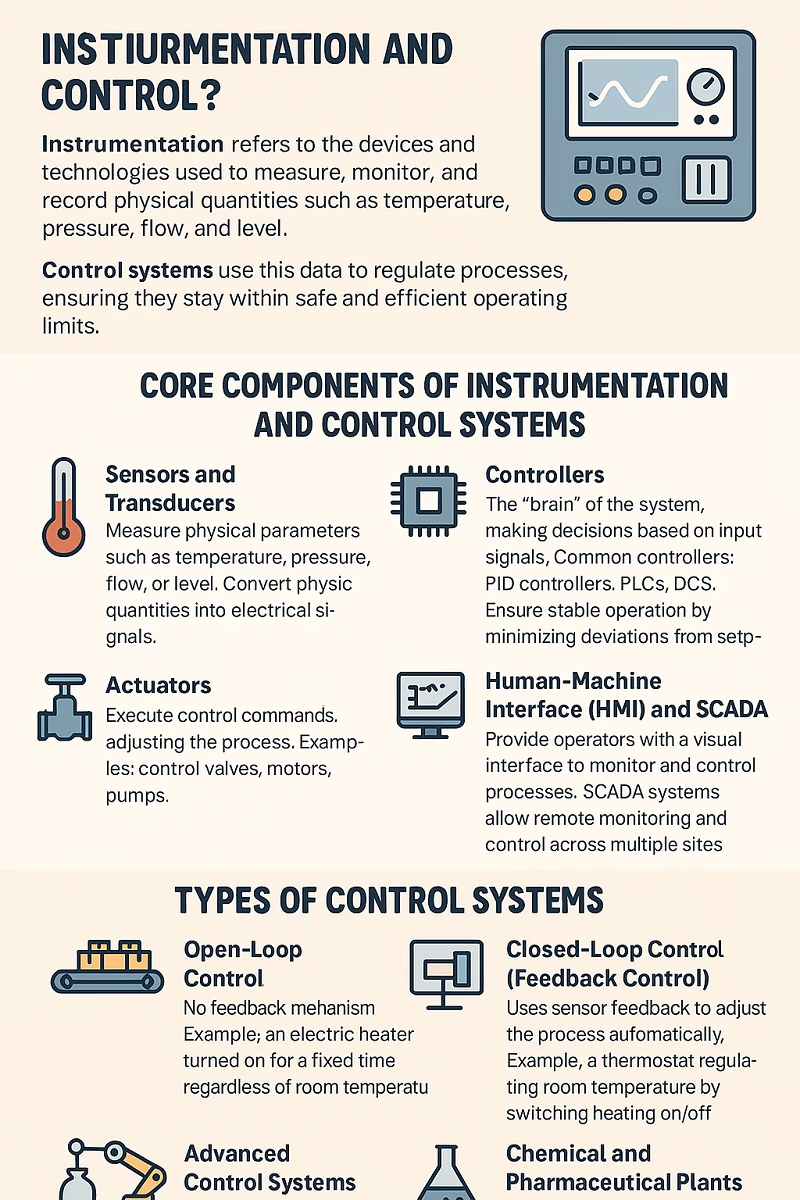
Thermocouples are one of the most widely used temperature measurement devices across industries and everyday applications. Known for their durability, wide temperature range, and fast response time, they are a go-to choice for engineers, scientists, and technicians. This article explores the common applications of thermocouples, explains how they work, and highlights why they remain essential in modern technology.
What is a Thermocouple?
A thermocouple is a temperature sensor consisting of two different metals joined at one end. When the junction experiences a change in temperature, it generates a small voltage that can be measured and interpreted to determine temperature.
The principle behind thermocouples is called the Seebeck effect, discovered in 1821 by Thomas Johann Seebeck. Depending on the type of metals used, thermocouples can measure extremely high or very low temperatures with great accuracy.
Why Thermocouples are Popular
Thermocouples are preferred in many industries because they offer:
- Wide Temperature Range: Can measure from -200°C to over 2000°C.
- Fast Response Time: Quickly detects temperature changes.
- Durability: Suitable for harsh environments.
- Cost-Effectiveness: Affordable compared to other temperature sensors.
- Simplicity: No need for external power supply.
Common Applications of Thermocouples
Thermocouples are used in numerous fields, from industrial manufacturing to scientific research. Below are the most common applications:
1. Common Applications of Thermocouples: Industrial Manufacturing
In manufacturing, controlling temperature is crucial for product quality and safety. Thermocouples are widely used in:
- Metal Processing: Monitoring furnaces, kilns, and heat treatment processes.
- Glass Industry: Measuring molten glass temperature.
- Plastic Molding: Ensuring the correct melting and forming temperatures.
For example, in steel production, Type B, R, or S thermocouples can handle the extreme heat needed for melting and refining metals.
2. Power Plants
In power generation, accurate temperature monitoring ensures efficiency and safety. Thermocouples are used to:
- Measure steam temperatures in turbines.
- Monitor exhaust gas temperatures in boilers.
- Control combustion processes in fossil fuel plants.
Gas turbine engines, for instance, use thermocouples to prevent overheating and optimize performance.
3. Aerospace and Aviation
The aerospace industry requires precise temperature control to ensure safety and efficiency. Thermocouples help in:
- Measuring exhaust gas temperatures (EGT) in jet engines.
- Monitoring environmental conditions inside spacecraft.
- Testing materials under extreme heat during re-entry simulations.
Their reliability under high-vibration and high-temperature conditions makes them ideal for aircraft systems.
4. Automotive Industry
In cars and other vehicles, thermocouples are used for:
- Exhaust gas temperature monitoring in internal combustion engines.
- Catalytic converter performance testing.
- Brake temperature measurement in motorsports.
Modern vehicles also use thermocouples in battery management systems for electric and hybrid cars.
5. Common Applications of Thermocouples: Food and Beverage Industry
Temperature plays a critical role in food processing and safety. Thermocouples are used in:
- Monitoring cooking temperatures in industrial ovens.
- Pasteurization and sterilization processes.
- Cold storage and refrigeration monitoring.
In commercial kitchens, thermocouples ensure that meat and baked goods are cooked to safe internal temperatures.
6. Medical Applications
In healthcare, thermocouples help maintain patient safety and proper operation of medical devices:
- Monitoring patient body temperature during surgeries.
- Controlling temperatures in autoclaves for sterilizing instruments.
- Measuring equipment temperatures in MRI and laboratory settings.

7. Oil and Gas Industry
Harsh environments in oil and gas exploration require robust sensors. Thermocouples are used to:
- Monitor drilling equipment temperatures.
- Measure heat levels in refineries.
- Control temperatures in gas pipelines.
Thermocouples’ resistance to corrosion and high-pressure environments makes them invaluable in offshore drilling platforms.
8. Scientific Research and Laboratories
Researchers use thermocouples for:
- Measuring reaction temperatures in chemistry labs.
- Testing materials under extreme conditions.
- Monitoring environmental chambers.
Their ability to function in cryogenic as well as high-heat environments makes them essential in experimental setups.
9. Common Applications of Thermocouples: HVAC Systems
Heating, Ventilation, and Air Conditioning (HVAC) systems rely on thermocouples to:
- Measure air temperatures in ducts.
- Control heating elements in furnaces.
- Monitor refrigerant line temperatures.
Choosing the Right Common Applications of Thermocouples
Different types of thermocouples are suited for specific environments:
- Type K (Nickel-Chromium/Nickel-Alumel): General-purpose, wide temperature range.
- Type J (Iron/Constantan): Suitable for lower temperature ranges.
- Type T (Copper/Constantan): Excellent for cryogenic applications.
- Type R, S, B (Platinum/Rhodium): High-temperature industrial uses.
Conclusion
Thermocouples remain one of the most reliable and versatile temperature sensing devices in the world. From aerospace engineering to kitchen ovens, their role is vital in ensuring safety, quality, and efficiency. Understanding the common applications of thermocouples helps in selecting the right type for your specific needs.
Whether in industrial manufacturing, scientific research, or everyday appliances, thermocouples continue to prove their worth as dependable temperature measurement tools.