Introduction Asia Modern Megayards
Asia modern megayards ~ In the dynamic world of shipbuilding, Asia has emerged as the dominant force, thanks to its state-of-the-art megayards—large-scale, technologically advanced shipyards capable of constructing some of the world’s most complex and massive vessels. Countries like South Korea, China, and Japan have not only embraced innovation but have also scaled operations to unprecedented levels, making Asia the undisputed leader in the global maritime industry.
This article explores the rise of modern megayards in Asia, the technologies that empower them, their economic impact, and the role they play in shaping the future of shipbuilding.
1. What Are Megayards?
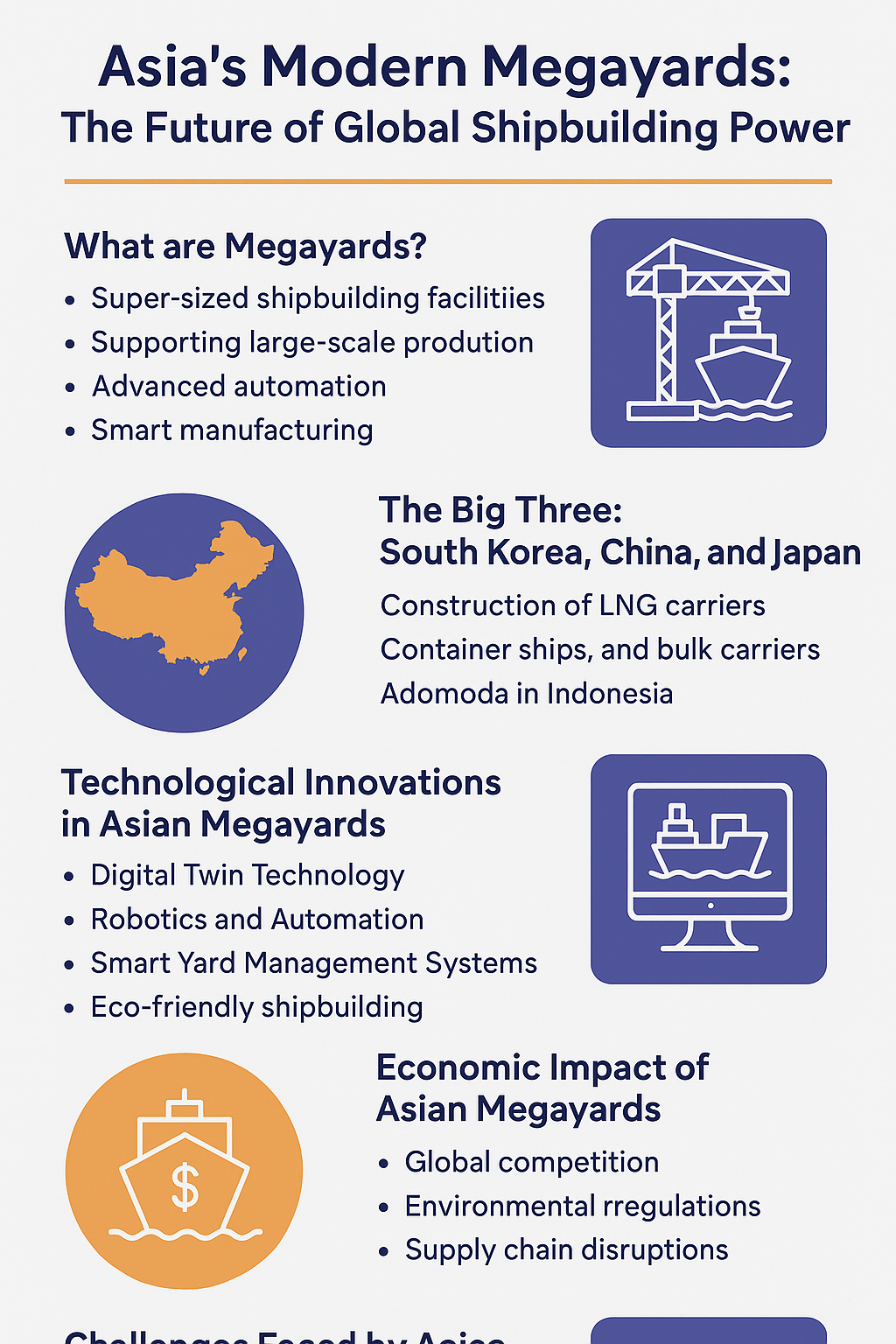
Megayards refer to super-sized shipbuilding facilities equipped with high-capacity dry docks, massive gantry cranes, and integrated digital systems. Unlike conventional shipyards, megayards focus on:
- High-volume production
- Simultaneous multi-vessel construction
- Advanced automation and robotics
- Smart manufacturing and design integration
- Eco-friendly shipbuilding practices
These facilities are not just shipyards—they are industrial ecosystems built to cater to both commercial and military shipbuilding on a massive scale.
2. The Big Three Asia Modern Megayards: South Korea, China, and Japan
South Korea: Pioneers of Efficiency
South Korea is home to some of the most advanced shipyards in the world:
- Hyundai Heavy Industries (HHI) – Ulsan
- Samsung Heavy Industries (SHI) – Geoje
- Daewoo Shipbuilding & Marine Engineering (DSME) – Okpo
These shipyards are known for building LNG carriers, VLCCs (Very Large Crude Carriers), container ships, and offshore structures. South Korea excels in efficiency, modular construction, and high-end technology integration.
China: Rising Superpower
China’s strategy is volume-driven, supported by state-backed infrastructure and subsidies. Key megayards include:
- China State Shipbuilding Corporation (CSSC)
- Dalian Shipbuilding Industry Co. (DSIC)
- Jiangnan Shipyard
China leads in bulk carriers, container ships, and fishing vessels, and is now moving toward smart shipyards using AI and IoT technologies.
Japan: Precision and Legacy
Although Japan’s shipbuilding market share has declined, it still operates advanced yards like:
- Imabari Shipbuilding
- Mitsubishi Heavy Industries (MHI)
Japan is known for technological refinement, quality control, and innovation in green shipping technologies.
3. Technological Innovations in Asia Modern Megayards
Asian megayards are not just larger—they are smarter and greener. Key innovations include:
a. Digital Twin Technology
Shipbuilders use digital replicas of ships for simulation, design optimization, and maintenance planning.
b. Robotics and Automation
Automated welding, robotic painting systems, and AI-powered inspection drones have significantly improved productivity and safety.
c. Smart Yard Management Systems (SYMS)
These systems monitor material flow, labor productivity, and real-time construction progress.
d. Eco-Friendly Shipbuilding
Modern megayards focus on low-emission vessels, LNG-fueled ships, and ballast water treatment systems, addressing environmental regulations.
4. Economic Impact of Asia Modern Megayards
Megayards contribute massively to employment, GDP, and export earnings. For example:
- South Korea’s shipbuilding industry supports over 200,000 jobs.
- China’s ship exports exceeded $40 billion in recent years.
- Japan’s shipbuilders have diversified into marine technology and R&D.
These shipyards also generate indirect economic benefits through local supply chains, ports, logistics, and research institutions.
5. Challenges Faced by Asia Modern Megayards
Despite their dominance, these megayards face several challenges:
- Global competition from emerging players (e.g., Vietnam, Turkey)
- Workforce shortages and rising labor costs
- Environmental regulations (IMO 2030 & 2050 compliance)
- Supply chain disruptions, particularly for high-tech components
To stay ahead, these megayards must continue to innovate and collaborate with global maritime stakeholders.
6. The Future Outlook
The future of Asian megayards looks promising with trends such as:
- Autonomous Ships: Prototype vessels are already being tested.
- Green Hydrogen and Ammonia Fuel Ships: Next-gen eco-friendly vessels.
- Floating Offshore Wind Platforms: A new revenue stream for megayards.
- Global Partnerships: Collaborations with European design firms and U.S. defense contracts.
Asia’s modern megayards are not just production centers—they are hubs of maritime innovation, transforming how the world builds and operates ships.
Conclusion of Asia Modern Megayards
From humble beginnings to becoming the global epicenter of shipbuilding, Asia’s modern megayards embody the spirit of innovation, scale, and sustainability. As maritime trade evolves and environmental concerns grow, these megayards are strategically positioned to lead the next wave of shipbuilding transformation.
Whether you’re a marine engineer, shipping company, investor, or enthusiast, keeping an eye on Asia’s megayards is essential to understanding the future of global shipping.
Published by: Abi Royen Maritime Insights
Stay updated with in-depth articles and technical breakdowns on shipbuilding, radar systems, navigational tech, and more.