
Applications of Electrical Systems ~ Electrical systems form the backbone of industrial operations. From powering massive machinery to enabling complex automation, these systems are essential for ensuring efficiency, safety, and productivity. In today’s competitive industrial landscape, modern electrical systems have evolved to become smarter, more reliable, and energy-efficient.
This article explores the key applications of electrical systems in industry, highlighting their role in power distribution, automation, safety, and more.
1. Applications of Electrical Systems: Power Generation and Distribution
One of the most critical applications of electrical systems in industry is power generation and distribution. Without a stable and reliable source of electricity, industrial operations would come to a halt.
- Power Generation – Industries use various sources such as thermal power plants, hydropower, renewable energy systems, and diesel generators to meet their electricity demands.
- Power Distribution Networks – These ensure that electricity is delivered efficiently to different departments, machines, and processes. Modern distribution systems use switchgear, transformers, and circuit breakers to manage loads and protect equipment.
Example: In manufacturing plants, power distribution boards ensure that different production lines receive the right voltage and frequency for optimal performance.
2. Industrial Automation and Control Systems
Automation is transforming the industrial sector, and electrical systems are at the heart of it. Control systems allow machines and processes to operate with minimal human intervention, improving precision and reducing errors.
- Programmable Logic Controllers (PLCs) – Used to control machinery, monitor processes, and respond to changes in real time.
- Human-Machine Interfaces (HMIs) – Enable operators to control and monitor systems through user-friendly displays.
- Industrial Robots – Powered and controlled through advanced electrical circuits and sensors.
Example: In automotive manufacturing, robotic arms perform welding, painting, and assembly tasks with high accuracy, all controlled by integrated electrical systems.
3. Applications of Electrical Systems: Motor Control and Drives
Electric motors are the workhorses of industrial machinery, used in conveyor belts, pumps, fans, compressors, and more. Electrical systems manage motor operations through:
- Variable Frequency Drives (VFDs) – Adjust motor speed to optimize energy consumption.
- Soft Starters – Reduce mechanical stress during startup.
- Motor Protection Circuits – Prevent damage from overloads, short circuits, or phase loss.
Example: In textile factories, VFDs allow adjustable motor speeds for weaving machines, improving quality and reducing energy waste.
4. Lighting Systems in Industrial Facilities
Lighting is more than just illumination—it’s essential for worker safety, productivity, and compliance with regulations.
- LED Lighting – Offers energy efficiency, long life span, and reduced maintenance.
- Smart Lighting Controls – Integrate motion sensors, timers, and dimmers for optimal usage.
- Emergency Lighting – Ensures visibility during power outages or emergencies.
Example: Warehouses with automated LED lighting systems save up to 50% on energy bills while improving visibility for forklift operators.
5. Applications of Electrical Systems: Safety and Protection Systems
Electrical systems are vital for maintaining industrial safety. They help prevent accidents, protect workers, and ensure compliance with safety standards.
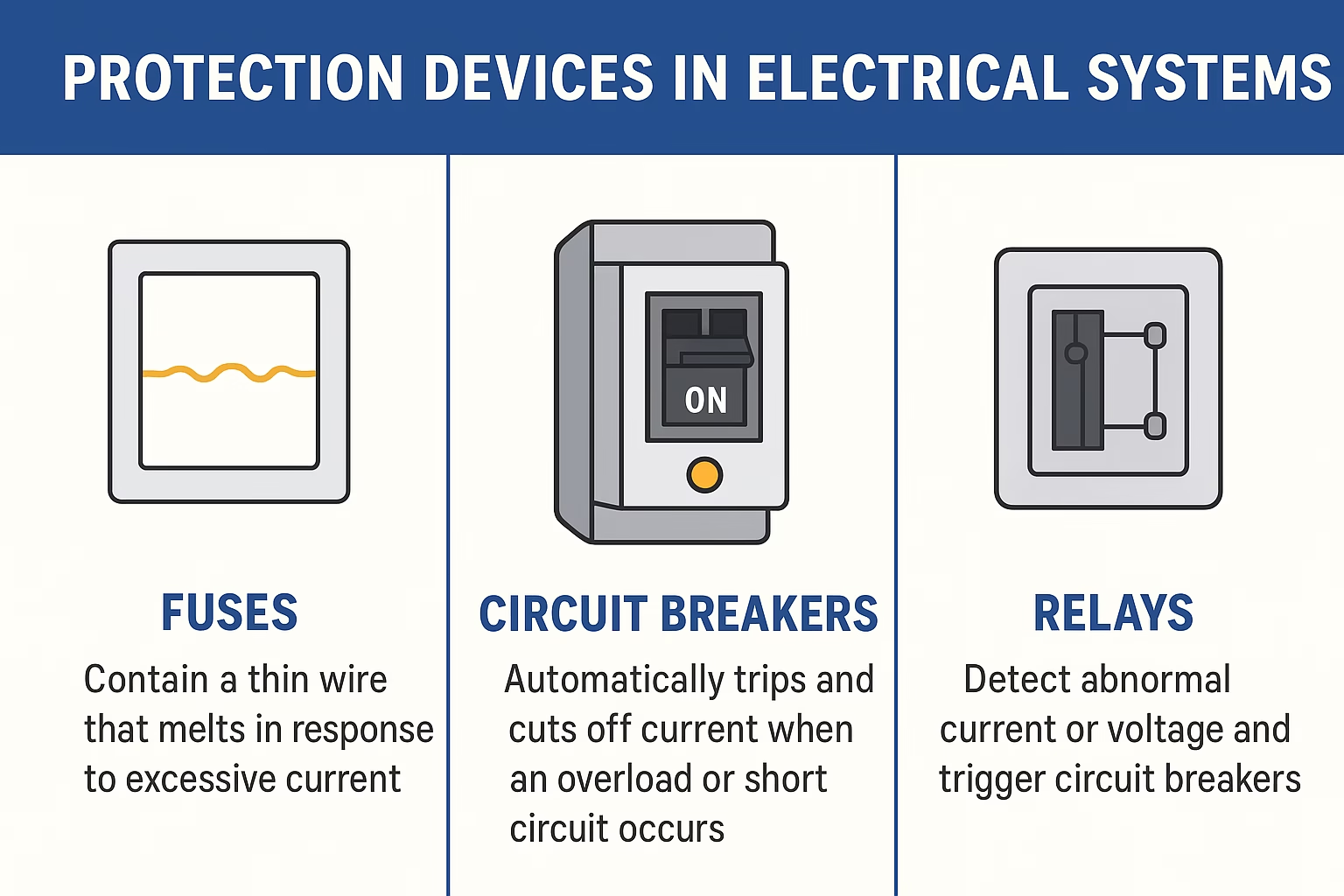
- Circuit Breakers and Fuses – Protect against electrical faults.
- Grounding Systems – Prevent electric shocks and protect equipment.
- Fire Detection and Suppression – Integrated electrical systems detect smoke and heat, activating alarms and sprinklers.
Example: In chemical plants, explosion-proof electrical installations are used to prevent sparks from igniting flammable gases.
6. Renewable Energy Integration
Many industries are adopting renewable energy solutions to reduce costs and environmental impact. Electrical systems enable seamless integration of solar panels, wind turbines, and biomass power plants into industrial grids.
- Inverters – Convert DC from solar panels to AC for industrial use.
- Energy Storage Systems – Store excess energy for later use.
- Grid-Tie Systems – Allow industries to feed surplus energy back into the grid.
Example: Food processing plants use rooftop solar arrays combined with battery storage to offset peak-hour energy costs.
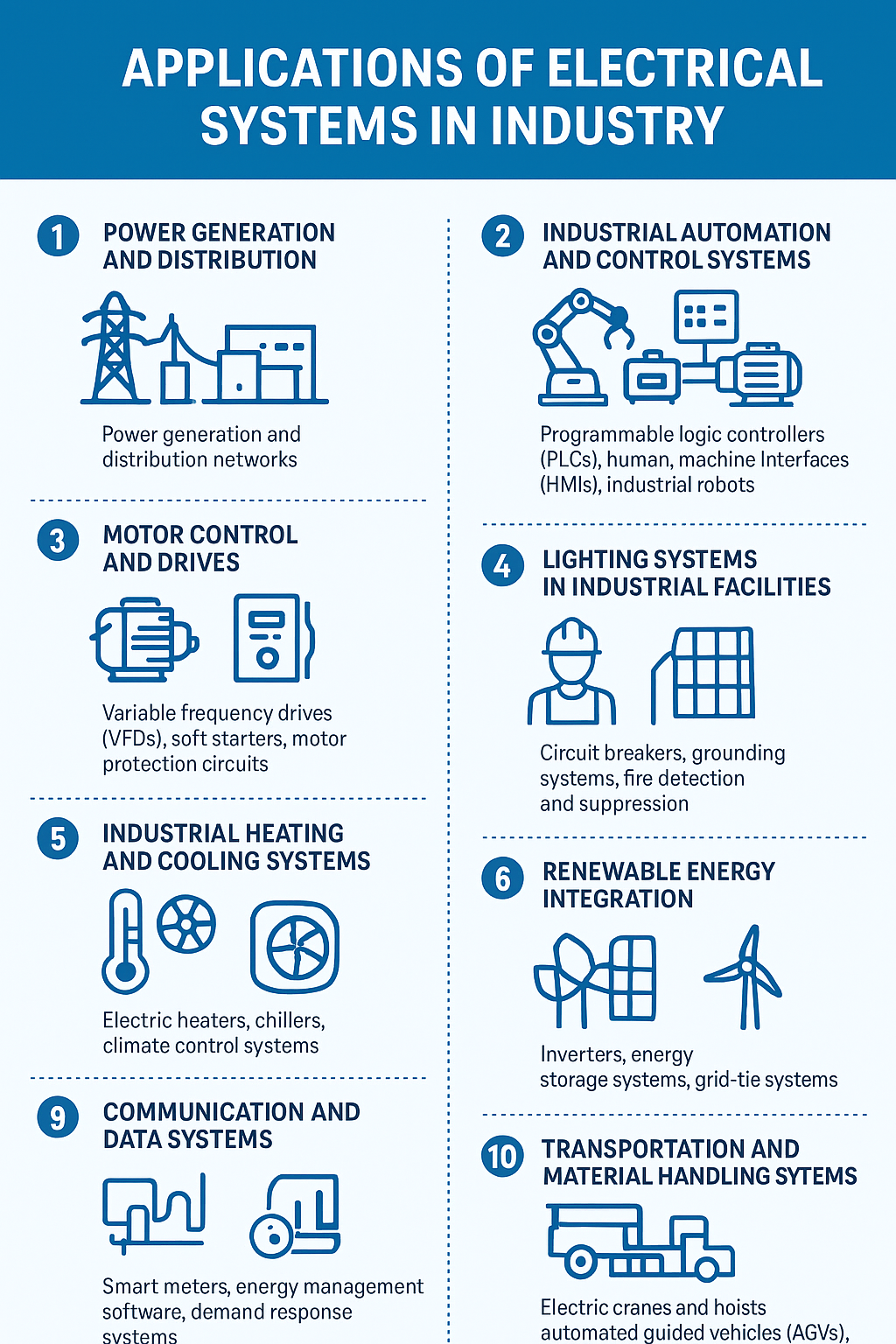
7. Applications of Electrical Systems: Industrial Heating and Cooling Systems
Electrical systems power heating, ventilation, and air conditioning (HVAC) equipment, which is crucial for maintaining optimal environmental conditions in industrial settings.
- Electric Heaters – Used for drying, melting, and heat-treating processes.
- Chillers and Cooling Towers – Maintain equipment temperatures to prevent overheating.
- Climate Control Systems – Ensure safe working environments for employees and sensitive equipment.
Example: Semiconductor manufacturing plants use precision climate control to maintain cleanroom standards.
8. Communication and Data Systems
In the age of Industry 4.0, electrical systems also support industrial communication networks, enabling seamless data flow between machines, operators, and management.
- Industrial Ethernet – Ensures high-speed, reliable communication between systems.
- Wireless Communication – Supports remote monitoring and control.
- IoT-Enabled Sensors – Provide real-time data for predictive maintenance and optimization.
Example: Oil refineries use IoT-enabled sensors to detect equipment wear before it leads to downtime.
9. Energy Monitoring and Management
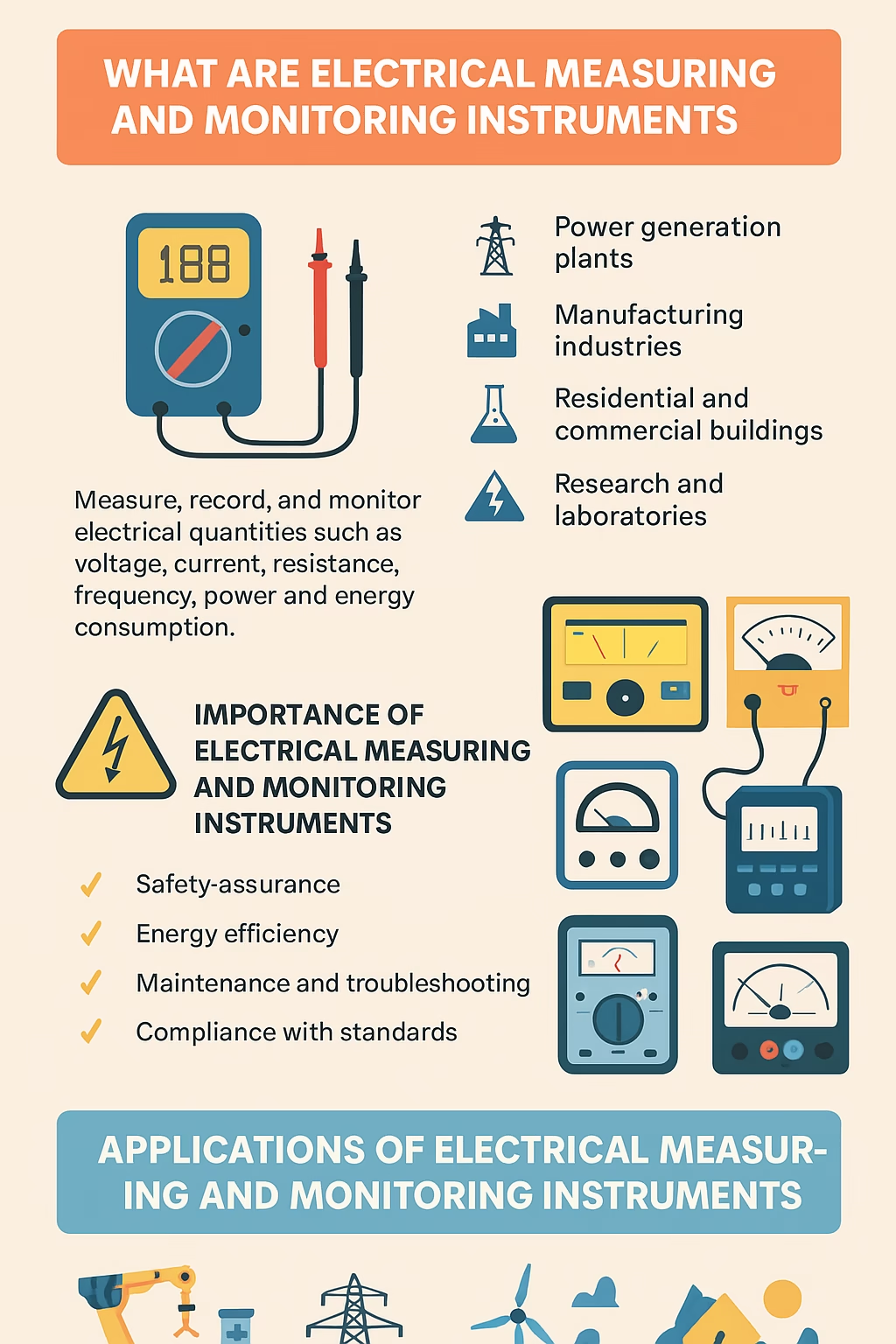
Electrical energy is one of the largest operating costs in industry. Modern electrical systems include tools for energy monitoring and optimization.
- Smart Meters – Track electricity usage in real time.
- Energy Management Software – Analyzes data to find inefficiencies.
- Demand Response Systems – Adjust power usage based on grid conditions.
Example: Manufacturing plants use automated demand control to reduce power consumption during peak hours, cutting energy bills significantly.
10. Applications of Electrical Systems: Transportation and Material Handling Systems
Electrical systems power industrial transportation solutions such as:
- Electric Cranes and Hoists – Move heavy materials safely.
- Automated Guided Vehicles (AGVs) – Transport goods within factories.
- Conveyor Systems – Streamline production and distribution.
Example: In logistics warehouses, AGVs reduce labor costs and improve efficiency in moving products from storage to shipping areas.
Conclusion
Electrical systems are the lifeblood of modern industry. From power distribution and automation to safety, renewable energy, and communication networks, these systems enable industries to operate efficiently, safely, and sustainably. As technology continues to evolve, the role of electrical systems will only grow—driving innovation and shaping the future of industrial operations.
Industries that invest in modern, well-maintained electrical systems can expect better productivity, lower energy costs, and a stronger competitive edge in the global market.