
Introduction of Advantages of Electromechanical Components
Advantages of Electromechanical Components ~ Electromechanical components play a vital role in bridging the gap between electrical signals and mechanical actions. From simple household devices like washing machines to advanced industrial automation systems, these components ensure reliable performance and efficient operation. They have become indispensable in modern engineering, providing the foundation for machines, electronics, and automated processes.
In this article, we will explore the advantages of electromechanical components, examining how they enhance efficiency, durability, cost-effectiveness, and versatility across industries. By understanding these benefits, engineers, technicians, and businesses can make informed decisions when selecting components for their applications.
What Are Electromechanical Components?
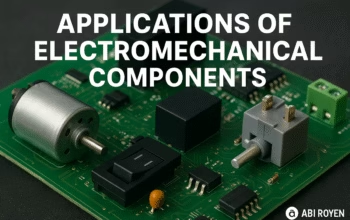
Electromechanical components are devices that combine both electrical and mechanical processes to perform specific functions. They convert electrical signals into mechanical movements or vice versa. Common examples include:
- Relays – Used for switching electrical circuits.
- Motors – Convert electrical energy into mechanical motion.
- Solenoids – Provide controlled movement using electromagnetic force.
- Switches and Connectors – Enable the flow and interruption of electrical currents.
- Sensors and Actuators – Facilitate automation in industrial and consumer systems.
These components are the backbone of automation, robotics, automotive systems, telecommunications, and industrial machinery.
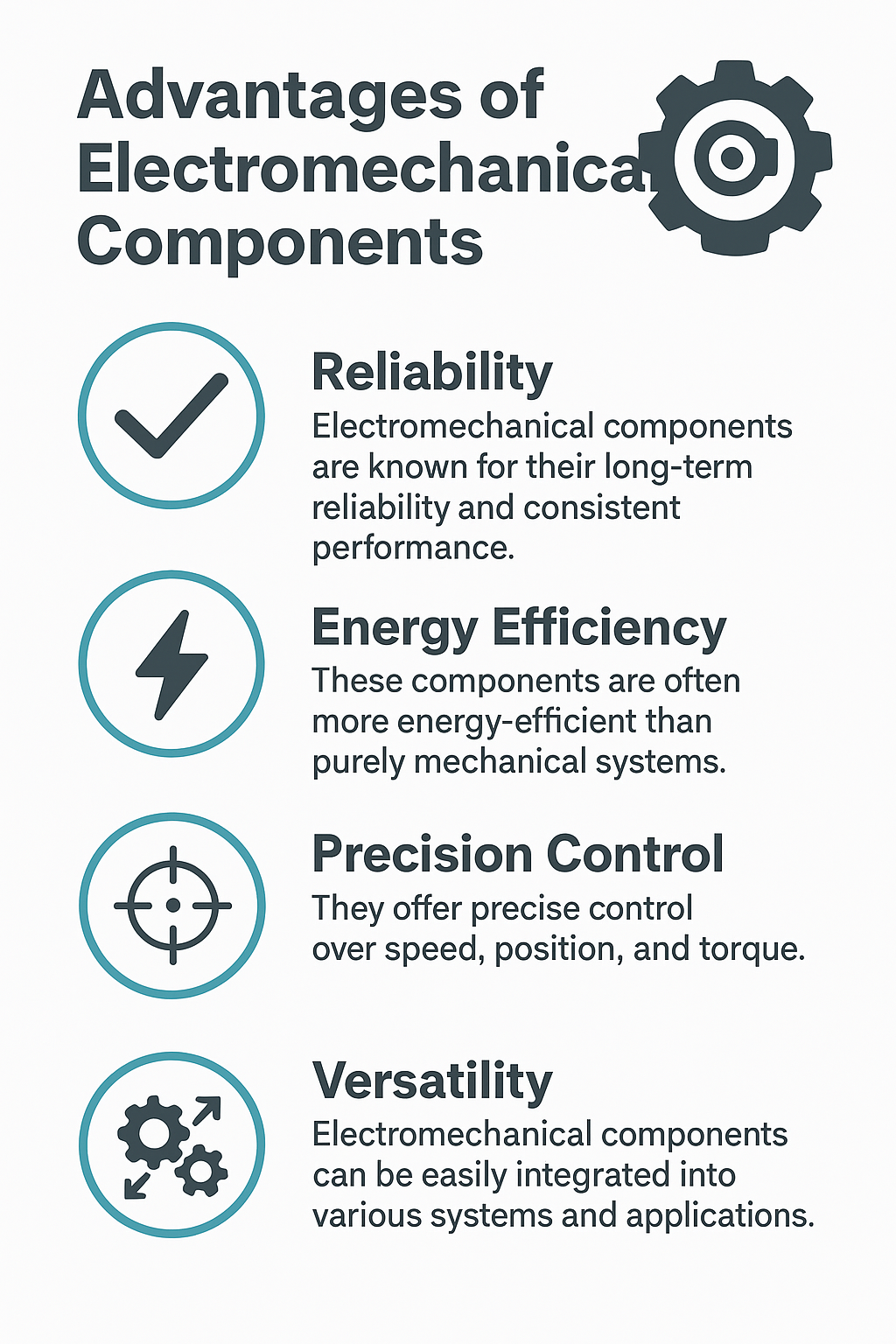
Key Advantages of Electromechanical Components
1. High Reliability and Durability
One of the most notable advantages of electromechanical components is their robust design. They are built to withstand high levels of stress, temperature variations, and prolonged usage.
- Industrial-grade durability: Many electromechanical devices can operate continuously for years with minimal maintenance.
- Resistance to environmental factors: Properly designed components can endure dust, vibration, and humidity, making them suitable for harsh industrial conditions.
This durability makes them ideal for industries such as aerospace, automotive, and manufacturing, where reliability is critical.
2. Precision and Control
Electromechanical components provide accurate control over electrical and mechanical systems. For example:
- Motors and actuators allow precise movement in robotics and automated assembly lines.
- Relays and switches enable exact circuit control, ensuring safety and efficiency.
- Sensors provide real-time data for monitoring and adjustments.
This level of precision and repeatability is essential for applications in medical devices, laboratory equipment, and advanced manufacturing processes.
3. Cost-Effectiveness
Compared to purely electronic or purely mechanical alternatives, electromechanical components offer a balanced cost-to-performance ratio.
- Affordable manufacturing: They can be mass-produced using well-established techniques.
- Long operational lifespan: Reduced replacement and repair costs due to their durability.
- Energy efficiency: Many modern designs minimize power consumption while maximizing output.
This makes them particularly attractive for small businesses and industries seeking affordable automation solutions.
4. Versatility in Applications
Electromechanical components are extremely versatile and adaptable across multiple industries. Examples include:
- Automotive: Power windows, seat adjustment systems, ignition relays.
- Consumer Electronics: Printers, vending machines, household appliances.
- Industrial Automation: Conveyor belts, robotic arms, control panels.
- Medical Equipment: Patient monitoring systems, ventilators, imaging devices.
This wide range of applications highlights their universal role in modern technology.
5. Easy Integration and Maintenance
Another advantage is the ease of integration into existing systems. Most electromechanical devices are designed with standardized interfaces, making installation straightforward.
- Plug-and-play compatibility with other components.
- Simple maintenance procedures such as lubrication or part replacement.
- Availability of spare parts worldwide, ensuring minimal downtime.
This reduces operational complexity and ensures smooth system performance.
6. Energy Efficiency
Electromechanical components have been continuously optimized for energy-efficient performance. For instance:
- Modern motors and relays consume less power while maintaining high output.
- Smart actuators adjust energy use according to load requirements.
- Advanced designs reduce heat loss and maximize system efficiency.
This is especially important in today’s industries, where sustainability and energy savings are key priorities.
7. Scalability and Customization
Electromechanical components can be scaled to fit various applications, from miniaturized systems in medical devices to large-scale machinery in manufacturing plants.
- Customization options: Tailored designs can meet specific industry needs.
- Modular design: Allows expansion and system upgrades without complete redesign.
- Compatibility with automation: Easily integrated into smart factories and IoT systems.
Scalability ensures that businesses can adopt these components regardless of their size or technological requirements.
8. Enhanced Safety Features
Electromechanical systems often include built-in safety mechanisms to prevent accidents.
- Circuit protection: Relays and switches help avoid overloads.
- Fail-safe designs: Many actuators and motors are designed to stop safely during malfunctions.
- Regulatory compliance: Most components meet strict international safety standards.
This makes them highly reliable in industries where human safety and system protection are top priorities.
Future of Electromechanical Components
The future of electromechanical components is closely tied to advancements in automation, robotics, and the Internet of Things (IoT). With industries demanding smarter and more efficient systems, electromechanical devices will continue to evolve by integrating with digital technologies.
Some emerging trends include:
- Smart sensors and actuators with wireless connectivity.
- Miniaturized designs for portable medical and electronic devices.
- Energy-harvesting components for sustainable operations.
- Integration with AI and machine learning for predictive maintenance.
These innovations will further enhance the advantages of electromechanical components, making them indispensable in the next generation of industrial and consumer technologies.
Conclusion of Advantages of Electromechanical Components
Electromechanical components are at the heart of modern technology, combining the strengths of mechanical systems with electrical efficiency. Their **advantages—reliability, precision, cost-effectiveness, versatility, and safety—**make them an essential part of industries ranging from automotive and manufacturing to healthcare and consumer electronics.
As technology continues to advance, these components will play an even more crucial role in creating smarter, more efficient, and sustainable systems. Businesses and engineers who understand their value can leverage electromechanical components to maximize performance and reduce costs in both present and future applications.