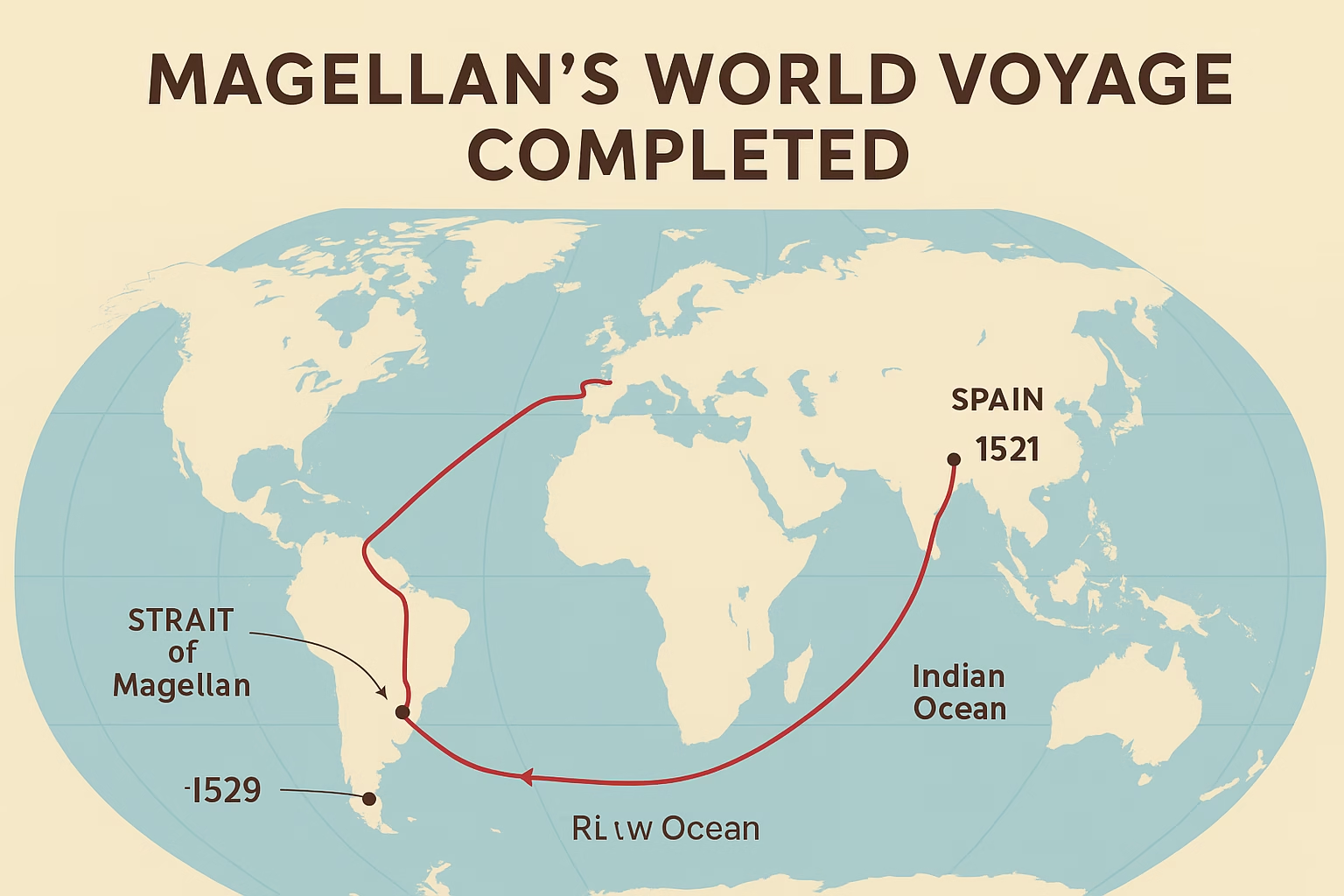
The early 16th century marked one of the most transformative periods in human history: the Age of Exploration. Among the many daring voyages of this era, the expedition initiated by Ferdinand Magellan stands out as one of the greatest milestones. Although Magellan himself did not survive the journey, his fleet’s completion of the first circumnavigation of the Earth in 1522 reshaped the world’s understanding of geography, trade, and cultural exchange. The phrase “Magellan’s world voyage completed” is not merely a historical note—it signifies the beginning of a new global era.
The Context of the Voyage
By the early 1500s, European powers were racing to establish new trade routes to the spice-rich islands of the East Indies. Portugal dominated the eastern route around Africa, and Spain sought an alternative path. Ferdinand Magellan, a Portuguese navigator who had fallen out with his homeland, offered his services to Spain. In 1519, under the sponsorship of King Charles I of Spain (later Emperor Charles V), Magellan set sail with five ships: the Trinidad, San Antonio, Concepción, Victoria, and Santiago.
The objective was clear: find a westward route to the Spice Islands and establish Spain’s claim over this lucrative trade.
Challenges and Hardships at Sea
The voyage was anything but straightforward. Magellan and his crew faced enormous challenges:
- Treacherous waters: The fleet had to navigate uncharted seas and survive violent storms.
- Mutinies: Tensions among the crew, particularly between Spanish officers and Magellan’s Portuguese leadership, led to attempted uprisings.
- Disease and starvation: Scurvy, hunger, and lack of fresh supplies claimed many lives during the voyage.
- Uncertainty: Maps of the time were incomplete, and no one knew exactly how far they would need to travel.
Despite these hardships, Magellan’s leadership and determination pushed the expedition forward, ultimately leading to the discovery of the strait at the southern tip of South America, now known as the Strait of Magellan. This passage became a vital maritime route connecting the Atlantic and Pacific Oceans.
Magellan’s Death and Elcano’s Leadership
Tragically, Magellan did not live to see the expedition’s completion. In April 1521, during a battle with local warriors in the Philippines at Mactan, he was killed. The leadership of the expedition fell to his remaining officers, most notably Juan Sebastián Elcano, a Spanish navigator.
Elcano took command of the ship Victoria, the only vessel that eventually returned to Spain. Under his leadership, the crew decided to continue westward across the Indian Ocean rather than return the way they had come. This decision led them through immense hardships, but it also ensured that the circumnavigation would be achieved.
Completion of the First Circumnavigation
On September 6, 1522, the battered Victoria sailed back into Sanlúcar de Barrameda, Spain, nearly three years after the expedition’s departure. Out of the original five ships and about 270 crew members, only one ship and 18 survivors completed the journey.
This triumphant return marked the first successful circumnavigation of the Earth. The feat proved beyond doubt that the world was round and interconnected by vast oceans, fundamentally altering the European worldview.
Scientific and Geographic Impact
The completion of Magellan’s voyage provided critical insights:
- Earth’s true size – The journey revealed that the Earth was far larger than previously estimated, especially the Pacific Ocean.
- Global trade routes – It opened the possibility of connecting continents by sea, paving the way for modern global trade.
- Maritime navigation – The expedition advanced cartography, navigation techniques, and oceanic knowledge.
This new understanding of geography accelerated European exploration, colonization, and trade networks across the globe.
Cultural and Historical Significance
Magellan’s voyage was not just a triumph of navigation but also a cultural landmark. The expedition established direct links between Europe, the Americas, Asia, and Africa, creating the foundation for the first truly interconnected world.
- Cultural exchanges: The voyage introduced Europeans to new foods, goods, and peoples, while also spreading European influence abroad.
- Shift in power: Spain’s successful westward route bolstered its status as a leading maritime empire.
- Human resilience: The survival of just 18 men out of nearly 270 underscored the immense risks of exploration, but also the extraordinary determination to push human boundaries.
Legacy of Magellan’s Voyage
Though Ferdinand Magellan himself did not live to see the end of his expedition, his name remains immortalized in history. The expedition’s successful circumnavigation inspired generations of explorers and confirmed the feasibility of global maritime travel.
Juan Sebastián Elcano, often less celebrated, deserves equal recognition for completing the voyage. Spain honored him with a coat of arms bearing the motto: “Primus circumdedisti me” (“You were the first to circumnavigate me”), referring to the Earth.
Today, the story of Magellan’s voyage serves as a symbol of exploration, discovery, and human perseverance against the unknown.
Conclusion of Magellan’s World Voyage Completed
The phrase “Magellan’s world voyage completed” is far more than a historical milestone. It represents the culmination of human courage, endurance, and curiosity. The successful circumnavigation of the Earth in 1522 reshaped global history by proving the interconnectedness of continents, advancing navigation, and laying the groundwork for global trade.
More than 500 years later, the legacy of this voyage continues to inspire adventurers, historians, and dreamers alike.