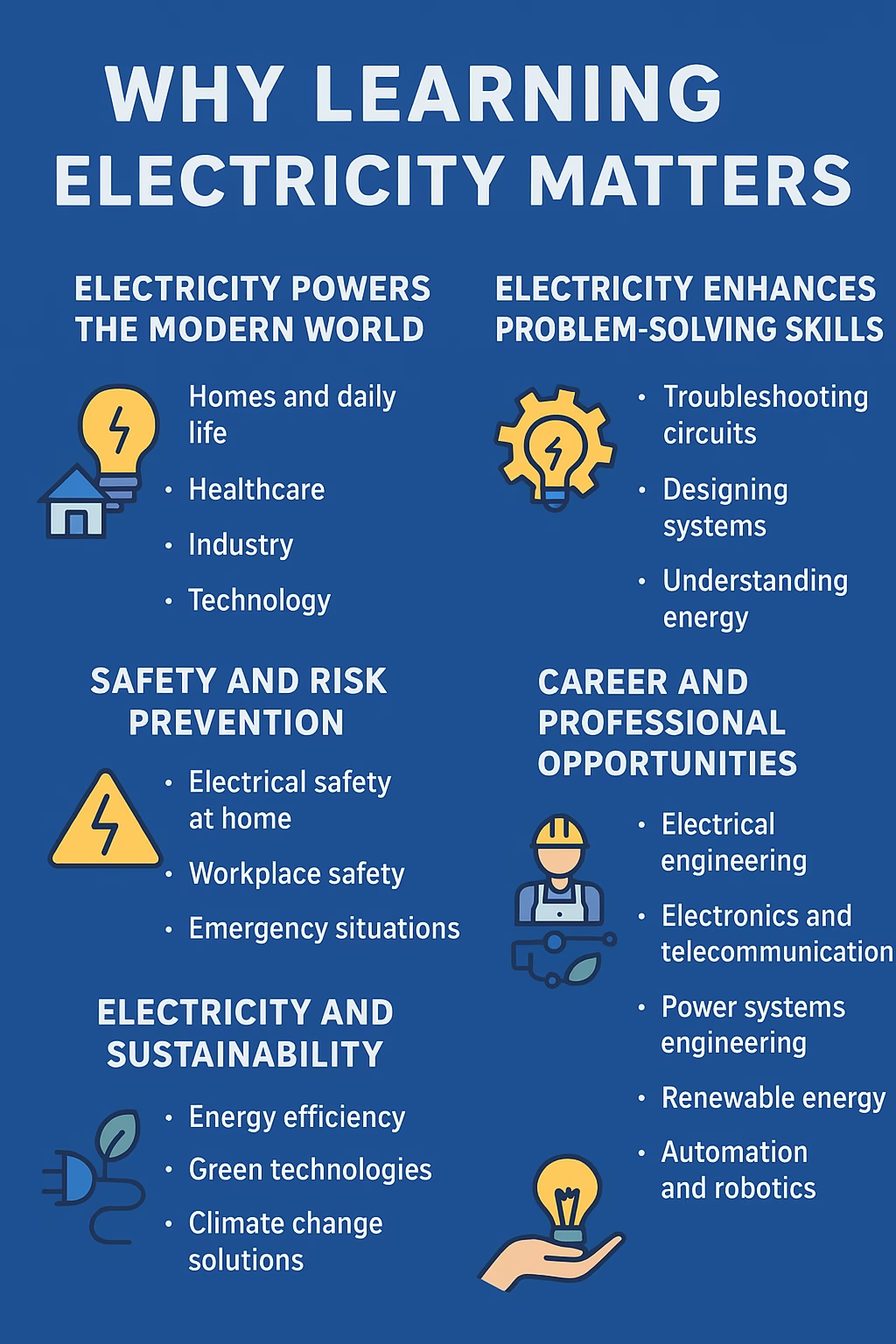
Definition of Electricity ~ Electricity is one of the most fundamental forces shaping our modern world. From the light bulbs that illuminate our homes to the powerful machinery that drives industries, electricity plays an essential role in almost every aspect of life. But what exactly is electricity? How is it defined, and why is it so important?
This article aims to provide a comprehensive understanding of electricity by defining its meaning, explaining its scientific principles, describing its types, and showcasing its real-world applications. By the end, you will have a clearer perspective on why electricity is considered one of the cornerstones of modern civilization.
1. What is Electricity?
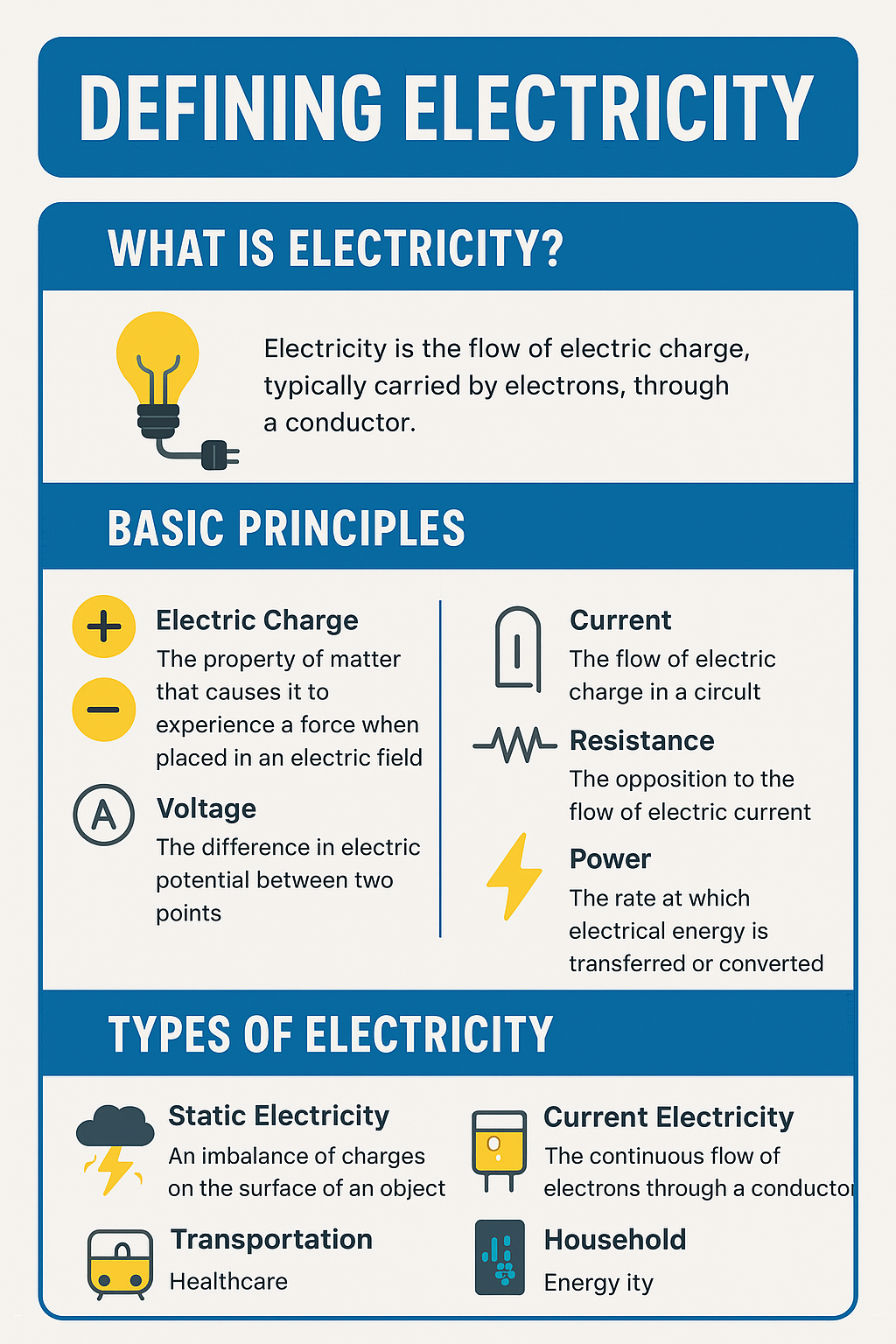
Electricity is the flow of electric charge, typically carried by electrons, through a conductor such as a wire. In simple terms, electricity is the movement of energy that can be harnessed to perform work, whether it is lighting a room, running a computer, or powering an entire city.
Scientifically, electricity can be described as a form of energy resulting from the presence and flow of charged particles. These particles are usually electrons in atoms, which can move from one atom to another when influenced by certain forces.
Electricity is not just a man-made phenomenon; it exists naturally in the world. Lightning during thunderstorms, electric eels generating shocks, and even the electrical impulses in our nervous system are examples of natural electricity.
2. The Basic Principles of Electricity
To define electricity properly, we must also understand its fundamental principles. Some of the key concepts include:
a. Electric Charge
Electric charge is the property of matter that causes it to experience a force when placed in an electric field. Charges can be positive (protons) or negative (electrons).
b. Voltage (Potential Difference)
Voltage is the difference in electric potential between two points. It acts as the “pressure” that pushes electric charges through a conductor.
c. Current
Current refers to the flow of electric charge in a circuit. It is measured in amperes (A).
d. Resistance
Resistance is the opposition to the flow of electric current. It depends on the material, length, and thickness of the conductor.
e. Power
Electrical power is the rate at which electrical energy is transferred or converted. It is measured in watts (W).
Together, these principles form the foundation of electrical science and engineering.
3. Types of Electricity
Electricity can be classified into several types based on how it is generated and used:
a. Static Electricity
This occurs when there is an imbalance of charges on the surface of an object. For example, rubbing a balloon on your hair can cause static electricity.
b. Current Electricity
This is the continuous flow of electrons through a conductor, which is the most common type used in homes and industries.
There are two main forms of current electricity:
- Direct Current (DC): The electric charge flows in one direction. Batteries and solar panels typically provide DC.
- Alternating Current (AC): The electric charge changes direction periodically. This is the type of electricity supplied to homes and businesses.
4. Sources of Electricity
Electricity can be generated from various natural and artificial sources, including:
- Fossil Fuels (coal, oil, gas): Traditional but environmentally harmful sources.
- Nuclear Power: Provides large amounts of energy but comes with safety concerns.
- Renewable Sources (solar, wind, hydro, geothermal): Sustainable and increasingly popular.
- Biological Sources: Certain organisms can produce electricity naturally.
5. Electricity in Daily Life
Electricity has transformed human life in ways that were unimaginable a few centuries ago. Some of the key areas where electricity plays a role include:
- Communication: Smartphones, computers, and the internet all rely on electricity.
- Transportation: Electric trains, subways, and electric cars are revolutionizing mobility.
- Healthcare: Life-saving equipment such as ventilators, X-ray machines, and MRI scanners depend on electricity.
- Household Use: From refrigerators to televisions, electricity powers most home appliances.
Without electricity, modern life as we know it would come to a standstill.
6. Electricity in Industry and Technology
Electricity is not only essential for daily living but also for industrial growth and technological advancement. Industries depend on electricity for:
- Manufacturing: Operating machines, robots, and production lines.
- Automation: Enabling smart factories and advanced robotics.
- Information Technology: Powering servers, data centers, and cloud systems.
- Innovation: Driving breakthroughs in artificial intelligence, biotechnology, and nanotechnology.
Electricity is the lifeline of industrialization and digital transformation.
7. The Importance of Electricity in Modern Civilization
Defining electricity is incomplete without understanding its role in human progress. Some of the reasons why electricity is crucial include:
- Economic Growth: Electricity is directly linked to a nation’s productivity and industrial output.
- Quality of Life: Access to reliable electricity improves education, healthcare, and living standards.
- Global Connectivity: Electricity powers global communication networks and the internet.
- Sustainability Goals: Transitioning to renewable electricity sources is key to fighting climate change.
8. Challenges in Electricity Generation and Distribution
While electricity is vital, there are challenges in ensuring its availability and sustainability:
- Energy Demand: The global population and industries are consuming more electricity than ever.
- Environmental Impact: Fossil fuel-based electricity contributes to pollution and climate change.
- Infrastructure Issues: Many developing regions lack reliable access to electricity.
- Energy Storage: Storing renewable electricity efficiently is still a technological challenge.
These challenges highlight the need for innovation in the energy sector.
9. The Future of Electricity
Looking ahead, electricity will continue to evolve. Some key trends shaping the future include:
- Smart Grids: Intelligent electricity networks that improve efficiency and reliability.
- Renewable Energy Growth: Solar, wind, and hydroelectric power will dominate future electricity generation.
- Electric Vehicles (EVs): Increasing demand will transform transportation.
- Wireless Electricity Transmission: Emerging technologies may allow electricity to be transmitted without wires.
- Fusion Energy: Considered the “holy grail” of clean electricity, fusion could provide limitless power.
Conclusion of Definition of Electricity
Electricity is more than just the energy that powers our lights and gadgets—it is the backbone of modern civilization. By defining electricity in terms of its principles, types, and applications, we gain a deeper appreciation for its importance.
From everyday life to advanced technology, electricity continues to be the driving force behind human progress. As we move into the future, sustainable and innovative uses of electricity will be essential for building a better, cleaner, and more connected world.