Introduction of Automation in Middle Ages
Automation in Middle Ages ~ When people hear the term automation, they often imagine modern factories filled with robots or artificial intelligence systems controlling complex processes. However, the roots of automation reach back much further than the Industrial Revolution or even the Renaissance. The Middle Ages (roughly the 5th to the 15th century) played a critical role in shaping early concepts of automated systems.
During this period, inventors, engineers, and scholars created ingenious machines powered by water, wind, and even simple gears. These devices not only demonstrated mechanical brilliance but also laid the foundation for the technological leaps that followed in later centuries.
This article explores how automation existed in the Middle Ages, examining its inventions, societal impact, and role in shaping modern industry.
The Concept of Automation in Medieval Times
Automation in the Middle Ages did not mean robots or electronic machines. Instead, it referred to mechanical systems designed to perform repetitive tasks with minimal human intervention. These machines relied on natural forces—such as water, wind, or gravity—combined with gears, pulleys, and levers.
In essence, medieval automation was about harnessing energy efficiently to reduce manual labor, improve productivity, and perform tasks that would otherwise be impossible for humans alone.
Key Examples of Medieval Automation
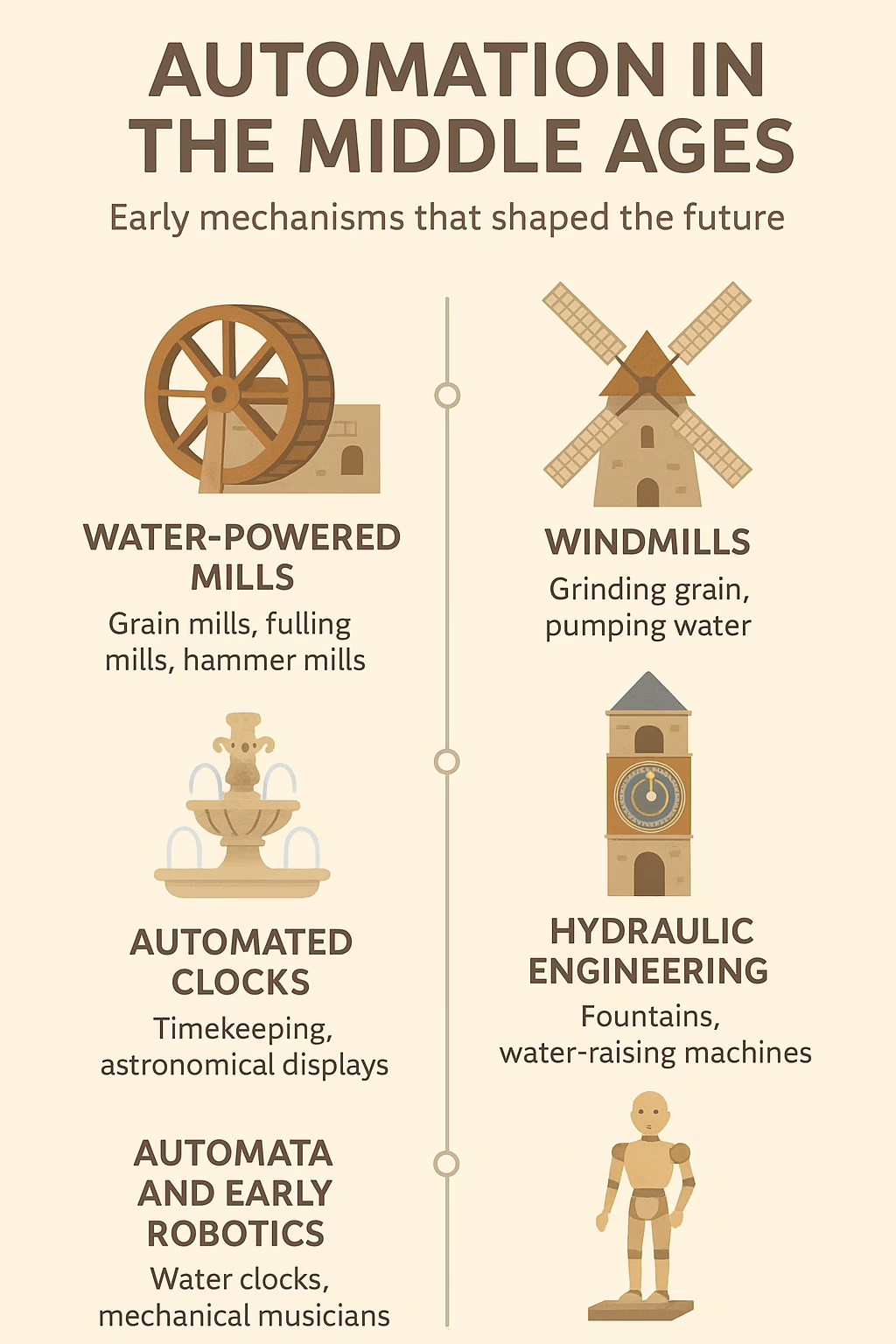
1. Water-Powered Mills
One of the most widespread forms of automation during the Middle Ages was the water mill. These mills used the flow of rivers or streams to turn large wheels, which then powered machinery.
- Grain mills: Automated the laborious process of grinding wheat and other grains into flour.
- Fulling mills: Mechanized the process of cleaning and thickening wool, essential for the textile industry.
- Hammer mills: Used in metalworking, automating tasks like forging and crushing ore.
Water mills became essential to medieval economies, freeing people from tedious manual work and allowing industries to grow.
2. Windmills
In regions where water was scarce, windmills became a brilliant alternative. First appearing in Europe around the 12th century, they converted wind energy into mechanical power.
- Used primarily for grinding grain and pumping water.
- Enabled agriculture and food production to become more efficient.
Windmills represented one of the earliest examples of renewable energy automation.
3. Automated Clocks
Medieval Europe also witnessed the rise of mechanical clocks—marvels of engineering that automated the measurement of time.
- Large tower clocks in cities allowed communities to coordinate daily activities.
- Some clocks featured astronomical displays, automating the movement of planets and lunar cycles.
- Monasteries used clocks to regulate prayer schedules, demonstrating how automation influenced religious life.
These clocks required intricate gears and escapements, showing the advanced level of medieval mechanical knowledge.
4. Hydraulic Engineering
Beyond mills, water was used in ingenious ways to automate public services and entertainment.
- Fountains in Islamic and European gardens featured automated water displays powered by hidden pipes and pumps.
- Water-raising machines, like the noria (a water wheel with buckets), automated irrigation, supporting agriculture in dry regions.
Hydraulic automation showcased how medieval engineers balanced utility with aesthetics.
5. Automata and Early Robotics
Perhaps the most fascinating examples of automation in the Middle Ages were automata—mechanical devices designed to imitate life.
- Engineers like Al-Jazari (1136–1206) in the Islamic Golden Age created water clocks with moving figures, mechanical musicians, and even programmable robots.
- European cathedrals housed automaton figures that struck bells or moved as part of religious rituals.
These creations were not only technological wonders but also precursors to modern robotics.
Cultural and Economic Impact of Medieval Automation
Automation during the Middle Ages was not simply about technology; it reshaped society, culture, and economies.
- Increased Productivity
- Water and wind mills significantly boosted agricultural output.
- Automated processes reduced dependence on manual labor, freeing people for other trades.
- Support for Urbanization
- Cities grew as industries expanded, supported by automated milling, textile production, and metalworking.
- Timekeeping through mechanical clocks allowed better organization of urban life.
- Technological Knowledge Sharing
- Inventions from the Islamic world influenced European engineers through trade and cultural exchange.
- The spread of automation highlighted the interconnectedness of civilizations.
- Influence on Religion and Art
- Automata in churches symbolized divine order and power.
- Decorative fountains and automated displays blended art with engineering.
Limitations of Medieval Automation
While medieval automation was groundbreaking, it also faced limitations:
- Dependence on natural forces (no wind or water meant no power).
- Machines were often expensive and required skilled craftsmen to maintain.
- Technology spread unevenly, benefiting cities and wealthy estates more than rural villages.
Despite these challenges, medieval automation marked an extraordinary step toward mechanization.
The Legacy of Medieval Automation
The automation of the Middle Ages did more than make life easier—it paved the way for the Industrial Revolution. The principles of gearing, water power, and mechanical design influenced later inventions like steam engines and factory machinery.
Many of today’s automation systems, from robotics to AI, can trace their roots to the medieval desire to reduce labor through ingenuity and natural forces.
Conclusion of Automation in Middle Ages
Automation in the Middle Ages may not have looked like modern robotics or smart factories, but it was no less revolutionary. From water mills and mechanical clocks to automata and hydraulic wonders, medieval engineers laid crucial foundations for technological progress.
By understanding these early innovations, we can appreciate how human creativity has always sought ways to extend capabilities and shape industries. The Middle Ages, often viewed as a time of stagnation, was in fact a fertile period of technological advancement that continues to influence automation today.